

Relocating to Germany with children requires a clear understanding of how family expenses align with local price levels and typical incomes. This briefing outlines the main cost categories a family with children can expect in Germany, using indicative figures to support budgeting and feasibility assessments. All amounts are approximate and can vary significantly by city, lifestyle and family size.
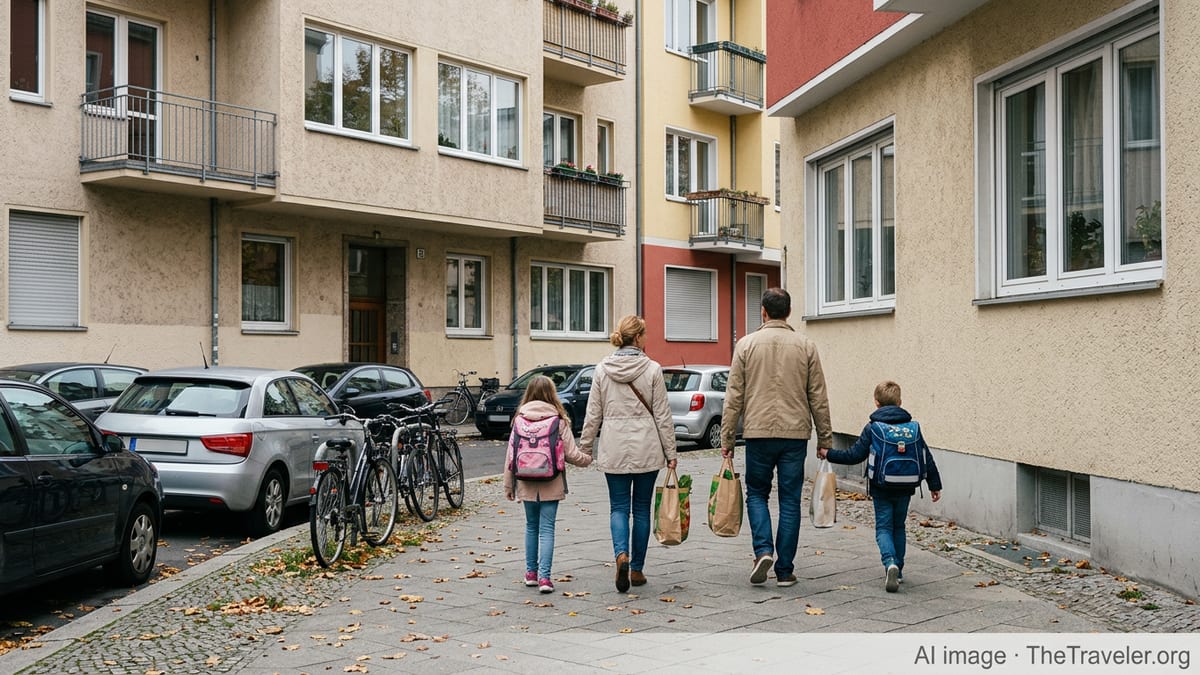
Overview of Family Cost of Living in Germany
Germany is broadly considered a medium to high cost country within Europe, with a marked difference between large cities and smaller towns. For families with children, the largest budget items are usually housing, childcare, food, and transport, followed by education-related costs and leisure. Public services partially offset private outlays, but families still face substantial monthly expenses.
As a rough orientation, a family of four in a major city typically needs a net monthly budget in the mid four-figure euro range to cover a modest but comfortable standard of living, before long-term savings. Smaller cities and rural areas can be materially cheaper, especially for housing, while some high-demand metropolitan areas can be significantly more expensive than the national average.
Foreign-currency earners should also consider exchange-rate movements, which can affect the real cost of living over time. Families paid in euros will still need to account for inflation, which has raised day-to-day prices in recent years, particularly for energy and food.
Because individual spending patterns differ, the figures in this briefing are intended as plausible ranges rather than precise predictions. They are designed to help families stress-test potential budgets and identify the categories that require the closest scrutiny before relocation.
Housing Costs for Families With Children
Housing is usually the single largest expense for families in Germany. Rents vary strongly between regions, with the highest levels in large cities and attractive commuter belts and lower levels in smaller cities and rural areas. Family apartments with 3 to 4 rooms are in particularly high demand in many urban markets, which can push monthly costs upward.
In major cities, a typical family apartment with 3 bedrooms in a reasonable residential area can often be in a mid to upper three-figure or low four-figure euro range for the cold rent, meaning before utilities and building charges. In especially sought-after districts of top-tier cities, similar properties can be higher and can absorb a large share of a family income.
Outside the main metropolitan areas, families can often find comparable-sized apartments or small houses at significantly lower cold rents. In many mid-sized cities and rural regions, family housing can be around one third to one half cheaper than in the most expensive urban districts. However, availability, commute distances and local amenities must be taken into account when comparing lower rent with potential increases in transport or time costs.
Warm rent includes utilities such as heating, water, and shared building costs and is the figure that matters for monthly cash flow. For a family apartment, warm rent can add a noticeable premium over the cold rent, depending on energy efficiency, heating type and recent energy price trends. Families should model conservative scenarios for utility costs, particularly in older buildings or areas with higher heating needs.
Childcare and Early Childhood Costs
Childcare is a major determinant of the cost of living for families with young children in Germany. Public childcare places in kindergartens and daycare centers are widely available but can be subject to waiting lists in some regions. Fees are set at the municipal or state level and often depend on parental income, the number of hours booked and the number of children in the family.
For public or subsidized daycare, monthly parental contributions per child can range from low two-figure amounts for low-income households up to a few hundred euros for higher incomes and full-day care. Some federal states have significantly reduced or even eliminated contributions for certain age groups, while others still levy meaningful fees. As a result, the same family profile can face fairly different childcare bills depending on the city and state.
Private childcare, bilingual kindergartens or international early childhood centers typically cost more than public options. Monthly fees for full-day care in private settings can reach mid to high three figures per child in larger cities. Families needing flexible schedules, care in the early morning or late evening, or care during school holidays may need to budget additional amounts for part-time nannies or babysitters, who are usually paid by the hour.
Beyond fees, families should include ancillary early childhood costs, such as diapers, basic clothing, occasional equipment like strollers or car seats, and baby food. These items can add low to mid three-digit euro sums per month for infants and toddlers, especially in the first two years when equipment purchases are concentrated.
Food, Groceries and Household Goods
Food and grocery prices in Germany are moderate by Western European standards but have increased due to recent inflation. Families benefit from a dense network of discount supermarkets as well as mainstream chains and specialist stores. The balance between cooking at home and dining out significantly impacts the monthly food budget.
A family of four that shops primarily at discount or mid-range supermarkets and cooks most meals at home might expect a monthly grocery budget in the mid three-digit euro range, covering staple foods, drinks, toiletries and cleaning products. Choosing more organic products, premium brands or specialty items can move this amount toward the upper end of that range or beyond.
Dining out is relatively expensive compared with home cooking. A simple meal for a family at a standard restaurant can quickly amount to a low three-digit euro total when including drinks and possibly dessert. Regular restaurant visits, takeaway food and coffee purchases can add a substantial incremental cost each month, so families aiming for tight budgets often limit these discretionary expenses.
Household goods such as basic furniture, kitchen equipment, bedding and small electronics are widely available at various price points, from budget-friendly chain stores to higher-end retailers. An initial setup after relocation can require a one-off expenditure in the low to mid four-figure euro range, depending on how much is brought from abroad and the desired quality level. Spreading major purchases over time can smooth cash flow, but families should plan for a baseline of recurring household expenses and small replacements each month.
Education, Schooling and Extracurricular Expenses
Public schooling in Germany does not charge tuition for primary and secondary education, which significantly reduces direct education costs for families. However, families should still budget for school-related items, such as books where not fully provided, stationery, digital devices if required, sports clothing, and contributions to school-related activities.
Annual school start and term-time purchases for a single child can reach a few hundred euros, especially when a laptop or tablet is necessary. School meals, where offered, often involve a parental contribution that can add up on a monthly basis. Additionally, parents may need to pay for transportation passes for older children if the route and distance fall outside subsidized schemes, which can again vary by region.
Private and international schools are significantly more expensive. Tuition fees in such institutions can range from low to high four-figure euro amounts per year per child, with some high-profile international schools charging more. Additional costs often include enrollment fees, mandatory contributions to school funds, uniforms, and extracurricular program fees. Families prioritizing a specific curriculum or language environment need to examine each school’s fee structure carefully.
Extracurricular activities such as sports clubs, music lessons, language classes and arts programs are common and can make up an important part of a child’s development. Membership in local sports clubs can be relatively affordable, often in low two-figure amounts per month, while private lessons, for example in music, can sit in the higher two-figure to low three-figure euro range per month per child. When several children participate in multiple activities, overall education and leisure-related costs can form a material component of the monthly budget.
Transport, Communications and Daily Mobility
Transport costs for families in Germany depend on whether the household relies primarily on public transport, a car, or a combination. Many urban families use local public transport systems, while suburban and rural families are more car dependent. Children’s ages and school locations also influence the transport mix and budget.
Monthly public transport passes in larger cities can cost in the low three-figure euro range per adult, with discounted or subsidized options for students and sometimes for children. Some federal or regional plans offer flat-rate tickets covering wider areas that may lower costs for frequent users. When at least one adult commutes daily and older children require passes, total public transport spending can become a significant recurring expense.
Owning a car in Germany introduces a separate cost layer. Acquisition costs, insurance, annual vehicle tax, maintenance, parking fees and fuel all need to be accounted for. Depending on vehicle type, insurance profile and mileage, running a family car can average several hundred euros per month. In major cities, limited parking and specific environmental regulations can add indirect costs, while in rural areas, car dependency may be unavoidable but parking restrictions are typically fewer.
Communication costs include mobile phone contracts, fixed internet access and occasionally a landline. A typical family might pay in the low three-figure euro range per month for a home internet connection and multiple mobile lines, depending on data volumes and contract terms. Bundled offers can provide cost savings, but families should check coverage quality in their chosen area before committing to long-term agreements.
Clothing, Healthcare Out-of-Pocket and Family Leisure
Clothing costs for families in Germany vary with brand preferences and shopping habits. Basic clothing for children and adults is widely available at budget and mid-range retailers, where seasonal items can be purchased at moderate prices. However, the need for warm and weather-appropriate clothing, especially in colder months, means families should plan for regular outlays on coats, shoes and winter accessories, which can accumulate into significant annual spending.
Children outgrow clothing and shoes quickly, particularly in the early years, so replacement cycles are frequent. A practical approach is to allocate a modest monthly budget for clothing and shoes rather than treating these purchases as sporadic, since sales and discounts can help spread costs. Families opting for high-end brands or specialist sports clothing will need to increase their budget considerably.
Mandatory health insurance covers a wide range of medical services, significantly reducing direct medical costs at the point of use, but families should still expect some out-of-pocket expenses. These may include co-payments for certain medications, over-the-counter medicines, dental services not fully covered, glasses or contact lenses, and specific therapies or treatments. Annually, these additional costs can accumulate, particularly for family members with chronic conditions or special care needs.
Leisure and recreation expenses are another important component of the family budget. Typical activities include occasional meals out, cinema visits, local excursions, weekend sports events and short domestic trips. The frequency and type of activities will drive costs, but even modest leisure patterns can add a mid to high three-digit euro figure per month in total for a multi-child household. Families considering relocation should decide in advance what level of leisure spending aligns with their desired quality of life and budget constraints.
Indicative Monthly Budget Ranges for a Family With Children
Although every family’s situation is different, it can be useful to assemble the main categories into a simplified indicative monthly budget. The following illustration assumes a family with two children, living in a larger German city, using a mix of public services and private spending. All amounts are broad ranges only.
Typical ranges might be summarized as follows:
Housing (warm rent): approximately mid to upper four-figure euros, depending on size and district. Food and groceries: mid three-figure to low four-figure euros, depending on diet and eating-out frequency. Childcare and school-related costs: from low three-figure euros for primarily public options to much higher where private or international schooling is used. Transport and communications: potentially mid three-figure euros for combined public transport, car costs and data services. Clothing, health out-of-pocket and leisure: another mid three-figure sum or more, depending on lifestyle.
In aggregate, a family of four in a large urban area might reasonably anticipate a total monthly cost of living in the mid to high four-figure euro range, before private savings, pension contributions or debt repayment. In smaller cities or rural regions, the total may be lower, particularly due to reduced housing costs, though this can be partly offset by higher transport expenses and fewer low-cost childcare options.
Families receiving employer allowances, such as cost-of-living adjustments, housing or education support, should compare these benefits to the likely local cost structure. A detailed personal budget based on actual housing offers, childcare fees and school options in the target city is essential before making a final relocation decision.
The Takeaway
For families with children, the cost of living in Germany is shaped primarily by housing, childcare, education choices and transport patterns. While public systems reduce some of the financial burden, especially for schooling and partially for childcare, the combination of rent, daily expenses and extracurricular activities can still lead to substantial monthly outlays, particularly in major urban centers.
Germany offers a broad cost spectrum, with notable differences between high-demand cities and more affordable regions. Families that can be flexible on location and school type can often find viable budgets even with moderate incomes, whereas those requiring central urban locations and international schooling will need significantly higher resources.
Decision-makers evaluating relocation should avoid relying on single headline figures or cost-of-living indexes. Instead, constructing a granular budget that reflects the family’s real housing needs, childcare and schooling preferences, commuting patterns and leisure expectations will give a more accurate picture of feasibility. When built on conservative assumptions, such an analysis can clarify whether a move to Germany supports both financial sustainability and the desired quality of life for the entire family.
FAQ
Q1. How much does a typical family of four need per month to live in Germany?
A family of four in a large city should expect total monthly living costs in roughly the mid to high four-figure euro range, depending on housing choice and lifestyle.
Q2. Is housing the largest cost for families with children in Germany?
Yes, for most families housing is the single largest expense, especially in major cities where family-sized apartments command high rents.
Q3. How expensive is childcare in Germany for young children?
Public childcare fees range from modest contributions to several hundred euros per month per child, while private or international options can be substantially more expensive.
Q4. Are public schools in Germany free for children of foreign families?
Yes, public primary and secondary schools do not charge tuition, although parents must budget for materials, excursions and occasional contributions.
Q5. What impact do private or international schools have on cost of living?
Private and international schools can add annual costs in the four-figure euro range per child, significantly increasing the overall family budget.
Q6. How much should a family budget for groceries each month?
A family of four cooking mainly at home might allocate a mid three-digit to low four-figure euro amount per month for groceries and basic household items.
Q7. Are transport costs high for families in German cities?
Transport costs can be significant, with public transport passes and possible car ownership together amounting to several hundred euros per month.
Q8. Do healthcare costs significantly affect the family budget?
Mandatory insurance covers many services, but families should budget for co-payments, dental extras, glasses and over-the-counter medicines.
Q9. How much do extracurricular activities for children usually cost?
Local sports clubs are relatively affordable, but multiple activities and private lessons can raise monthly costs to notable levels for larger families.
Q10. Is living in smaller German cities noticeably cheaper for families?
Yes, smaller cities and rural areas often have lower housing costs, although potential savings can be partly offset by higher transport needs.