

Evaluating the cost of living in Italy for a family with two children requires a structured review of major recurring expenses and how they vary across regions. Italy combines relatively moderate consumer prices with significant geographic cost differentials, particularly between major northern cities and smaller southern or provincial locations. For prospective relocating families, understanding typical expenditure ranges by category is critical for realistic budgeting and package negotiations.
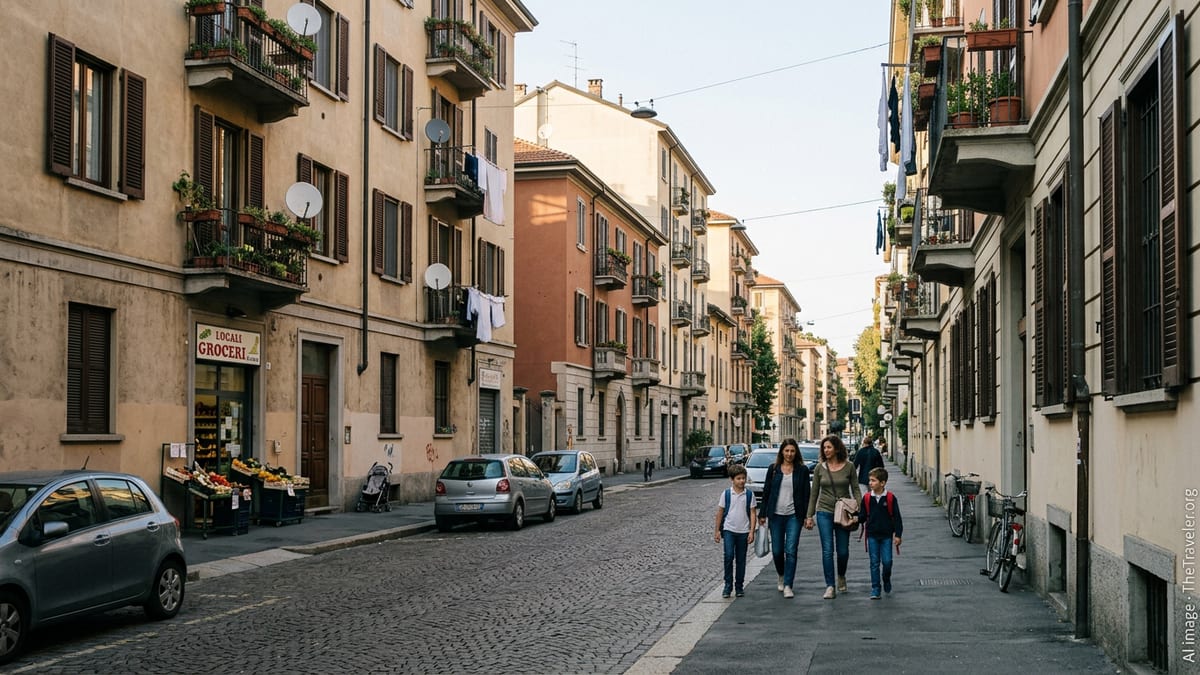
Overview of Family Living Costs in Italy
For a family of four in Italy, total monthly living costs typically range from about €2,500 to €4,500 before income tax and social contributions, depending primarily on housing choices and city. Recent relocation-oriented cost breakdowns suggest that a comfortable but not luxurious standard of living for a family of four in a mid‑sized city often falls around €3,000 to €3,500 per month, excluding private schooling and major discretionary spending.([faurit.com](https://faurit.com/article/your-guide-to-the-cost-of-living-in-italy-2023-2024?utm_source=openai))
Major northern metropolitan areas such as Milan, Rome, Florence and Bologna sit at the upper end of national cost indices, while many southern cities and provincial towns can be 20 to 40 percent cheaper on everyday spending, and up to 40 to 60 percent cheaper on rent.([estatefy.com](https://www.estatefy.com/italy/cost-of-living-in-italy-by-region?utm_source=openai))
For relocation planning, it is helpful to separate housing, food, domestic utilities, local transport, childcare and education-related expenses, and children’s day‑to‑day costs. This structure highlights which costs are relatively predictable nationally and which are highly location‑sensitive.
The analysis below uses 2024 to early‑2026 data from Italian and international cost-of-living indices, national statistics and recent expat‑focused price surveys. Prices are indicative and can vary by neighborhood, lifestyle and consumption habits.
Housing and Household Utilities Impact
Housing is usually the single largest cost item for a family with two children in Italy. For a three‑bedroom apartment suitable for a family of four, current relocation market sources report broad monthly rent ranges of approximately €900 to €1,500 in mid‑sized cities and €1,500 to more than €2,300 in central districts of Milan and Rome. Peripheral or southern cities can offer comparable space from around €700 to €1,100 per month.([globalpropertyguide.com](https://www.globalpropertyguide.com/Europe/Italy/Rental-Yields?utm_source=openai))
Recent city comparisons show Milan as one of the most expensive housing markets in the country, with a three‑bedroom in a desirable central area frequently exceeding €2,000, while similar space in cities such as Turin, Bologna or Naples can be 20 to 40 percent lower. A family accepting a longer commute or choosing a suburban municipality can often reduce rent by several hundred euros per month relative to central neighborhoods.([estatefy.com](https://www.estatefy.com/italy/cost-of-living-in-italy-by-region?utm_source=openai))
Utility costs for a family apartment typically add €200 to €350 per month, depending on building energy efficiency and region. This figure covers electricity, heating (gas or central), water and waste charges. Older buildings with less insulation and gas heating can push winter utility bills above this range, particularly in northern regions with colder winters, while newer energy‑efficient properties may sit at the lower end.([faurit.com](https://faurit.com/article/your-guide-to-the-cost-of-living-in-italy-2023-2024?utm_source=openai))
Telecommunications, including a home broadband connection and at least two mobile phone plans, commonly add €60 to €100 per month for a family, depending on data requirements and bundled services. These costs are relatively consistent across the country compared with rent differentials.
Food, Groceries and Dining for a Family of Four
Food prices in Italy have risen in recent years, but remain moderate by Western European standards. National data and current expat price indexes suggest that a family of four budgeting for home cooking with occasional eating out typically spends between €500 and €800 per month on groceries, including non‑alcoholic beverages and basic household items.([whysoitaly.online](https://whysoitaly.online/cost-of-living-in-italy-in-2025/?utm_source=openai))
Recent supermarket price samples for 2025 and 2026 show commonly purchased items at approximately €1.50 for a 500 g loaf of bread, €1.30 to €2.00 per liter of milk, €2.50 to €4.00 for a dozen eggs and €2.00 to €4.00 per kilogram for many seasonal fruits and vegetables, with regional and seasonal variability. Meat, fish and imported goods represent the more expensive elements of a typical family basket.([wprices.com](https://wprices.com/cost-of-living/cost-of-living-in-italy-prices/?utm_source=openai))
Eating out regularly increases the monthly food budget significantly. An inexpensive restaurant meal is commonly priced between €12 and €18 per adult, with children’s portions somewhat lower. A weekly family meal out in a mid‑priced restaurant could add €150 to €250 per month to the budget, while occasional takeaway pizzas or casual dining will add more modestly. Families in high‑cost cities who dine out frequently can easily see monthly total food and dining costs exceed €900.([idealista.it](https://www.idealista.it/en/news/financial-advice-in-italy/2025/02/13/206440-how-much-money-do-you-need-to-live-comfortably-in-italy?utm_source=openai))
Overall, families who are prepared to cook at home, buy seasonal produce and make use of discount supermarkets or local markets can maintain food costs near the lower end of these ranges, even in large cities. Families preferring imported brands, premium supermarkets and frequent restaurant outings should plan for the upper bound.
Local Transport and Commuting Costs
Transport costs for a family with two children in Italy depend on the balance between public transport usage and car ownership. In major cities, public transport is widely used and can keep costs relatively controlled. Standard monthly passes for buses, trams and metro services typically cost around €35 to €50 per adult, depending on the city and zone, while discounted passes for students and younger children reduce costs for school‑age passengers.([faurit.com](https://faurit.com/article/your-guide-to-the-cost-of-living-in-italy-2023-2024?utm_source=openai))
A two‑adult household relying primarily on public transport might therefore budget €80 to €120 per month for passes, with additional occasional single tickets or regional train fares when needed. This public‑transport‑oriented model is most common in metropolitan areas such as Milan, Rome, Turin, Bologna and Florence, where service coverage is extensive.
Car ownership introduces higher and more variable costs. Fuel prices fluctuate but have remained relatively high compared with North America. Adding insurance, routine maintenance, motorway tolls and parking, a single family car can cost several hundred euros per month when spread across the year. Urban families often face additional parking charges or residents’ permits, while those in provincial towns may face longer driving distances for work and school.
For relocation planning, many incoming families adopt a mixed model: public transport for commuting and school where feasible, combined with occasional car sharing or rentals for weekend travel. Under this approach, typical monthly transport expenditure for a family of four in a city might fall between €150 and €300, depending on commuting distances, parking arrangements and car usage patterns.
Childcare and School‑Related Expenditure
Childcare and education‑related costs are central to the cost of living for a family with two children. Italy provides public education from primary level with no tuition fees for residents, but families should budget for school materials, meals and extracurricular activities. International comparisons estimate that Italy spends a moderate share of GDP on education, with public provision covering core teaching costs while households contribute to ancillary items.([oecd.org](https://www.oecd.org/content/dam/oecd/en/publications/reports/2024/09/education-at-a-glance-2024-country-notes_532eb29d/italy_1f8f65a5/c46299a8-en.pdf?utm_source=openai))
School‑age children attending state schools may incur annual outlays for textbooks, stationery, contributions to school funds, transport and canteen services. Media reports and consumer associations have highlighted rising back‑to‑school costs, with some estimates indicating single‑digit percentage increases year‑on‑year for supplies. A family with two children may therefore face several hundred euros in early‑September expenses, followed by ongoing monthly canteen or transport fees.([euronews.com](https://www.euronews.com/my-europe/2024/09/12/watch-high-costs-for-italian-families-as-children-head-back-to-school?utm_source=openai))
Childcare for younger children or after‑school supervision can be a significant budget item. Fees for municipal nurseries and preschools vary by municipality and household income, but can range from a modest monthly contribution to several hundred euros. Private daycare and private preschools are more expensive and can easily exceed €500 to €800 per child per month in major cities. Many families use a combination of public services, grandparents and part‑time private care to manage costs.
Relocating families considering private or international schools, particularly in Milan, Rome or other globally connected cities, should treat tuition as a separate major cost center, often comparable in size to rent. Such schools can add several thousand euros per child per year in tuition and fees, substantially altering the overall cost profile. Where possible, this is typically addressed within employer relocation or education allowances rather than the basic cost‑of‑living budget.
Children’s Clothing, Activities and Miscellaneous Costs
Beyond core categories such as housing and food, families with two children in Italy encounter ongoing costs for clothing, sports, hobbies and leisure activities. Clothing prices are broadly aligned with other Western European markets; mid‑range children’s clothing retailers and supermarket brands help keep costs moderate for everyday items, while branded sportswear and fashion items are more expensive.
A practical benchmark for clothing and footwear for two growing children can be €50 to €120 per month averaged over the year, rising during growth spurts or at the start of new school years when uniforms or multiple pairs of shoes may be needed. Taking advantage of seasonal sales can significantly reduce this component of the budget.
Extracurricular activities such as sports clubs, music lessons, language classes or arts programs represent another material cost. Single activities offered through municipal or community programs may cost €20 to €50 per month per child, while private lessons or competitive sports clubs can be substantially higher. A family enrolling both children in one or two structured activities each should expect anywhere from €60 to €200 per month, depending on activity type and intensity.
Additional miscellaneous costs include occasional medical co‑payments, birthday gifts for peers, school trips, entertainment and digital subscriptions. These items are highly lifestyle‑dependent, but many families allocate a flexible discretionary buffer of €100 to €200 per month to absorb such irregular expenses.
Regional Variations and Scenario Budgets
Regional price differences are central to cost planning in Italy. Cost‑of‑living indices consistently place Milan and, to a slightly lesser extent, Rome at the top of national rankings, with Bologna, Florence and other northern cities also above the national average. Mid‑sized central and northern towns sit close to the national baseline, while parts of the South and islands typically record lower housing and consumer prices.([estatefy.com](https://www.estatefy.com/italy/cost-of-living-in-italy-by-region?utm_source=openai))
Based on recent rent and price data, a composite budget for a family of four in a mid‑sized, non‑capital city might look as follows for a moderate lifestyle: rent for a three‑bedroom apartment €1,000; utilities and telecommunications €280; groceries and basic dining €650; local transport €200; school‑related and childcare costs (excluding private school tuition) €250; clothing, activities and miscellaneous €200. This yields a monthly total around €2,600 to €2,800, acknowledging variability by municipality and childcare arrangements.
In contrast, a similar family in a high‑cost area such as central Milan could reasonably budget: rent €1,800 to €2,200; utilities and telecommunications €320; groceries and dining €800; transport €250 (including higher parking or commuting costs); school‑related and childcare €350 or more; clothing, activities and miscellaneous €250. The resulting total ranges between approximately €3,800 and €4,200 per month, with international schooling or premium housing pushing the figure higher.([globalpropertyguide.com](https://www.globalpropertyguide.com/Europe/Italy/Rental-Yields?utm_source=openai))
At the lower end, families in smaller southern cities or provincial towns that combine lower rents with strong reliance on public services may manage on total budgets closer to €2,200 to €2,400 per month, provided housing costs are contained and discretionary spending is modest. These regional scenarios highlight the importance of aligning relocation destinations and housing choices with the family’s income level and employer support.
The Takeaway
The cost of living in Italy for a family with two children is manageable compared with many Western European capitals, but it is highly sensitive to city choice, housing standards and schooling decisions. A realistic budget for a family of four ranges from just over €2,000 per month in lower‑cost locations with modest lifestyles to more than €4,000 per month in high‑cost metropolitan centers, before considering private or international school tuition.
Housing and utilities, followed by food, childcare and education‑related costs, represent the key drivers of overall expenditure. Transport and discretionary spending can be adjusted more flexibly, particularly where robust public transport networks exist. Regional price gaps between northern and southern Italy, and between central and suburban districts, provide scope for cost optimization where remote or hybrid work patterns allow.
For decision‑makers and relocating employees, the figures outlined above provide a framework for assessing whether local salaries, allowances and benefits are sufficient to sustain the desired living standard. Detailed, city‑specific research and an itemized family budget are recommended prior to finalizing relocation decisions or employment contracts.
FAQ
Q1. What is a typical monthly budget for a family of four in Italy?
A typical family of four can expect to spend roughly €2,500 to €3,000 per month in a mid‑priced city, and €3,500 to over €4,000 in high‑cost cities like Milan or Rome, excluding private school tuition.
Q2. How much should a family with two children budget for rent in Italy?
For a three‑bedroom apartment, most families should anticipate €900 to €1,500 per month in mid‑sized or lower‑cost cities and €1,500 to over €2,300 in major metropolitan centers, depending on location and property quality.
Q3. What are average grocery costs for a family with two children?
A family that cooks at home and shops at mainstream supermarkets usually spends about €500 to €800 per month on groceries, with higher amounts for frequent restaurant dining or premium products.
Q4. How expensive is childcare in Italy for young children?
Municipal nurseries can be relatively affordable and income‑linked, while private daycare in large cities can cost €500 to €800 or more per child per month. Many families combine public services, family support and part‑time private care.
Q5. Are transport costs high for families in Italian cities?
Where public transport is used, two adult monthly passes plus occasional tickets for children generally cost €80 to €150 per month. Car ownership, parking and fuel can increase total transport expenditure to €150 to €300 per month or more.
Q6. How do living costs differ between northern and southern Italy for families?
Northern cities, especially Milan and Rome, have higher rents and service costs. Southern and many provincial areas often show 20 to 40 percent lower overall living expenses, particularly in housing.
Q7. How much should be budgeted for school supplies and activities for two children?
Families commonly allocate several hundred euros at the start of the school year for books and supplies, plus €50 to €150 per month for extracurricular activities, depending on the number and type of programs.
Q8. What utility costs should a family of four expect in Italy?
Typical monthly costs for electricity, heating, water and waste services for a family‑sized apartment fall between €200 and €350, influenced by property efficiency, climate and usage patterns.
Q9. How much discretionary spending is realistic for entertainment and clothing?
Many families plan €150 to €300 per month for children’s clothing, casual outings, occasional restaurant meals and other incidentals, with flexibility to adjust if income allows.
Q10. Is it possible for a single income to support a family with two children in Italy?
A single income can support a family of four in many locations, particularly outside the highest‑cost cities, but this depends heavily on net salary, housing costs and whether additional expenses such as private schooling are required.