

Evaluating a move to Mexico as a family with two children requires a clear view of expected monthly living costs. While Mexico remains less expensive than many North American and European countries, prices have risen in recent years and vary substantially between major cities, mid‑sized regional hubs, and smaller towns. This briefing outlines realistic cost ranges for a family of four in 2025, focusing on core household spending such as housing, food, utilities, transport, education, and childcare‑related expenses.
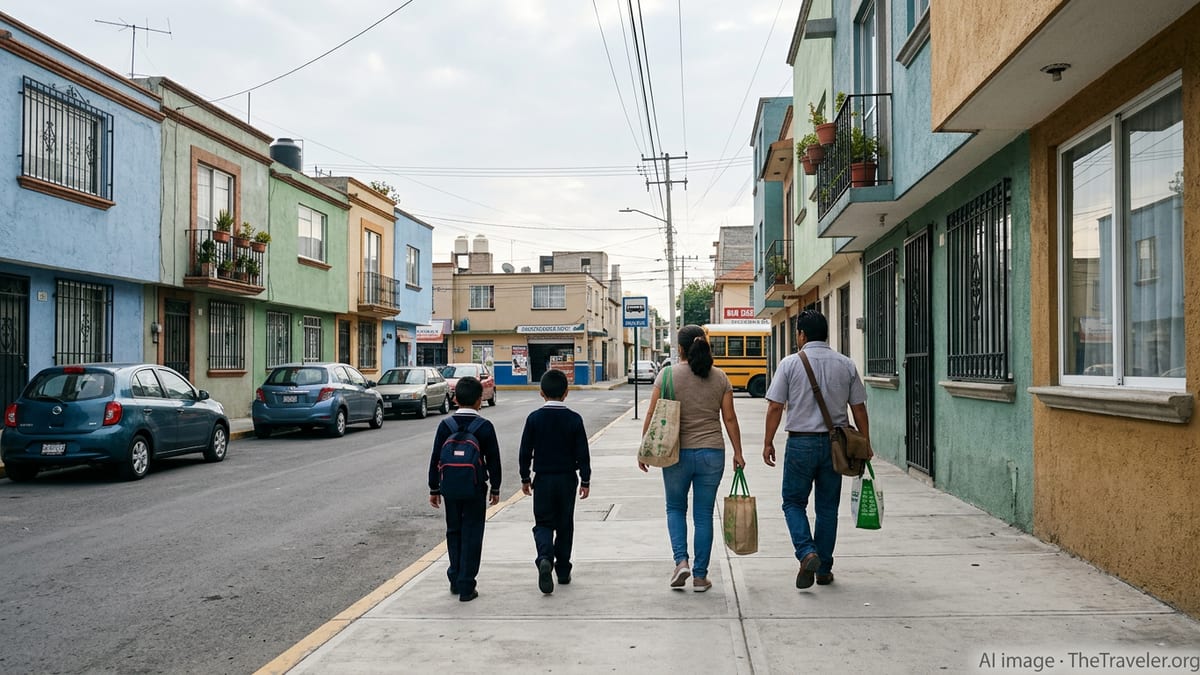
Overview of Family Cost Levels in Mexico
The cost of living for a family with two children in Mexico depends most strongly on city choice, housing standards, and whether the children attend public or private schools. As a broad reference, major metros such as Mexico City, Monterrey, and Guadalajara are the most expensive, coastal resort cities form a second high‑cost tier, while many interior mid‑sized cities and smaller towns remain considerably cheaper.
For a family aiming for a modest but comfortable standard of living, total monthly spending in 2025 typically falls in the range of approximately 30,000 to 70,000 Mexican pesos, excluding extraordinary items such as international travel or major medical procedures. At current exchange rates, this corresponds very roughly to about 1,800 to 4,100 US dollars, but local purchasing power is more relevant than currency conversion.
At the lower end of this range, families are usually renting a smaller apartment outside premium neighborhoods, using public schools, managing food costs carefully, and limiting discretionary spending. Toward the upper end, families tend to rent larger homes in desirable areas, use private schooling, own a car, and spend more on dining out, activities, and services.
The following sections break down these totals by major spending category and illustrate how choices in each area can move a family’s monthly budget up or down.
Housing Costs for a Family of Four
Housing is the single largest cost driver for most families in Mexico. Rents and purchase prices vary sharply by city and neighborhood, with premium districts in Mexico City or coastal resort areas now approaching or exceeding prices in mid‑tier US cities. For analysis, it is useful to consider the cost of a two to three bedroom apartment suitable for a family with two children.
In Mexico City, recent data suggest average monthly rent for a three bedroom apartment in a central area can be well above 30,000 pesos, and in some high‑demand neighborhoods it can exceed 40,000 pesos for 80–100 square meters. Families willing to live in less central but still urban areas can often reduce this to about 18,000 to 28,000 pesos, depending on building age and amenities.
In second‑tier cities such as Mérida, Puebla, Querétaro, or León, a modern two or three bedroom apartment in a safe, middle‑class neighborhood often rents in the approximate range of 12,000 to 22,000 pesos per month. In smaller cities and many non‑touristic towns, comparable housing can still be found in the 8,000 to 15,000 peso range, especially outside gated communities or new developments.
For budgeting purposes, a family of four considering Mexico should expect housing to account for roughly 25 to 45 percent of total monthly spending, with the percentage higher in major metros and for those seeking newer, amenity‑rich properties. Choosing location and housing type carefully is the most direct way to manage overall cost of living.
Food, Groceries, and Household Supplies
Food costs in Mexico remain moderate relative to many high‑income countries, but inflation since 2022 has raised prices of staples such as eggs, bread, and dairy. Recent price snapshots show a liter of milk typically around the mid‑20 peso range, a half‑kilogram loaf of bread often between 40 and 50 pesos in urban supermarkets, and a dozen eggs commonly in the 40 to 60 peso band depending on brand and region. Basic fresh fruits, vegetables, and local meats purchased in markets tend to be good value compared with imported or packaged products in large supermarket chains.
A family of four that cooks most meals at home, uses local markets for produce, and limits imported goods can often keep monthly grocery and basic household supply costs in the range of 6,000 to 10,000 pesos in many regions. This assumes a balanced diet with some meat and dairy, school lunches prepared at home, and limited alcohol and snacks.
In larger cities or resort regions, families that rely heavily on supermarkets, brand‑name products, and frequent dining out can easily see this category rise to 10,000 to 18,000 pesos per month. Eating out in mid‑range restaurants and cafés is significantly cheaper than in North America or Western Europe, but regular restaurant use several times per week will still add thousands of pesos to monthly spending.
For planning, it is realistic for a typical middle‑income family with two children to allocate approximately 20 to 30 percent of their monthly budget to food and household consumables, with the final figure largely determined by shopping habits and the balance between home cooking and meals out.
Utilities, Internet, and Basic Services
Utilities in Mexico are generally lower than in many colder or more energy‑intensive countries, but they are not negligible, especially in hot climates where air conditioning is used for several months of the year. Electricity pricing is also tiered, with higher usage moving households into more expensive tariffs, which can significantly increase bills for families relying heavily on air conditioning.
For a family of four in a standard apartment, monthly electricity costs can range from around 500 to 1,500 pesos in temperate central‑highland cities with limited air conditioning use, and from about 1,500 to over 3,000 pesos in hotter coastal or lowland areas where air conditioning runs daily in summer. Water and municipal services are typically modest by international standards, often together in the 300 to 800 peso per month range, though this varies by municipality and building type.
High‑speed fiber or cable internet is widely available in major and mid‑sized cities, with typical family‑grade packages commonly priced around 400 to 800 pesos per month, sometimes bundled with television services. Mobile phone plans with moderate data allowances can add another 300 to 800 pesos per line, depending on whether the family uses prepaid or postpaid plans.
Combining electricity, water, gas, internet, and basic mobile services, a reasonable estimate for a family of four is approximately 2,500 to 5,000 pesos per month, with the lower end more typical in milder climates and the upper end representing higher‑usage households or hotter regions.
Transportation and Commuting Costs
Transportation expenses for a family in Mexico are highly sensitive to car ownership, commuting distances, and city layout. Public transport in large cities is inexpensive in absolute terms, while private vehicle use introduces higher but still moderate costs compared with many developed economies, especially in terms of fuel and parking.
Public transportation fares in large cities tend to be low per trip, although comfort levels vary. A family relying primarily on metro, buses, and ride‑hailing for commuting and school runs might spend in the range of 1,500 to 3,000 pesos per month, assuming two adults with regular commutes and occasional taxi or app‑based rides for the children.
Car ownership changes the structure of costs. Fuel prices in Mexico are no longer heavily subsidized and track international markets, so monthly fuel spending for a typical family car used for commuting, shopping, and weekend activities may fall in the approximate range of 2,000 to 4,000 pesos, depending on distance driven and city traffic. Insurance, routine maintenance, and occasional repairs can add a further 1,000 to 2,000 pesos per month averaged over the year.
When all forms of transport are combined, families that depend mostly on public transport may keep monthly transportation spending around 2,000 to 3,500 pesos, while car‑owning families with daily use can expect totals closer to 4,000 to 7,000 pesos. Parking and toll road use in major urban areas can further increase these amounts.
Education, Schooling, and Child‑Related Expenses
For families with two children, education choices can dramatically alter overall cost of living. Public education is free at the point of use, although families still face expenses for uniforms, materials, voluntary contributions, and transport. In contrast, private school fees vary widely by city and school prestige, creating a very broad cost range for this category.
Recent surveys of private schools across Mexican cities indicate that typical mid‑tier private institutions often charge roughly 4,500 to 7,000 pesos per month in tuition per child, with additional one‑time enrollment or annual fees. More prestigious bilingual or international schools can charge significantly more, with annual tuition in the tens of thousands of pesos per child, often payable in monthly installments. Education costs have experienced above‑average inflation in recent years, so families should anticipate gradual annual increases.
Using broad approximations, a family with two children in mid‑range private schools might allocate in the vicinity of 9,000 to 14,000 pesos per month for tuition alone, excluding enrollment fees, school transport, meals, and extracurricular activities. In high‑end international schools or in Mexico’s most expensive urban areas, the monthly education outlay for two children can rise well beyond that band.
Even for families using public schools, child‑related costs remain meaningful. Uniforms, school supplies, after‑school activities, tutoring, and sports or arts programs can amount to several thousand pesos per year per child. Over a monthly budget, many families find that child‑related education and activity spending occupies at least 10 to 25 percent of total living costs when private schooling is involved.
Childcare, Activities, and Discretionary Spending
Childcare costs in Mexico are generally lower than in North America and Western Europe, but they remain a notable component of a working family’s budget, especially in large cities. Full‑time nannies or domestic helpers in urban areas reportedly earn in the approximate range of 6,000 to 12,000 pesos per month, depending on hours, responsibilities, and location. Part‑time assistance or after‑school care solutions can be significantly cheaper.
Formal daycare and preschool options span a wide range, from subsidized public programs to private nurseries. In major cities, private daycare can add the equivalent of several thousand pesos per month per child. Families with two working parents often blend informal family help, preschool programs, and part‑time domestic assistance to manage costs while ensuring coverage.
Beyond formal childcare, families should consider budgets for children’s leisure activities such as sports clubs, music or language classes, and weekend entertainment. Participation in one or two structured extracurricular activities per child can add 1,000 to 3,000 pesos per month to the household budget, depending on program type and frequency.
Discretionary spending also includes clothing, occasional electronics, gifts, and local travel within Mexico. These categories are highly variable by lifestyle, but many middle‑income families find that non‑essential and semi‑essential discretionary items can represent an additional 15 to 25 percent of total household spending if not monitored.
Illustrative Monthly Budget Scenarios for a Family of Four
The following indicative budget ranges illustrate how a family with two children might structure monthly costs in Mexico. These are not precise or universal figures, but they demonstrate how different choices in housing and schooling impact the total. Amounts are in Mexican pesos.
In a mid‑sized interior city, a cost‑conscious but comfortable budget might include approximately 12,000 pesos for a two or three bedroom apartment in a non‑luxury neighborhood, 8,000 pesos for groceries and household items, 3,000 pesos for utilities and internet, 3,000 pesos for transport using mainly public options with limited car use, and 4,000 pesos for miscellaneous child‑related and recreational expenses. With children in public school, this type of household could operate around 30,000 to 35,000 pesos per month, accepting modest housing and controlled discretionary spending.
In a major metro or coastal city, a middle‑class family opting for private schooling might instead face about 22,000 pesos in rent for a three bedroom apartment in a safer, central‑adjacent area, 10,000 pesos for groceries and household supplies, 4,000 pesos for utilities and connectivity, 5,000 pesos for car‑based transport, and roughly 12,000 pesos for two children’s private school tuition plus ancillary school expenses. Adding 5,000 pesos for other discretionary spending, this scenario results in a monthly total in the vicinity of 58,000 pesos.
At the upper end, a family choosing a premium neighborhood, high‑end international schools, and a more consumption‑heavy lifestyle can easily see monthly expenditures exceed 80,000 or even 100,000 pesos, particularly in Mexico City or high‑demand beach destinations. In such cases, housing and education combined often account for more than half of all spending.
These scenarios underline that Mexico can be relatively affordable for families who accept moderate housing and make cost‑conscious choices, yet it can quickly approach developed‑country cost levels in premium locations with private education and extensive discretionary spending.
The Takeaway
For a family with two children, Mexico offers a wide spectrum of possible cost of living outcomes. Nationally, typical family budgets are lower than in North America and Western Europe, but there is no single “Mexican cost of living” figure. The most critical variables are city selection, housing expectations, and decisions around schooling and childcare.
In 2025, a realistic band for total monthly living costs for a family of four in Mexico stretches from around 30,000 pesos for a cost‑conscious lifestyle in a non‑premium city with public schooling, to 60,000 pesos or more for middle‑class urban families that combine private schooling and car ownership. Premium housing and elite schools can push budgets well above that level.
Prospective relocating families should stress‑test their plans by modeling at least two scenarios: a conservative budget assuming modest housing and mostly public services, and a more comfortable case including private education, car ownership, and higher utilities. Comparing these scenarios against expected income in pesos, and factoring in recent inflation trends, will provide a more decision‑grade assessment of whether a move to Mexico is financially viable.
FAQ
Q1. What is a realistic monthly budget for a family of four in Mexico?
A realistic range for a family with two children in 2025 is roughly 30,000 to 70,000 pesos per month, depending mainly on city, housing, and whether the children attend public or private schools.
Q2. How much should a family expect to spend on rent in Mexico?
Most relocating families can expect rent for a suitable two or three bedroom home to fall between about 10,000 and 30,000 pesos per month, with major metros and premium neighborhoods at the higher end and smaller cities at the lower end.
Q3. What do groceries cost for a family of four in Mexico?
A family that cooks at home and uses local markets can often keep monthly groceries and household consumables near 6,000 to 10,000 pesos, while heavier use of supermarkets and restaurants can push this to 10,000 to 18,000 pesos.
Q4. How much more expensive are private schools compared to public schools?
Public schools are free but involve incidental costs, whereas mid‑range private schools commonly charge about 4,500 to 7,000 pesos per month per child in tuition, with high‑end international schools costing considerably more.
Q5. What portion of a family budget typically goes to housing in Mexico?
For many relocating families, housing represents around 25 to 45 percent of monthly spending, with the share higher in expensive urban markets and lower in smaller or less central locations.
Q6. Are utilities and internet a major expense for families in Mexico?
Utilities and internet are significant but usually not dominant, with a typical family spending around 2,500 to 5,000 pesos per month depending on climate, air conditioning use, and service packages.
Q7. How do transportation costs compare if a family owns a car?
Car‑owning families often spend around 4,000 to 7,000 pesos per month on fuel, insurance, maintenance, and parking, versus roughly 2,000 to 3,500 pesos for families relying mainly on public transport and occasional ride‑hailing.
Q8. What childcare costs should two working parents anticipate?
Full‑time in‑home childcare in large cities often ranges from about 6,000 to 12,000 pesos per month, while daycare and preschool programs vary widely but can add several thousand pesos per child each month.
Q9. How much should be budgeted for children’s activities and extras?
Families commonly allocate 1,000 to 3,000 pesos per child per month for extracurricular activities, plus additional funds for clothing, electronics, and leisure, which together can represent 15 to 25 percent of the overall budget.
Q10. Can a single income support a family of four in Mexico?
Whether a single income is sufficient depends on its level in pesos, city of residence, and lifestyle choices. A higher‑than‑average local salary can support a modest to comfortable life in many regions, but private schooling and premium housing in top‑tier cities may require dual incomes or substantial external income.