

Evaluating the cost of living in Portugal as a couple in 2026 requires a structured view of recurring monthly expenses, strong regional contrasts between Lisbon and the rest of the country, and realistic consumption assumptions. While Portugal remains cheaper than many Western European markets, housing costs in major cities and relatively high energy prices mean couples should model several budget scenarios before committing to relocation.
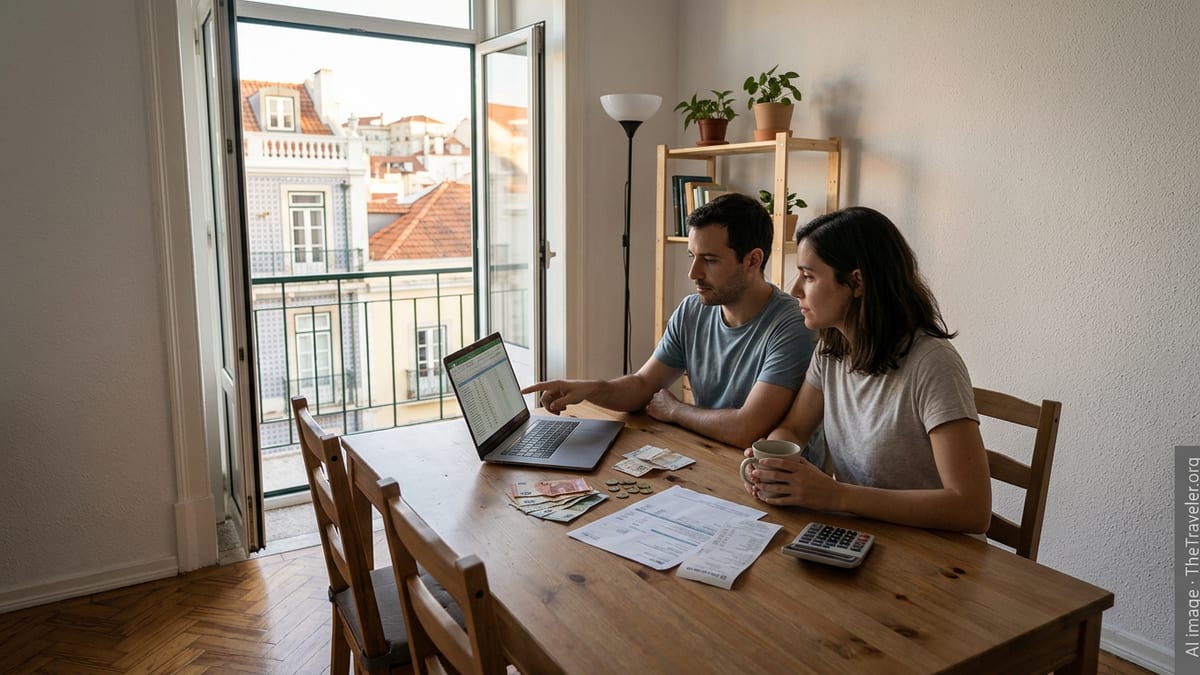
Cost of Living Overview for a Couple in Portugal
Portugal’s overall consumer price level is typically 20 to 30 percent lower than large Western European economies, but the gap has narrowed in recent years, especially for rent and utilities. Cost-of-living indices place Porto and Lisbon in the middle tier of European cities: more affordable than Paris or Dublin, but more expensive than many Eastern European and some Spanish cities.([sabochemical.com](https://sabochemical.com/userfiles/files/lesedovipabap_dulonumotejaf_bulozezutedov_xupogakemobeje.pdf?utm_source=openai))
For a couple, the biggest determinant of monthly budget is location. Lisbon’s central districts now command rents that are significantly above the national average, while medium-sized cities such as Braga, Coimbra or Faro, and many inland towns, remain substantially cheaper. As a result, a “comfortable but not luxurious” monthly budget for a couple can range from roughly €1,800 to €2,400 outside Lisbon and Porto, and from around €2,500 to more than €3,500 in central Lisbon, primarily driven by housing.([reddit.com](https://www.reddit.com/r/TouchdownPortugal/comments/1ojvktv/megathread_cost_of_living_usa_v_portugal_a_2025/?utm_source=openai))
Non-housing expenses such as groceries, local transport, and telecommunications are more uniform nationwide, with only modest regional variation. Energy and water tariffs are regulated or strongly influenced by national markets, so differences between cities are minimal once climate and dwelling size are controlled for.
Prospective relocators should therefore model at least two scenarios: an urban, Lisbon-based budget where rent dominates, and a secondary-city or smaller-town scenario where non-housing expenses play a larger proportional role but the total outlay is lower.
Housing Costs for a Couple
Housing is the single largest line item in a couple’s monthly budget. After several years of sharp increases, market data and rental platforms show one-bedroom apartments in central Lisbon commonly listed at €1,200 to €2,000 per month in 2026, with two-bedroom units in many central areas ranging from approximately €1,800 to €3,500 depending on size, renovation level, and neighborhood.([spotahome.com](https://www.spotahome.com/blog/lisbon-rental-guide-2026/?utm_source=openai))
Outside Lisbon and Porto, rents drop materially. In medium-sized cities, a one-bedroom apartment suitable for a couple often rents in the approximate range of €650 to €1,000, with two-bedroom units around €850 to €1,300, assuming modern standards and central or semi-central locations. In smaller inland towns, long-term leases for adequate one- or two-bedroom apartments can fall below €700, although quality and energy efficiency may vary considerably.([koronapay.com](https://koronapay.com/transfers/europe/en/blog/cost-of-living-in-portugal/?utm_source=openai))
For budgeting, couples should consider the following monthly rent benchmarks in 2026:
• Central Lisbon: €1,500 to €2,200 for a one-bedroom; €2,000 to €3,000 for a standard two-bedroom.
• Porto and coastal cities such as Cascais or Porto suburbs: roughly 20 to 35 percent lower than prime Lisbon, depending on neighborhood.
• Secondary cities and many inland towns: often 40 to 60 percent cheaper than prime Lisbon, but with thinner rental markets.
These estimates exclude condominium fees where applicable. In multi-unit buildings with shared facilities, monthly building charges may add €30 to €100, which should be incorporated into total housing costs.
Utilities and Household Services
Portugal’s household electricity prices rank among the higher tier in the European Union on a per kilowatt-hour basis. Official and regulatory statistics for 2024 and 2025 indicate typical all-in residential tariffs around €0.22 to €0.27 per kWh for medium-sized consumers, once network fees and VAT are included.([countryeconomy.com](https://countryeconomy.com/energy-and-environment/electricity-price-household/portugal?year=2024&utm_source=openai))
Actual monthly bills, however, depend heavily on dwelling size, insulation, heating or cooling type, and use of energy-intensive appliances. For a couple in a 50 to 80 m² apartment, forum reports and consumer data show a broad range of approximately €40 to €90 per month for electricity in moderate consumption scenarios, rising significantly when electric space heating or heavy air-conditioning is used. Gas, where used for water heating or cooking, can add roughly €15 to €30 per month for a couple, though many apartments are fully electric.([reddit.com](https://www.reddit.com/r/PortugalExpats/comments/1f383yy?utm_source=openai))
Water, sewage and waste charges are typically billed together by municipal utilities. For a couple in an apartment, a common range is around €20 to €40 per month, with modest regional variation. Broadband internet and fixed-line packages in urban areas usually fall between €25 and €40 per month for standard speeds, often bundled with mobile or television services.
Aggregating these items, a realistic monthly utilities and household-services budget for a couple in 2026 would be approximately:
• Low consumption, mild climate, efficient apartment: €90 to €130 (electricity, gas if any, water, waste, broadband).
• Average consumption for a couple in a typical apartment: €120 to €170.
• High consumption with extensive electric heating or cooling: €180 to €250 or more.
Food, Groceries and Eating Out
Grocery prices in Portugal are broadly aligned with Southern European averages. National consumer spending data and expatriate cost-of-living surveys suggest that a single adult spending primarily on supermarket food typically allocates roughly €200 to €300 per month. For a couple preparing most meals at home, a pragmatic baseline is around €350 to €500 per month, depending on dietary preferences, brand choices, and reliance on imported products.([reddit.com](https://www.reddit.com/r/TouchdownPortugal/comments/1ojvktv/megathread_cost_of_living_usa_v_portugal_a_2025/?utm_source=openai))
Fresh produce, basic staples, and locally sourced products remain comparatively affordable, while imported goods, specialty diets, and premium items can increase costs. Shopping in discount supermarket chains and local markets can reduce a couple’s grocery bill by 10 to 20 percent relative to shopping mainly in premium chains.
Eating out is still relatively good value compared to many Northern European countries, but prices have risen in major cities. In Lisbon or Porto, a modest lunch menu in a local restaurant often falls in the €9 to €13 per person range, while mid-range dinners with drinks can easily reach €20 to €35 per person. In smaller towns, prices are often lower. A couple that eats out modestly, for example one or two restaurant meals per week and occasional café visits, might add €120 to €220 per month to the food budget.
Combining groceries and a moderate dining-out pattern, a realistic monthly food budget for a couple in 2026 spans approximately €450 to €700. Heavy reliance on restaurants, frequent delivery orders, or premium dining will push the upper bound higher, particularly in Lisbon’s central districts.
Transportation and Local Mobility
Transportation costs for a couple vary significantly based on car ownership and city of residence. Major metropolitan areas have increasingly robust public-transport passes, while many smaller towns still depend on private vehicles for daily mobility. Regional passes in Lisbon and Porto provide unlimited access to metro, buses and suburban rail within defined zones for around €40 to €50 per person per month, which can substantially limit transport costs for couples who do not own a car.([iefp.pt](https://www.iefp.pt/documents/10181/13148399/LW_Portugal_2025.pdf?utm_source=openai))
Fuel prices in 2025 and early 2026 have generally been in the upper tier among EU countries when measured in euro per litre terms, with indicative averages around €1.6 to €1.8 per litre for petrol. For a couple operating one compact vehicle with moderate use, this typically equates to approximately €80 to €140 in fuel per month, plus allocations for insurance, maintenance and parking. All-in, a realistic monthly car ownership cost for a single modest car often runs in the €200 to €300 range, depending on mileage and parking arrangements.([koronapay.com](https://koronapay.com/transfers/europe/en/blog/cost-of-living-in-portugal/?utm_source=openai))
Couples relying primarily on public transport in Lisbon or Porto might budget approximately €80 to €120 per month combined for passes, plus occasional ride-hailing or intercity trips. Those in smaller towns who require a car should plan for at least double that figure, particularly if parking in dense historic centers or commuting longer distances.
From a planning perspective, the choice between car ownership and minimizing car use through strategic location is a major lever in a couple’s cost-of-living model, second only to rent in its impact on monthly outlays.
Other Recurring Monthly Expenses
Beyond the core categories of housing, utilities, food, and transport, couples should factor in a set of recurring but often underestimated monthly expenses. Mobile phone plans, frequently bundled with data and domestic calls, typically cost around €10 to €20 per line for mid-range packages, so €20 to €40 per month for two people. Streaming services and digital subscriptions may add another €10 to €30 depending on usage.
Clothing and personal items are broadly in line with European averages, with international brands priced similarly to other EU markets. A moderate budget for a couple might be €50 to €150 per month averaged over the year, acknowledging that actual spending is lumpy and seasonally biased.
Leisure, fitness and local services add further variability. A standard gym membership in larger cities often ranges from €25 to €45 per person per month, though lower-cost options and pay-as-you-go classes exist. Occasional regional travel, hobbies, and entertainment can add from €100 to €250 or more per month depending on lifestyle.
These non-core items can easily total €150 to €400 per month for a couple who participates in urban leisure activities, subscribes to several digital services, and maintains at least one gym membership or equivalent activity.
Sample Monthly Budget Scenarios for a Couple
The following indicative scenarios illustrate how core categories combine into monthly budgets for a couple in 2026. These are not minimum survival budgets but attempt to represent realistic, modest living standards without significant luxury.
Scenario A: Central Lisbon, renting a one-bedroom apartment
• Rent (T1, central): €1,600 to €1,900
• Utilities and broadband: €130 to €170
• Groceries and food at home: €400 to €550
• Eating out (limited but regular): €150 to €220
• Transport (two public-transport passes): €80 to €120
• Other recurring (phones, gym, leisure, clothing): €200 to €350
Indicative total: approximately €2,560 to €3,310 per month.
Scenario B: Secondary city (for example Braga, Coimbra or inland regional center)
• Rent (T1 or modest T2): €750 to €1,050
• Utilities and broadband: €120 to €160
• Groceries and food at home: €380 to €520
• Eating out (similar pattern): €130 to €200
• Transport (one car with moderate use, limited public transit): €200 to €280
• Other recurring: €180 to €320
Indicative total: approximately €1,760 to €2,530 per month.
Scenario C: Smaller town or semi-rural location
• Rent (T2, non-central but adequate): €600 to €850
• Utilities and broadband: €110 to €160
• Groceries and food at home: €350 to €480
• Eating out (occasional): €90 to €160
• Transport (one car, more frequent use): €230 to €320
• Other recurring: €160 to €280
Indicative total: approximately €1,540 to €2,250 per month.
These scenarios demonstrate that housing location choices can alter a couple’s monthly budget by €1,000 or more, even when lifestyle assumptions are held roughly constant.
The Takeaway
For couples evaluating relocation to Portugal, the cost-of-living equation in 2026 is no longer defined solely by the country’s reputation for affordability. Housing markets in Lisbon and parts of the coast have converged toward broader European price levels, while utilities remain relatively expensive compared with incomes. At the same time, groceries, local services and public transport can still provide meaningful savings relative to many Western European and North American cities.
A realistic planning range for a couple is roughly €2,500 to €3,300 per month in central Lisbon and €1,800 to €2,500 in many secondary cities and towns, with the final figure heavily dependent on rent level, car ownership, and eating-out habits. Prospective relocators should stress-test their budgets against energy-intensive winters, potential rent increases, and discretionary spending that often rises once settled.
Couples who are flexible about location and housing type are best positioned to realize Portugal’s relative cost advantages. Those for whom central Lisbon or premium coastal areas are non-negotiable should plan on a budget much closer to other mid-priced European capitals than to a low-cost destination.
FAQ
Q1. What is a realistic minimum monthly budget for a couple in Portugal in 2026?
A couple living modestly outside Lisbon and Porto, in a reasonably priced rented apartment, can often manage on around €1,700 to €2,000 per month, assuming careful control of eating out, transport and discretionary spending.
Q2. How much should a couple budget for rent in Lisbon specifically?
In 2026, a typical long-term rental for a one-bedroom apartment suitable for a couple in central Lisbon generally falls between about €1,500 and €2,200 per month, with two-bedroom apartments significantly higher.
Q3. Are utilities in Portugal expensive compared with other European countries?
On a per kilowatt-hour basis, household electricity prices in Portugal sit toward the higher end of the EU range, so monthly bills can feel high if consumption is not carefully managed.
Q4. How much do groceries usually cost for a couple each month?
Most couples should budget approximately €350 to €500 per month for groceries if cooking at home frequently, with costs increasing if preferring imported brands or specialty diets.
Q5. Is it cheaper for a couple to rely on public transport or own a car?
In Lisbon and Porto, relying primarily on public transport is usually cheaper, with two monthly passes often totaling under €120, while running a single car can easily cost €200 to €300 per month.
Q6. How much does eating out add to a couple’s budget in Portugal?
A couple who eats out modestly, such as once or twice a week in mid-range restaurants and cafés, will typically add around €120 to €220 per month to their overall budget.
Q7. Do smaller Portuguese towns offer a significantly lower cost of living for couples?
Yes, rents in smaller towns and many inland areas can be 40 to 60 percent lower than in central Lisbon, which can reduce a couple’s total monthly costs by several hundred euros.
Q8. How volatile are housing and utility costs, and should couples expect rapid increases?
Rents in major cities have risen faster than inflation in recent years, while energy prices have been influenced by European market conditions, so couples should allow headroom for possible annual increases.
Q9. How much should couples allocate for leisure, subscriptions and personal expenses?
A moderate allocation for gym memberships, entertainment, clothing and digital subscriptions will often fall between €150 and €400 per month, depending on lifestyle.
Q10. Can a couple live comfortably in Portugal on one medium European salary?
Outside Lisbon and Porto, one medium European income can often support a comfortable standard of living for a couple, but in central Lisbon a dual income or higher single income offers a more comfortable margin.