

Evaluating a move to Spain with two children requires a clear understanding of everyday living costs. While Spain remains more affordable than many Western European countries, there are significant differences between major metropolitan areas and mid-sized or smaller cities. The following briefing outlines the main cost components a family of four is likely to face, with reference values for 2024 and early 2026, to support realistic budgeting and salary benchmarking.
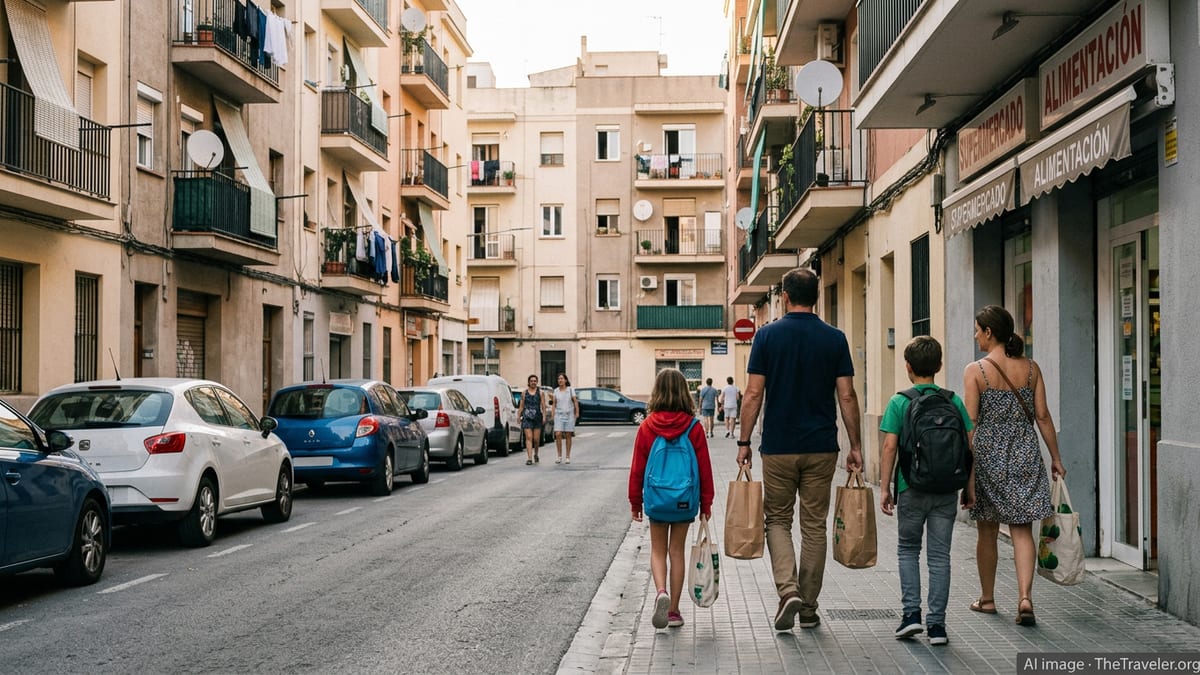
Overview of Typical Family-of-Four Budgets in Spain
For a family with two children, total monthly cost of living in Spain typically ranges between approximately 2,800 and 4,800 euros, depending largely on location, housing choices, and whether children attend public or private schools. Independent expat budget analyses for 2025 and 2026 suggest that a family of four in Madrid or Barcelona often spends around 3,400 to 4,500 euros per month for a moderate lifestyle, including rent, utilities, food, local transport and basic leisure, but excluding high private school fees or frequent long-distance travel.
Mid-sized cities such as Valencia, Seville or Málaga generally require a lower family budget. Recent market-based estimates for Valencia, for example, indicate that a comfortable middle-class lifestyle for a family of four can be maintained from roughly 3,500 to 4,300 euros per month, with significantly cheaper housing than Madrid or Barcelona but similar grocery and everyday costs.
At national level, the Spanish National Statistics Institute reports that “couple with children” households had average annual consumption expenditure slightly above 43,000 euros in 2024, equal to roughly 3,600 euros per month across all regions and income levels. This figure includes both essential and discretionary spending, and it aligns broadly with independent family budget models used by relocation advisers.
Prospective movers should treat these figures as central reference points and then adjust for their own housing standards, schooling preferences and tolerance for commuting, all of which can visibly shift monthly costs up or down.
Housing and Utilities as Core Cost Drivers
Although this report focuses on overall living costs rather than the housing market itself, accommodation is the single largest budget item for most families in Spain and strongly shapes total cost of living. In 2026, typical monthly rent for a three-bedroom apartment suitable for a family of four ranges from around 1,000 to 1,400 euros in many mid-sized cities, to 1,600 to 2,500 euros or more in central areas of Madrid and Barcelona. Outlying neighbourhoods and commuter towns can be substantially cheaper, particularly in regions outside Catalonia and Madrid.
Utilities add a further 130 to 220 euros per month for a family apartment, based on aggregated price trackers and recent landlord data. This usually covers electricity, water and gas or heating. Internet and pay TV packages add approximately 30 to 60 euros per month, depending on provider and speed. Seasonal variations are significant: winter heating and, in some regions, summer air conditioning can push monthly utility bills to the upper end of this range.
In practical budgeting terms, many families with two children in urban Spain allocate 35 to 45 percent of their monthly spending to rent and utilities combined. For example, a family spending 3,800 euros per month in Madrid might face 1,800 to 2,000 euros in housing and utilities, while a comparable family in Valencia or Seville might spend closer to 1,300 to 1,600 euros for a slightly larger home in a more central location.
Families prepared to compromise on space or live further from city centres can reduce housing expenditure substantially. Conversely, seeking new-build properties, detached homes or proximity to international schools will push accommodation costs to the top of the national range, especially in Madrid, Barcelona and certain premium coastal areas.
Food, Groceries and Household Goods
Grocery and food costs in Spain are relatively consistent across regions, with some local variation in fresh produce and imported goods. For a family of four cooking most meals at home, monthly supermarket expenditure typically falls in the 450 to 700 euro range, covering staples, fresh produce, cleaning products and basic personal care items. Families with older children, special dietary needs or a heavier reliance on imported products may find themselves toward the top of this range.
Eating out remains comparatively affordable by Western European standards, but regular restaurant use can still be a noticeable budget item. A moderate pattern of eating out once or twice per week, combined with occasional weekend treats such as bakery visits or café stops, can add around 150 to 300 euros per month for a family of four, depending on the mix of casual versus more formal venues.
In aggregate, food and household goods for a typical family with two children can reasonably be forecast at 600 to 900 euros per month. This category therefore represents roughly one quarter of the total budget for many households. Families that cook extensively at home and plan weekly supermarket shops tend to enjoy meaningful savings compared with those that make frequent smaller purchases or rely regularly on prepared meals and restaurant dining.
Relocation planners should note that, while supermarket prices have risen in recent years in line with broader European inflation, Spain still compares favourably with major cities in northern Europe and with many metropolitan areas in North America when it comes to fresh produce and mid-range supermarket brands.
Transport, Communications and Daily Mobility
Spain’s urban areas typically provide comprehensive public transport networks, which helps keep mobility costs manageable for families who choose not to rely on multiple private vehicles. In cities with metro or tram systems, a monthly transport pass often costs in the range of 35 to 60 euros per person for unlimited or high-usage access within main zones. For a family of four that includes two school-age children, monthly public transport spending might average 80 to 140 euros, depending on age discounts and the distance between home, school and workplace.
Car ownership introduces additional fixed and variable expenses. Fuel prices in Spain broadly track European averages, and parking in dense urban centres can be restrictive or costly. Families maintaining a single compact car for weekend use and occasional commuting can expect combined monthly costs (fuel, insurance, parking, routine maintenance and amortised taxes) of approximately 150 to 250 euros, higher for larger vehicles or heavy usage. Running two cars can double this figure, particularly in suburban settings where daily driving is necessary.
Telecommunications costs are another recurring component of daily life. Bundled packages for home internet, landline and mobile services are widely available, with typical combined monthly bills ranging from 60 to 120 euros, depending on data needs and the number of mobile lines. Families with two adult smartphones and limited data usage can often stay nearer the lower end, while households with teenagers, heavy streaming or gaming habits tend to pay more.
Overall, a realistic working estimate for transport and communications for a family of four falls between 250 and 450 euros per month. Households that rely on public transport and maintain only one car, or none at all, will usually operate at the lower end of this band, while suburban families with two vehicles and multiple high-data phone plans will be towards the top.
Child-related Everyday Costs and Education-linked Spending
Beyond housing and food, families with two children in Spain face a set of child-related expenses that materially influence their overall cost of living. These include clothing and footwear, school materials, extracurricular activities, childcare for younger children, and holiday-period supervision. National data on education-related household expenditure for the 2023 to 2024 academic year indicates that average annual spending on textbooks, school supplies, uniforms and similar items amounts to several hundred euros per household, with typical figures around 600 to 900 euros per year for families with school-age children who remain in the public system.
Spanish public education does not charge core tuition fees, but families should budget for textbooks in compulsory education, as well as voluntary contributions, excursions and school meal plans. Canteen services, where used, commonly cost around 4 to 7 euros per child per day, implying 80 to 140 euros per month per child during term time. For two children using school meals full-time, this can total 160 to 280 euros per month during the school year, though costs fall in holiday periods.
Extracurricular activities such as sports, music, language classes or tutoring are widely used and can significantly widen the cost spectrum. A moderate level of participation, such as one or two activities per child, might add 80 to 200 euros per month for the family, depending on the nature of the activity and whether it is organised through the school, municipal services or private providers.
Families choosing private or international schooling must factor in a separate and often substantial category of costs. Fees at international schools in Madrid and Barcelona can start around 7,000 to 10,000 euros per child per year and rise well beyond that in premium institutions, not including transport, meals or registration charges. For two children, this can transform the total cost-of-living profile, adding at least 1,200 to 1,800 euros per month to the family budget and, in some cases, considerably more. Many employers with international transferees therefore treat schooling support as a distinctive relocation benefit outside regular cost-of-living comparisons.
Leisure, Clothing, Health-related Out-of-pocket Spending
Non-essential but routine categories such as leisure, clothing and out-of-pocket health expenses can represent 10 to 20 percent of a family’s budget in Spain. Typical monthly clothing and footwear spending for two adults and two children averages around 80 to 150 euros, with peaks at the start of school years or during seasonal changes. Families preferring international brands or frequent wardrobe updates will experience higher costs than those who rely on Spain’s extensive mid-market retail and seasonal discount periods.
Leisure and entertainment costs depend heavily on lifestyle. Modest patterns of spending, including an occasional family meal out, weekend activities and subscriptions (for example streaming services, sports club memberships or children’s classes beyond school-based offerings), frequently total 120 to 250 euros per month. More activity-oriented or travel-intensive families can easily double this figure, particularly if they undertake frequent domestic trips or pay private club memberships.
Out-of-pocket health expenses for resident families in Spain are usually moderate compared with many other developed countries, because the public system covers most basic services. However, many middle-income and higher-income households purchase private health insurance to reduce waiting times and expand provider options. Premiums for a family of four commonly range from about 120 to 250 euros per month, depending on coverage, age and pre-existing conditions, and should be included when assessing overall cost of living.
When aggregated, clothing, leisure and discretionary health costs for a family with two children are commonly estimated in the 300 to 600 euro per month range. This band is where families most readily adjust expenditure upward or downward in response to income, relocation allowances or broader financial goals such as saving for education or home purchase.
Illustrative Monthly Budgets by City Type
The following table presents indicative monthly cost-of-living ranges for a family of four, excluding private school tuition and major debt repayments. These figures reflect 2024 and early 2026 data from national statistics, expat budget surveys and property market analyses, converted into broad bands to account for household choice and lifestyle differences.
Indicative Monthly Cost-of-Living Ranges for a Family of Four (euros)
Major metropolitan areas (Madrid, Barcelona): approximately 3,400 to 4,800 euros, with 1,600 to 2,500 euros typically allocated to rent and utilities, 600 to 900 euros to food and household goods, 250 to 450 euros to transport and communications, and 400 to 900 euros to child-related, leisure and health costs.
Mid-sized regional cities (Valencia, Seville, Málaga, Zaragoza): approximately 3,000 to 4,200 euros, with housing often in the 1,200 to 1,700 euro range and similar spending patterns in other categories. In these locations, families can usually obtain larger housing or central locations for the same budget that would secure a smaller or more peripheral property in Madrid or Barcelona.
Smaller cities and provincial towns: approximately 2,800 to 3,600 euros, assuming significantly lower rent levels, sometimes 800 to 1,200 euros for suitable family housing, while food and other living costs remain broadly in line with national averages. Savings in housing can free up budget for travel, extracurricular activities or savings, although employment and salary levels in such locations may also be lower.
These ranges are intended as planning tools rather than precise forecasts. They are particularly useful when assessing whether a proposed salary or relocation package will support a desired standard of living in a given Spanish location, and when calculating potential savings capacity after core living costs have been covered.
The Takeaway
Spain offers families with two children a generally competitive cost-of-living profile compared with many other advanced economies, particularly when focusing on mid-sized cities and non-luxury lifestyles. National data and independent budget studies converge on a central estimate of around 3,000 to 4,000 euros per month as a realistic operating budget for a family of four relying on public schooling and living in standard-quality accommodation.
Within this broad picture, three factors have the greatest impact on the overall cost of living: the choice of city and neighbourhood, the standard and location of family housing, and the decision between public and private or international education. Food, transport and everyday services display less dramatic regional variation and are more easily adjusted through lifestyle choices.
For decision-makers evaluating a relocation to Spain, the most robust approach is to develop a city-specific budget using local rent data, transport needs and school choices, then cross-check this against the national expenditure averages and example ranges outlined above. This method helps ensure that offered compensation packages and relocation allowances align with the financial reality of raising two children in Spain, while still providing scope for savings and long-term financial planning.
FAQ
Q1. What is a typical monthly budget for a family of four in Spain?
A typical family of four in Spain can expect to spend roughly 3,000 to 4,000 euros per month, including housing, food, transport and everyday expenses but excluding private school tuition.
Q2. How much should a family with two children budget for rent and utilities?
Most families allocate 1,200 to 2,000 euros per month to rent and utilities, with higher figures in Madrid and Barcelona and lower figures in mid-sized or smaller cities.
Q3. Are groceries and food significantly cheaper outside major cities?
Grocery prices are relatively similar across Spain, so moving away from major cities mainly reduces housing costs rather than supermarket bills, although some regional price differences exist.
Q4. How much do child-related expenses add to the cost of living?
For families using public schools, child-related expenses such as supplies, school meals and extracurricular activities often total 200 to 500 euros per month, but can be higher with intensive activities.
Q5. What impact does choosing a private or international school have on the budget?
Private and international schools can add at least 7,000 to 10,000 euros per child per year, meaning more than 1,200 euros per month for two children, significantly increasing total living costs.
Q6. How much should be budgeted for transport for a family of four?
Families relying mainly on public transport typically spend 80 to 140 euros per month, while adding a car for regular use can push total transport costs to 200 to 400 euros per month.
Q7. What are typical telecommunications costs for a household with two adults and two children?
Combined home internet and mobile plans for a family of four usually range between 60 and 120 euros per month, depending on data requirements and the number of active mobile lines.
Q8. How do leisure and clothing costs affect the overall budget?
Together, leisure, entertainment and clothing commonly account for 200 to 400 euros per month, but this category is highly flexible and can be adjusted according to income and savings goals.
Q9. Is health insurance a major component of the cost of living in Spain?
Public healthcare limits out-of-pocket costs, but private health insurance for a family of four often adds 120 to 250 euros per month for those who choose additional coverage.
Q10. How much should a relocating family set aside as a safety margin above core costs?
Many relocation advisers recommend building in a 10 to 20 percent buffer above calculated monthly costs to allow for price changes, one-off expenses and lifestyle adjustments in the first year.