

Relocating to Thailand is often perceived as a way to significantly reduce living costs, but actual monthly expenses for a couple vary widely by city, housing choices, and consumption patterns. This briefing outlines realistic monthly budget ranges for two adults, highlighting the main cost drivers and presenting decision‑grade figures rather than minimum survival estimates.
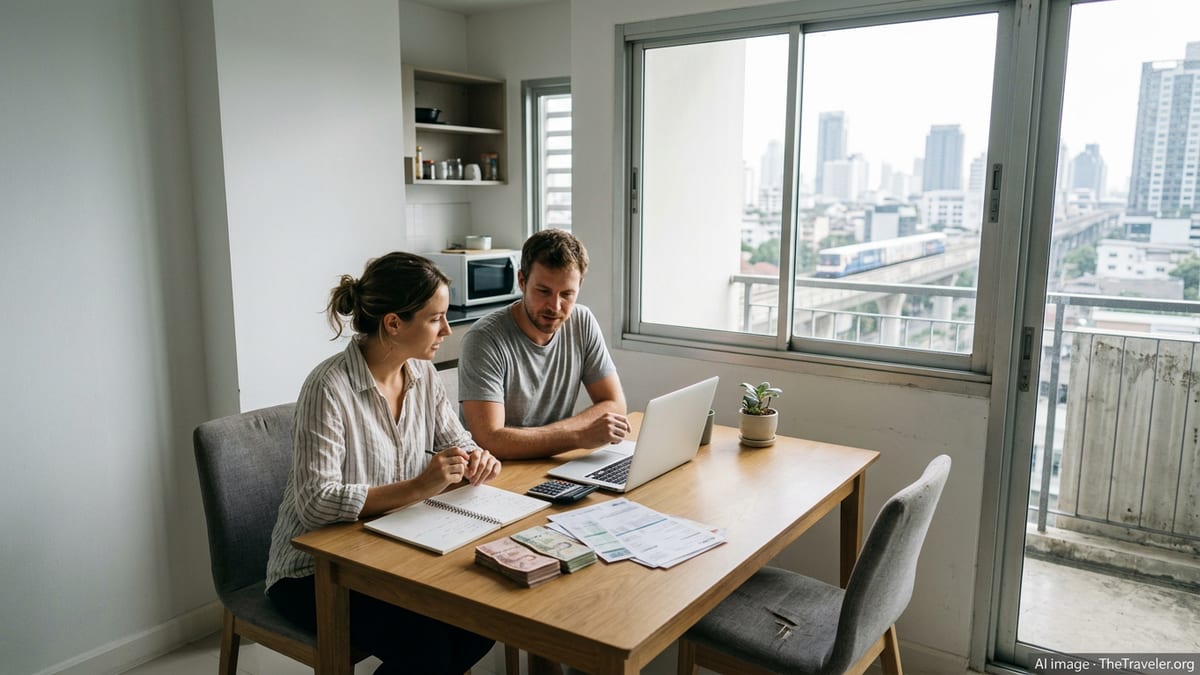
Overview: What a Couple Typically Spends Each Month
For a foreign couple in Thailand in 2025–2026, typical total monthly living costs fall roughly between 50,000 and 120,000 Thai baht, depending primarily on location and lifestyle. At current exchange rates, this equates to approximately 1,400 to 3,300 US dollars, with significant variability for high‑end urban living or coastal locations.
Bangkok generally presents the highest baseline among major inland cities, followed by Pattaya, while Chiang Mai and many provincial cities remain 20 to 40 percent cheaper overall for comparable lifestyles. Coastal tourist hubs such as Phuket are often the most expensive due to strong demand and limited long‑term housing stock.
Low and relatively stable inflation in 2024 and early 2025, including periods of near‑zero or negative headline inflation, has helped keep everyday costs from rising sharply, although specific categories like imported goods and certain rents can still show localized increases. This makes cost planning over a two‑ to three‑year horizon more predictable than in many higher‑inflation markets.
The following sections deconstruct a typical couple’s budget into core components and present scenario budgets for different city types, allowing prospective movers to align expectations with their preferred standard of living.
Key Cost Drivers for Couples in Thailand
The largest single determinant of a couple’s monthly cost of living is housing choice, followed by how often they dine out, their transport pattern, and whether they prioritize imported products and premium services. A couple in a compact one‑bedroom condo, using mainly local food and public transport, will spend dramatically less than one in a large central apartment with private car, frequent flights, and regular imported groceries.
Location further magnifies these choices. Surveys and comparative expat analyses consistently find that Chiang Mai can be around 30 to 40 percent cheaper than Phuket and meaningfully cheaper than Bangkok for a similar quality of life, while Pattaya and mid‑size coastal towns sit between these extremes. Smaller provincial cities can reduce costs even further, especially on rent and dining out.
Another structural factor is whether the couple is satisfied with "Thai price" options. Couples who are comfortable in non‑luxury local neighborhoods, eat primarily Thai or regional food, and use local markets can achieve much lower budgets than those seeking international supermarket brands, premium gyms, and high‑end malls.
Because discretionary categories such as leisure travel, nightlife, and shopping vary widely, the budget ranges below distinguish between "essential" everyday costs and more flexible lifestyle spending, which couples can adjust up or down after arrival.
Housing and Utilities for a Couple
Housing typically consumes 25 to 45 percent of a couple’s monthly budget. In Bangkok, long‑term rentals for a one‑bedroom condo suitable for two adults commonly range from around 15,000 to 30,000 baht per month in non‑luxury buildings, with higher prices in central and riverside districts. Premium two‑bedroom or larger units in prime locations can easily reach 40,000 to 70,000 baht or more.
Chiang Mai and many up‑country cities often offer equivalent or slightly larger apartments at discounts of around 20 to 40 percent compared with Bangkok, while coastal tourist hubs such as Phuket typically command higher rents, especially near major beaches. Within Phuket, central or inland areas tend to be substantially cheaper than prime beachfront zones, where prices can be 30 to 50 percent higher than inland districts for comparable properties.
Monthly utilities for a couple, including electricity, water, and basic waste fees, generally fall between 1,500 and 3,500 baht in a modest condo and 3,500 to 6,000 baht in larger or heavily air‑conditioned units. Electricity is the main variable, driven by air‑conditioning usage. Basic internet packages suitable for two remote workers typically cost about 500 to 900 baht per month, while mobile phone plans for two adults can add roughly 600 to 1,500 baht depending on data requirements.
Couples planning a high level of remote work or streaming should budget toward the upper end of internet and electricity estimates, particularly in warmer regions where air‑conditioning is used most of the day.
Food, Groceries, and Dining Out
Food is a category where couples can achieve substantial savings relative to Western countries if they rely on local products and eat predominantly Thai cuisine. Official yearbook data and comparative price indices suggest that an average Thai household spends around 8,000 baht per month on food and groceries, which serves as a useful lower‑bound benchmark for a couple comfortable eating and shopping like local residents.
Foreign couples typically spend somewhat more, particularly if they prefer supermarkets to fresh markets, increase meat and dairy consumption, or regularly buy imported items such as cheese, wine, and cereals. In practice, a realistic monthly grocery budget for two adults in Bangkok or Chiang Mai often falls between 8,000 and 16,000 baht, depending on how much they cook at home and where they shop.
Dining out remains comparatively affordable in most areas. Local meals at simple restaurants or food courts can cost roughly 50 to 120 baht per dish, meaning a couple who mainly eats Thai food outside can keep meal costs low even without intensive cooking at home. Mid‑range sit‑down restaurants with mixed Thai and international menus more often charge in the 200 to 400 baht range per main course, while upscale or hotel venues can exceed this substantially.
Combining groceries and dining out, a non‑luxury couple that mixes market shopping with local eateries might spend 12,000 to 20,000 baht per month on food, while a couple favoring international brands and frequent restaurant dining is more likely to fall in the 20,000 to 35,000 baht range, especially in Bangkok or coastal tourist centers.
Transportation and Everyday Mobility Costs
Transport costs depend heavily on whether the couple relies on public transport and ride‑hailing or owns and operates a private vehicle. In Bangkok, extensive mass transit coverage via BTS and MRT systems allows many couples to avoid car ownership entirely, using monthly passes and targeted ride‑hailing instead. Outside the capital, motorbikes and scooters are more common, particularly in Chiang Mai, Phuket, and provincial cities.
A metro‑oriented couple in Bangkok using public transport for commuting and occasional ride‑hailing for evenings out might spend approximately 2,500 to 6,000 baht per month on transport for two adults. This would cover routine use of transit cards, some taxi or ride‑hailing fares, and periodic intercity travel by bus or train.
In cities with limited public transport such as Phuket or Pattaya, many long‑term residents use scooters or motorcycles, either owned or rented. A scooter rental plus fuel can be in the low thousands of baht per month, while couples who opt for a private car must budget not only for fuel but also for maintenance, parking, and potential loan payments, which can quickly push monthly transport costs above 10,000 to 15,000 baht.
Intercity flights and frequent weekend trips materially increase monthly outlays. Couples planning regular domestic flights to the islands or abroad should explicitly add a separate travel line to their budget, typically 5,000 to 20,000 baht per month depending on frequency and destinations.
Other Recurring Living Costs
Beyond housing, food, and transport, a couple’s monthly budget in Thailand will include a mix of personal services, household items, and leisure expenditures. These can be quite modest by international standards but add up when premium options are chosen. Domestic cleaning support, for example, can be arranged on a once‑ or twice‑weekly basis for relatively low hourly rates, and many couples incorporate this into their lifestyle once settled.
Fitness, sports, and hobbies typically range from inexpensive local gyms and public facilities to premium health clubs. A basic gym membership may cost only a few hundred to around 1,500 baht per month per person, while high‑end clubs can charge several times that amount. Entertainment costs such as cinema tickets, casual outings, and low‑key nightlife will vary by city, with Bangkok and Phuket generally more expensive than smaller inland cities.
Miscellaneous line items such as clothing, personal care, and household goods should not be overlooked. While locally produced items can be cheap, imported brands often cost at or above Western prices. Couples who are content with mid‑range Thai brands and modest personal care services can often keep this category in the 4,000 to 10,000 baht range, while more brand‑conscious spending can raise it considerably.
Subscriptions and digital services, including streaming platforms, cloud storage, and software licenses, should also be included. Although individually small, these recurring charges can easily total 1,000 to 3,000 baht per month for two adults using multiple international services.
Sample Monthly Budgets for Different City Types
The following table presents indicative monthly budgets for a foreign couple living in Thailand. Figures are broad estimates intended for planning and comparison, assuming a moderate but comfortable standard of living rather than minimum survival levels.
| Scenario | Location example | Typical range (THB/month) |
| Lower‑cost inland city, modest lifestyle | Chiang Mai or provincial city | 50,000 – 75,000 |
| Bangkok, mid‑range condo, mixed local/international consumption | Non‑prime urban districts | 70,000 – 110,000 |
| Coastal hub, mid‑range lifestyle | Pattaya or inland Phuket | 80,000 – 120,000 |
| High‑end urban or prime coastal lifestyle | Central Bangkok, prime Phuket beach zones | 120,000 and above |
In the lower‑cost inland scenario, a couple typically rents a modest but modern one‑bedroom apartment in a non‑tourist neighborhood, relies heavily on local food and markets, and uses a scooter or limited public transport. This budget level often allows for some domestic travel and leisure but requires attention to discretionary spending.
In the mid‑range Bangkok scenario, the couple lives in a one‑ or small two‑bedroom condo in a well‑connected district, mixes local and international groceries, eats out regularly, and uses mass transit together with ride‑hailing. This lifestyle offers a comfortable urban experience while remaining markedly cheaper than comparable standards in many Western capitals.
In coastal and high‑end scenarios, higher rents, heavier reliance on private transport, and greater spending on restaurants and imported goods drive budgets upward. Couples prioritizing beach proximity, larger housing, and frequent social or leisure activities should budget conservatively at the higher end of the suggested ranges to avoid underestimation.
The Takeaway
Thailand can offer a favorable cost‑of‑living proposition for couples, but outcomes depend strongly on city choice and lifestyle decisions. A careful planner can structure a comfortable life for two adults on around 50,000 to 75,000 baht per month in lower‑cost cities, while mid‑range urban or coastal living more commonly requires 70,000 to 120,000 baht monthly.
Key levers for controlling expenses include housing size and location, the balance between local and imported goods, reliance on public versus private transport, and expectations around dining and leisure. Because inflation has been relatively subdued in recent years, these budget frameworks are a useful starting point for medium‑term planning, though specific line items will continue to evolve.
Couples evaluating relocation should construct a personalized budget using the categories and ranges outlined here, stress‑testing higher‑cost scenarios such as coastal or premium urban living. This will support a realistic assessment of income requirements and financial resilience before committing to a long‑term move.
FAQ
Q1. What is a realistic minimum monthly budget for a couple in Thailand?
A realistic lower‑end budget for a foreign couple is around 50,000 to 60,000 baht per month in a lower‑cost city, assuming modest housing, mostly local food, and limited long‑distance travel.
Q2. How much should a couple budget for rent each month?
Most foreign couples should plan for 15,000 to 30,000 baht per month for a one‑bedroom condo in urban areas, with inland cities toward the lower end and prime Bangkok and coastal locations at the higher end.
Q3. Is it cheaper for a couple to live in Chiang Mai than in Bangkok?
Yes, for a similar lifestyle, Chiang Mai is often 20 to 40 percent cheaper than Bangkok, primarily due to lower rents and slightly reduced everyday prices.
Q4. How much do utilities and internet usually cost for two people?
Utilities and internet for a couple typically range from about 2,000 to 6,000 baht per month, depending on apartment size, air‑conditioning usage, and internet speed.
Q5. What should a couple expect to spend on food monthly?
A couple relying mainly on local food and markets might spend 12,000 to 20,000 baht per month on groceries and dining, while heavier use of imported goods and mid‑range restaurants can raise this to 20,000 to 35,000 baht.
Q6. How do transportation costs differ between Bangkok and coastal cities?
In Bangkok, couples using mass transit and occasional ride‑hailing may spend 2,500 to 6,000 baht per month, whereas car‑ or scooter‑dependent couples in coastal cities often face higher combined monthly transport costs.
Q7. Are coastal areas like Phuket significantly more expensive for couples?
Yes, prime coastal areas, especially in Phuket, tend to have higher rents and restaurant prices, and often require private transport, collectively raising monthly costs compared with inland cities.
Q8. How much should be allocated for leisure and entertainment?
A moderate allocation for leisure and entertainment for a couple is typically 5,000 to 15,000 baht per month, depending on frequency of outings, nightlife, and trips.
Q9. How sensitive is a couple’s budget to inflation in Thailand?
Recent inflation in Thailand has been relatively low, so budgets have been fairly stable, but import‑heavy baskets and certain rents can still experience noticeable increases over time.
Q10. What income level is advisable for a comfortable lifestyle for two adults?
For a broadly comfortable lifestyle without extensive luxury, many couples target a net monthly income of at least 80,000 to 120,000 baht, with higher targets for prime Bangkok or coastal living.