

The cost of living in the United Arab Emirates for a family with children is high by global standards, but varies significantly by emirate, lifestyle choices, schooling decisions and housing location. For relocation decisions, the key question is not whether the UAE is expensive in absolute terms, but whether a specific family budget can sustain housing, schooling and day-to-day expenses at a standard of living that matches expectations.
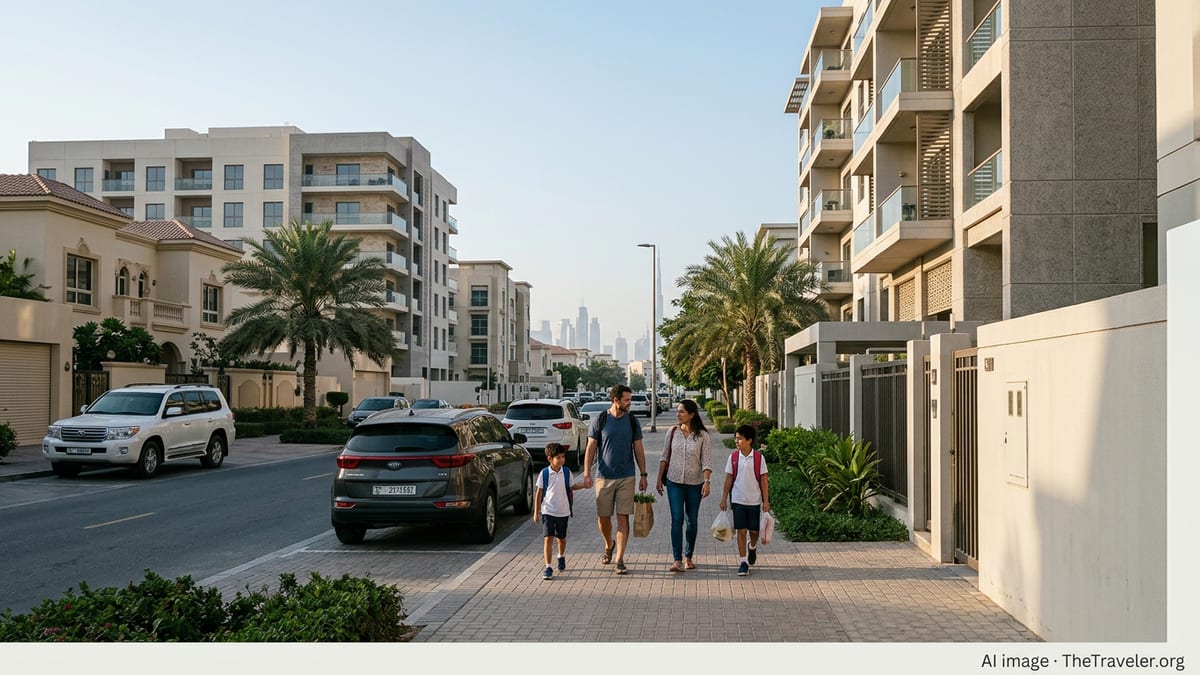
Overview of Family Cost of Living in the UAE
For a family with children, housing and education are the dominant drivers of total cost of living in the UAE, followed by utilities, transport and food. International and mid- to upper-tier private schools, larger apartments or villas, and frequent dining out can quickly push costs into the upper range even before discretionary spending is considered.
Recent benchmarks for major UAE cities indicate that a mid-range lifestyle for a family of four in Dubai typically requires at least about 14,000 to 20,000 AED per month for general living expenses excluding rent and school fees. When accommodation and private schooling are added, realistic total monthly budgets in Dubai for a family of four often fall in the 25,000 to 45,000 AED range, depending on emirate, location and school type. ([reddit.com](https://www.reddit.com/r/u_abuzer26/comments/1rf4d53/what_is_the_cost_of_moving_in_dubai_in_2026_real/?utm_source=openai))
Costs in Abu Dhabi are broadly comparable to Dubai, while secondary emirates such as Sharjah, Ajman and Ras Al Khaimah generally offer lower housing and schooling costs, at the expense of longer commutes for many expatriate workers. Families should therefore approach UAE cost of living analysis as a set of trade-offs between accommodation size and location, school quality and curriculum, and desired discretionary spending.
Importantly, the UAE has experienced relatively moderate consumer price inflation in the low single digits in recent years, but housing, schooling and summer utility costs have seen localized increases. Long-term family budgeting should allow flexibility for incremental rises in these specific categories over a multi-year assignment. ([emirates-online.net](https://www.emirates-online.net/English/location/fujairah/living-costs-in-dubai?utm_source=openai))
Housing-Related Living Costs for Families
While this briefing focuses on cost of living rather than a detailed housing market analysis, accommodation spending remains the single largest recurring line item in a family budget and must be quantified when assessing overall affordability. In practice, families with children often opt for two- or three-bedroom apartments or townhouses, or villas in suburban communities with access to schools and amenities.
In Dubai, a three-bedroom apartment in a mid-range area can easily cost 100,000 to 180,000 AED per year in rent, with prime locations significantly higher. These rental levels translate into monthly housing costs of approximately 8,000 to 15,000 AED, often payable via a small number of post-dated cheques. In Abu Dhabi and Sharjah, comparable units may be somewhat cheaper, particularly outside premium districts, though the spread between older and newer buildings is wide. ([mayak.ae](https://mayak.ae/blog/cost-of-living-in-dubai-2024?utm_source=openai))
Families should account for one-off housing-related costs when calculating their effective cost of living for the first year. These include refundable security deposits typically around 5 percent of annual rent, agency fees where applicable, connection deposits for utilities, district cooling and internet, as well as basic furnishings if accommodation is not fully furnished. These front-loaded costs can add the equivalent of one to two additional months of rent to the first-year housing outlay. ([reddit.com](https://www.reddit.com/r/UAE/comments/1n0hzyn?utm_source=openai))
Housing choices interact strongly with other cost-of-living components. Living closer to schools and workplaces can reduce commuting expenses and time, while choosing a villa with a garden or private pool typically increases both rent and utility costs. Families should therefore review housing not in isolation but as a structural determinant of their overall monthly budget envelope.
Utilities, Communications and Domestic Services
Utility costs in the UAE are heavily influenced by air conditioning use, property size and whether district cooling is separately billed. For a family living in a two- to three-bedroom apartment, typical combined monthly charges for electricity, water and cooling often fall in the range of about 800 to 1,500 AED, with summer months at the top or above this range and winter months lower. Villas and larger homes frequently incur higher bills that can exceed 2,000 AED per month in peak summer. ([utilitybilluae.com](https://utilitybilluae.com/average-utility-bills-uae/?utm_source=openai))
Telecommunications is another structural item in the family budget. A home broadband connection suitable for work, study and streaming typically costs around 300 to 500 AED per month, depending on speed and bundled TV services. Mobile phone plans for two adults, each with moderate data usage, can add 300 to 600 AED monthly, with additional costs if older children require their own lines. Families often underestimate the cumulative impact of multiple subscriptions, premium TV packages and add-on data services.
Many dual-income or higher-income families in the UAE also engage domestic help, such as a live-in nanny or cleaner. A full-time live-in housekeeper may cost around 1,500 to 4,000 AED per month in salary, plus visa, insurance and accommodation costs, while weekly cleaning services typically cost several hundred dirhams per month. For families with young children, the decision to employ domestic help can meaningfully increase monthly outgoings but may also be considered essential for work-life balance. ([bizinvestfirm.com](https://www.bizinvestfirm.com/cost-of-living-dubai-uae/?utm_source=openai))
Overall, for a family of four in a typical three-bedroom apartment, utilities, internet, mobile plans and basic domestic help together can easily range from 2,000 to 4,000 AED per month, higher for larger villas or more extensive services.
Food, Groceries, Child Essentials and Everyday Spending
Grocery and household goods spending varies by shopping preferences and the extent to which families rely on imported brands and premium retailers. Market surveys and expatriate budget analyses suggest that a family of four in a major UAE city can expect monthly grocery and basic household expenditures in the approximate range of 2,500 to 4,500 AED, assuming a mix of home cooking and some ready-made meals. ([saadatrent.ae](https://saadatrent.ae/mag/costs-and-pricing/cost-of-living-in-dubai/?utm_source=openai))
Dining out is a highly elastic component of the cost of living. Regular meals at mid-range restaurants or frequent food delivery can add 1,000 to 3,000 AED per month or more for a family, depending on frequency and venue type. More frugal households that focus on home cooking and limit restaurant visits may keep combined grocery and dining costs closer to the lower end of the range, while families embracing a more restaurant-driven lifestyle will experience a noticeable uplift in monthly spending.
Child-related essentials form a distinct but sometimes overlooked budget category. Diapers, formula and baby food for infants can add several hundred dirhams per month in the first years. Clothing, school uniforms, extracurricular activity fees, children’s entertainment, pocket money for older children and occasional childcare all contribute to the running cost of family life. Across age groups, it is realistic to allocate at least 500 to 1,500 AED per child per month for these non-school child-related expenses, depending on age and activity level.
Collectively, food, groceries, basic child essentials and everyday discretionary spending such as coffee, modest entertainment and small household purchases will often fall in the 4,000 to 8,000 AED per month band for a family with children, with higher figures reflecting more frequent dining out and branded retail consumption.
Education and Schooling Costs for Children
For expatriate families with school-age children, private education is usually the second largest cost of living component after housing, and in some cases the largest. The UAE hosts a wide spectrum of schools, from more affordable community schools to premium international institutions with very high tuition levels. Annual tuition fees in Dubai and Abu Dhabi for private schools commonly range from around 10,000 to 20,000 AED at the lower-cost end to more than 60,000 AED per child at top-tier international schools, with a small number of flagship schools charging in excess of 100,000 AED annually in senior grades. ([en.wikipedia.org](https://en.wikipedia.org/wiki/Delhi_Private_School%2C_Dubai?utm_source=openai))
Recent fee data for Dubai indicates an average annual tuition of roughly 40,000 AED across private schools, with significant variance between curricula and quality ratings. Indian and some other Asian-curriculum schools often sit below this average, while British, American or IB-curriculum schools and those rated in the highest performance bands tend to sit above it. In practical terms, mid-tier international schools for primary and lower secondary years typically cost 30,000 to 50,000 AED per child per year, rising in upper secondary. ([placeoverseas.com](https://placeoverseas.com/market/about-dubai/education-and-schools-in-dubai-uae?utm_source=openai))
Families must also budget for associated school costs beyond tuition. These include registration and re-registration fees, uniforms, books and materials, school transport and activity or trip fees. Bus transportation for a child can cost roughly 3,000 to 8,000 AED per year depending on distance, while uniforms and materials may add a further 1,000 to 2,500 AED annually. For two children at mid-range schools including transport and ancillary fees, the realistic annual education budget may lie in the 70,000 to 120,000 AED band.
Strategic schooling choices therefore have outsized impact on total cost of living. A family with two children in lower-fee schools might spend 25,000 to 35,000 AED per year on education, while the same family at high-end international schools could face 200,000 AED or more annually. Prospective assignees should analyze potential employer school-fee allowances and the likely trajectory of fees over the duration of their stay.
Transport, Mobility and Family Leisure Costs
Transport is a significant but manageable portion of UAE family budgets. Many families rely on one or two cars for school runs and commuting. For a financed mid-range vehicle, monthly payments often sit between 1,500 and 3,000 AED per car, with fuel costs relatively low by international standards. Typical fuel expenditure for a family car used for daily commuting and school runs may be in the 300 to 600 AED per month range, more for longer commutes. ([reddit.com](https://www.reddit.com/r/abudhabi/comments/13q154f?utm_source=openai))
Comprehensive car insurance, registration and regular maintenance should also be factored in. Insurance premiums vary by driver profile and vehicle value but may reasonably add 200 to 400 AED per month when annual costs are averaged. Families that prefer not to own a car and instead rely on ride-hailing and taxis will face variable costs that depend heavily on trip patterns, while public transport is more relevant for certain urban corridors in Dubai and Abu Dhabi.
Leisure and recreation expenses are highly discretionary yet material in daily life. Family-oriented entertainment such as cinema, indoor play areas, sports clubs, theme parks and weekend leisure activities can add a few hundred to several thousand dirhams per month, particularly for larger families or those who engage regularly in paid activities. Annual travel or flights to home country can represent a substantial additional outlay and should be considered in a comprehensive cost-of-living model, even if technically discretionary.
In aggregate, car ownership for one vehicle plus modest leisure and local outings might commonly account for 2,000 to 4,000 AED per month for a family with children. Introducing a second vehicle, premium club memberships or frequent paid leisure activities can double this figure.
Illustrative Monthly Budget Scenarios for a Family With Children
While actual costs vary by emirate and lifestyle, illustrative budget scenarios can help prospective assignees test whether proposed compensation packages are adequate. The following table outlines indicative monthly expenditure bands for a family of four living in Dubai or Abu Dhabi, excluding income taxes and long-haul travel. All figures are approximate and intended as order-of-magnitude guidance only.
| Expense Category | Conservative Range (AED) | Comfortable Range (AED) |
|---|---|---|
| Rent (3BR apartment) | 8,000 – 10,000 | 12,000 – 18,000 |
| Utilities & Internet | 1,000 – 1,800 | 1,800 – 3,000 |
| Groceries & Dining | 3,500 – 4,500 | 5,000 – 8,000 |
| Transport (1 car) | 1,500 – 2,500 | 2,500 – 4,000 |
| Schooling (2 children, mid-range) | 6,000 – 8,000 | 10,000 – 18,000 |
| Child-related extras & leisure | 1,000 – 2,000 | 2,000 – 4,000 |
| Domestic help (if any) | 0 – 1,500 | 1,500 – 3,000 |
| Indicative Total | 21,000 – 30,000 | 34,000 – 58,000 |
These ranges align broadly with independent estimates that place typical monthly living costs (excluding schooling and in some cases excluding rent) for a family of four around the mid-teens in thousands of dirhams, rising into the 30,000 to 60,000 AED range when mid- to high-level rent and private schooling are included. ([financialplanningindubai.com](https://financialplanningindubai.com/cost-of-living-in-dubai/?utm_source=openai))
For families relocating to lower-cost emirates or choosing more modest housing and schooling options, it is possible to maintain a basic but acceptable standard of living at the lower end of these ranges. However, for those targeting central locations, larger properties or premium international schools, employers and relocating families should consider total compensation packages calibrated toward the upper bands.
Given the significance of education and housing drivers, effective negotiations over allowances and careful selection of schools and residential areas are often more impactful on overall affordability than smaller optimizations in grocery or utility spending.
The Takeaway
The cost of living in the UAE for a family with children is best understood as a spectrum shaped by housing location and type, schooling choices and lifestyle expectations. While basic living costs for food, utilities and transport are high relative to many regions, they remain manageable for households with middle- to upper-middle-income remuneration, particularly when balanced against the absence of personal income tax.
For decision-grade planning, families should start by clarifying their likely housing configuration and preferred schooling tier, then build a bottom-up budget that incorporates realistic ranges for utilities, groceries, transport, domestic help and discretionary leisure. Prospective assignees should also incorporate first-year setup expenses and allow headroom for incremental increases in rents and school fees over time.
In practical terms, a family of four relocating to a major UAE city such as Dubai or Abu Dhabi should test prospective offers against indicative total monthly outlays of at least the low-20,000s AED for a budget-conscious lifestyle in a modest area, and upward of 35,000 AED for a more comfortable lifestyle including mid-tier private schooling and centrally located accommodation. Larger properties or premium schools will require proportionally higher budgets.
Families that approach the UAE as a long-term base, rather than a short-term assignment, will benefit from periodically revisiting their cost structure, renegotiating rents where possible, re-evaluating schooling options at transition points and monitoring utility usage. This disciplined approach helps sustain financial resilience in a region where headline incomes can be attractive, but structural family costs are substantial.
FAQ
Q1. What is a realistic monthly budget for a family of four in the UAE excluding school fees?
A realistic monthly budget for a family of four in a major city, excluding school fees, typically ranges from about 14,000 to 25,000 AED depending on housing, utilities, food and transport choices.
Q2. How much should be budgeted for private school fees per child in the UAE?
Private school tuition commonly ranges from around 10,000 to 20,000 AED per year at the lower end to 40,000 to 60,000 AED at many mid- to upper-tier schools, with elite international schools exceeding 80,000 AED annually in senior grades.
Q3. Are housing costs significantly different between Dubai, Abu Dhabi and other emirates?
Dubai and central Abu Dhabi generally have the highest rents, while emirates such as Sharjah and Ajman often offer noticeably lower housing costs, though potentially with longer commutes to main employment hubs.
Q4. How much do utilities typically cost for a family in a three-bedroom apartment?
For a three-bedroom apartment, combined electricity, water and cooling bills typically run between 800 and 1,500 AED per month, higher during peak summer and lower in cooler months.
Q5. What portion of a family budget in the UAE usually goes to schooling?
For families using private schools, education can easily represent 20 to 40 percent of the total monthly budget, and even more for households choosing premium international schools.
Q6. Is it feasible to live comfortably in the UAE on a single income with children?
It can be feasible on a single income if that income is sufficiently high and if housing and school choices are aligned with a defined budget, but many families find that dual incomes or substantial allowances provide greater financial flexibility.
Q7. How do food and grocery costs in the UAE compare with Western Europe or North America?
Food and grocery prices are broadly comparable to large cities in Western Europe or North America, with imported brands and specialty items often more expensive and local or regional products providing opportunities for savings.
Q8. How much should be set aside for children’s extracurricular activities and hobbies?
Depending on the number and type of activities, a typical allocation is around 500 to 1,500 AED per child per month for sports, music, clubs and related equipment or fees.
Q9. Do families in the UAE commonly employ domestic help, and what does it cost?
Many middle- and higher-income families employ domestic help; a full-time live-in helper’s salary usually ranges from about 1,500 to 4,000 AED per month, with additional visa and insurance costs.
Q10. How much contingency or buffer should be built into a UAE family cost-of-living budget?
It is prudent to include a contingency of at least 10 to 20 percent of the total monthly budget to accommodate seasonal utility spikes, school fee increases, medical expenses and unplanned travel or housing-related costs.