

More news on this day
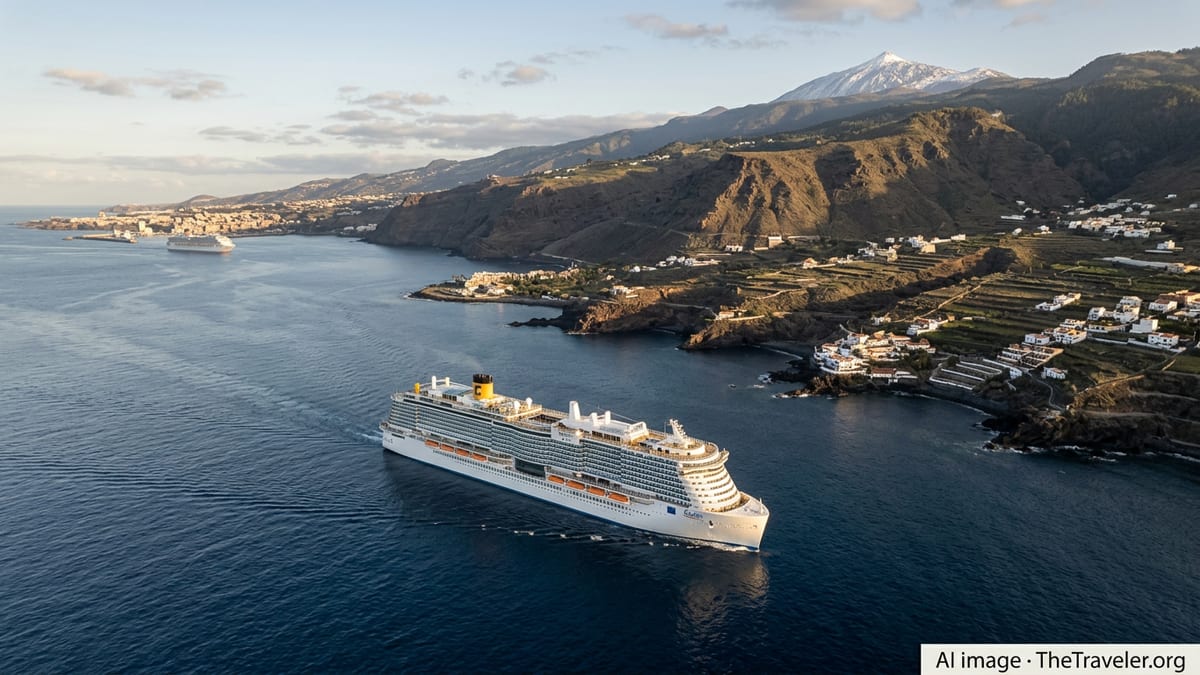
Costa Cruises is reshaping its winter 2025–2026 deployments, shifting the LNG-powered flagship Costa Smeralda to the Canary Islands and Madeira and repositioning Costa Pacifica to Mediterranean and North African routes in a strategic move designed to capture rising demand and boost regional tourism flows.
Get the latest news straight to your inbox!
Strategic Redeployment Targets High-Growth Winter Sun Markets
The Italian cruise line, part of Carnival Corporation, is concentrating capacity in Europe’s most resilient winter sun regions as it fine-tunes its network for the 2025–2026 season. The decision to base Costa Smeralda in the Canary Islands and Madeira reflects both strong booking trends and growing confidence in the Atlantic archipelagos as year-round cruise hubs, supported by their stable climate and diversified shore offerings.
Costa Smeralda, one of the largest and most modern ships in the fleet, will operate a series of seven- and ten-night itineraries that combine popular islands such as Tenerife, Lanzarote, Gran Canaria and Madeira with secondary ports seeking to expand their tourism footprint. By deploying a flagship vessel rather than a smaller seasonal ship, Costa Cruises is signaling long-term commitment to the region and betting on higher passenger volumes for local tour operators, guides and transport providers.
At the same time, Costa Pacifica is being repositioned to operate extended Mediterranean and North African cruises, underlining the company’s pivot away from more volatile Middle East deployments. The ship will serve a mix of marquee destinations in Italy and Spain alongside ports in Morocco and Tunisia, where governments and tourism boards are actively courting cruise calls as a catalyst for broader economic development.
Industry analysts say the redeployment underscores a wider trend: major brands are consolidating capacity around itineraries that deliver both cultural depth and operational predictability, allowing them to market longer, more immersive voyages to European and international guests seeking off-season escapes.
Boost for Canary Islands and Madeira Visitor Economies
The arrival of Costa Smeralda is expected to deliver a noticeable lift to the cruise economies of the Canary Islands and Madeira, where port authorities have spent recent years upgrading infrastructure and refining shore products to attract larger vessels. Local tourism officials anticipate higher passenger throughput per call, greater onboard spending on excursions, and a broader range of themed experiences that link coastal cities with interior landscapes.
With a capacity of several thousand guests per sailing, Costa Smeralda’s regular calls will amplify demand for guides, transport companies, restaurants and activity providers from whale-watching and hiking to cultural tours and wine tastings. Smaller ports that were previously served sporadically are preparing for a more predictable schedule, which in turn supports investment in waterfront improvements, signage, and destination marketing campaigns.
Madeira, already a staple for transatlantic repositioning voyages and New Year’s Eve calls, stands to gain from the ship’s repeated visits on closed-loop itineraries. Travel agents report increased interest in cruise-and-stay packages combining the island’s hotels with sailings that loop through the Canaries, extending visitor stays and smoothing traditional seasonality in occupancy patterns.
For the islands’ tourism boards, Costa’s decision is also a branding opportunity. High-profile hardware like Costa Smeralda functions as a floating showcase, reinforcing the image of the archipelagos as sophisticated yet accessible destinations, particularly among first-time cruisers from Central and Eastern Europe who might otherwise opt for Caribbean itineraries.
Mediterranean and North African Ports Gain from Costa Pacifica Shift
The redeployment of Costa Pacifica toward Mediterranean and North African circuits will deepen the company’s presence in ports across Italy, Spain, Morocco and Tunisia at a time when these destinations are prioritizing cruise tourism as part of broader recovery strategies. Longer itineraries that combine classic Western Mediterranean cities with North African gateways are designed to highlight cultural continuity around the shared sea while distributing economic benefits more widely.
Ports such as Tangier and La Goulette, already familiar to cruise lines, are poised to see increased frequency of calls, supporting plans for upgraded terminals, improved access roads and new excursion products that move beyond traditional city tours. Local stakeholders in these markets have emphasized the importance of repeat deployments, which give small businesses the confidence to hire staff and expand operations to welcome ship passengers.
Costa Cruises’ decision to emphasize Mediterranean and North African routes also reflects traveler preferences for destinations with rich historic centers, varied gastronomy and convenient flight access from major European hubs. By positioning Costa Pacifica on itineraries that often start and end in easily reached ports like Savona, Marseille or Barcelona, the line can tap into both drive-to and fly-cruise segments, broadening its potential source markets.
For North African governments, the move aligns with ongoing efforts to diversify tourism beyond traditional resort enclaves. Increased cruise calls bring short-stay visitors into historic medinas, coastal promenades and archaeological sites, creating opportunities to promote return visits and longer land-based holidays.
Tourism Stakeholders Anticipate Strong Demand and Longer Stays
Across the affected regions, hoteliers, destination management companies and local authorities are preparing for a substantial uptick in traffic from Costa’s reconfigured deployment. Travel agencies in key European markets report that demand for winter cruises combining mild weather with cultural exploration has strengthened, particularly among multi-generational families and couples seeking alternatives to long-haul trips.
In the Canary Islands and Madeira, hospitality operators expect the draw of a high-profile ship like Costa Smeralda to translate into higher pre- and post-cruise hotel bookings as passengers choose to extend their stay. Cities with nearby airports, such as Las Palmas and Funchal, are especially well positioned to benefit from this pattern, reinforcing their roles as regional air-sea gateways.
Mediterranean and North African ports on Costa Pacifica’s routes are similarly focused on capturing more onshore value, with many promoting locally owned tours, food experiences and handicraft markets directly to cruise guests. Some destinations are experimenting with evening calls that allow visitors to experience nightlife and culinary scenes that daytime stops can miss, a strategy that could increase per-passenger spend.
Regional tourism boards are also keen to leverage the marketing power of Costa’s global distribution network. Featuring Canary Islands, Madeira and North African cities prominently in brochures, trade events and digital campaigns gives these destinations visibility in markets where they have historically been overshadowed by Caribbean or Arabian Gulf offerings.
Cruise Industry Adjusts to Geopolitics and Climate While Investing in Growth
Costa Cruises’ latest redeployment decisions reflect the broader cruise sector’s need to navigate geopolitical risk while capitalizing on resilient demand for sea-based holidays. By concentrating capacity in the Canary Islands, Madeira, the Mediterranean and North Africa, the line is favoring regions perceived as stable, well-connected and capable of absorbing larger passenger volumes without overwhelming local infrastructure.
The use of modern vessels such as Costa Smeralda, which is powered by liquefied natural gas, also speaks to mounting pressure on cruise operators to reduce emissions and respond to environmental regulations in European waters. Destinations increasingly favor ships with stronger sustainability credentials, which can help protect sensitive coastal ecosystems that underpin their tourism economies.
For coastal communities from the Atlantic islands to North African ports, the redeployment presents both opportunities and responsibilities. While increased arrivals promise new revenue streams and job creation, authorities are under growing scrutiny to manage flows responsibly, safeguard heritage sites and ensure that local residents share in the benefits of cruise growth.
As bookings open for the revamped 2025–2026 season, travel industry observers will be watching closely to see how travelers respond to the new itineraries. Early indications from trade partners suggest robust interest, reinforcing the view that carefully curated routes around the Canary Islands, Madeira, the Mediterranean and North Africa can anchor the next phase of Costa Cruises’ regional expansion.