

More news on this day
A renewed focus on Eastern Mediterranean itineraries is putting the spotlight back on Costa Serena, as the Italian-operated cruise ship is increasingly promoted for seven-night voyages that combine storied ports, warm-weather sailing and the line’s trademark blend of Italian style and contemporary onboard amenities.
Get the latest news straight to your inbox!
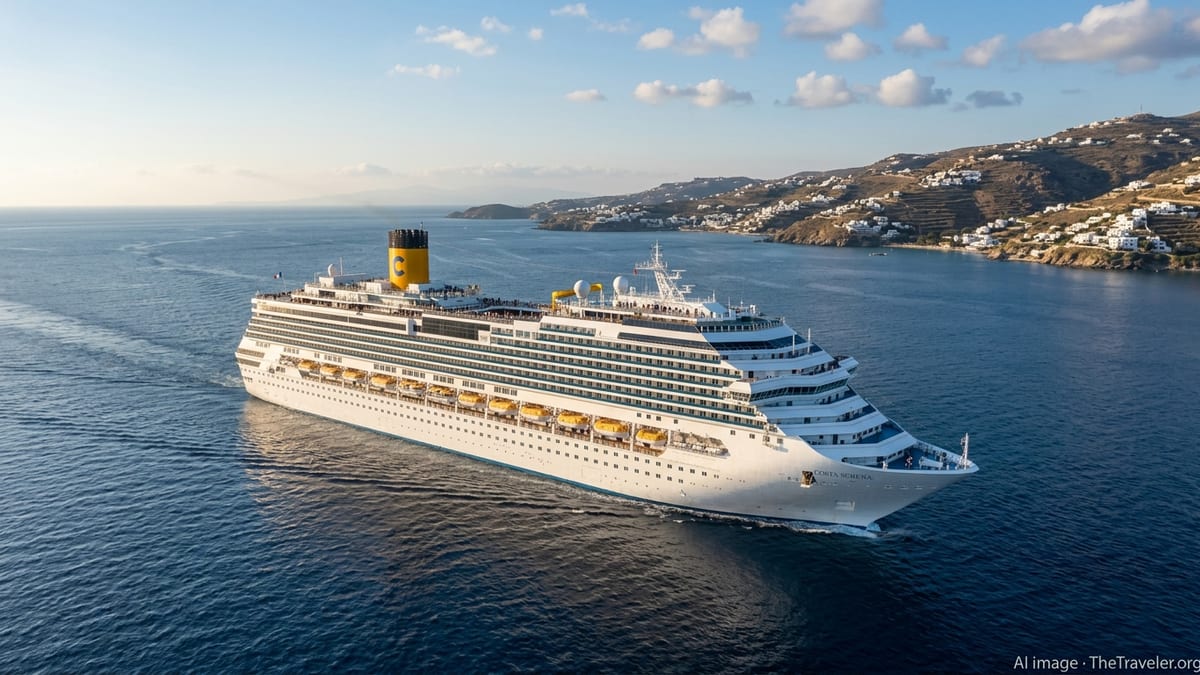
A Concordia-Class Ship Returning Toward Western Waters
Costa Serena is a Concordia-class cruise ship operated by Costa Crociere, part of Carnival Corporation’s global fleet. Built by Fincantieri and delivered in 2007, the 114,500‑gross‑ton vessel carries around 3,700 passengers and 1,100 crew, placing it among the larger mainstream ships positioned for regional programs in Europe and Asia. Publicly available specifications highlight 17 decks, 13 of them dedicated to guests, with interiors themed around Greco-Roman mythology, including a soaring Pantheon atrium and venues named for classical deities.
The ship spent much of the past decade based in Asia, operating short cruises from ports in China, Japan and Southeast Asia. Recent deployments have included seasonal programs from Indian and Southeast Asian homeports, with reports indicating an emphasis on short, port-intensive itineraries for local markets. Industry commentary notes that Costa’s broader strategy has been to rebalance capacity between Asia and Europe as travel demand patterns evolve.
Regional media and cruise industry coverage suggest that, following fleet adjustments such as the planned exit of Costa Fortuna, Costa Serena is expected to return to the Western Hemisphere in late 2026 for seasons in South America and the Mediterranean. That projected shift positions the ship as a potential workhorse for seven-night Eastern Mediterranean sailings, timed with renewed interest in Greece, Turkey and nearby destinations.
Fast-Paced Seven-Night Eastern Mediterranean Concept
While precise weekly schedules vary by season, seven-night Eastern Mediterranean programs typically marketed around ships such as Costa Serena emphasize a different port almost every day. Sample patterns highlighted in cruise industry roundups and agency brochures link major hubs like Athens or Istanbul with island calls in the Aegean and stops along the Adriatic or Aegean coasts. The result is a compact itinerary that can touch three or four countries in a single week.
The Eastern Mediterranean remains one of Europe’s most competitive cruise regions, with itineraries often including marquee Greek islands, historic Turkish ports and occasionally calls in Croatia, Montenegro or southern Italy. For travelers, the seven-night format is designed to fit within a standard vacation window while still delivering a sense of grand tour, with early-morning arrivals and late departures maximizing time ashore.
Travel trade analysis points to consistent demand for itineraries that pair major cultural centers with beach-ready islands. In this context, a ship the size of Costa Serena is positioned to serve both first-time cruisers drawn to headline ports and repeat guests looking to revisit the region with different combinations of stops. The emerging focus on Eastern Mediterranean deployment coincides with a broader industry trend toward rediscovering classic European routes after years of capacity growth in the Caribbean and Asia.
Onboard Experience: Italian Flair and Family-Friendly Focus
Onboard, Costa Serena is promoted as combining Italian design with a casual, family-friendly atmosphere. Publicly available deck plans and marketing materials describe multiple main dining rooms, a large buffet venue, specialty options such as pizzerias and sushi, and a mix of bars and lounges spread across the upper decks. The design language leans heavily into mythology-inspired artwork, columns and sculptures, creating a distinctive backdrop for sea days and evenings at sail.
The ship’s wellness offering is anchored by the Samsara Spa, which cruise industry profiles describe as one of the larger spa complexes at sea when it debuted, spanning roughly 6,000 square metres over two decks. Facilities typically include thermal suites, treatment rooms, a fitness center and relaxation areas with ocean views, appealing to guests who treat sea days as a chance to disconnect between port calls.
Family-focused features highlighted in recent coverage include multiple pools and hot tubs, children’s clubs and teen spaces, along with late-evening entertainment designed to keep younger guests occupied while adults enjoy live music, bars and theater shows. Reviews compiled on cruise review platforms frequently note a lively onboard atmosphere, with a particular appeal to multigenerational groups and international travelers comfortable with a multilingual environment.
Why Eastern Mediterranean Cruises Are Regaining Momentum
Travel analysts point to several factors behind the renewed emphasis on Eastern Mediterranean programs for ships like Costa Serena. First, the region offers a dense concentration of historically significant ports within relatively short sailing distances, which allows cruise lines to build attractive seven-night routes without long overnight stretches at sea. This makes itineraries appealing to guests who prioritize destination time over days in transit.
Second, the Eastern Mediterranean provides a blend of cultural touring and warm-weather leisure that can be marketed from late spring through autumn. City-intensive days in ports such as Athens or Istanbul can be balanced with relaxed stops on islands known for beaches and waterfront tavernas. For cruise lines, this mix supports both shore-excursion revenue and onboard spending, as guests often return to the ship ready for evening dining and entertainment after active days ashore.
Finally, shifts in global deployment following interruptions to tourism earlier in the decade have created openings for ships to return to Europe with refreshed itineraries. Publicly available deployment documents and promotional calendars show that several large operators are concentrating capacity in popular European regions during peak months, signaling confidence in continued demand. Seven-night Eastern Mediterranean cruises on ships comparable to Costa Serena fit squarely into that strategy, offering a familiar format that can be adjusted as port conditions and demand evolve.
What Travelers Can Expect From a Week on Costa Serena
For travelers considering a seven-night Eastern Mediterranean sailing on Costa Serena once Mediterranean seasons are fully established, the experience is likely to center on quick transitions between culturally rich ports, evenings framed by Italian-inflected dining and entertainment, and sea days dedicated to relaxation in the ship’s pools, spa and open decks. Industry descriptions of Costa’s service model emphasize a relaxed European style, with late dining options and nightlife that can run well into the night.
Given the ship’s size and layout, passengers can expect a variety of cabin categories, from interior staterooms to balcony cabins and spa-linked accommodations near the wellness facilities. Balcony cabins are frequently promoted in marketing material as a way to enjoy scenic approaches to island ports, sunrises over the Aegean and departures from historic harbors directly from the privacy of the cabin.
Prospective guests are advised, according to travel agency guidance, to look closely at the specific itinerary and season when choosing a sailing. Spring and autumn departures can offer milder temperatures and fewer crowds ashore, while peak summer weeks are typically more vibrant and busy, both on board and in port. As Costa Serena’s future Mediterranean deployments become more clearly defined in published schedules, seven-night Eastern Mediterranean programs are expected to appeal to travelers seeking a compact yet varied introduction to one of Europe’s most storied cruising regions.