

More news on this day
Costa Cruises’ LNG-powered flagship Costa Toscana has returned to Mediterranean service after a scheduled drydock in Marseille, with Civitavecchia and Barcelona again emerging as key turnaround ports for the ship’s 2026 program.
Get the latest news straight to your inbox!
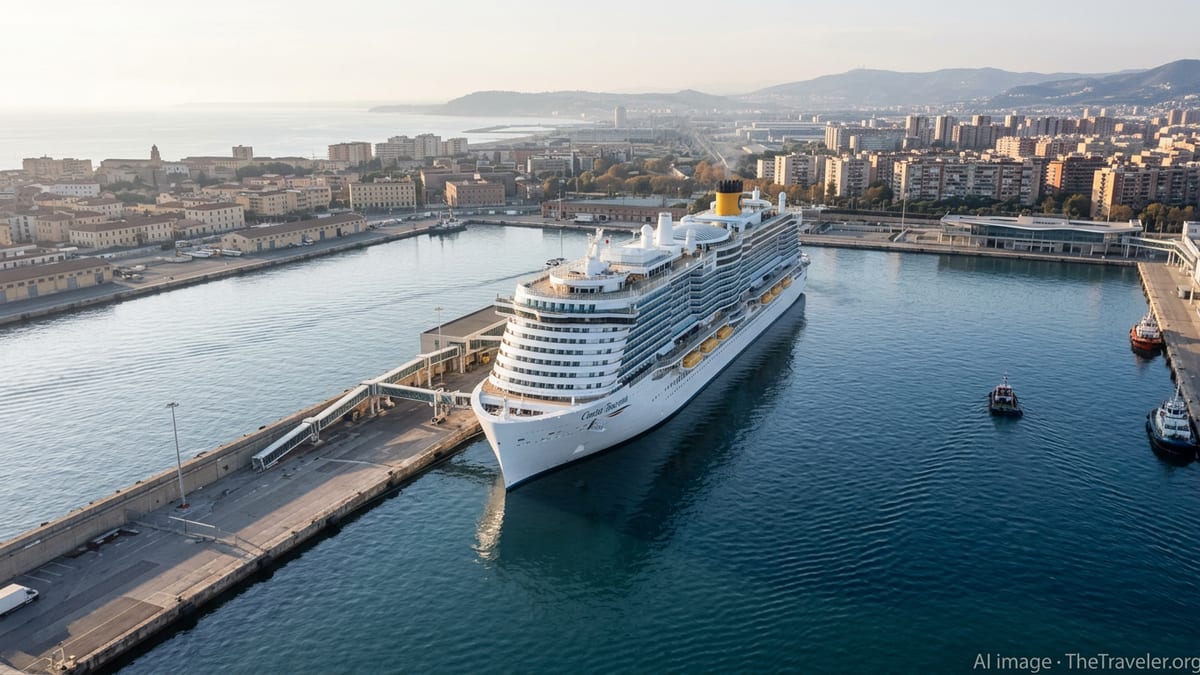
Fresh From Drydock and Back on the Med Circuit
Publicly available information shows that Costa Toscana completed its first major shipyard maintenance period at the Chantier Naval de Marseille in mid-February 2026. The vessel entered drydock in late January for a scheduled technical stop focused on routine servicing, safety checks and cosmetic refreshes to guest areas, before resuming commercial operations shortly after.
Industry coverage describes a work package centered on hull cleaning and repainting, inspection of propulsion and safety systems, and selective updates to interior finishes such as flooring and décor in public spaces and cabins. Reports indicate there were no large-scale structural changes, with the emphasis instead on ensuring the vessel remains in top operational condition after several years of near-continuous deployment.
Following completion of the maintenance program, itinerary data compiled by cruise-tracking outlets shows Costa Toscana returning to short and medium-length Mediterranean cruises, with calls and embarkation options at major Western Mediterranean ports. Among these, Civitavecchia and Barcelona stand out as strategic hubs, offering both homeport operations and high-capacity air and rail connections for international guests.
The ship’s return to service comes as Costa Cruises continues to adjust its wider deployment plan for the 2025 to 2026 period, including reduced exposure to Middle East routes and a reinforced focus on Mediterranean itineraries. In this context, Costa Toscana’s presence in the Western Mediterranean is positioned as a key element of the brand’s European program.
Civitavecchia: Gateway to Rome and Central Italy
Civitavecchia, the port city serving Rome, is once again a central embarkation and turnaround point for Costa Toscana. Port schedules and cruise line materials list multiple arrivals and departures for the ship in early and mid-2026, underlining the port’s role as a primary gateway to central Italy for Mediterranean cruise passengers.
For travelers, Civitavecchia offers a practical starting point for exploring Rome and the Lazio region, despite the port’s location around 70 kilometers from the capital. Cruise forums and travel accounts frequently highlight the need for shuttle buses between the pier and the port entrance, and onward train or coach connections into Rome, which can shape how guests plan their pre- and post-cruise logistics.
With Costa Toscana back on regular rotations, demand for shore excursions to Rome’s historic center, the Vatican area and surrounding coastal towns is expected to remain strong. Publicly available excursion descriptions emphasize full-day programs into the city, as well as shorter options to nearby Etruscan sites and seaside communities for repeat visitors who may prefer to skip Rome’s busiest landmarks.
For Mediterranean tourism stakeholders, the ship’s renewed presence supports a steady flow of passengers through Civitavecchia’s terminals outside the traditional high-summer window, contributing to hotel stays in the area, transfers to Rome and local service providers ranging from guides to transport operators.
Barcelona Reclaims Its Role as a Turnaround Hub
On the western side of the itinerary, Barcelona continues to feature prominently in Costa Toscana’s deployment. Itinerary databases and cruise brochures for the 2025 to 2026 period list the Catalan capital both as a port of call and as an embarkation port for week-long Western Mediterranean cruises, reinforcing its position as a major hub for the ship.
For travelers, sailing from Barcelona provides access to one of Europe’s most connected cruise gateways, with frequent international flights and high-speed rail links into the city. Cruise review platforms and passenger reports from recent seasons underline the convenience of combining a short city break in Barcelona with a seven-night itinerary that includes Italy, France, Spain and North African destinations, depending on the specific sailing.
The return of Costa Toscana after drydock also aligns with Barcelona’s broader cruise calendar, which remains dense across spring, summer and early autumn. The presence of a large-capacity LNG-fueled ship such as Costa Toscana is notable for local tourism and port stakeholders, given ongoing efforts to reduce emissions and manage the environmental footprint of cruise operations in the city’s harbor area.
As the vessel resumes its cycles in and out of Barcelona, prospective passengers are advised by cruise-tracking services to monitor any last-minute operational changes, such as occasional reassignments to alternative terminals or adjustments in embarkation procedures, which can occur during peak traffic days.
What the Updated Itineraries Mean for Travelers
Cruise program updates published by Costa Cruises and summarized by industry media indicate that Costa Toscana will concentrate on seven-day Western Mediterranean itineraries into late 2025, followed by a series of extended cruises across the wider region and nearby coasts during early 2026. Timetables point to combinations of Italian ports such as Savona, Civitavecchia and Naples with Spanish calls including Barcelona and Valencia, as well as selected stops in France, Morocco and Tunisia on specific departures.
These patterns position Civitavecchia and Barcelona not only as embarkation points, but also as repeat calls within longer itineraries that loop through multiple cultural regions around the Western Mediterranean. For guests planning a voyage in 2026, this structure offers flexibility: travelers can embark in one of the major hubs and still enjoy extended time in the other, either at the beginning or end of their cruise or as a mid-cruise overnight depending on the schedule.
Publicly available schedules highlight that some 2026 sailings involve longer port times or late-evening departures, particularly in Barcelona, allowing guests to experience the city beyond standard daylight sightseeing. Meanwhile, calls at Civitavecchia are often used as full-day gateways to Rome, with early-morning arrivals that maximize shore time.
Industry analysts note that the decision to center Costa Toscana’s post-drydock deployment on well-established Mediterranean routes reflects continued demand for accessible week-long itineraries, particularly from European markets. The pattern also offers a measure of operational resilience, as ports like Civitavecchia and Barcelona have the infrastructure to accommodate very large ships and absorb schedule adjustments if required.
Planning Ahead: Practical Considerations for 2026 Sailings
For travelers considering Costa Toscana after its return from drydock, several practical factors stand out. Cruise scheduling platforms emphasize that itineraries can still be subject to change due to weather, port congestion or wider deployment decisions, and they recommend that passengers verify final schedules directly with the cruise line before departure.
In Civitavecchia, the port’s layout means that independent travelers should account for the time needed to move between the ship and the train station or private transfers into Rome. Recent passenger accounts point to shuttle bus operations within the port area and potential bottlenecks at peak arrival and departure times, making it advisable to allow extra time, especially when connecting to flights.
In Barcelona, the proximity of cruise terminals to the city center is a key advantage, but local reports suggest that traffic around the port access roads can be heavy on days with multiple large ship calls. Travelers are encouraged to factor in additional transfer time between the airport, central hotels and the terminal, particularly during high season weekends when Costa Toscana is operating alongside other megaships.
More broadly, Costa Toscana’s return to regular Mediterranean operations reinforces the Western Mediterranean’s position as a year-round cruise region, with Civitavecchia and Barcelona again at the heart of itineraries. For passengers, that translates into a wide range of available sailing dates in 2026, along with opportunities to combine classic city stays in Rome and Barcelona with a large-ship cruise experience following the vessel’s latest technical refresh.