

More news on this day
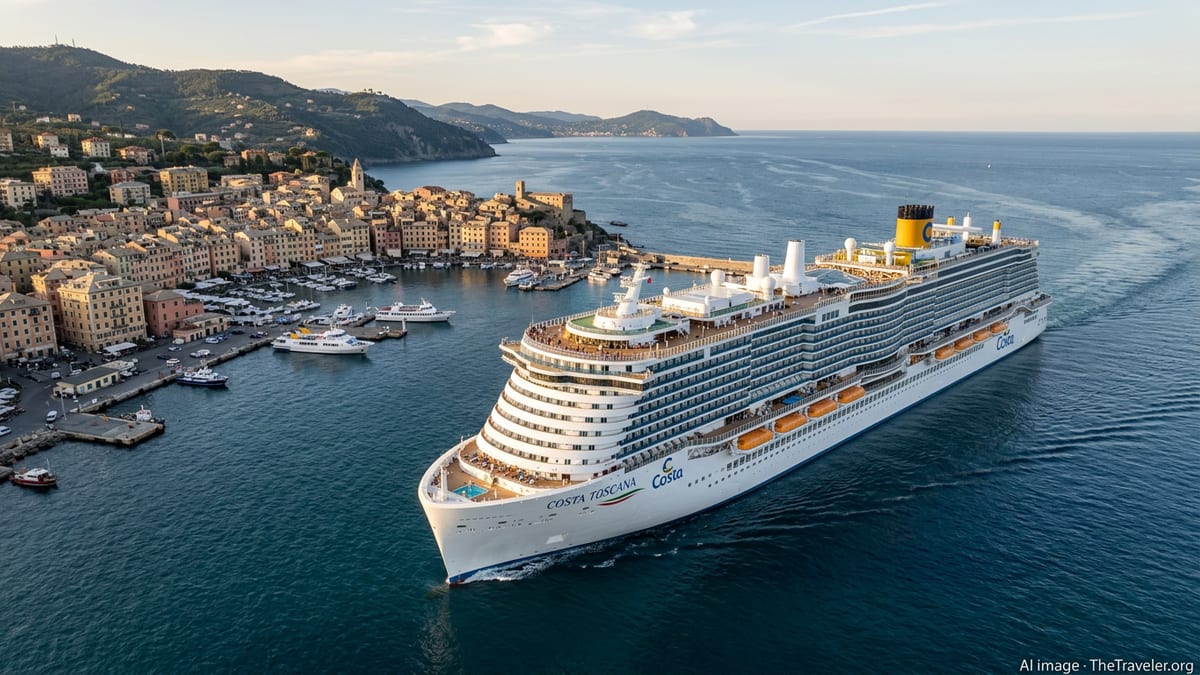
Costa Cruises’ LNG-powered flagship Costa Toscana has resumed Western Mediterranean operations following a scheduled maintenance period, reentering service with an expanded season of sustainable itineraries connecting Spain, France, Italy and Tunisia and signaling renewed momentum for high-capacity luxury cruising in the region.
Get the latest news straight to your inbox!
Flagship Returns to Service After Marseille Dry Dock
Publicly available information shows that Costa Toscana completed its first major shipyard maintenance at Chantier Naval de Marseille in early 2026, with routine technical work and cosmetic upgrades carried out while the vessel was in dry dock. The 2021-built ship, among the largest in Costa Cruises’ fleet, is now back in operation after several weeks out of service.
Industry reports indicate that the ship returned to commercial cruising in mid February 2026, operating short Western Mediterranean sailings from key ports including Genoa, Savona and Barcelona. The swift relaunch positions Costa Toscana to capture early season demand ahead of the main summer peak, reinforcing the Western Mediterranean’s status as one of Europe’s most resilient cruise markets.
Costa Toscana’s return also comes as the brand continues to refine deployment plans following recent itinerary adjustments in the Middle East and Red Sea region. With capacity redirected toward Southern Europe, cruise analysts note that the Western Mediterranean is emerging as a strategic focus for Costa’s premium, higher-yield sailings.
Extended Western Mediterranean Program Links Four Countries
According to published deployment coverage, Costa Toscana is scheduled to maintain a robust Western Mediterranean program through at least late 2025, offering a mix of seven night and longer sailings that connect Italian homeports with marquee destinations in Spain and France. These itineraries typically include embarkation options in Savona or Genoa, as well as regular calls at Barcelona and Marseille.
Additional planning documents and trade materials indicate that Costa Toscana will expand its reach toward North Africa and the central Mediterranean from early 2026, operating 10 to 12 day cruises that add ports in Tunisia and Morocco to the established Spain France Italy circuit. This combination places the ship on routes that blend classic coastal cities with emerging cultural and heritage stops.
The deployment pattern is designed to serve both European and long haul international travelers seeking multi country itineraries within a single voyage. By offering overlapping embarkation points and varied lengths, the program aims to maximize occupancy while giving port authorities a predictable schedule to manage growing passenger volumes.
LNG Propulsion and Efficiency Measures Underpin Sustainability Push
Costa Toscana is one of Costa Cruises’ next generation ships powered by liquefied natural gas, a fuel that industry research associates with reductions in sulfur oxides and particulate emissions compared with conventional marine fuels. Sustainability reports from the parent company describe the vessel as a key platform for testing lower impact operations across the brand’s Mediterranean network.
Beyond LNG propulsion, public technical documentation highlights a range of energy efficiency features on board, including optimized hull design, advanced waste heat recovery and LED lighting systems intended to reduce overall fuel consumption. The ship’s hotel operations have been engineered to support waste sorting, food waste reduction initiatives and improved water management, aligning with broader environmental commitments across the cruise industry.
Destination planners in ports such as Barcelona, Marseille and Italian Riviera cities have been working in parallel on shore side sustainability strategies, including cleaner power options, improved waste reception and measures to manage visitor flows in historic districts. As Costa Toscana resumes regular calls, these combined ship and port level efforts are expected to shape how large scale cruise tourism evolves along the Western Mediterranean corridor.
Western Mediterranean Cruises Support Regional Tourism Recovery
Travel trade analyses note that Western Mediterranean cruise itineraries have become an important driver of tourism revenue for coastal cities in Italy, France and Spain, particularly during shoulder seasons. High capacity ships such as Costa Toscana bring thousands of visitors per call, feeding demand for local tours, hospitality services and retail businesses in port communities.
With the ship now confirmed to remain in the Western Mediterranean for a longer window before repositioning, regional tourism stakeholders are preparing for a more stable flow of cruise arrivals. Published forecasts from port organizations suggest that extended deployment by large vessels could help smooth seasonality, providing steadier income for guides, transportation providers and small businesses tied to cruise traffic.
At the same time, destination managers are balancing growth with concerns over congestion and heritage preservation. Recent policy discussions in several Western Mediterranean ports have focused on passenger caps, time slot management and diversification of shore excursions to spread visitor impact beyond the most saturated historic centers, measures that could directly shape the guest experience on Costa Toscana’s itineraries.
North Africa Calls Add Cultural Depth and New Market Opportunities
Industry schedules for 2026 indicate that Costa Toscana’s program will increasingly incorporate North African destinations, including Tunisian ports that offer access to archaeological sites and coastal resorts. These calls are viewed as a way to add cultural variety and differentiate Western Mediterranean itineraries in a competitive market.
Tourism economists note that including Tunisia alongside Spain, France and Italy can help distribute cruise spending toward emerging destinations that are working to rebuild international visitor numbers. Shore experiences in these ports often emphasize local crafts, cuisine and UNESCO listed heritage, broadening the narrative of a typical Western Mediterranean cruise beyond European capitals and resort towns.
The move also positions Costa Toscana to serve travelers seeking more immersive regional routes without committing to longer repositioning voyages. By linking North Africa to well established hubs such as Savona and Barcelona within a single itinerary, the ship’s deployment underscores how evolving cruise schedules are reshaping the geography of luxury travel in the Western Mediterranean.