

More news on this day
As Scotland moves closer to introducing its own Air Departure Tax to replace the UK-wide Air Passenger Duty, tourism leaders and business groups are warning that poorly calibrated rates or exemptions risk undermining the country’s competitiveness just as the visitor economy and aviation sector work to recover and grow.
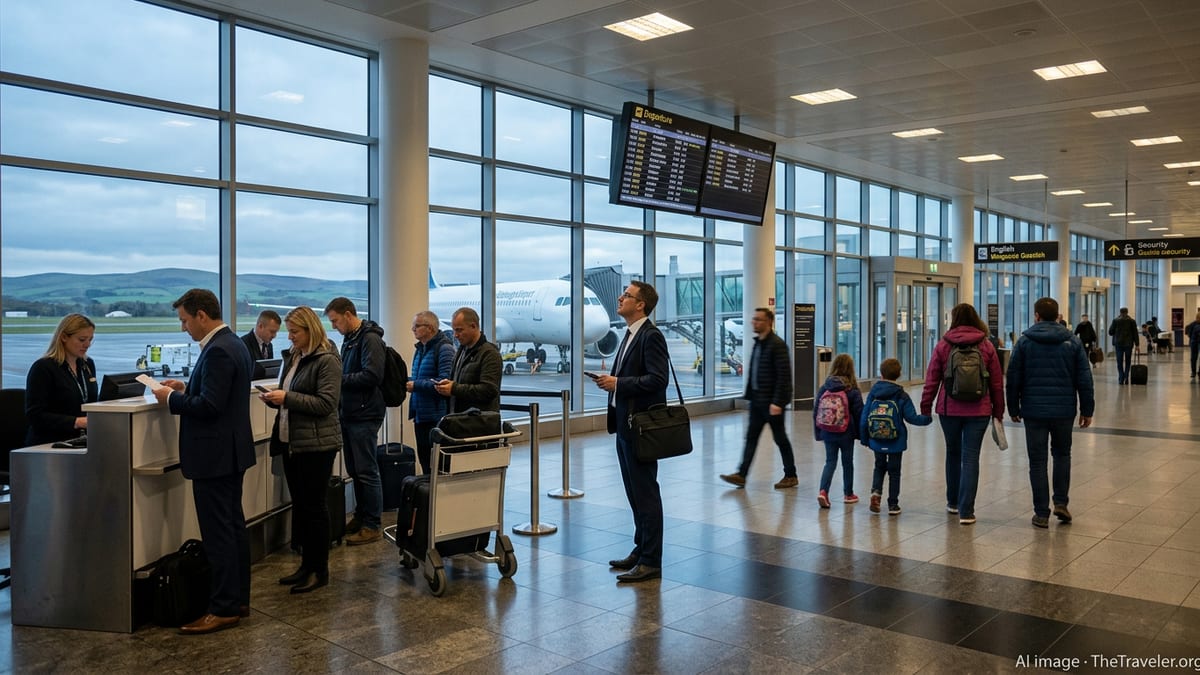
What Is Scotland’s Air Departure Tax and When Will It Arrive?
Air Departure Tax is Scotland’s planned replacement for the UK Air Passenger Duty, the levy added to most airline tickets for passengers departing from UK airports. The Scottish Parliament passed the Air Departure Tax (Scotland) Act in 2017, but technical and legal issues, particularly around existing exemptions for the Highlands and Islands, meant the tax was never brought into force and Air Passenger Duty has continued to apply at Scottish airports.
After years of delay, the Scottish Government has signalled that these hurdles are now largely resolved and that its own tax is back on the legislative track. Recent analysis from the Scottish Fiscal Commission indicates that the government intends to introduce Air Departure Tax from April 2027, replacing Air Passenger Duty in Scotland and transferring full responsibility for rates and bands to Holyrood.
In advance of that switch, ministers have set out high level principles for the new tax, stressing that it should support sustainable growth, protect the public finances and align with climate targets. However, airlines and tourism bodies are pressing for clarity far sooner than 2027 on exactly what passengers will pay, arguing that long lead times are essential in an industry that plans fleets and routes years ahead.
For now, passengers booking flights from Scottish airports continue to pay UK Air Passenger Duty at rates set in London, including recently announced increases for some longer-haul and premium tickets in 2026 and 2027. The moment Scotland diverges with its own regime, though, the competitive map for airports and airlines around the North Sea could change markedly.
Why the Tax Matters for Tourism and Regional Competitiveness
Tourism has become one of Scotland’s flagship industries, supporting hundreds of thousands of jobs across accommodation, attractions, food and drink, transport and culture. Visitor numbers to cities such as Edinburgh, Glasgow and Inverness, and to rural destinations from Skye to Speyside, are highly sensitive to air connectivity and price, especially for short breaks and budget-conscious travellers.
Aviation groups warn that if Scotland’s eventual Air Departure Tax rates end up higher than equivalent charges in England, or in competing hubs such as Dublin and Amsterdam, price-sensitive passengers may choose to route through other airports or avoid Scotland altogether. Even small differentials can tilt decisions on whether airlines maintain marginal routes to regional Scottish airports or redeploy aircraft elsewhere.
Industry responses to earlier consultations on Scotland’s aviation taxation highlighted these risks in detail. Airlines pointed out that for many visitors from North America and continental Europe, Scotland is interchangeable with other destinations that do not levy as much tax on departures. Tourism operators share concerns that any perception of Scotland as an expensive place to fly to could depress demand outside peak festival periods when prices are already high.
Conversely, if Scotland sets significantly lower rates than the rest of the UK, that could draw more passengers to Scottish airports, but might also prompt the UK Government to adjust its own Air Passenger Duty in response. That dynamic could complicate fiscal planning and potentially undermine the goal of using the tax to deliver predictable, sustainable revenues for public services.
Business Travel, Investment and Connectivity Concerns
Beyond leisure tourism, business groups view the design of Air Departure Tax as a test of Scotland’s commitment to being an open and globally connected economy. Chambers of commerce and sector associations have repeatedly argued that reliable direct air links are essential for attracting inward investment, supporting exports and maintaining the competitiveness of key sectors such as energy, financial services, technology and higher education.
Corporate travel budgets are already under pressure from higher costs and net zero commitments. If the new tax increases the overall price of flying from Scottish airports relative to rival hubs in northern England or continental Europe, companies may concentrate international travel through fewer gateways, potentially bypassing Scotland for some long haul connections.
Business leaders are particularly focused on the fate of thinner, high value routes, such as links to North American financial centres and energy hubs, as well as key European business cities. These services can be vulnerable if yields fall or operating costs rise. Airlines weighing up whether to launch or retain direct connections to Scotland will factor Air Departure Tax into their calculations alongside airport charges, fuel costs and demand forecasts.
There is also unease about the cumulative effect of multiple policy changes on the cost base of Scottish enterprises. While Air Departure Tax is only one element, it will interact with other national and local measures, including the forthcoming visitor levy in cities such as Edinburgh and Glasgow, to shape overall perceptions of Scotland as a place to meet, trade and host major conferences.
Balancing Climate Goals With Growth in Aviation
Any debate about an air travel tax in Scotland now unfolds against the backdrop of ambitious climate legislation. The Scottish Government has binding statutory targets to reduce greenhouse gas emissions and has faced criticism for missing interim milestones, including those related to transport, one of the most challenging sectors to decarbonise.
Environmental organisations have long argued that aviation is under taxed relative to its climate impact and that higher departure levies can help moderate demand and fund greener transport alternatives. Campaigners point to the growth in private jet movements at Scottish airports and have called for a steep surcharge on such flights as part of the new tax framework, to ensure that the highest polluters pay the most.
Ministers, for their part, have signalled that Air Departure Tax will need to reflect both economic and environmental priorities. Proposals set out around the draft 2026 to 2027 budget included the development of a dedicated private jet tax within the wider Air Departure Tax structure, alongside commitments to invest more in active travel and public transport. That direction of travel has been welcomed by many green groups but has prompted questions from airlines about complexity and costs.
There is also a broader question about whether using ticket taxes alone is the most effective way to curb aviation emissions, given that such charges do not vary with the actual carbon intensity of specific flights or aircraft. Some in the industry argue that incentivising newer, more efficient fleets and sustainable aviation fuels may deliver more emissions reductions for each pound collected than simply raising departure charges indiscriminately.
What Travellers and the Industry Should Watch Next
With the target date for introducing Air Departure Tax still more than a year away, much of the detailed design work is happening behind the scenes in Edinburgh. Revenue Scotland and the Scottish Government are working on the administrative systems required to collect the tax, while officials refine options for rates, banding, exemptions and any surcharges for private aviation.
Key decisions will include whether to mirror the existing UK Air Passenger Duty structure initially to provide continuity for airlines and passengers, or to move quickly to a distinct Scottish model that places a stronger emphasis on environmental signals or regional development. The continuing exemption for flights from the Highlands and Islands, vital for social and economic cohesion in remote communities, will also need to be preserved in a way that satisfies both domestic and international legal requirements.
Airlines, airports, tourism businesses and environmental groups are expected to lobby heavily in the coming months as consultations open on the final shape of the tax. The aviation industry is likely to push for stability and competitiveness, warning against sudden increases that could trigger route closures, while green campaigners will argue that a modest token levy would squander a key tool for managing demand and funding climate action.
For travellers, the most visible impact will be on ticket prices for flights departing from Scottish airports once Air Departure Tax replaces Air Passenger Duty. While the precise amounts are not yet set, holidaymakers, business travellers and the tourism sector alike will be watching closely to see whether Scotland’s new tax regime positions the country as a climate-conscious yet accessible destination, or risks pricing some visitors and investors out of the market.