

More news on this day
Crete’s Alexander Beach Hotel & Village Resort is sharpening its international focus for upcoming seasons, targeting higher-spending visitors from the United Kingdom, Switzerland and emerging long-haul markets as Greece’s largest island consolidates its role as a powerhouse in Mediterranean tourism.
Get the latest news straight to your inbox!
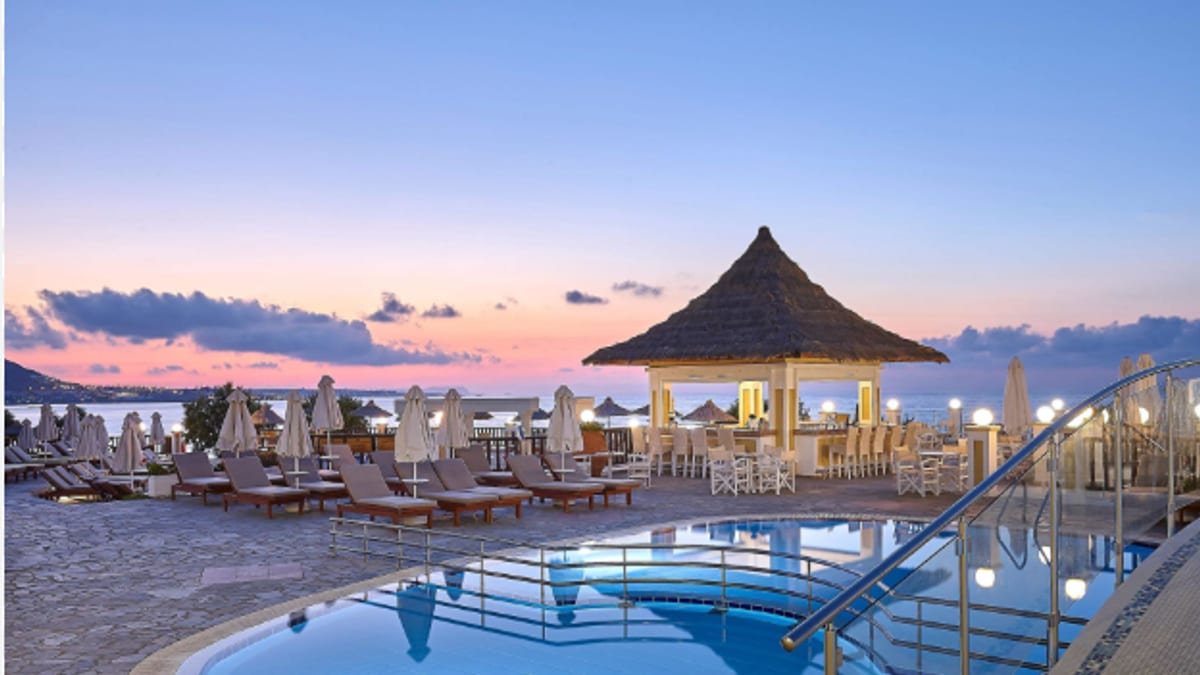
Image by Travel And Tour World
Resort strategy aligns with Crete’s surging visitor numbers
Publicly available data on Crete’s tourism performance indicates that the island has entered a new phase of growth, with international arrivals and spending reaching record levels in 2024 and 2025. Industry analyses show that Crete now accounts for a significant share of Greece’s tourism receipts, supported by strong air connectivity and a shift toward higher-value travel.
Within this context, Alexander Beach Hotel & Village Resort, located on the north coast between Malia and Stalida, is positioning itself more clearly as an upscale beachfront base for international guests. Tour operator listings and trade-facing materials highlight its five-star facilities, extended beachfront and village-style layout, factors that align with demand from European package travelers seeking resort-based stays with convenient access to Heraklion Airport.
Reports on booking trends for Crete suggest that demand from key European markets is not only resilient but growing, even as some other Greek islands face capacity and sustainability constraints. By refining its international outreach now, Alexander Beach Resort appears to be aiming to capture a larger share of that expansion while diversifying beyond its historically strong Central European clientele.
The resort’s strategy also reflects a broader move across Crete toward lengthening the season and attracting visitors who spend more per trip. Sector analyses note that Crete generates some of the highest tourism revenue per visitor of any Greek region, strengthening the business case for hotels that can appeal to premium segments in established and emerging markets.
United Kingdom market remains a cornerstone for Crete
The United Kingdom has emerged as one of Crete’s most important source markets, with recent research indicating that British visitors are among the highest spenders per trip in Greece. Data-focused reports on Crete’s airports show that the UK now ranks near the top in international arrivals, particularly at Chania and Heraklion, and continues to post solid growth in air capacity.
Tour operator brochures and online booking platforms in the UK prominently feature Alexander Beach Resort, often packaging it with direct charter flights from regional airports. This distribution footprint points to a deliberate effort to deepen penetration in the British market, especially among families and couples seeking full-service beach stays with half-board or all-inclusive options.
Market commentary suggests that British travelers to Crete increasingly seek a blend of resort comfort and local experiences, including access to traditional tavernas, archaeological sites and coastal villages. Alexander Beach Resort’s location near Malia and Stalida, combined with its seafront promenade and landscaped grounds, is promoted as a way to satisfy both resort relaxation and easy exploration of the surrounding area.
With UK demand for Greece projected to remain robust in 2026, the resort’s heightened presence in British distribution channels positions it to benefit from further capacity increases and potential shifts in traveler preference away from more crowded Mediterranean destinations.
Growing interest from Switzerland and wider European markets
While Germany and the UK dominate arrival statistics, recent tourism studies point to Switzerland as a steadily growing source market for Greece and Crete in particular. Swiss travelers are often associated with higher average daily expenditure and a preference for quality-focused accommodation, two characteristics that align with the resort’s positioning in the upper segment of the market.
Travel trade information and holiday program brochures indicate that Alexander Beach Resort is included in the portfolios of major Central European tour operators active in Switzerland, frequently emphasizing its beachfront location, spa facilities and a mix of rooms, suites and bungalows suitable for couples and multigenerational groups. This suggests an effort to strengthen visibility in a market that values both comfort and access to authentic local culture.
Broader European data also shows growing arrivals from France, Poland and Scandinavia to Crete, adding further diversification to the island’s tourism profile. For a resort such as Alexander Beach, this opens opportunities to balance its guest mix across several European economies, reducing exposure to fluctuations in any single market.
Analysts note that air connectivity from Swiss and other European airports to Crete continues to expand gradually, especially during the peak summer months. By maintaining relationships with multiple tour operators and aligning its product with the expectations of these travelers, the resort is well placed to capture additional demand from across the continent.
Crete and Greece pursue higher-value long-haul tourism
At the national level, Greece has been steadily increasing its share of visitors from long-haul markets such as the United States, Canada, Australia, China and Brazil. Recent barometer reports on long-haul travel to Europe show that Greece has secured a growing share of demand from these distant markets, helped by improved air links, targeted promotion and the global appeal of its culture and landscapes.
Crete is emerging as an important beneficiary of this trend. Studies on regional performance underline that visitors from long-haul markets typically stay longer and visit multiple destinations within Greece, including major islands. Higher spending per trip among US and other non-European travelers is also drawing attention from hotels seeking to move up the value chain.
Alexander Beach Resort’s investment in upgraded facilities, wellness offerings and premium room categories can be viewed through this lens of long-haul readiness. Travel trade descriptions emphasize spa services, extensive pools and beachfront access, amenities that are often priorities for guests who combine a longer European itinerary with a relaxing island segment.
With international carriers gradually adding more transatlantic and Asia-linked services into Athens and other Greek gateways, Crete’s connectivity for long-haul visitors is improving through domestic links. The resort’s proximity to Heraklion Airport and its inclusion in multi-stop itineraries marketed by tour planners suggest that long-haul guests are an increasingly important part of its forward strategy.
Shift toward sustainability and premium beach experiences
As visitor numbers climb, Crete faces the same sustainability questions confronting many Mediterranean destinations, including pressure on water resources, coastal ecosystems and local infrastructure. Policy measures and industry initiatives across Greece are increasingly aimed at spreading demand over a longer season, promoting regional dispersal and encouraging investment in certified sustainable accommodation.
Alexander Beach Resort appears aligned with this direction. Public documents listing eco-certified properties show the resort among hotels in Crete that have obtained recognized environmental labels, indicating a structured approach to energy, water and waste management. Such recognition is becoming more visible in the marketing of resorts to European and long-haul travelers who factor sustainability into their booking decisions.
Tourism analysts note that premium beachfront resorts offering strong environmental credentials, extensive leisure facilities and easy access to local culture are best placed to thrive as competition intensifies across the Mediterranean. Alexander Beach Resort’s evolution toward a more globally oriented, higher-spending clientele suggests that it aims to sit firmly within this category.
With Crete’s tourism outlook for 2026 described by sector observers as positive, supported by robust bookings from Germany, the UK and other key markets, the resort’s focus on the UK, Switzerland and long-haul visitors points to a strategy built around diversification, value and sustainable growth on one of Europe’s most in-demand islands.