

More news on this day
Hundreds of travelers at Charleston International Airport in South Carolina have faced cancellations, rolling delays and missed connections after a sudden pilot and cabin crew shortfall triggered a sharp disruption in scheduled flights, underscoring how fragile airline staffing and scheduling systems remain across the United States.
Get the latest news straight to your inbox!
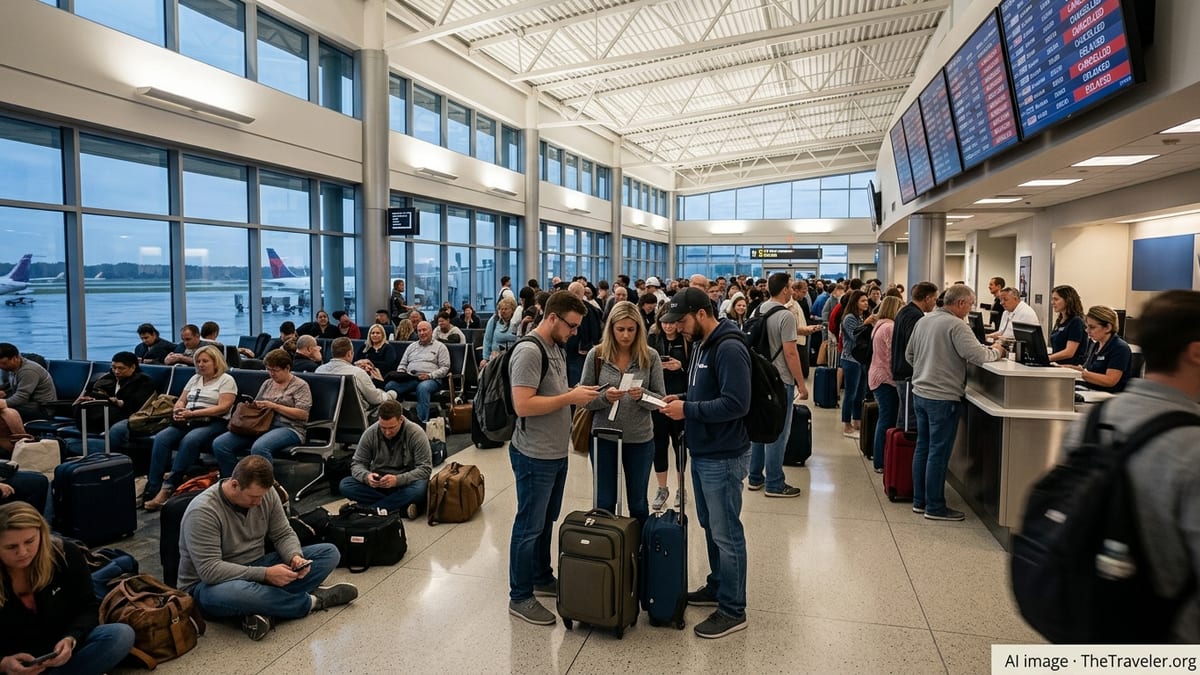
Flights Scrapped and Delayed as Schedules Unravel
Published coverage and live flight-tracking data indicate that a cluster of flights into and out of Charleston has been canceled or heavily delayed over a short window, with crew availability repeatedly cited as a key factor. Passengers reported abrupt gate changes, extended tarmac waits and late-night cancellations as airlines scrambled to reassign pilots and flight attendants.
The pattern fits a familiar type of operational breakdown seen at other U.S. airports in recent years, where relatively small disruptions in crew rotations cascade across tightly timed daily schedules. When inbound aircraft arrive late or crew members approach federally mandated duty-time limits, departures can quickly stack up on departure boards, turning a localized issue into a terminal-wide slowdown that affects hundreds of travelers.
While Charleston is not a major hub airport, it has grown rapidly as a leisure and business gateway, meaning there is limited slack in the system when staffing or aircraft rotations go awry. With fewer alternative flights compared with larger hubs, passengers whose services are canceled often face long waits for rebooking, overnight stays or detours through multiple connecting cities.
Reports from affected travelers describe long customer-service lines, overburdened phone centers and limited same-day options, particularly for those traveling on regional routes that depend heavily on specific aircraft and crew pairings.
How a Local Meltdown Reveals National Crew Pressures
The disruption at Charleston reflects a broader pattern in North American aviation, where pilot and cabin crew availability has emerged as a recurring pressure point. Industry analyses and regulatory hearings have highlighted a pipeline of retirements, training bottlenecks and pandemic-era cuts that left many airlines operating with thinner staffing margins than before.
Publicly available data and union statements across the industry point to several overlapping causes: a multi-year pilot shortage, high attrition to larger carriers from regional airlines, and scheduling systems that leave little room for error when weather, maintenance or air-traffic constraints push crews toward legal duty-time limits. Once a crew “times out,” a flight cannot legally depart without replacement staff.
Events at other carriers and airports in recent years, including high-profile scheduling crises and crew-related mass cancellations, have shown how even modest mismatches between planned and actual crew availability can snowball into what passengers experience as a full-scale meltdown. The situation at Charleston fits into that pattern, with a localized shortage in available crews creating outsized disruption for a regional gateway.
Analysts have also noted that regional operations are especially vulnerable. Smaller bases have fewer standby pilots and flight attendants, so a single sick call, misconnection or diversion can leave aircraft on the ground for hours while crews are repositioned from other cities.
Passenger Impact: Missed Connections and Limited Recourse
For travelers on the ground at Charleston, the immediate consequences have been missed weddings, lost vacation days and disrupted business trips. Social media posts and traveler accounts describe families sleeping in terminal chairs, scrambling to find last-minute hotel rooms, and attempting to salvage itineraries after missed connections at larger hubs.
When disruptions are coded as crew- or staffing-related, passengers often have a different set of rights than during weather events, particularly regarding hotel vouchers and meal support. However, the distinction can be opaque in practice, and travelers frequently report confusion about whether they are entitled to compensation, rebooking on other airlines or refunds beyond the value of unused tickets.
Consumer advocates regularly advise passengers to document airline communications, keep screenshots of delay reason codes on apps or departure boards, and ask for written explanations of cancellations. In large-scale crew disruptions such as the one affecting Charleston, those recommendations can become critical for travelers seeking reimbursement later, especially when policies differ between domestic and international itineraries.
In the meantime, many travelers at Charleston have had to fall back on standard coping strategies: checking alternative nearby airports, monitoring standby lists and leveraging travel insurance or credit-card protections where available.
Why Crew Shortages Keep Hitting Smaller Gateways
Charleston’s experience highlights how mid-sized and regional airports can feel the sharpest effects of crew constraints. Airlines typically concentrate reserves and spare aircraft at their largest hubs, where they can cover a broad network of routes. At secondary airports, there may be just a handful of daily departures for each carrier and limited spare crew on hand.
When an inbound flight carrying a scheduled crew is delayed or diverted, there may be no immediate replacement at a smaller station. Public reports and testimony in broader aviation policy discussions describe how carriers sometimes rely on last-minute “deadhead” positioning flights or ground transportation to move crews into place, but those workarounds can take many hours to arrange.
Industry observers point out that this structural vulnerability intersects with strong demand at destinations like Charleston, which has seen rapid growth in tourism and business travel. Busy schedules, constrained infrastructure and lean staffing can combine to create exactly the sort of chain reaction now unfolding, where a single weak link in the crew chain translates into a day or more of turbulence for passengers.
The Charleston disruption is therefore being watched by aviation analysts as another case study in the ongoing challenge of balancing cost control with resilience, especially at airports that have outgrown their former status as purely regional outposts.
Calls for More Resilient Airline Operations
The latest turmoil at Charleston adds to pressure on airlines and policymakers to build more robust systems that can withstand crew-related shocks. Aviation watchdog groups, passenger advocates and some industry experts have urged investment in more modern scheduling technology, larger pools of reserve crew and clearer rules about transparency when disruptions are caused by staffing rather than uncontrollable weather.
Congressional hearings and regulatory reviews in recent years have already examined how pilot shortages, air-traffic staffing constraints and tight scheduling practices contribute to cancellations across the United States. The Charleston episode offers fresh evidence that progress remains uneven, especially at fast-growing regional airports where operational buffers are thin.
Some commentators argue that treating events like the Charleston meltdown as rare anomalies underestimates the structural nature of current airline staffing pressures. From this perspective, crew-related breakdowns are not isolated mishaps but symptoms of a system that has not fully adjusted to post-pandemic travel patterns, labor dynamics and regulatory requirements on rest and duty time.
For travelers, the situation in Charleston serves as a reminder that even on clear-weather days, unseen logistics such as crew rotations can be the deciding factor between an on-time departure and a night spent in the terminal. Until airlines build greater resilience into those systems, similar episodes are likely to recur at airports across the country.