

More news on this day
Slovenia’s tourism sector has entered 2026 with strong momentum, logging around 403,000 foreign tourists in January and February as neighboring markets including Croatia, Italy, and Austria feed a renewed surge in cross-border travel.
Get the latest news straight to your inbox!
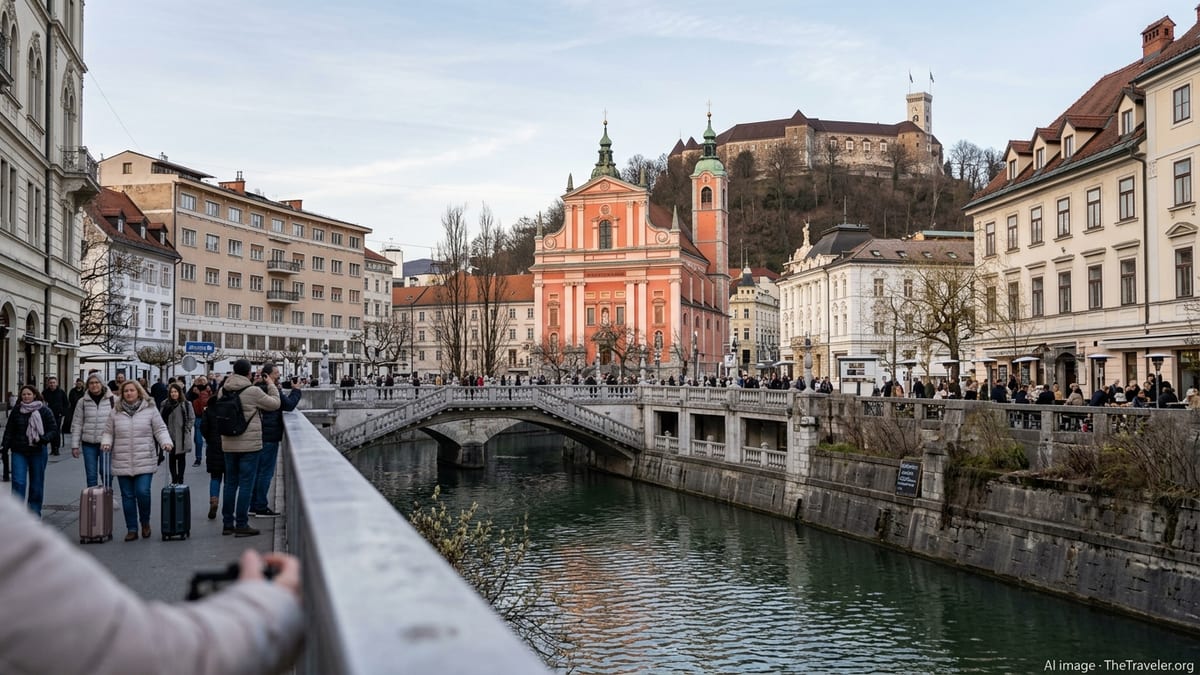
Foreign Arrivals Pass 400,000 as Slovenia Extends Its Tourism Run
Publicly available statistics for early 2026 indicate that Slovenia welcomed approximately 403,000 foreign tourists in the first two months of the year, underscoring the country’s transition from pandemic rebound to sustained growth. The figure builds on a record-setting 2025, when just under seven million tourists visited the country and foreign guests were the primary drivers of new overnight stays.
Data released by Slovenia’s statistical authorities for January 2026 show a total of 317,000 tourist arrivals and 870,000 overnight stays, up 8 percent and 11 percent respectively year on year. Sector analysts note that February traditionally trails January in volume, but the two months combined point to a robust winter and shoulder-season performance supported mainly by international visitors rather than domestic demand.
Tourism-focused outlets tracking Slovenia’s performance through 2025 and into 2026 describe a steady upward trajectory in international arrivals, following a record August 2025 and an 8 percent increase in foreign tourists in the first nine months of last year. The fresh 403,000 foreign-arrival estimate for early 2026 suggests that momentum has carried over despite economic headwinds in parts of Europe.
Industry observers argue that Slovenia is increasingly consolidating its image as a compact, green European destination that can absorb higher visitor volumes while still marketing itself as a less crowded alternative to neighboring hotspots. The early 2026 numbers are seen as a signal that this positioning is resonating with travelers, particularly those arriving from nearby countries by car or short-haul train.
Croatia Joins Italy and Austria Among Top Source Markets
According to recent tourism analyses referencing national statistics, Italy, Austria, and Croatia ranked among Slovenia’s most important source markets throughout 2025, a pattern that appears to be continuing in 2026. These neighboring countries benefit from short travel times to Slovenia’s ski centers, spa resorts, and historic towns, making them natural feeders for weekend and short-break trips.
Prior to 2026, reports covering the first half of 2025 highlighted Italy, Croatia, and Austria as the leading contributors to a more than 7 percent rise in international arrivals, with visitors from these markets generating millions of overnight stays. That trend has not reversed, and current winter-season reporting points to the same trio as key segments within the 403,000 foreign tourists counted in the opening months of this year.
Croatia’s role is noteworthy because flows between the two countries traditionally intensify in the summer, when Slovenians head to the Croatian coast and Croatian residents look toward Slovenia’s mountains, lakes, and spa towns. Analysts indicate that this relationship increasingly operates in both directions year-round, with Croatian travelers joining Italians and Austrians in booking winter and city-break stays in destinations such as Ljubljana, Maribor, and the country’s Alpine resorts.
Tourism strategy documents presented in late 2025 and early 2026 also identify these three neighboring states as “priority markets,” reflecting both their volume and relatively high repeat-visit rates. The emphasis on regional source countries is viewed as a hedge against long-haul volatility, giving Slovenia a stable base of visitors who can travel overland even during periods of airline disruption or broader economic uncertainty.
Winter Events, Sports and City Breaks Drive Early 2026 Demand
Several high-profile sporting events and cultural programs have contributed to Slovenia’s strong start in 2026. The country is co-hosting major competitions such as the UEFA Futsal Euro and is also preparing for a busy summer of cycling and outdoor events, which together enhance its exposure across European markets. Travel media coverage notes that these tournaments and festivals help to smooth seasonality by pulling visitors into traditionally quieter months.
Ljubljana continues to function as the main gateway, with recent reports describing a sustained rise in arrivals and overnight stays linked to its expanding network of low-cost and regional flight connections. The capital’s compact center, winter markets, and growing food scene have positioned it as a natural weekend destination for residents of Italy, Austria, Croatia, and beyond.
Mountain and spa resorts also remain central to early-year performance. Statistics from previous winters showed that changes in snow conditions and domestic travel patterns could dent overall results, but the latest figures suggest that a stronger international component is helping to buffer these fluctuations. Travelers from neighboring countries are reportedly combining skiing or wellness stays with short urban visits, creating multi-stop itineraries that increase overall spending per trip.
Observers point out that Slovenia is marketing its winter and shoulder-season offerings more assertively than in the past, pairing sports events with cultural programming and regional gastronomy. This approach appears to be paying off in the form of higher foreign arrivals throughout January and February, rather than relying solely on the peak summer months.
Regional Competition and the Push for Sustainable Growth
Slovenia’s performance in early 2026 is taking place against a backdrop of intense competition across Central and Southern Europe, where established tourism players such as Croatia, Austria, and Italy have also reported strong visitor numbers and new records in recent seasons. While these countries compete for some of the same international travelers, they also act as gateways feeding visitors onward to smaller destinations like Slovenia.
Analysts note that rail and road connectivity across the Alps and the northern Adriatic basin allows travelers to combine multiple countries in a single itinerary. It is increasingly common for visitors flying into Venice, Vienna, or Zagreb to add a few days in Slovenia, drawn by natural landscapes, lower crowd levels, and a growing reputation for sustainable tourism practices.
Official tourism dashboards highlight that Slovenia has been positioning itself in recent years as a pioneer of green tourism, with certification schemes for destinations and accommodation providers. Reports indicate that this strategy has resonated particularly well in neighboring markets, where travelers are already familiar with the country and are receptive to messaging around nature, soft adventure, and responsible travel.
At the same time, commentators caution that continued growth will bring pressure on infrastructure and sensitive natural areas, especially around Lake Bled, the Soča Valley, and certain Alpine resorts. Local debates in 2025 and early 2026 focused on managing day-trip traffic and preserving resident quality of life, suggesting that the current surge is prompting serious discussion about how much growth is desirable.
What Travelers Need to Know for 2026
For travelers considering a visit in 2026, the early influx of 403,000 foreign tourists signals that Slovenia is becoming more popular, particularly among visitors from nearby Croatia, Italy, and Austria. As a result, those planning trips for peak periods may need to book accommodation earlier than in past years, especially in high-demand areas such as Ljubljana, Bled, and major mountain resorts.
Travel coverage suggests that prices in some of western Slovenia’s most scenic regions are now comparable to neighboring parts of Italy and Austria, reflecting rising demand and limited capacity in small alpine towns. Visitors seeking better value are increasingly looking to secondary destinations, including less-publicized spa centers, wine regions, and eastern Slovenian towns that remain quieter even during high season.
The strong start to 2026 also implies that events and festivals will play a larger role in shaping travel patterns. Prospective visitors are advised, based on published tourism calendars and media reports, to check event schedules early, as major sports competitions and cultural gatherings can quickly fill local accommodation while simultaneously providing additional reasons to visit.
With regional neighbors feeding more visitors into Slovenia than ever, the country appears set for another busy year in tourism. For now, the latest figures show that foreign demand is driving growth, and that Croatia has firmly joined Italy and Austria in powering a surge that is reshaping how and when travelers experience one of Europe’s most compact destinations.