

More news on this day
Croatia is preparing to tighten late-night alcohol sales in its most visited coastal cities, signaling that the Adriatic favorite is ready to join Spain, Portugal, Poland and Australia in a growing global push to rein in unruly party tourism and restore peace for residents.
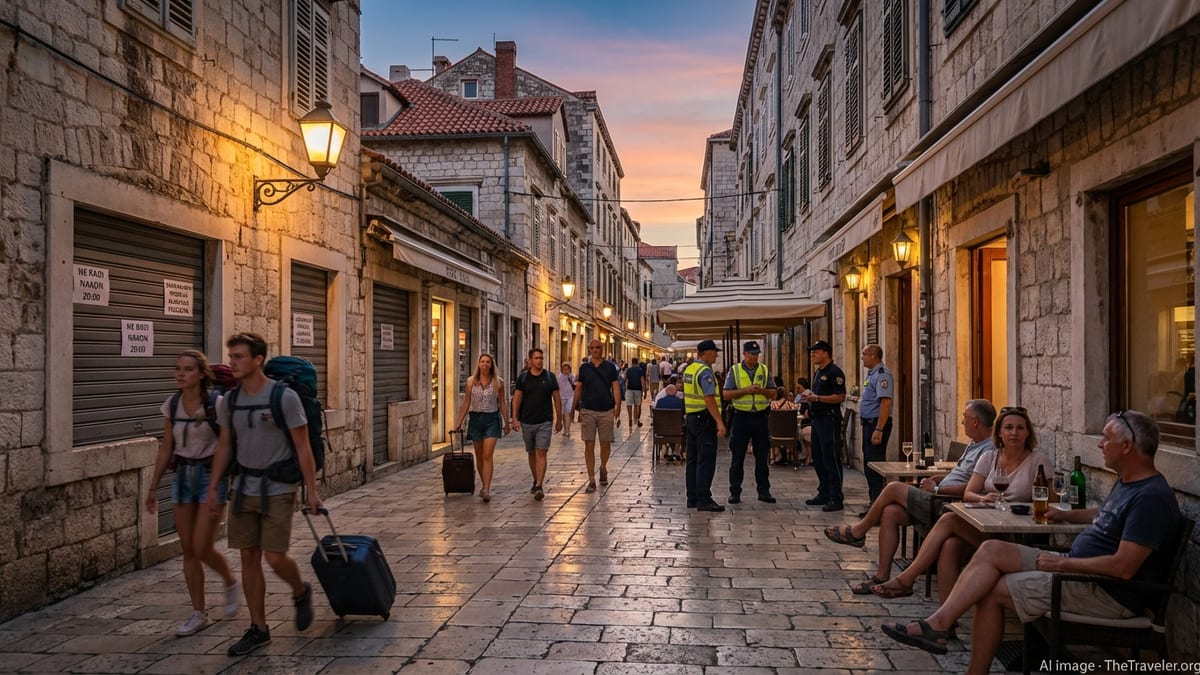
Cities Given New Powers to Limit Nighttime Alcohol Sales
The latest shift in Croatia’s approach to disruptive tourism centers on proposed changes to national trade rules that would give cities and municipalities clear authority to restrict evening and nighttime alcohol sales. The Economy Ministry in Zagreb clarified in mid-February that the state does not plan a blanket national ban after 8 p.m., but will instead legally empower local governments to set their own curfews for retail alcohol sales based on local needs and tourist pressure.
The distinction is crucial for a country whose coastal destinations, from Split and Dubrovnik to Hvar and Zadar, have become fixtures on Europe’s summer party circuit. While bars, clubs and restaurants are expected to keep serving drinks under their normal hospitality licenses, grocery shops, kiosks and small convenience stores are likely to face tighter hours in the most crowded historic centers and nightlife strips.
Officials argue that the measures are not about demonising tourists but about aligning Croatia with other major destinations that have concluded that easy access to cheap alcohol in shops late at night fuels street drinking, noise and vandalism. By delegating the power to local authorities, the government is attempting to strike a balance between protecting residents’ quality of life and preserving tourism, a cornerstone of the national economy.
Mayors along the Dalmatian coast have lobbied for clearer legal tools for several seasons, saying that existing public order regulations and fines have not kept pace with the volume of visitors and the explosive growth of budget flights and short-term rentals in medieval city centers.
Split Moves First With an 8 p.m. Summer Shop Cutoff
Split, Croatia’s second-largest city and a key hub for ferries to the islands, is emerging as the testing ground for the new approach. Local authorities have publicly backed a plan to prohibit alcohol sales in shops from 8 p.m. to 6 a.m. during the peak summer months, targeting streets in and around the UNESCO-listed Diocletian’s Palace and the busy Riva seafront promenade.
Residents have long complained about drunken crowds buying cheap beer and spirits from late-opening minimarts and then gathering in doorways, narrow alleys and squares where sound echoes off the stone walls. Videos of late-night chanting, public urination and tourists dancing on monuments have circulated widely on social media, fueling debate over how much late-night revelry a historic city can reasonably absorb.
The proposed rules would not prevent visitors from enjoying Split’s bars and nightclubs, which could continue serving alcohol under their existing licenses. Instead, the aim is to disrupt the flow of takeaway alcohol that underpins what locals describe as “open-air bar streets,” where pavements and public stairways effectively become drinking venues until the early hours of the morning.
Split’s mayor has framed the move as part of a wider effort to preserve the city’s character and keep the center livable for families and older residents who have watched noise and disorder escalate in lockstep with record tourist arrivals. The city has already introduced limits on public drinking, as well as fines for walking shirtless or in swimwear away from the beach, signaling a broader tightening of expectations around visitor behavior.
From Hvar to Dubrovnik, Local Backlash Shapes Policy
Split is not alone. Island destinations such as Hvar have for several years experimented with stricter rules aimed at party tourism, including noise limits, patrols targeting public drunkenness and prominent signage warning visitors of on-the-spot fines. Officials there say the measures have reduced the most extreme episodes of disorder but have not fully eliminated late-night disturbances, especially in peak season.
In Dubrovnik, best known for its fortified Old Town and cruise traffic, authorities have focused more on crowd management and short-term rentals, but alcohol-fuelled nuisance remains a recurring complaint in residential streets just outside the main tourist arteries. The emerging framework that gives Croatian municipalities explicit power to restrict retail alcohol sales is likely to be welcomed by local councils that have struggled to defend quality of life against the economic clout of the tourism sector.
Residents’ groups across the Adriatic coast have become more vocal, arguing that uncontrolled nightlife, stag and hen parties and cheap drink promotions threaten to turn historic quarters into what some describe as “theme parks for intoxication.” For them, curbing late-night shop sales is a pragmatic tool, easier to enforce than subjective bans on “rowdy behavior” and potentially more effective than raising fines alone.
Tourism professionals, however, are watching closely to see how the rules are drawn up and enforced. Many hoteliers and restaurateurs support measures that target irresponsible drinking in public spaces but worry that an overly restrictive regime could push younger visitors to rival destinations that are perceived as more permissive.
Spain’s Balearic Islands Set the Template for Tough Curfews
Croatia’s debate is unfolding against a wider European background in which some of the continent’s most famous party destinations have already moved aggressively to limit alcohol availability. Spain’s Balearic Islands, including Majorca and Ibiza, pioneered a new model from 2020 onwards that sharply curtailed what local authorities call “booze tourism.”
In resorts such as Magaluf, Playa de Palma and Sant Antoni, regional rules now ban happy hours, open bars and two-for-one drink offers, and prohibit shops from selling alcohol between roughly 9.30 p.m. and 8 a.m. Local governments have backed the measures with millions of euros for extra policing and inspections, insisting that curfews on retail alcohol are essential to tackle street drinking and balcony-jumping incidents that made headline news across Europe.
These measures have gradually been tightened and extended, and this year’s holidaymakers are being warned that on-the-spot fines for drinking in the street, behaving indecently in beach areas or staging unlicensed pub crawls can reach into the thousands of euros. Tourism authorities in the Balearics say serious incidents linked to alcohol have dropped significantly since the package of restrictions came into force, even as some businesses complain of lost revenue.
For policymakers in other Mediterranean destinations, the Balearic experience offers both a cautionary tale and a policy blueprint. It shows that curbing around-the-clock access to alcohol, particularly in convenience and grocery stores, can change nightlife patterns and reduce pressure on local communities, but also that clear communication with visitors is vital to avoid confusion and resentment.
Portugal’s Porto and Poland’s Hotspots Tighten the Rules
Portugal has also shifted course, with Porto, one of Europe’s most popular city-break destinations, introducing a nighttime alcohol sales ban in central districts. Since mid-2025, supermarkets, wine merchants, corner shops and souvenir stores in designated downtown “containment zones” have been barred from selling alcohol between 9 p.m. and 8 a.m. after authorities concluded that existing fines were not sufficient to curb disruptive public drinking.
City leaders in Porto say the curfew is designed to tackle late-night gatherings in busy streets lined with bars and clubs, where crowds had routinely spilled out with drinks bought cheaply from nearby shops. As in Spain, bars and licensed venues are allowed to continue serving during their normal opening hours, but bottle sales for consumption in public spaces have been sharply limited.
Further north and east, authorities in Poland have been responding to similar pressures in cities such as Kraków and Gdańsk, where stag party tourism and budget flights brought a sharp uptick in complaints about drunken behavior in historic centers. Several municipalities have introduced or extended restrictions on the sale of alcohol at night in shops, often after local referendums or council votes in which residents backed curfews to protect sleep and public order.
These measures, which typically focus on banning shop sales after late evening while leaving licensed bars largely unaffected, mirror the approach now being weighed in Croatia. They are all part of a broader trend towards using alcohol availability controls as a targeted tool in the fight against overtourism.
Australia’s Experience: Lockouts, Licensing and Public Order
Outside Europe, Australia has spent the past decade reshaping nightlife in major cities in response to alcohol-related assaults and disturbances, particularly in entertainment districts popular with visitors. Cities including Sydney and Brisbane have experimented with so-called lockout laws that prevent new patrons entering bars and clubs after a certain hour, alongside tighter controls on late-night takeaway alcohol sales.
While some of the strictest lockout provisions have since been relaxed or lifted after criticism from nightlife businesses, many Australian states retain firm limits on late-opening bottle shops and strong enforcement of public drinking bans. Tourism authorities there argue that clear, predictable rules around alcohol help reassure residents and international visitors that city centers remain safe after dark.
For Croatian officials studying international examples, Australia’s experience illustrates both the potential benefits and political risks of tough nightlife regulation. On one hand, reductions in alcohol-related violence and hospital admissions are widely cited. On the other, hospitality operators and some local leaders have complained of a loss of vibrancy and economic activity in once-bustling bar districts.
The Australian case underscores the importance of tailoring restrictions to specific neighborhoods, engaging with business owners and building in regular reviews so that measures can be adjusted if they prove either too weak or too blunt.
Balancing Tourism Revenue With Residents’ Quality of Life
The underlying question for Croatia, as for Spain, Portugal, Poland and Australia, is how to reconcile a lucrative tourism industry with the right of local people to quiet streets and orderly public spaces. Croatia relies heavily on foreign visitors, many of whom are drawn by its reputation for relaxed seaside living, historic towns and relatively affordable nightlife compared with Western Europe.
Local leaders insist that the objective is not to scare away tourists but to steer the country away from a race to the bottom in which cheap alcohol and permissive attitudes to disruptive behavior become the main selling points. The new powers for municipalities to limit late-night shop sales are being framed as a way to nudge nightlife back into regulated venues and away from squares, alleys and residential courtyards.
Residents in coastal hotspots complain that the combination of short-term holiday rentals and late-night drinking has eroded community life, with families moving out of old quarters and those who remain often unable to sleep during peak season. They argue that without firmer controls, Croatia risks repeating the experience of some Spanish resorts that became synonymous with binge-drinking tourism and later faced costly reputational damage and corrective policy overhauls.
At the same time, business owners who depend on summer crowds warn that new restrictions must be carefully calibrated and clearly communicated. Some worry that tighter rules on alcohol sales, if seen as confusing or arbitrary, could fuel negative headlines abroad and divert younger travelers to destinations that have not yet tightened their stance.
What Visitors Should Expect This Summer and Beyond
As Croatia’s legal changes move forward, travelers planning summer trips to the Adriatic should prepare for a patchwork of local rules on late-night alcohol sales. In practice, this is likely to mean earlier cutoffs for buying beer, wine and spirits in shops in busy tourist districts, particularly in Split and other coastal cities that have been at the forefront of calls for tougher controls.
Bars, restaurants and clubs are expected to continue serving within their licensed hours, but visitors may find it harder to stock up on cheap drinks in minimarts late at night or to continue street drinking in historic centers into the early hours. Tourists could also encounter more visible enforcement of public order rules, including checks on open containers in certain zones and reminders about appropriate dress away from the beach.
Travel industry observers say Croatia is joining a clear international trend in which authorities in popular destinations are increasingly willing to risk some pushback from party-focused visitors in order to create a more sustainable model of tourism. For travelers, the new reality is that sun, sea and nightlife will still be on offer, but often within a framework that sets earlier closing times for shops and stricter expectations about behavior in public spaces.
For now, Croatia’s approach stops short of some of the most far-reaching experiments seen elsewhere, such as Australia’s lockout laws or the toughest Spanish rules targeting balcony-jumping and organised pub crawls. Yet the direction of travel is clear, and local officials suggest that if current measures fail to control late-night chaos, further steps, including broader alcohol curfews or higher fines, may be considered in seasons to come.