

More news on this day
Croatia has adopted a stricter cash declaration regime for travelers crossing its borders, aligning with a wider European Union clampdown on undeclared cash that aims to protect tourism economies while tightening financial transparency across the bloc.
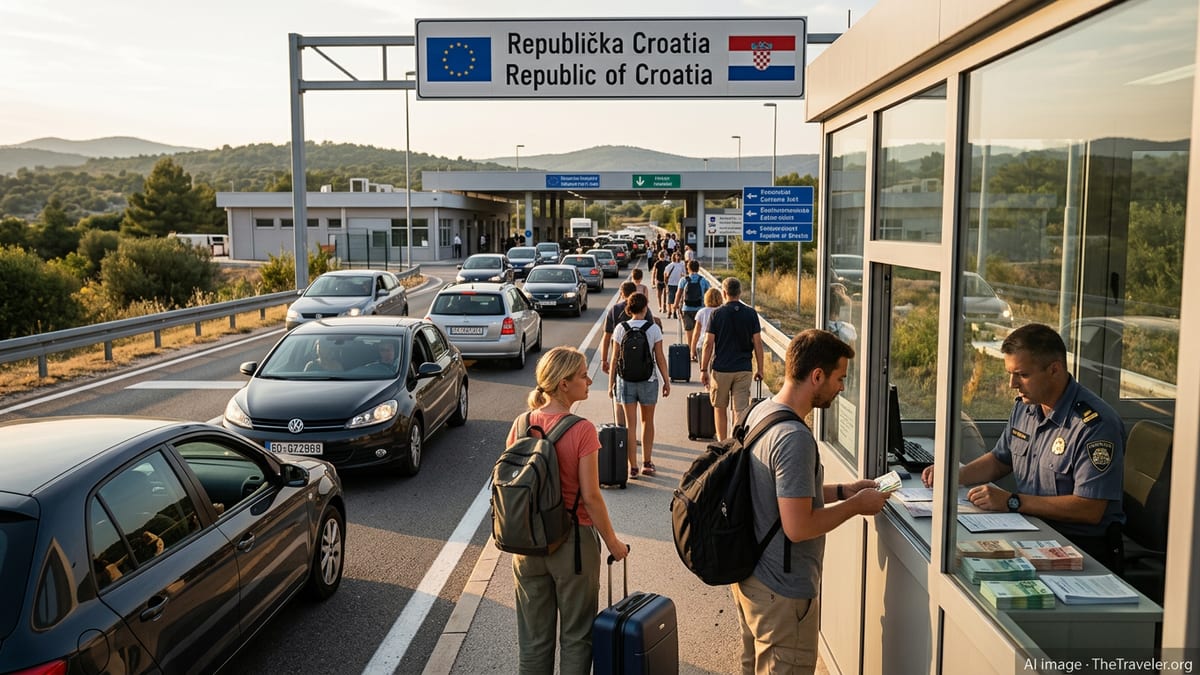
Croatia Aligns With EU-Wide Crackdown on Undeclared Cash
The Croatian Parliament this month approved an updated Foreign Exchange Law that introduces tighter oversight of cash movements across its borders, mirroring a broader European push to combat money laundering and terrorist financing. The move brings Croatia firmly in line with the European Union’s cash control framework, which requires travelers entering or leaving the bloc to declare 10,000 euros or more in cash and certain financial instruments.
The reform clarifies and strengthens how Croatian customs and financial authorities monitor large sums carried by travelers, including more detailed information on the origin and intended use of funds. Officials in Zagreb have framed the update as both a legal obligation and a reputational investment, positioning Croatia among a growing group of EU states that are actively enforcing stricter rules at air, land and sea borders.
The new rules arrive as Croatia cements its role as a major Mediterranean destination within the eurozone and the Schengen Area, with record visitor numbers putting additional scrutiny on the flow of cash tied to tourism, real estate and services. Authorities argue that a more transparent cash environment is essential to keep pace with the country’s rapid tourism growth.
How the EU’s Cash Declaration Rules Work for Travelers
Under EU regulation, any traveler entering or leaving the European Union with 10,000 euros or more in cash, or the equivalent in other currencies and certain bearer instruments, must file a declaration with customs at the external border. This obligation applies regardless of nationality and includes money carried in hand luggage, checked bags or vehicles, as well as funds held on behalf of other people.
The declaration typically records a traveler’s identity, travel route, the exact amount being carried, and information about where the money comes from and how it will be used. Customs officers can ask for supporting documents and are empowered to temporarily seize funds if the rules are ignored or if the money is suspected to be linked to criminal activity.
Within the EU, countries can adopt their own complementary rules for movements of cash across internal borders or within national territory. States such as Italy, Spain, the Netherlands, Belgium, Finland and Austria have layered stricter reporting thresholds or additional checks on top of the EU-wide standard, especially in sectors or regions with high tourism and real estate activity.
Tourism Hotspots Tighten Controls Without Deterring Visitors
Several of Europe’s most visited countries have moved in recent years to reinforce cash declaration rules and related anti-money-laundering measures, arguing that a clean financial reputation is increasingly vital for sustainable tourism. Italy, Spain and Austria, for example, have paired the EU-wide 10,000 euro threshold with tougher domestic scrutiny of large cash payments in hospitality, luxury retail and property transactions.
In the Netherlands and Belgium, where tourism intertwines with major financial and logistics hubs, authorities have intensified data sharing between customs, tax offices and financial intelligence units. This coordinated approach is designed to identify patterns of suspicious cash movements, including cases where travelers repeatedly move just under declaration limits or route money through multiple EU entry points.
Finland and other northern European destinations have largely embraced digital payments, but they too are refining their cash controls, conscious that airports, cruise terminals and land crossings remain attractive routes for illicit funds. By joining this group, Croatia signals that its beaches, islands and heritage cities are not a weak link in Europe’s financial control chain.
What the Stricter Rules Mean for Visitors to Croatia
For the vast majority of tourists, the updated Croatian rules will have little practical impact, as most travelers already rely on cards, mobile payments and modest amounts of cash for day-to-day spending. Those carrying less than 10,000 euros in cash equivalent will generally see no additional formalities at the border beyond standard passport checks.
Travelers who do plan to carry larger sums, however, will face a more structured and better enforced declaration process. They should be prepared to fill out forms, answer questions about the source and purpose of the funds, and provide documentation such as bank withdrawal slips, sales contracts or proof of income if requested by customs officers.
Authorities stress that the aim is not to discourage legitimate visitors, but to deter attempts to smuggle undeclared cash linked to tax evasion, organized crime or undeclared business activity in the tourism sector. Clearer, harmonized rules across the EU are meant to reduce confusion at borders, especially as new digital border systems roll out and traveler volumes continue to rise.
Balancing Traveler Convenience With Financial Integrity Across the EU
Croatia’s move comes as the European Union steps up efforts to modernize its wider anti-money-laundering framework, including new centralized supervision structures and a long-planned cap on large cash payments for goods and services. While these policies have sparked debate about the future of cash, Brussels has underlined that private use of cash remains legal, with the focus squarely on high-risk, high-value transactions.
For travel and tourism, the challenge is to implement robust controls without undermining the seamless experience that draws millions of visitors to Europe’s open borders. Industry groups argue that predictable, well-communicated rules at airports, ports and land crossings can help travelers comply while maintaining confidence in Europe as a safe and welcoming destination.
With its new legislation, Croatia is positioning itself at the forefront of this balancing act. By aligning with partners such as Italy, the Netherlands, Belgium, Spain, Finland and Austria, it aims to ensure that the economic benefits of tourism are not undermined by opaque cash flows, but instead are channelled into a more transparent, resilient and trustworthy European travel market.