

More news on this day
Croatia’s tourism industry is heading into 2026 with solid momentum, as record recent seasons and fresh projections suggest the Adriatic nation will capture a growing share of travelers steering away from conflict-affected parts of the Middle East and eastern Mediterranean.
Get the latest news straight to your inbox!
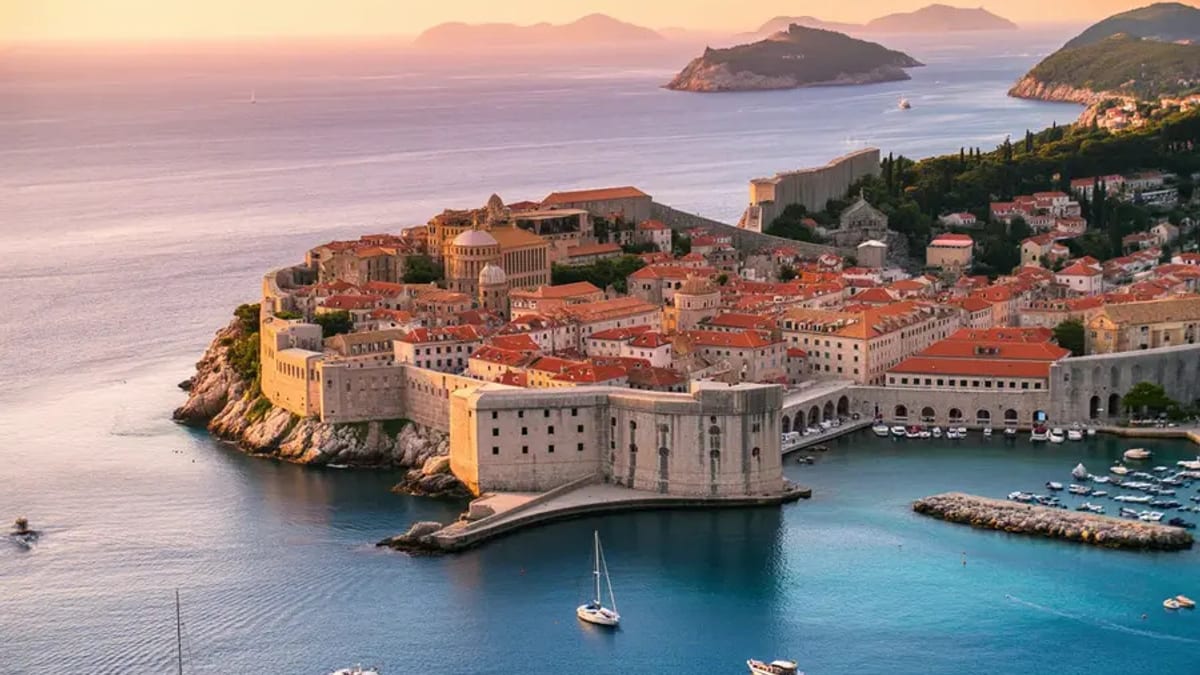
Image by Latest International / Global Travel News, Breaking World Travel News
Record Seasons Cement Croatia as a Reliable Mediterranean Draw
Recent data show Croatia has consolidated its position among Europe’s most visited coastal destinations after several successive record or near-record years for visitor numbers. National statistics and industry coverage indicate that the country welcomed more than 21 million tourists in 2024, with over 100 million overnight stays, and tourism again accounted for roughly a fifth of national economic output. Reports from Croatia’s eVisitor registration system and travel trade publications describe 2025 as another high-performing year, with modest year-on-year increases in both arrivals and nights, even as parts of Europe experienced a flatter season.
Figures for the first half of 2025 pointed to around 3 to 4 percent growth in arrivals and overnights compared with the same period in 2024, according to Croatian and regional media summaries of official data. While peak-summer volumes in July 2025 softened slightly compared with a record 2024, coastal regions such as Istria and leading destinations including Rovinj and Dubrovnik continued to report millions of overnight stays and strong occupancy rates across hotels, private rentals and campsites.
Analysts note that the performance has been supported by a diversified mix of source markets. Germany, Slovenia, Austria, Italy and other European Union members continue to provide the bulk of foreign visitors, while North American arrivals have grown from a small base thanks to improved air links and cruise itineraries. Industry commentary suggests that despite concerns about higher prices after Croatia’s adoption of the euro, demand has so far remained resilient, reflecting the destination’s perceived safety, infrastructure upgrades and broadened cultural and nature offerings beyond the peak beach season.
Middle East Turmoil Redirects Demand Across the Mediterranean
The latest escalation of conflict involving Israel, Gaza and neighboring states has added a new layer of instability to an already fragile regional environment, with aviation disruptions, travel warnings and insurance restrictions affecting parts of the Middle East and eastern Mediterranean. International organizations and economic policy briefings describe a sharp negative impact on tourism in countries closely tied to the conflict, including Israel, Jordan and some Gulf destinations, where arrivals have fallen and forward bookings remain weak.
Coverage in European business media in March 2026 reports that large tour operators and online agencies are recording a noticeable shift in bookings away from eastern Mediterranean destinations such as Cyprus and parts of Turkey toward western Mediterranean and Adriatic countries. Travel companies cited in those reports describe customers actively seeking alternatives perceived as more stable, with Italy, Spain, Malta and Croatia among the main beneficiaries of rebooked package holidays and cruises that have been rerouted around sensitive airspace and ports.
Global tourism outlooks prepared by banks and regional analysts suggest that international travel is expected to grow moderately in 2026 after hitting historic highs in 2025. Within that broader expansion, destinations with comparatively low geopolitical risk and reliable transport connectivity are projected to capture a disproportionate share of new and displaced demand. Croatia’s status as a member of both the European Union and the Schengen Area, combined with a track record of avoiding major security incidents, is frequently highlighted in such assessments as a competitive advantage in the current environment.
Croatia Positions Itself as a Safe, High-Value Destination
Croatia’s long-term tourism strategy has placed strong emphasis on safety, quality and sustainability, and recent policy changes have reinforced that direction. The national tourism development framework to 2030, as described in Organisation for Economic Co-operation and Development analysis, sets an explicit goal of maintaining Croatia as one of Europe’s leading destinations for safety and high added value. A new Tourism Act that entered into force in January 2024 created more structured, data-driven management of visitor flows, with an eye to preserving local quality of life while protecting competitiveness.
Marketing and planning documents from the Croatian National Tourist Board for 2026 and 2027 indicate that future campaigns in key foreign markets will promote Croatia not only for its coastline but also for its perceived security, modern infrastructure and diversified experiences. There is a push to strengthen year-round travel by highlighting cultural events, inland nature areas and city breaks in Zagreb and regional centers, partly to ease pressure on crowded summer hot spots and partly to stabilize revenue across seasons.
Industry observers note that the country has also benefited from its rapid post-pandemic recovery and macroeconomic stability. Croatia’s integration into the eurozone and the Schengen free-travel area has simplified border crossings and payments for European visitors, elements that are increasingly important as travelers compare alternatives in a complex geopolitical setting. Publicly available information from ratings agencies and financial institutions links Croatia’s recent gross domestic product growth, which has outpaced much of the euro area, to sustained tourism income and ongoing investment in hospitality infrastructure.
Opportunities and Pressures in a Redefined Competitive Landscape
The redirection of demand away from unstable Middle Eastern and eastern Mediterranean destinations presents clear short-term opportunities for Croatia, but it also intensifies existing pressures. Urban and coastal communities have already raised concerns about crowding, housing affordability and environmental strain during peak season, particularly in historic centers such as Dubrovnik and on popular islands. Commentaries from regional media and public debate describe a growing push to balance volume with value, manage cruise ship traffic more tightly and tackle issues such as waste, water use and noise in tourist-heavy areas.
At the same time, Croatia faces fiercer competition from other “safe” Mediterranean destinations that are also trying to capture diverted demand. Italy, Spain and parts of the western Balkans are investing heavily in marketing, new hotel capacity and transport links. Analysts suggest that Croatia’s ability to sustain growth will depend on differentiating itself through authenticity, cultural programming and nature-based experiences, while avoiding overreliance on price-driven mass tourism that could undermine both resident support and long-term profitability.
Forward-looking assessments from banks and tourism research groups project continued but more moderate growth for European tourism overall in 2026, after the rapid rebound of 2023 to 2025. Within that context, Croatia is widely seen as likely to remain among the region’s outperformers. Stable institutions, clear security perceptions and ongoing infrastructure upgrades, combined with travelers’ desire to avoid perceived conflict zones, point to another robust season on the Adriatic, even as the country debates how much further its tourism industry should expand.
Shift in Traveler Priorities Favors Secure Adriatic Getaways
Surveys and booking trends tracked by large European tour operators indicate that safety and geopolitical stability have moved higher up the list of considerations for holidaymakers planning trips in 2026. While value for money and weather remain important, the prospect of airspace closures, protests or sudden changes in travel advisories in parts of the Middle East and its vicinity has led many travelers to lock in itineraries within the European Union, particularly along the Mediterranean and Adriatic coasts.
In this recalibrated landscape, Croatia’s mix of fortified medieval towns, island archipelagos and national parks, all within a regulated and comparatively secure environment, appears to resonate strongly with international visitors seeking reassurance as well as relaxation. Reports from cruise and ferry operators describe ongoing adjustments of routes to emphasize Adriatic ports, while hotel groups and private accommodation platforms in Croatia continue to expand capacity, albeit at a more measured pace than during the immediate post-pandemic rebound.
As the 2026 high season approaches, the combination of strong recent performance, favorable risk perceptions and deliberate positioning as a safe, high-quality Mediterranean destination suggests that Croatia will remain near the top of travelers’ lists. The country’s challenge will be to translate the current wave of diverted demand into a more balanced, sustainable tourism model that can withstand future geopolitical shocks while maintaining the qualities that first drew visitors to its shores.