

More news on this day
Switzerland is edging toward a new transit fee for foreign motorists crossing the Alps, a measure intended to curb congestion and environmental pressures on sensitive mountain routes while reshaping how visitors in transit contribute to the country’s road network.
Get the latest news straight to your inbox!
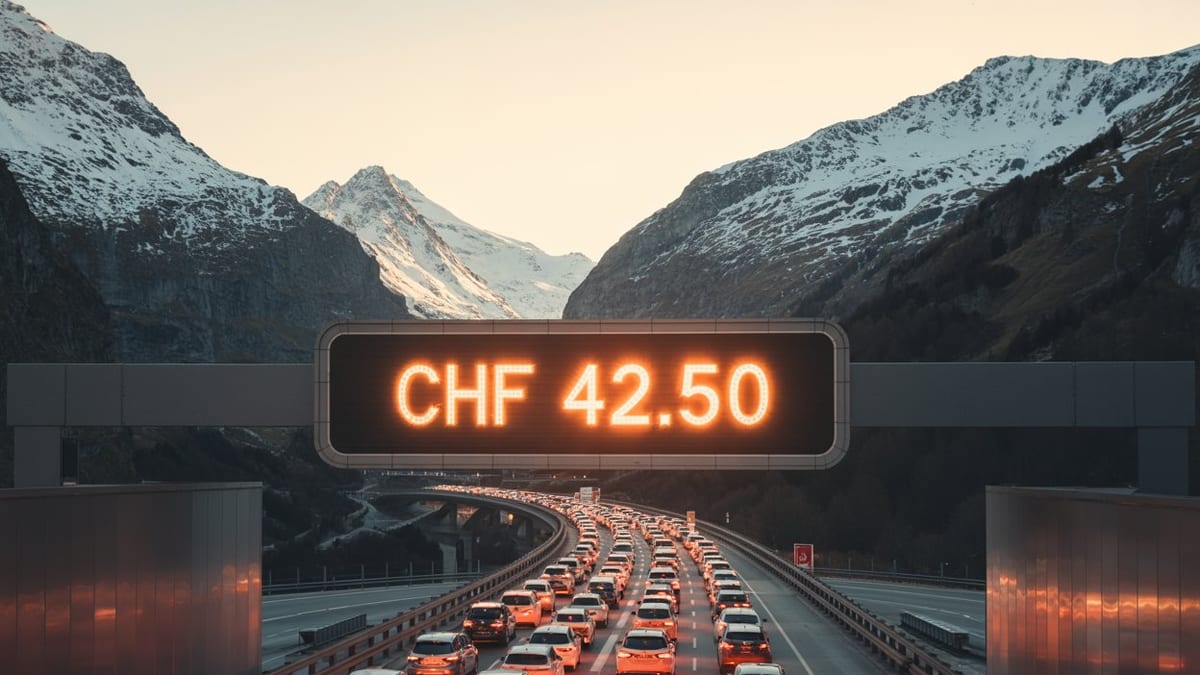
Image by Travel And Tour World
From Parliamentary Motion to Proposed Transit Charge
Debate over a specific transit fee for foreign drivers has gathered momentum in Bern, building on long standing concerns about heavy through traffic on Alpine motorways such as the Gotthard corridor. Publicly available information shows that a parliamentary motion is seeking to charge motorists who simply cross Switzerland without an overnight stay, on top of existing obligations like the nationwide motorway vignette.
Reports indicate that the initiative is framed as a way to ensure that travelers who use Switzerland as a quick north south shortcut contribute more fairly to the costs and impacts of that traffic. Current rules already require most passenger vehicles up to 3.5 tonnes to display a 40 franc annual vignette to use national motorways, regardless of how many days they spend in the country. Critics of the status quo argue that this flat, low annual fee gives frequent foreign transit drivers generous access to Swiss roads compared with neighboring toll systems.
Recent coverage suggests that the proposal is linked politically to Switzerland’s Alpine protection principles, which require that mountain regions be safeguarded from the effects of transit traffic and that freight in particular be shifted as far as possible from road to rail. Supporters of the new charge present it as a logical extension of those goals into the realm of private car travel, targeting flows that add congestion but generate little local economic benefit.
According to published coverage from early 2026, lawmakers expect that any concrete model for a transit fee would ultimately be tested in a nationwide vote. It is therefore not yet a confirmed levy, but the legislative process has moved the idea several steps closer to reality and prompted early planning by transport firms and cross border travelers.
How the Transit Fee Would Differ from the Swiss Vignette
For now, the basic tool for driving on Swiss motorways remains the motorway vignette, available in both physical sticker and digital form. The vignette, priced at 40 Swiss francs, is valid for around fourteen months and is required for cars, motorcycles, campervans and light vans using motorways and expressways. Heavy vehicles over 3.5 tonnes are instead subject to a separate performance related heavy vehicle charge calculated per tonne kilometre.
The proposed transit fee would sit on top of this framework as an additional charge specifically for drivers classified as being in transit. According to reports, the focus is on foreign registered vehicles that enter Switzerland, cross the Alps using key corridors such as the Gotthard, San Bernardino or Simplon axes, and exit again without any registered overnight stay or extended visit.
Unlike the time based vignette, which offers unlimited use within its validity period, the new fee is being discussed as a targeted charge that would apply only to certain routes or crossings. Policy discussions described in Swiss and international media explore options such as a one off per transit payment, differentiated fees for peak holiday periods, and possibly higher tariffs for more polluting vehicles. No official model has been adopted, but the direction of travel points toward more granular charging that reflects distance and environmental impact rather than a simple annual sticker.
For travelers, an important distinction is that the classic vignette would almost certainly remain in place for the foreseeable future. Transit drivers would therefore need to budget for the existing vignette requirement plus a potential extra fee tied to crossing the Alps without stopping, a change that could significantly alter the cost calculation for quick drive through itineraries.
Who Might Have to Pay and How It Could Be Collected
Public discussion of the reform indicates that the fee is aimed at foreign registered private cars and possibly motorhomes, although the exact scope is still under debate. One central challenge is defining what counts as transit. Concepts floated in policy articles include linking the charge to license plate recognition systems at strategic points and combining that data with border crossing records to determine whether a vehicle has simply passed through the country.
Some scenarios examined in Swiss media foresee cameras on key entry and exit routes, especially around major Alpine tunnels and passes, with automatic billing tied to the number plate of foreign vehicles. Similar systems already operate in several European countries for congestion fees and emission zones, giving Swiss planners a variety of technical models to study. A digital approach would also align with the recent introduction of an electronic vignette in Switzerland, which already associates a vehicle’s registration number with motorway fee payments.
Another open question concerns exemptions and adjustments. Commentators have raised the possibility that residents of neighboring border regions, regular cross border commuters and families with close ties on both sides of the frontier might be granted special conditions so that routine local trips are not priced the same as long haul tourist transits. Environmental policy advocates, by contrast, argue that robust pricing is needed to reduce pressure on Alpine valleys regularly overwhelmed during peak holiday weekends.
Until a final law and implementing regulations are adopted, travelers will not know the precise registration requirements, collection methods or available payment channels. However, indications from existing digital road pricing systems suggest that online prepayment portals, app based accounts and payments via rental car intermediaries are all likely to feature.
Timeline, Political Hurdles and What Travelers Should Expect
According to recent coverage in Swiss and European travel media, the parliamentary motion behind the transit fee is expected to culminate in a decision within the next couple of years, with observers frequently citing 2026 as a key reference point for a possible referendum. In Switzerland’s system of direct democracy, major changes to road pricing and constitutional principles often require or attract a public vote, which can reshape or delay original plans.
The country’s constitution currently enshrines the principle that public roads are in general free to use, although this rule already coexists with the motorway vignette and heavy vehicle charges. Campaigners for the transit fee argue that the constitutional Alpine protection article provides solid backing for targeted measures on the most sensitive corridors. Opponents highlight the risk of creating a new barrier to cross border tourism and warn of potential conflicts with neighboring countries if charges are perceived as discriminatory.
For the moment, there is no fixed start date or final tariff table. Travelers planning to drive across Switzerland in 2026 and 2027 should therefore follow legislative developments and consult official information closer to their departure. Given typical Swiss timelines for new nationwide fees, any approved transit charge is likely to include a transition period with extensive public information before full enforcement begins.
Tour operators and coach companies that rely on fast Alpine crossings may face the most significant adjustments, as trip pricing and route planning would need to factor in both the Swiss vignette and any new per transit fee. Individual motorists, particularly those on once in a lifetime road trips, may accept higher costs as part of a broader trend toward environmental and congestion related charging across Europe’s most trafficked mountain corridors.
Practical Tips for Drivers Crossing the Alps
Even before any new transit charge is introduced, travelers heading through Switzerland by road should prepare for stricter enforcement of existing rules. Reports and traveler accounts underline that driving on Swiss motorways without a valid vignette can lead to on the spot fines, and checks are common around popular border crossings and motorway junctions near the Alps.
Motorists renting cars in neighboring countries should verify in advance whether a Swiss vignette is included. Many vehicles hired in Switzerland come with the sticker or digital registration already paid for, while cars collected in nearby EU countries may not. The rise of the digital vignette gives additional flexibility, allowing drivers to register a license plate online shortly before travel, provided that payments have been processed successfully.
Route choice also matters. Alternative itineraries that bypass Swiss territory, for example via France or Austria and Italy, may become relatively more attractive if a separate transit fee is introduced on top of the vignette. However, these options can involve their own tolls, separate vignettes, and heavy traffic at other Alpine passes. Travelers are therefore weighing costs, environmental considerations, driving time and scenery when deciding whether to continue using Switzerland as their main north south corridor.
Until Switzerland’s new transit fee is finalized, the safest approach for travelers is to budget for existing motorway charges, monitor legislative developments, and remain flexible about route planning. The direction of policy suggests that using Europe’s most spectacular Alpine crossings will increasingly come with a clearer price tag, particularly for those simply passing through.