

More news on this day
Escalating conflict around the Strait of Hormuz and renewed attacks on regional shipping lanes are triggering sweeping cancellations of Middle East voyages, as major cruise operators suspend Gulf and Red Sea programs and scramble to reroute ships and repatriate thousands of passengers.
Get the latest news straight to your inbox!
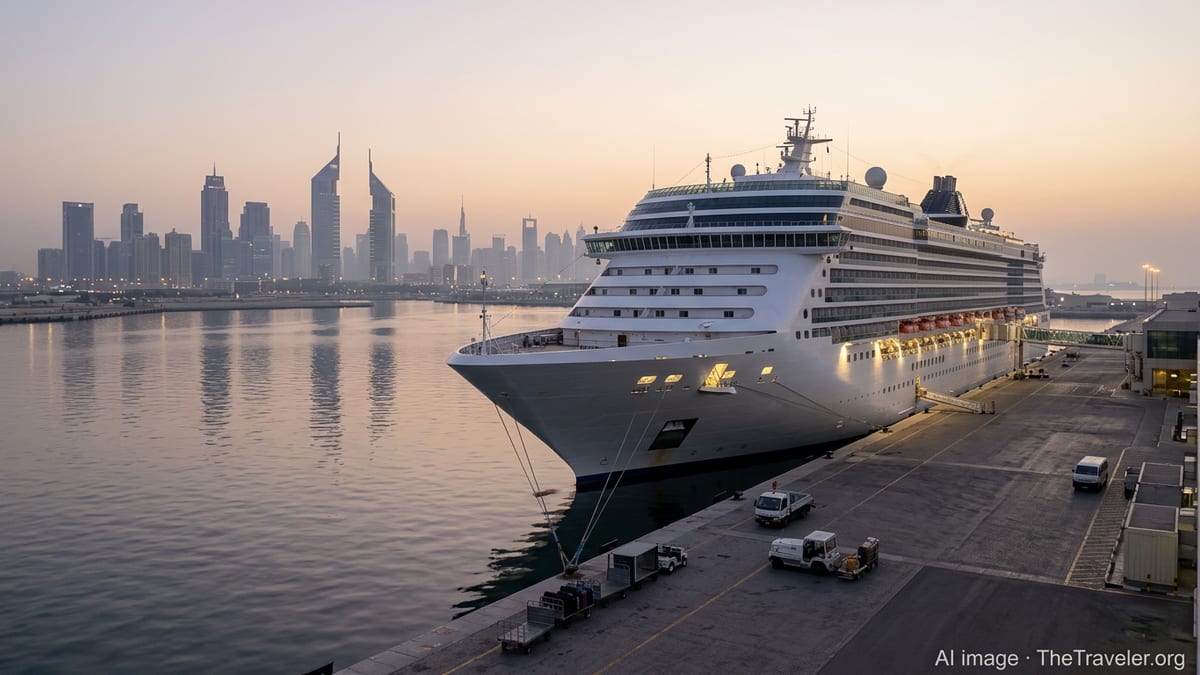
Rapid Shutdown of Gulf and Red Sea Cruise Programs
Middle East cruise seasons that were expected to run well into spring have effectively been cut short in a matter of days. Publicly available information shows that regional and European brands with a heavy Gulf footprint have halted or sharply reduced operations, following port advisories warning of heightened military risk, constrained airspace and insurance restrictions in and around the Strait of Hormuz.
Recent coverage indicates that Celestyal Cruises, MSC Cruises, TUI Cruises and Saudi Arabia’s AROYA Cruises are among the operators canceling or suspending sailings that would have transited the strait or called at ports in the United Arab Emirates, Qatar and Saudi Arabia. Reports from trade publications describe voyages being terminated early in Dubai, with cruise lines arranging hotels, transfers and alternative flights as air corridors allow.
The current crisis follows several years of mounting caution around the Red Sea and eastern Mediterranean, where cruise lines had already reduced calls to Israel and repositioned ships away from the most exposed chokepoints. What had been framed as temporary detours is now becoming a broader retreat from the Middle East, at least in the near term, as operators reassess the viability of itineraries that depend on the Gulf and adjacent waters.
Industry analysis suggests that the sudden shutdown reflects not only security concerns but also the practical difficulties of maintaining reliable schedules when ship movements can be disrupted with little notice. The decision to suspend voyages entirely, rather than attempt complex piecemeal diversions, is seen as an attempt to provide clarity to travelers and travel agents in a fast-changing situation.
Stranded Ships, Stressed Networks and Passenger Repatriation
The most visible impact of the crisis has been on passengers already at sea. Reference material on the 2026 Strait of Hormuz crisis notes that at least six large cruise ships, including vessels from AROYA Cruises, Celestyal Cruises, MSC Cruises and TUI Cruises, were initially unable to continue their scheduled routes after operators stopped using the strait. The affected ships were forced to idle or divert while companies rushed to secure safe ports for disembarkation.
Subsequent reports indicate that passengers from some of those vessels have now disembarked in Dubai and other Gulf ports, with cruise lines organizing onward travel where commercial airspace restrictions permit. Travel trade coverage describes complex, case by case arrangements as airlines adjust schedules and some routes into and out of the region remain suspended or constrained.
For travelers, the experience has ranged from abrupt itinerary changes to full voyage cancellations. Some guests booked on upcoming Gulf sailings have received notifications that their cruises will not operate, coupled with offers of full refunds, future cruise credits or rebookings on alternative itineraries away from the region. However, limited cabin availability on peak holiday sailings, especially in popular balcony categories, is making like for like replacement difficult.
Behind the scenes, cruise operations teams are working through a cascading set of challenges. Ships need to be repositioned to safer waters, crew rotations must be reorganized, and port slots in alternative regions such as the Mediterranean and Caribbean have to be secured on very short notice. Industry observers note that even when passengers are fully compensated, the operational and logistical strain on cruise networks is substantial.
Security, Insurance and the Ripple Effect on Regional Tourism
The cruise suspensions are closely tied to changing risk assessments in the wider maritime sector. Recent advisories describe how many commercial shipping lines have sharply reduced transits through the Strait of Hormuz and nearby corridors, citing both direct threats to vessels and uncertainty over potential escalations. Similar dynamics were seen previously in the Red Sea, where attacks on commercial shipping led container lines and cruise operators to divert or suspend voyages.
Insurance conditions are compounding the challenge. Industry updates indicate that some marine insurers have curtailed or withdrawn war risk coverage for vessels entering high risk zones in the Gulf, Red Sea and Gulf of Oman. Without adequate coverage, cruise lines face higher financial exposure in the event of an incident, making continued leisure operations increasingly difficult to justify.
The impact extends well beyond the ships themselves. Over the past decade, ports in the United Arab Emirates, Qatar and Saudi Arabia have invested heavily in cruise terminals and shore infrastructure to capture a growing share of the winter sun market. With major operators now suspending or rerouting Middle East sailings, analysts expect a meaningful hit to local tourism economies that had come to rely on regular ship calls.
Hospitality and excursions providers stand to feel the effects quickly. From Dubai’s waterfront attractions to heritage tours in Gulf cities, many businesses had built products specifically for cruise visitors. As ships redeploy to other regions, those partners may see bookings evaporate for at least the remainder of the current season and possibly longer, depending on how the security situation evolves.
Global Fleet Repositioning and Itinerary Overhauls
The turmoil in the Middle East is reshaping deployment plans well beyond the Gulf. Several major operators had structured complex world cruises, repositioning voyages and winter programs around Red Sea and Suez Canal passages, including sailings between Europe and Asia or between European homeports and Dubai. In some cases, these longhaul itineraries have now been canceled outright or redesigned to bypass the region entirely.
Coverage from cruise industry outlets highlights examples such as MSC Cruises canceling a 25 day Grand Voyage between Dubai and Southampton in April 2026, citing an inability to guarantee safe transit across the Red Sea and Suez Canal. Earlier adjustments by global brands, including rerouting ships around Africa during previous Red Sea flare ups, are being revisited as operators fine tune 2025 and 2026 deployment.
For guests booked on these complex itineraries, the changes can be particularly disruptive. World cruise segments and grand voyages are often planned years in advance, with travelers arranging extensive air, hotel and land touring around specific port calls. Rebooking options may not fully replicate the original routing, and in some cases travelers are opting for shorter, more regionally focused cruises in perceived lower risk areas.
At a strategic level, the crisis is prompting cruise executives to reconsider the balance between adventurous routing and operational resilience. While itineraries that include iconic transit points such as the Suez Canal or Gulf ports have strong market appeal, the cost of repeated disruptions may push more capacity into established, lower risk regions like the Caribbean, Western Mediterranean and Northern Europe for upcoming seasons.
What Travelers Should Expect in the Months Ahead
For would be cruisers, the immediate implication is a shrinking menu of options that include the Arabian Gulf, Red Sea or surrounding waters. Forward looking schedules already show fewer departures from Dubai and other Gulf homeports, and industry commentary suggests that most large brands will avoid committing additional tonnage to the region until there is sustained stability and more predictable maritime risk.
Travel advisors are encouraging clients with existing Middle East bookings in late 2025 and early 2026 to monitor communications from their cruise line closely and to consider backup plans in alternative regions. Many operators are offering flexible rebooking windows, fare protection and, in some cases, added onboard credit to encourage guests to shift to modified itineraries without canceling their cruise plans entirely.
Prospective passengers considering new reservations that involve any transit of the Strait of Hormuz, Red Sea or adjacent conflict affected areas are being advised, in publicly available guidance, to review itineraries carefully and to check for recent schedule changes. Even when voyages remain on sale, they may be subject to further modification as operators track developments in real time and adapt to shifting advisories and insurance conditions.
How quickly Middle East cruise programs recover will depend on a combination of geopolitical developments, maritime security trends and traveler sentiment. For now, the picture is one of rapid retrenchment, as cruise lines prioritize safety, operational predictability and global fleet stability over maintaining a presence in one of the world’s most geopolitically sensitive waterways.