

More news on this day
Escalating regional tensions and shipping restrictions in and around the Strait of Hormuz have triggered a major setback for the Arabian Gulf’s cruise season, with multiple ships held in port, itineraries abruptly curtailed and thousands of passengers facing prolonged delays and complex journeys home.
Get the latest news straight to your inbox!
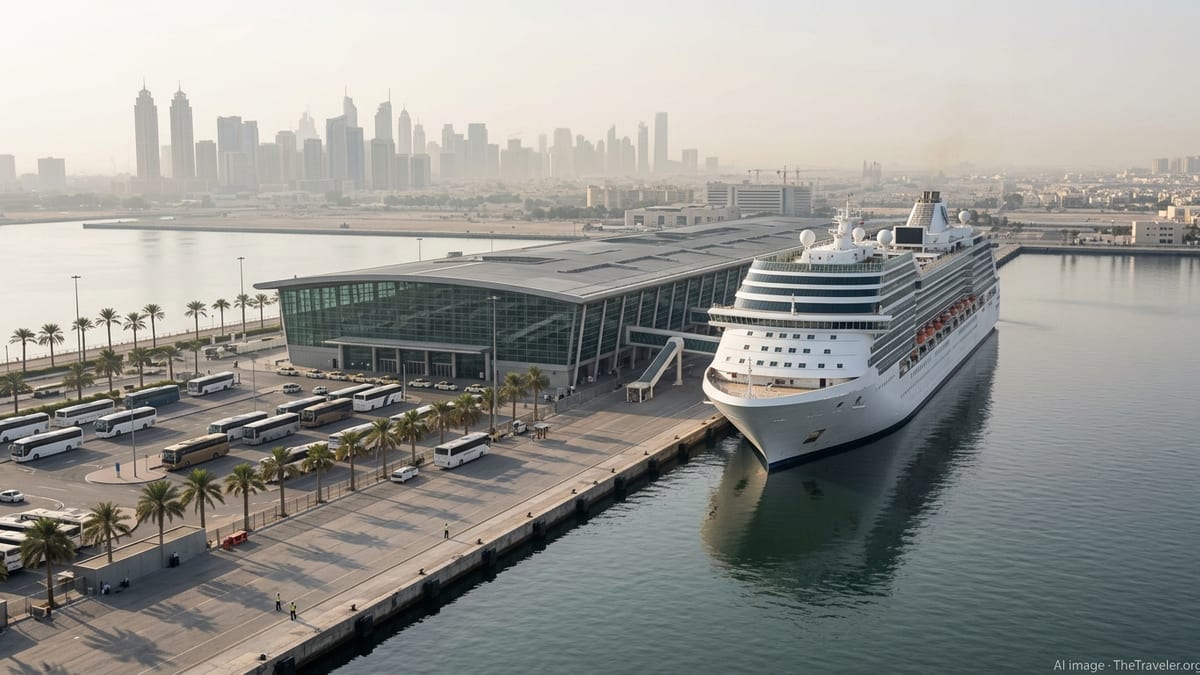
Cruise Season Disrupted Across Key Arabian Gulf Hubs
Publicly available cruise-tracking data and industry reports indicate that cruise operations across major Arabian Gulf hubs, including Dubai, Abu Dhabi and Doha, have been heavily disrupted since late February 2026. The escalation of conflict involving Iran and its neighbors, combined with a sharp rise in military activity around the Strait of Hormuz, has led operators to suspend departures, keep ships at berth and reassess the viability of remaining sailings this season.
Cruise-focused outlets report that several ships scheduled to operate roundtrip itineraries in the region have been unable to depart as planned, resulting in voyages being cut short or cancelled entirely. Sailings marketed as convenient fly-cruise holidays centered on Dubai or Doha are now facing a combination of airspace closures, reduced commercial flights and security advisories affecting maritime movements, all of which are contributing to extensive delays.
According to recent cruise industry coverage, some lines have moved from short-term pauses to outright cancellation of the remaining 2025–26 Arabian Gulf programs. This has left ships unexpectedly idle in regional ports and forced companies into rapid contingency planning for both passenger repatriation and future deployment of their fleets.
Strait of Hormuz Crisis Creates Bottleneck for Cruise Traffic
The developing crisis around the Strait of Hormuz sits at the heart of the disruption. Maritime security advisories issued in early March describe a heightened military risk environment throughout the Arabian Gulf, Gulf of Oman and adjacent waters, prompting many commercial vessels to avoid transiting the narrow waterway. While there has been no universally recognized legal closure of the strait, company-level risk policies and radio warnings reported by ship operators have dramatically reduced traffic.
Analysts note that cruise ships, which typically require predictable schedules and an environment perceived as safe by international travelers, are among the most exposed to such volatility. Industry commentary suggests that at least half a dozen large cruise vessels operating in or near the Arabian Gulf have effectively been trapped by the evolving situation, unable to reposition via the strait and reluctant to set out on alternative routes without clear assurances about safety and port access.
Operationally, this has translated into ships remaining alongside in ports such as Dubai and Doha while cruise lines work through fast-changing security assessments and flight availability. Some vessels that were due to exit the region at the end of the winter season now face uncertain timelines for leaving the Gulf, complicating their redeployment to European or other summer markets and cascading delays into future itineraries.
Passengers Face Lengthy Delays and Complex Repatriation Journeys
For passengers, the sudden breakdown of normal cruise patterns has led to a wave of inconvenience and uncertainty. Travel media reports describe guests finding their voyages transformed from multi-port holidays into extended stays on ships moored at a single port, or into hastily organized hotel nights ashore while flights are sourced out of increasingly congested regional airports.
Cruise lines have been working to arrange alternative transport for affected travelers, with some reports highlighting large-scale efforts to secure charter and commercial seats to move guests out of the UAE and Qatar. However, airspace restrictions and temporary suspensions of flights to and from several Gulf destinations have limited options, stretching repatriation operations over several days and, in some cases, leaving passengers facing lengthy waits before they can return home.
Travel advisors cited in trade publications say the situation has also generated a significant customer service burden, as agents rebook air tickets, update insurance claims and help clients understand evolving cancellation and compensation policies. With communication channels busy and conditions changing rapidly, many travelers have turned to cruise forums and social media to share real-time updates about ship movements, delays at terminals and shifting departure estimates.
Cruise Lines Cancel, Curtail and Reroute Arabian Gulf Programs
In response to the instability, major cruise operators with a presence in the Arabian Gulf have moved quickly to curtail or cancel itineraries. Industry news outlets report that MSC Cruises, Celestyal Cruises and TUI Cruises are among the brands adjusting schedules, including cancelling late-season departures from Dubai and Doha and ending Gulf programs earlier than initially advertised.
Some cruise lines had already begun reshaping their broader Middle East strategies in recent years, rerouting repositioning sailings to avoid the Red Sea and key choke points in times of tension. Coverage of world and grand voyages scheduled for 2026 highlights that several brands, including Holland America Line and Princess Cruises, previously redesigned itineraries to bypass the region entirely, citing long-term security concerns and the need for reliable planning.
The latest shock in the Arabian Gulf is now accelerating those trends. Travel trade reporting suggests that operators are evaluating whether to concentrate future winter seasons in alternative warm-weather regions, such as the Canary Islands or Caribbean, until maritime conditions and travel confidence in the Gulf improve. At the same time, regional tourism authorities face the prospect of reduced ship calls, which could affect local businesses that have grown reliant on cruise passenger spending.
Port Congestion and Wider Shipping Disruption Compound Delays
The cruise sector’s difficulties are unfolding against a broader backdrop of maritime disruption in the Gulf. Shipping advisories and freight market analyses in early March describe a sharp fall in vessel movements through the Strait of Hormuz, with many cargo ships diverting or pausing voyages as risk levels rise. This has contributed to congestion at alternative anchorages and ports, as vessels wait out the situation or queue for limited berths.
For cruise ships, which require dedicated terminal space and passenger processing facilities, this congestion can translate directly into additional waiting time before docking or departure. Publicly available port circulars from the region show that while many terminals remain technically open, enhanced security postures, crew-change restrictions and complex logistics around ground transport and flights are stretching operational capacity.
Logistics briefings also point to knock-on effects along global supply chains, as carriers suspend or restrict bookings to and from key Gulf gateways. Although container and tanker shipping represent the bulk of this impact, cruise operations are feeling the consequences in the form of slower port services, constrained fuel and provisioning schedules, and fewer available flights for embarking and disembarking passengers.
Analysts suggest that recovery for the Arabian Gulf’s cruise sector will depend on both a clear de-escalation of the security situation and the gradual normalization of port and air operations. Until then, travelers planning regional sailings are being advised, in publicly available guidance from travel companies and insurers, to monitor itinerary updates closely, review flexible booking options and consider the possibility of significant last-minute changes or delays.