

More news on this day
Major cruise lines are scaling back calls to Puerto Vallarta and nearby ports as cartel violence in western Mexico prompts intensified U.S. security alerts and forces travel brands to put safety ahead of Riviera itineraries.
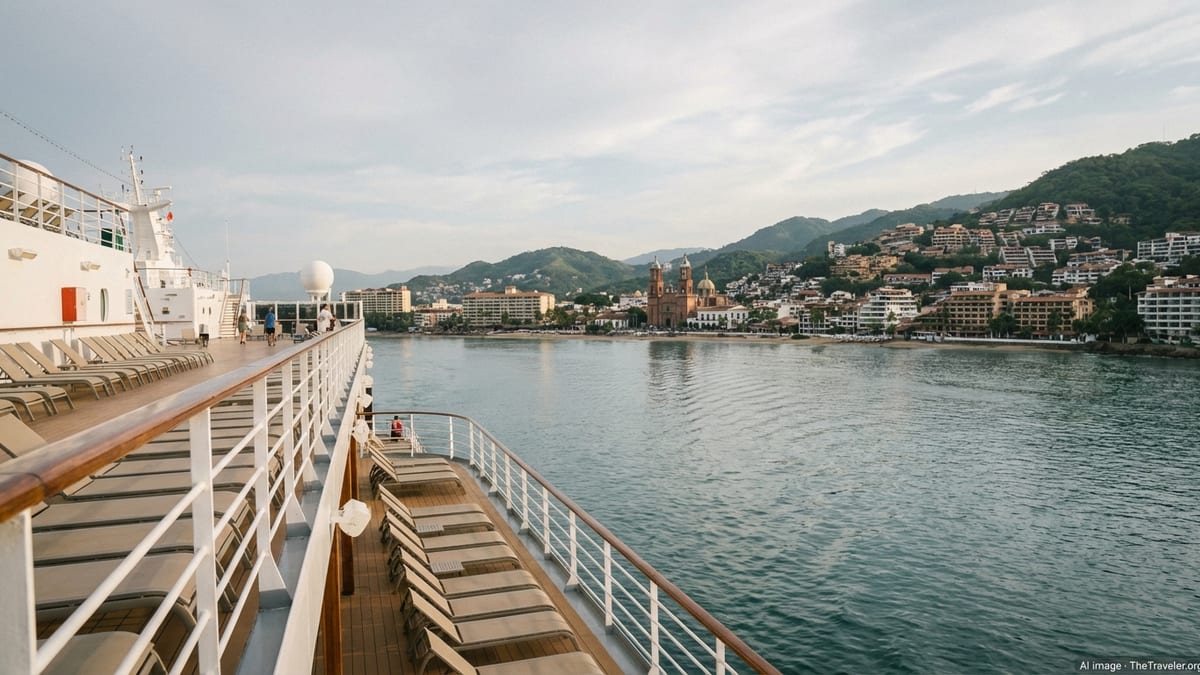
Cruise Itineraries Shift Overnight After Violent Unrest
Puerto Vallarta’s normally busy pier has fallen unusually quiet this week as cruise companies move quickly to adjust routes in response to rapidly unfolding security concerns. Local port authorities confirmed that at least one international vessel, Holland America Line’s Zuiderdam, skipped its scheduled call on February 23 after Jalisco officials activated a code red alert following a wave of arson attacks and road blockades across the state.
The cancellation meant roughly 3,300 people, including more than 2,000 paying passengers, remained aboard rather than disembarking in Puerto Vallarta, depriving the city’s tour operators, restaurants and shops of a full day of spending at the height of the winter season. Local boat tours and bay excursions were also widely suspended as a precaution, compounding the sudden halt in nautical tourism around Bahía de Banderas.
Industry tracking sites and cruise news outlets report that other major brands are now following suit. Norwegian Cruise Line’s flagship Norwegian Bliss has removed its upcoming call to Puerto Vallarta from its current Mexican Riviera sailing, citing the same cartel-related unrest and uncertainty on the ground. Additional itinerary tweaks remain possible as companies monitor security briefings and evaluate each port on a day-by-day basis.
For guests already at sea, the shifts have so far been framed as a necessary trade-off. Onboard announcements emphasize that while missed ports are disappointing, the combination of local security operations, potential road closures and U.S. government warnings makes sticking to the original schedule incompatible with corporate safety standards.
U.S. Security Alerts Put Puerto Vallarta Under the Microscope
The cruise decisions come against the backdrop of unusually blunt messaging from U.S. officials. Since February 22, the U.S. Mission in Mexico has issued a series of security alerts urging Americans in parts of western Mexico to shelter in place following the killing of Nemesio “El Mencho” Oseguera Cervantes, alleged leader of the Jalisco New Generation Cartel. Authorities say the operation triggered retaliatory attacks across multiple states, including Jalisco and neighboring Nayarit.
Updated guidance as of February 23 narrowed the highest level of concern to Jalisco and Nayarit, explicitly naming Puerto Vallarta, Guadalajara, Chapala and Nuevo Nayarit as areas where U.S. government staff are sheltering in place and where private citizens are encouraged to limit movement until road blockades are fully cleared. The alerts describe a dynamic environment marked by burned vehicles, sporadic gunfire reports and a heavy security presence on key highways.
Puerto Vallarta, long marketed as one of Mexico’s safest and most visitor-friendly beach cities, already sat within a “reconsider travel” state-level advisory for crime. The new, localized security alerts stop short of a blanket ban but represent a significant escalation in tone, especially because they directly affect U.S. consular operations and staff movements in the region.
Canadian authorities have issued parallel cautions, and airlines briefly paused or diverted flights into Puerto Vallarta and Guadalajara before gradually resuming operations under closer scrutiny. The combined effect has been to reframe the destination, at least temporarily, from a carefree Pacific playground to a flashpoint in Mexico’s broader security struggle.
Cruise Lines Emphasize Safety-First Culture to Nervous Guests
Inside the cruise industry, executives and safety teams are leaning on long-established protocols that give companies wide latitude to drop, swap or shorten port calls when conditions deteriorate. Risk managers closely track advisories from the U.S. State Department and allied governments alongside intelligence from local port agents, security consultants and ship captains on the ground.
Company statements about the latest changes have centered on the principle that guest and crew safety outweighs itinerary promises. Cruise lines typically reserve the contractual right to adjust ports without compensation when external events such as storms, political unrest or security operations pose potential danger, and they have not hesitated to invoke that flexibility in Mexico this week.
On ships where Puerto Vallarta calls have been cancelled, passengers are being offered extended sea days, extra onboard programming or substituted ports in relatively calmer regions such as Cabo San Lucas or Ensenada. Travel advisors say most guests accept the adjustments, particularly when confronted with images of burning vehicles near highways leading to popular excursion sites and resort zones.
Behind the scenes, cruise lines are also weighing the reputational risk of being seen as either too cautious or not cautious enough. With social media amplifying every incident, companies are keenly aware that a single high-profile security event involving cruise passengers ashore could overshadow an entire season and damage confidence far beyond Mexico.
Economic Jolt for a Tourism-Dependent Coast
For Puerto Vallarta, losing multiple large-ship calls in quick succession delivers a painful shock. Cruise days inject thousands of short-stay visitors into the local economy, supporting everyone from long-established tour companies to independent vendors selling crafts on the malecón. When a scheduled ship stays away, that revenue disappears instantly, and smaller operators in particular have little cushion to absorb the loss.
Local tourism leaders have been quick to stress that violence has largely been concentrated away from core hotel and beach zones, and that security forces have moved aggressively to clear roadblocks and protect infrastructure. Still, the visual images of armored vehicles and soldiers along access routes make it challenging to reassure foreign partners that operations are truly back to normal.
Hotel occupancy in Puerto Vallarta and the adjacent Nuevo Nayarit area remains uneven as travelers weigh whether to go ahead with spring trips. Some visitors choose to stay, taking comfort in resort-level security and the relative calm within tourist corridors. Others have postponed vacations, particularly families and older travelers who see the combination of security alerts and interrupted air and sea service as too much uncertainty for a leisure getaway.
Regional competitors on Mexico’s Pacific and Caribbean coasts are watching closely. If western Mexico continues to experience disruptions, ports such as Mazatlán, Cabo San Lucas and Caribbean hubs like Cozumel may see additional cruise traffic diverted in their direction, at least in the short term.
What Travelers Should Expect From Upcoming Sailings
For cruisers booked on Mexican Riviera itineraries in the coming weeks, the situation remains fluid. Cruise lines are expected to maintain a conservative posture toward Puerto Vallarta and nearby ports for as long as shelter-in-place guidance remains in effect for U.S. government personnel stationed there. That means last-minute itinerary changes, adjusted shore excursion offerings and possible swaps in favor of ports deemed lower risk.
Travel planners advise passengers to monitor line-specific travel advisories closely, enroll in official alert systems when traveling abroad and maintain flexible expectations regarding port calls in western Mexico. Comprehensive travel insurance that includes trip interruption can help soften the financial blow if future voyages are significantly reworked.
Even as Mexican federal and state authorities move to restore confidence and highlight calm in core tourist areas, the events of late February have reinforced a familiar reality for the cruise sector: sunny marketing campaigns and long-planned itineraries yield quickly to real-time risk assessments when security deteriorates. For now, Puerto Vallarta’s skyline may still beckon from the horizon, but the call to put safety first is proving stronger than the pull of the pier.