

More news on this day
Caribbean cruise plans for 2027 are being quietly but significantly rewritten, as Royal Caribbean and Carnival adjust itineraries that cut scheduled calls to the Bahamas and Aruba in favor of redeploying ships and emphasizing private destinations.
Get the latest news straight to your inbox!
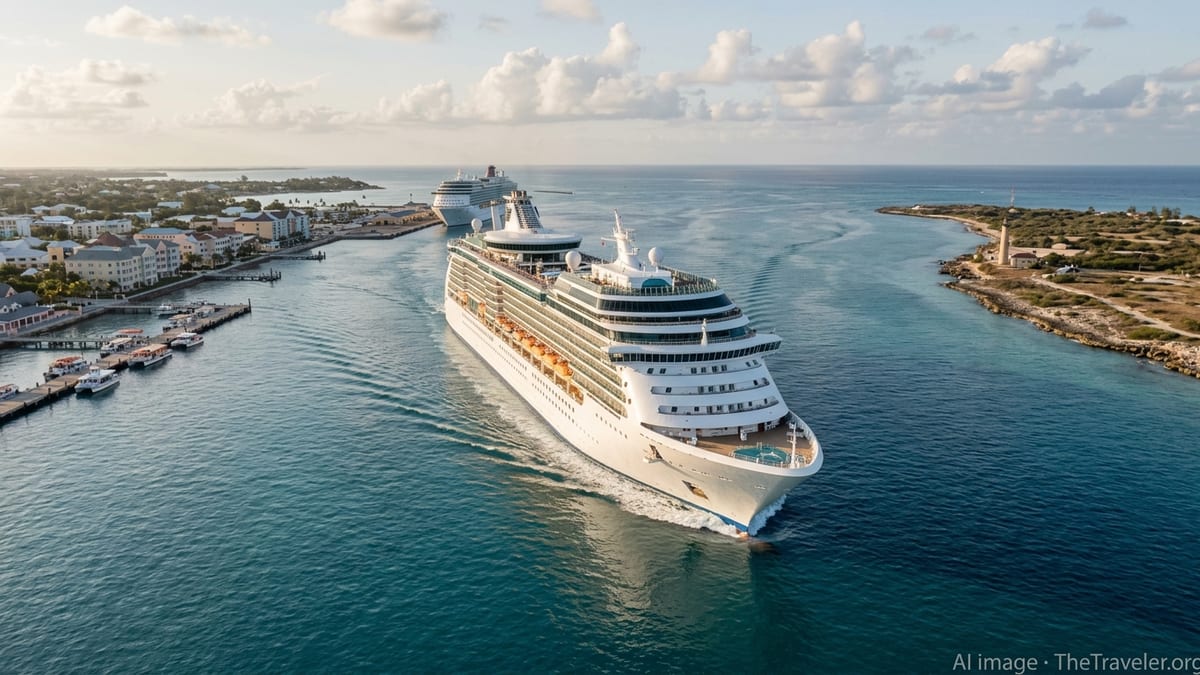
Royal Caribbean Scraps Select Bahamas Sailings for 2027
Royal Caribbean has begun cancelling a series of short Bahamas cruises scheduled into 2027, with affected guests receiving notices that their sailings will not proceed as planned. Publicly available deployment information and trade coverage indicate that some four-night itineraries that once featured stops at Nassau and private destinations in the Bahamas are being withdrawn as the company reshapes its Caribbean program.
The cancellations do not represent a full retreat from the Bahamas. Royal Caribbean’s published 2027–2028 deployment shows an expanded slate of three to nine night sailings featuring calls at Nassau and its flagship private island destination in the Berry Islands. Instead, the pattern emerging is one of consolidation, with fewer individual departures but larger ships and more consistent itineraries across key Florida homeports.
For travelers, the practical impact is that some previously bookable Bahamas dates in 2027 are disappearing, particularly shorter getaways that combined Nassau with a private island call. Guests on these cancelled sailings are typically offered rebooking options on alternative departures, but not always with the same ports, length, or pricing, leading to frustration among planners who locked in dates years in advance.
Industry analysts note that lines routinely reserve the right to alter or cancel itineraries, but the timing of these decisions, several years ahead of sailing, underscores how far in advance cruise companies now fine-tune capacity based on demand, fuel costs, and port availability.
Carnival Tweaks Southern Caribbean Routes and Aruba Calls
Carnival Cruise Line is making its own adjustments further south, affecting select 2027 itineraries that had featured Aruba on longer Caribbean sailings. Deployment updates and trade reports show that some ships are being reassigned to new homeports or route patterns, prompting itinerary changes where Aruba is shortened, swapped with another island, or removed entirely on specific dates.
Rather than a single sweeping announcement, the changes have surfaced ship by ship as Carnival refines its schedules out of ports such as Tampa and Galveston. Longer voyages to the Panama Canal and Southern Caribbean remain in the program and still highlight marquee ports like Aruba on select sailings, but they sit alongside a growing mix of itineraries that favor closer destinations and fewer long-haul segments.
Travel forums and booking data reflect that some guests on affected 2027 cruises have seen their original Aruba calls replaced with alternatives in destinations such as Curaçao, Bonaire, or Grand Cayman, or with an extra sea day. Carnival’s publicly available materials emphasize that port sequences and calls are subject to change, language that is now being exercised more frequently as the line rebalances its fleet.
For Aruba, the picture is nuanced. The island continues to appear prominently on flagship Southern Caribbean itineraries, but the trimming of select calls in 2027 suggests a more surgical redeployment aimed at optimizing ship time and managing operating costs rather than a wholesale withdrawal.
Why Cruise Lines Are Rewriting 2027 Caribbean Playbooks
The wave of cancellations and port swaps in the Bahamas and Aruba for 2027 is rooted less in any single crisis and more in a complex mix of commercial and operational factors. Public statements and trade analysis highlight recurring themes: evolving demand patterns, rising operating expenses, and the strategic push toward private destinations and bespoke beach clubs.
In the Bahamas, Royal Caribbean’s investment in its private island experiences has shifted the calculus for short cruises. By concentrating more sailings on routes that feature its own destinations, the company can better control the onshore experience, capture more onboard and on-island spending, and reduce uncertainty linked to third-party port infrastructure. That strategy can make older or less-profitable itineraries to traditional ports like Nassau more vulnerable when schedules are revised.
In the Southern Caribbean, longer legs to Aruba tie up ships for more days, increasing fuel consumption and limiting flexibility. As lines respond to cost pressures and look to maximize revenue per day, itineraries that require extended sailing to the southernmost ports may be reworked in favor of more compact loops that allow additional departures or higher-yield combinations of ports.
Security assessments, weather resilience, and pier capacity also play supporting roles. While there has been no broad public indication that either the Bahamas or Aruba has become unsuitable for cruise visits, shifting advisories in the wider region and ongoing infrastructure projects elsewhere in the Caribbean encourage lines to keep their 2027 plans fluid.
What This Means for Travelers Holding 2027 Bookings
For travelers who have already booked 2027 cruises to the Bahamas or Aruba, the recent spate of itinerary updates is a reminder that early planning comes with trade-offs. Published coverage and guest reports indicate that most changes are being communicated by email, often with options to rebook on alternative sailings or accept revised port lists, but the alternatives may not perfectly match original plans.
Guests whose sailings have been cancelled entirely are generally being offered future cruise credits or refunds according to each line’s standard policies. Those whose ports have changed, but whose sailings remain scheduled, typically retain their bookings under the modified itinerary, sometimes with adjustments to prepaid shore excursions and onboard packages.
Travel advisors recommend monitoring booking portals regularly and not relying solely on initial confirmation documents, especially for departures more than a year away. Because cruise contracts broadly allow lines to alter ports, travelers seeking specific destinations such as Nassau or Aruba may want to favor itineraries where those calls appear multiple times across a season, which can be a sign of higher schedule stability.
Flexibility remains important. Some travelers are choosing to anchor their plans around homeports and ship experiences rather than a single port of call, reasoning that onboard amenities, private island stops, and overall value can help soften the disappointment if a cherished destination drops off the map.
Caribbean Destinations Brace for a More Volatile Cruise Future
The 2027 adjustments by Royal Caribbean and Carnival are part of a broader pattern that Caribbean tourism boards are watching closely. Destinations that depend heavily on cruise calls, including ports in the Bahamas and islands such as Aruba, must now contend with deployment decisions that can shift years of projected visitor numbers with a single scheduling update.
Economic impact studies cited in regional coverage have long underscored the importance of cruise traffic for local tour operators, shore excursion providers, and small businesses clustered around terminals. When calls are reduced or rerouted, those businesses feel the effects immediately, even if overall visitation to the wider Caribbean remains strong.
At the same time, some islands see opportunity in the new environment. Ports that can accommodate the latest generation of mega-ships, or that partner with lines on dedicated beach experiences, may attract redeployed vessels and gain calls that were formerly slated for neighbors. For 2027, that means a more competitive landscape in which destinations seek to align port infrastructure, security, and visitor experience with the evolving priorities of the major cruise brands.
As deployment plans for late 2027 and 2028 continue to roll out, travelers, destinations, and industry observers will be watching to see whether the current wave of cancellations and port swaps stabilizes or signals a longer-term shift in how and where the world’s largest cruise lines sail the Caribbean.