

More news on this day
As scientists map global hotspots where ships and whales collide, environmental groups and coastal programs are turning their attention to the fast‑growing cruise sector, urging major lines to cut speeds, change routes and embrace new technology to prevent lethal strikes on endangered giants like blue whales.
Get the latest news straight to your inbox!
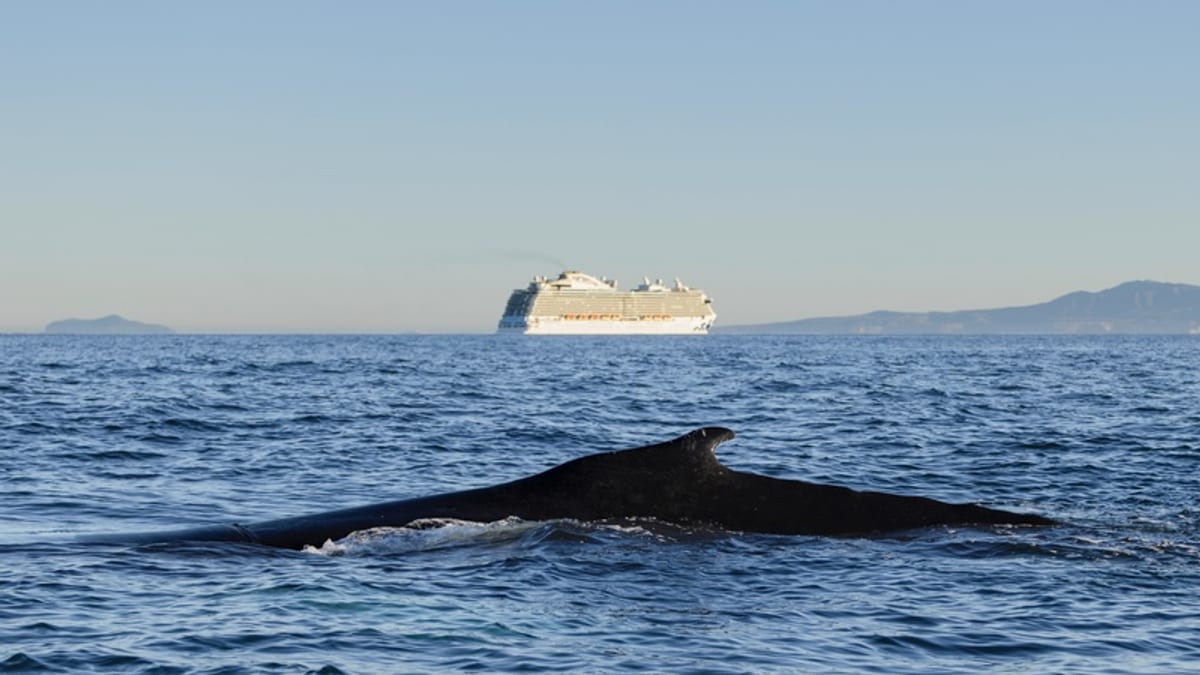
Image by Cruise Industry News | Cruise News
Ship Strikes Emerge as a Global Conservation Flashpoint
Collisions between large vessels and whales have long been documented along busy trade corridors, but recent research has sharpened the scale and urgency of the problem. Global analyses of shipping traffic and whale movements indicate that modern vessels now overlap with more than 90 percent of the ranges of blue, fin, humpback and sperm whales, concentrating risk in just a small fraction of the ocean where routes and feeding grounds intersect.
One widely cited modeling study suggests that making roughly 2.6 percent of the global ocean surface safer through rerouting and speed reductions could dramatically cut ship strike risk, particularly for blue and sperm whales. The findings have intensified calls for targeted measures in high traffic regions, from the North Atlantic and Mediterranean to the Indian Ocean and the North Pacific, where cruise itineraries often track the same biologically rich waters that attract whales to feed and breed.
In United States waters, publicly available information from federal and academic sources documents a steady series of strandings in recent years where necropsies point to blunt force trauma, deep propeller wounds or fractured vertebrae consistent with vessel impacts. While cargo and tanker fleets account for much of the traffic, cruise ships are among the largest and fastest vessels operating near coastal whale habitats, making their participation central to any long term solution.
The public profile of ship strikes has grown as more incidents occur near major ports and tourist hubs. Photos of dead whales draped across the bows of visiting ships have circulated widely, turning what was once a largely technical maritime safety issue into a visible test of the cruise industry’s environmental commitments.
California’s ‘Blue Whales, Blue Skies’ Model Puts Speed in the Spotlight
On the United States West Coast, a voluntary initiative known as Protecting Blue Whales and Blue Skies has emerged as a prominent case study in how slower ships can save whales while cutting emissions. The program, coordinated by a coalition of national marine sanctuaries, state air districts and nonprofit partners, offers financial and public recognition incentives to shipping companies that reduce speeds to 10 knots or less in seasonal zones along California’s coast.
Recent program results indicate that participating carriers in 2024 cut the modeled risk of fatal ship strikes to endangered whales by around half in designated areas, while also reducing underwater noise and air pollution. Those gains come from relatively simple measures: slowing large vessels, including container ships and car carriers, during months when blue, fin and humpback whales are known to be abundant near shipping lanes.
Although the initiative was initially framed around commercial cargo, its basic design applies directly to cruise traffic that shares the same approach corridors to ports such as Los Angeles, Long Beach and San Francisco. Environmental organizations and some local officials have begun to argue that comparable speed management for cruise itineraries would further amplify benefits, reducing the likelihood that a fast moving hull will collide with whales surfacing to feed.
The California experience is also influencing international discussions. Risk models and monitoring data generated under the program have been used as examples in guidance documents aimed at ship operators, showing how voluntary speed reduction, route planning and seasonal advisories can be combined into a practical package for industry adoption.
Cruise Routes Under Scrutiny After High‑Profile Incidents
Individual whale deaths linked to large passenger ships have helped focus attention on cruise operations specifically. In one widely reported 2024 case, a cruise vessel arrived in New York Harbor with an endangered sei whale pinned across its bow, drawing public criticism and renewed scrutiny from conservation groups. Necropsy findings in that and other events have underscored how the mass and speed of large ships can cause catastrophic internal injuries even without visible external damage.
Reports from stranding networks and marine mammal research programs along the East and West Coasts of North America similarly note cases where humpback, fin and other large whales show injuries consistent with vessel strikes in regions that also host heavy seasonal cruise traffic. While investigators rarely tie individual deaths to specific vessels, the overlap of routes used by passenger ships with whale feeding and migration corridors in places like Alaska, New England, California and the wider North Atlantic has become increasingly clear.
As post‑pandemic cruise demand rebounds and new mega‑ships enter service, advocates say the stakes are rising. Many new itineraries emphasize wildlife rich destinations such as glacier fjords, remote archipelagos and coastal sanctuaries, where whales are both a core attraction and especially vulnerable to close‑quarters navigation in confined channels and narrow approaches to port.
Industry representatives often highlight investments in cleaner fuels, waste treatment and shoreline power as evidence of broader environmental progress. However, campaigners argue that ship strike prevention now belongs alongside air emissions and plastic waste on the list of key performance indicators that prospective passengers, regulators and destination communities should scrutinize.
Emerging Technology Gives Captains New Tools to Avoid Whales
Alongside speed management, advocates are urging cruise operators to adopt new detection and routing tools designed to give bridge crews more time to react when whales are nearby. In North American testbeds, collaborations between research institutes, technology firms and port authorities have produced platforms that blend real time acoustic listening, satellite data and visual sightings into risk alerts delivered directly to ships.
One system under development in the northeastern Pacific uses underwater microphones to detect whale vocalizations, cross referencing them with oceanographic models and historical movement patterns to estimate when whales are likely to be present near specific shipping corridors. Elsewhere, researchers in Alaska are trialing radar and infrared systems that can help watchstanders spot surfacing whales in low visibility conditions, providing an extra margin of safety when navigating glacier fjords favored by cruise itineraries.
Cruise terminals in some regions are also beginning to share seasonal advisories through existing vessel traffic services, encouraging captains to use whale safe routing options where available. In combination with better onboard training and updated voyage planning protocols, proponents say these tools can help translate broad conservation goals into concrete operational decisions on the bridge.
Technology developers and conservation groups caution, however, that detection systems are not a substitute for lower speeds in known hotspots. Slower transits give whales and ships more time to avoid one another, making any near miss less likely to turn into a fatal collision, even when whales appear unexpectedly along a planned route.
From Voluntary Programs to Consumer Pressure
For now, most whale strike mitigation aimed at the broader shipping sector remains voluntary outside a few regulated zones, and participation varies by region and company. Advocates argue that cruise operators have an opportunity to move faster than the regulatory baseline, using their marketing reach and direct contact with travelers to normalize whale safe practices as a standard part of cruising.
Some environmental organizations have started publishing scorecards that rank shipping companies on compliance with voluntary slowdowns and route recommendations, and there are calls for future editions to break out cruise lines as a distinct category. Public data from vessel tracking services already allows researchers to compare actual speeds with requested limits in sensitive areas, creating the potential for third party ratings that reward high performers and highlight laggards.
Travel advisers and destination managers are also beginning to factor ship strike risk into discussions about sustainable tourism. As coastal communities weigh the economic benefits of hosting cruise calls against concerns about noise, air quality and crowding, initiatives that reduce harm to whales are seen by some local stakeholders as a way to align visitor experiences with conservation goals.
With new science mapping a relatively small share of the ocean where better management could sharply reduce lethal collisions, pressure is building on the cruise sector to make whale protection a visible part of its climate and biodiversity narrative. The coming seasons along busy whale corridors from California to the Norwegian fjords are expected to show whether more cruise lines are ready to embrace slower steaming and smarter routing in the name of blue whales and blue skies.