

More news on this day
A leading European cruise line has scrapped all of its 2025-26 Arabian Gulf sailings in response to mounting geopolitical tensions and airspace disruptions, redirecting capacity to Mediterranean routes as operators across the industry reassess their exposure to the conflict-hit region.
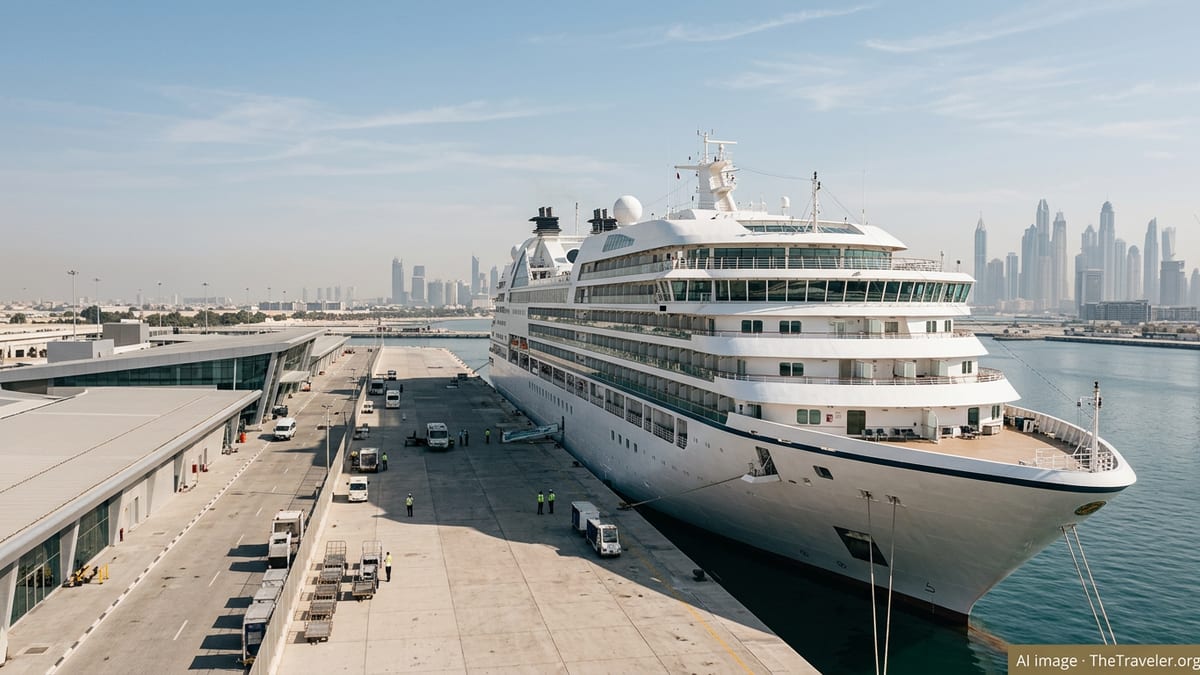
Full Arabian Gulf Program Wiped From Schedule
The cruise line confirmed this week that every scheduled voyage in its 2025-26 Arabian Gulf season has been cancelled, including round-trip sailings from Dubai and Abu Dhabi and a series of repositioning cruises transiting through the region. The decision follows weeks of operational uncertainty as military confrontation in and around the Strait of Hormuz and the wider Middle East intensified, affecting both maritime safety and commercial aviation.
Executives said the company had been monitoring the situation closely before concluding that it could no longer reliably guarantee safe, uninterrupted itineraries for guests or crew. With ports closing at short notice, regional airspace intermittently restricted and insurance costs rising sharply, the line opted to end its Gulf deployment entirely rather than pursue piecemeal schedule adjustments.
Guests booked on the cancelled season are being offered either a full refund or future cruise credit, along with assistance rebooking on alternative voyages in 2025 and 2026. The line is also working with airline partners to re-accommodate travelers who had bundled fly-cruise packages tied to now-cancelled embarkations.
The cancellation sweeps away what had been a cornerstone winter program featuring calls at Dubai, Abu Dhabi, Doha, Sir Bani Yas and other Gulf ports that have aggressively marketed themselves as homeport hubs in recent years.
Geopolitical Tensions and Safety Concerns Drive Decision
The move comes as the security picture in the broader region deteriorates, with conflict in and around the Arabian Gulf and Red Sea spilling into key shipping lanes. Cruise lines have faced a convergence of risks, including military activity near commercial routes, sporadic port closures and warnings from maritime security agencies advising heightened caution for passenger vessels.
Industry sources say the latest airspace restrictions and flight disruptions were a tipping point. With commercial airlines trimming frequencies or temporarily suspending routes into the Gulf, cruise operators faced the prospect of thousands of guests unable to reach or leave their ships on schedule. The risk of ships becoming stranded in port with limited options for rapid repatriation weighed heavily on deployment decisions.
Short-notice port closures have compounded the challenge. In several recent cases, vessels already alongside in Arabian Gulf ports were instructed to hold passengers onboard while local authorities assessed security developments, stretching onboard logistics and placing additional pressure on cruise lines to provide extended accommodation, food and support services.
While no major passenger vessel has been directly targeted, the heightened military presence and the resurgence of attacks on commercial shipping in nearby waters have altered insurers’ and risk assessors’ calculations. Higher war-risk premiums and route diversions have driven up operating costs, making Gulf itineraries less viable even before the current season’s cancellations.
Strategic Pivot to Mediterranean Capacity
In place of the shelved Gulf season, the cruise line will redeploy the affected ships to the Mediterranean, where demand remains robust and the risk profile is more predictable. The vessels are expected to reposition via Africa or Europe, avoiding chokepoints near current flashpoints, before entering service on spring and summer sailings from ports such as Athens, Barcelona and Rome.
According to the company, the additional Mediterranean capacity will be used to lengthen the shoulder season and add more culturally focused itineraries combining marquee ports with smaller islands and coastal towns. The line is also exploring expanded Eastern Mediterranean routes, including longer voyages in the Aegean and Adriatic, to absorb displaced Gulf passengers who still want warm-weather cruising and historic sightseeing.
Travel advisors say the pivot plays to the strength of a region that consistently ranks among the most resilient cruise markets. With airlift into Southern Europe operating largely as normal and port infrastructure well established, the Mediterranean offers a relatively low-risk environment for redeployed tonnage, even as operators remain alert to broader geopolitical currents.
The shift underscores a broader recalibration by global cruise brands, many of which had poured ships and marketing investment into the Arabian Gulf over the past decade. With that growth story now interrupted, Europe’s established cruise heartlands are once again absorbing ships displaced by instability elsewhere.
Impact on Gulf Tourism and Local Cruise Ambitions
The suspension of the 2025-26 season is a blow to Gulf tourism authorities, which have spent years positioning Dubai, Abu Dhabi and Doha as winter cruise capitals capable of rivaling the Caribbean. Multi-million-dollar terminal projects, streamlined visa regimes and aggressive co-marketing campaigns had helped the region attract a growing roster of brands and ships.
Tour operators, destination management companies and port-based businesses across the Gulf now face a sharp drop in passenger volumes next winter. Many had invested in new shore excursion products and seasonal staffing based on optimistic deployment forecasts stretching well into the second half of the decade.
Regional stakeholders insist the setback is temporary and tied directly to geopolitical events beyond their control. Tourism boards are already in talks with cruise partners about returning once conditions stabilize, emphasizing the region’s modern infrastructure, warm winter climate and proximity to key source markets in Europe and Asia.
For now, however, the immediate priority is managing the disruption for visitors already in the region and those who had built broader holidays around their cancelled cruises, including pre- and post-stays in Gulf cities and desert resorts.
What Booked Guests Should Expect Next
Passengers with reservations on the cancelled 2025-26 Arabian Gulf sailings are being contacted directly by the cruise line and their travel advisors. Notification letters outline options that typically include a full cash refund within a defined timeframe, or a future cruise credit often enhanced with an additional percentage to encourage rebooking on alternative itineraries.
Guests who arranged air independently are being urged to speak with airlines and insurers as soon as possible, especially where tickets were issued as nonrefundable. In some cases, carriers are offering flexibility given the extraordinary circumstances, though policies vary. Those who purchased air through the cruise line’s packages should have their flights reprotected or refunded as part of the wider booking.
Travel agents report a surge of interest in substitute Mediterranean sailings, particularly those departing from easily accessible hubs with frequent flights from North America and Europe. Many customers who originally chose the Gulf for its winter sun are now weighing spring or autumn departures in the Mediterranean as a near-term alternative.
Consumer advocates advise travelers to review travel insurance coverage carefully, paying particular attention to clauses related to war, civil unrest and government travel advisories. While the cruise line’s own compensation policies will cover most out-of-pocket cruise costs, supplementary coverage can play a key role when flights, pre- or post-cruise land arrangements and independent tours are involved.
Industry Braces for Ongoing Volatility
The cancellation of an entire Gulf season underscores how quickly geopolitical events can reshape global cruise deployment. Operators that once touted the region as a growth frontier are now revisiting risk models and contingency planning, with some executives privately acknowledging that a full return to pre-crisis levels of activity may take several years.
Analysts note that modern cruise fleets are designed to be mobile, allowing lines to shift tonnage among regions in response to demand and security conditions. However, such redeployments often have knock-on effects, tightening capacity in some markets while flooding others and potentially pressuring pricing.
For destination economies that have aligned infrastructure and marketing around cruise calls, the current wave of cancellations is a stark reminder of the sector’s vulnerability to external shocks. Ports and tourism boards in the Arabian Gulf will now look to diversify their visitor mix, doubling down on air arrivals and land-based tourism while monitoring cruise-related developments.
Even as ships head back to the Mediterranean, industry leaders caution that they are planning itineraries with greater built-in flexibility, including ports that can be swapped or routes that can be adjusted on relatively short notice. In an era of heightened geopolitical volatility, the cruise sector’s ability to adapt quickly has become as critical as the onboard experience it sells.