

More news on this day
Princess Cruises has quietly raised the automatic service charge on many onboard purchases to 20 percent fleetwide, spotlighting a broader trend of higher gratuities and ancillary fees across the United States and global cruise industry as operators navigate rising costs while trying to keep base fares competitive.
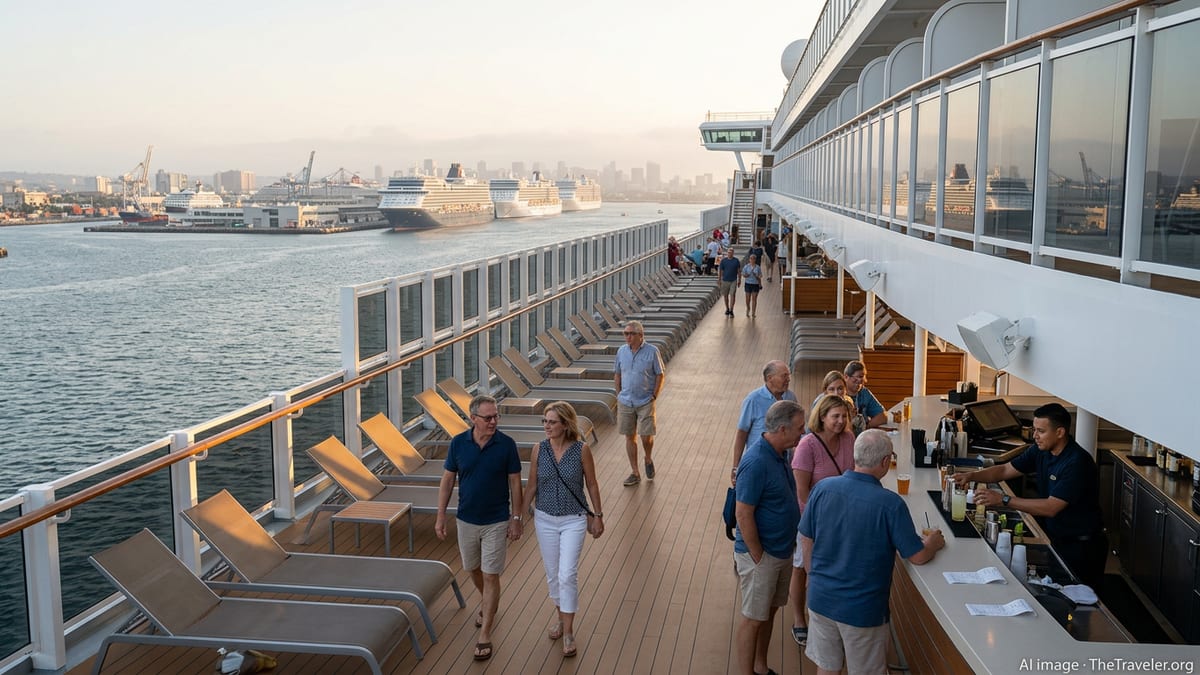
Princess Service Charge Increase Rolls Out Across the Fleet
Princess Cruises began implementing the higher 20 percent service charge in early March 2026, updating its guest policy to reflect the new rate on drinks, specialty dining, private group events and other elective onboard purchases that fall outside the cruise fare. The move lifts the charge from the previous 18 percent level and is being activated on different dates by ship as systems are updated.
According to the line’s current terms, the 20 percent fee is now automatically added to most à la carte food and beverage orders, dining room and specialty restaurant cover charges when not included in a package, and a range of optional amenities and services. Passengers who buy bundled products such as drinks and dining packages will see the service element embedded in those prices rather than as a separate line item.
Crucially for travelers planning their budgets, the higher service charge is distinct from Princess Cruises’ daily “crew appreciation” gratuity, which continues to be levied on a per-person, per-day basis. At present, that daily charge stands at $18 for standard staterooms, $19 for mini suites, cabanas and Reserve Collection staterooms, and $20 for suites, underscoring how layered the cost of service has become on many mainstream lines.
The company has not publicly detailed a specific rationale for the new 20 percent threshold beyond the standard industry explanation of supporting crew and maintaining service standards. However, the timing aligns with a broader pattern of cruise brands shifting more of their revenue mix toward onboard spending rather than headline ticket prices.
Gratuity Hikes Ripple Across Major U.S. Cruise Brands
The Princess adjustment is arriving as other major North American operators roll out their own increases to service-related fees. Carnival Cruise Line, the largest brand by passenger numbers, has notified guests that its recommended daily gratuities will rise by $1 per person, per day for voyages departing from April 2, 2026, building on multiple rounds of incremental hikes in recent years.
Carnival’s bar and beverage purchases already carry a 20 percent service charge similar to the new Princess rate, while its popular Bottomless Bubbles soda package is also becoming more expensive. The changes mean a typical family of four on a weeklong Caribbean itinerary will now spend noticeably more on the “extra” costs that accrue once onboard, even before factoring in shore excursions and specialty dining.
Elsewhere in the market, lines such as Disney Cruise Line, Royal Caribbean International, Norwegian Cruise Line and Margaritaville at Sea have all implemented higher automatic gratuities or service charges over the past two years. In some cases, the increases have pushed daily gratuity totals above $20 per person, giving North American brands some of the highest service-related levies in the global industry.
While each cruise company sets its own structure, the overall trajectory has been clear: service charges and automatic gratuities have crept steadily upward, becoming a major component of the total vacation cost and a key lever for operators seeking revenue growth without overtly raising base fares.
Economic Pressures Behind Rising Cruise Service Fees
Executives and industry analysts point to a combination of inflation, higher labor and fuel expenses, and ongoing investments in new tonnage as primary drivers behind the latest service fee adjustments. Cruise lines emerged from the pandemic with higher debt loads, and many have leaned on onboard revenue streams such as beverages, specialty dining, spa services and Wi-Fi to help rebuild balance sheets.
Because cruise companies market aggressively around low entry fares, particularly in the highly competitive U.S. market, discretionary onboard charges have become the logical place to seek incremental yield. Automatic gratuities and service charges, which are framed as supporting crew compensation and guest-facing service, can be nudged upward in relatively small steps that generate significant additional revenue across large fleets.
At the same time, crew costs are under close scrutiny. Many brands have publicly emphasized that gratuity and service charge pools are designed to supplement wages for housekeeping, dining room and bar staff, among others. However, critics, including some frequent cruisers, argue that the complex structure of pooled service charges makes it difficult for guests to understand how much of each extra dollar actually reaches individual crew members.
The result is an increasingly delicate balancing act. Cruise operators must reassure guests that higher service fees are justified and fairly distributed, even as they rely on those very charges to offset broader cost pressures and maintain profitability in a price-sensitive travel segment.
Guest Reactions Range From Acceptance to Grumbling
Early reactions from travelers to the Princess service charge hike and wider industry increases have been mixed. Some guests regard a 20 percent service fee as aligned with customary tipping norms in many U.S. bars and restaurants and see the changes as a reasonable adjustment in today’s higher-cost environment, particularly for crew-intensive hospitality operations at sea.
Others, especially repeat cruisers who track fees closely, express concern that automatic charges are eroding the perception of value that once made cruising a standout vacation bargain. For passengers who prefer to recognize individual service with direct tips, the layering of daily gratuities and fixed service percentages can feel opaque and, in some cases, excessive.
Onboard, policies around adjusting or removing automatic gratuities vary by line and region but typically require guests to visit the customer service desk to request changes. Some brands allow partial reductions, while others encourage dissatisfied passengers to work with onboard management to resolve issues rather than zeroing out charges entirely.
Travel agents report that fee fatigue is increasingly part of pre-cruise conversations, with clients asking detailed questions about what exactly is included in their fare, which extras will incur a 20 percent charge, and how tipping works under bundled packages like Princess Plus or similar offers from competing lines.
What the Service Charge Shift Means for Future Cruise Pricing
The move by Princess Cruises to join peers at a 20 percent service charge level underscores how standard that rate has become in the mainstream cruise segment. For prospective passengers, it reinforces the need to think of advertised fares as just one component of their overall travel budget, particularly on U.S.-based itineraries where gratuities and service fees are rarely included in the headline price.
Industry observers suggest that, barring a major economic downturn, incremental increases to both daily gratuities and onboard service charges are likely to continue over the medium term. As newer, larger ships enter service with expanded bar, dining and entertainment options, the potential for onboard spending increases, and with it, the importance of service-related revenue streams.
Some analysts also see a growing divergence between North American and European or British cruise brands, many of which are more inclined to bundle gratuities into cruise fares or position their products as more all-inclusive. That could influence how and where cost-conscious travelers choose to sail, especially as they compare the transparency of different pricing models.
For now, guests booking Princess Cruises and other major U.S.-focused lines are being advised by travel advisors to scrutinize fare inclusions, pre-purchase packages where they make financial sense, and factor a 20 percent service charge on most onboard extras into their calculations. As service fees settle at this new benchmark, the question for many cruisers will be not just how much they are paying, but whether the onboard experience continues to feel worth the rising tab.