

More news on this day
The Middle East’s once‑booming winter cruise scene is heading into a turbulent 2026–27 Arabian Gulf season, as three established brands cancel their regional programs while four newer players move in to claim berths and itineraries.
Get the latest news straight to your inbox!
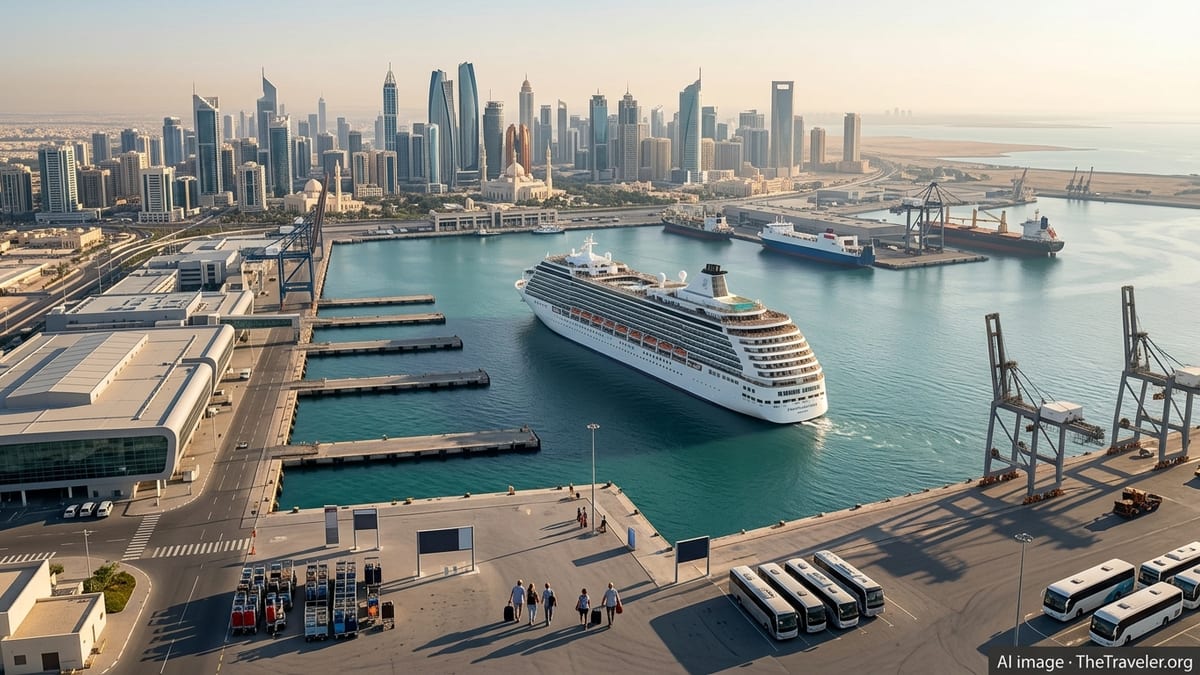
Established Brands Withdraw From a Volatile Region
Publicly available deployment updates indicate that at least three major cruise brands have now withdrawn their planned operations in the Middle East for the 2026–27 winter season, citing shifting risk assessments and wider fleet redeployments. AIDA Cruises has already confirmed it will not run its previously announced Gulf and Red Sea sailings for late 2026 and early 2027, pulling an entire season that had targeted German-speaking guests seeking warmer-weather itineraries.
Costa Cruises has reached a similar conclusion for its 2026–27 schedule, after earlier plans positioned one of its flagship vessels on United Arab Emirates and wider Gulf itineraries. Industry reports note that the company’s deployment for that winter now omits the region altogether, with capacity reassigned to what are considered more stable Mediterranean and Caribbean programs.
The reshuffle follows a difficult 2025–26 winter, when several lines curtailed or cancelled remaining Arabian Gulf sailings in response to escalating tensions and operational disruption around key sea lanes. Analysts observing the sector say those short-term cancellations have evolved into longer-term strategic decisions, with brands factoring higher insurance premiums, potential routing detours, and guest hesitation into planning for 2026–27.
For travelers, the withdrawals translate into fewer options on familiar European brands that once marketed the Gulf as an easy “fly-and-cruise” alternative to the Caribbean. For port cities, the reduced presence of these operators raises questions over near-term passenger volumes and associated tourism revenue, even as other cruise companies step in to fill some of the gaps.
Four Newcomers Signal Ongoing Confidence in Gulf Potential
Despite the pullback from several household names, the 2026–27 Arabian Gulf season is not shaping up to be a retreat across the board. Four comparatively new or expanding brands are preparing to enter or significantly grow in the region, indicating that long-term confidence in Gulf cruising remains intact.
Saudi-backed Aroya Cruises is among the most closely watched of these entrants. Published deployment plans show the young line extending its focus on the Arabian Gulf with itineraries designed around Saudi ports and nearby Gulf destinations, part of a broader push to develop cruising as a key pillar of the kingdom’s tourism strategy. Its presence is expected to increase regional source markets and introduce more itineraries tailored to Gulf-based travelers.
Celestyal, traditionally known for Eastern Mediterranean sailings, is another operator betting on the region. The line is in the midst of building out multi-season Gulf programs and has publicly detailed plans spanning into 2026 for its Celestyal Journey and Celestyal Discovery, including shorter “Iconic Arabia” voyages and longer repositioning cruises that knit together Gulf, Red Sea, and Eastern Mediterranean ports.
In parallel, large-ship operators from Europe are positioning new-tonnage vessels in the Gulf for early 2027, using the 2026–27 window as a bridge between established winter markets and future expansion. These deployments, combined with the launch of regionally focused brands, mean that while some familiar flags will disappear from Gulf terminals next winter, other funnels and hull designs will appear for the first time.
Safety, Schedules and Guest Sentiment Reshape Itineraries
The changing roster of cruise lines reflects a confluence of security, logistical, and consumer-perception factors that are now central to planning a 2026–27 Gulf itinerary. Coverage across maritime and travel trade outlets highlights how recent conflict around strategic waterways has forced ships to cut short seasons, adjust turnaround ports, or take lengthy diversion routes, all of which complicate the economics of running short winter cruises.
Lines that have chosen to skip the Gulf next winter are, according to published statements and schedule revisions, weighing not only operational risk but also the likelihood of last-minute cancellations that can erode traveler trust. After several brands were compelled to halt sailings before the end of the 2025–26 season, prompting extensive repatriation efforts, planners appear more cautious about committing capacity to nearby winters without clear signs of stability.
Customer sentiment is another driver. Travel agents and cruise forums have reported a rise in questions about route safety, airlift reliability, and the potential for sudden itinerary changes. For some guests, that uncertainty is prompting a pivot back to more familiar winter regions such as the Caribbean or Canary Islands, even when Gulf itineraries remain on sale. Brands exiting the region for 2026–27 appear to be chasing that demand shift, consolidating hardware where interest remains strongest.
At the same time, lines that are pressing ahead in the Gulf are emphasizing port-intensive itineraries and flexible deployment plans. New entrants and expanding brands are highlighting shore experiences in cities like Doha, Abu Dhabi, and Muscat, as well as beach destinations such as Sir Bani Yas Island, while also building in operational contingencies in case routing adjustments become necessary.
Ports and Destinations Adjust to a Different Mix of Ships
For Gulf destinations, the loss of three established brands during the 2026–27 season will be felt differently across the region. UAE hubs such as Dubai and Abu Dhabi had become accustomed to hosting multiple large European lines each winter, contributing a steady flow of transit and turnaround passengers to local hotels, attractions, and airports. With some of those ships redeployed, local stakeholders will be watching closely to see whether new brands can deliver comparable volumes.
Destinations invested heavily in cruise infrastructure over the past decade, from expanded terminals to streamlined immigration facilities and dedicated tourism zones. The entry of regionally based operators like Aroya Cruises and the continued buildout of Celestyal’s Gulf presence may help offset the departure of European mass-market brands by anchoring capacity that is more closely linked to domestic and regional source markets, rather than relying primarily on long-haul fly-cruise guests.
The shift could also alter the pattern of port calls. Itineraries built around regional homeports and shorter cruises are likely to favor closer clusters of destinations, potentially increasing visits to secondary ports in Saudi Arabia, Qatar, or Oman that were previously used more sporadically by larger international lines. This may spread economic benefits beyond the traditional marquee ports, even if overall passenger counts fluctuate.
Local tourism boards are expected to respond by fine-tuning shore excursion offerings, tailoring them more closely to the preferences of Gulf-based and regional travelers and emphasizing cultural, heritage, and family-oriented experiences. How successfully they adapt could determine whether the region retains its appeal for new and returning brands beyond the 2026–27 season.
What Cruise Travelers Should Watch for 2026–27 Bookings
For travelers contemplating a Middle East cruise in late 2026 or early 2027, the evolving picture underscores the importance of checking deployment updates and terms closely before committing. With several brands having withdrawn and others entering for the first time, the mix of products, departure ports, and onboard languages will differ markedly from pre-2025 winters.
Prospective guests may find fewer Western European mass-market ships on traditional weeklong Dubai or Abu Dhabi loops, but more options from regionally anchored lines and select international newcomers offering combinational itineraries that link the Gulf with the Red Sea or Eastern Mediterranean. Reading the fine print on change and cancellation policies, as well as reviewing how lines handled schedule disruptions in 2025–26, can provide useful guidance.
Travel advisors note that air arrangements require particular attention. Given that some of the same factors influencing cruise deployments can also affect flight schedules, building additional flexibility into arrival and departure plans may help mitigate stress if itineraries shift. Choosing sailings that begin and end in major aviation hubs such as Dubai, Abu Dhabi, or Doha can also provide more options if plans change.
Ultimately, the 2026–27 Arabian Gulf cruise season is shaping up as a transitional year rather than a simple contraction. While three familiar brands step away from the region, four others are leaning in, testing new itineraries and guest segments. For the industry, the coming winter will serve as a real-world test of whether fresh capacity and new concepts can keep the Gulf on the global cruise map amid a more complex operating environment.