

More news on this day
An investigation into the death of an 85-year-old British cruise passenger has found that delays in diagnosing and treating his spinal injury after a violent storm at sea led to “suboptimal” care, raising new questions about medical readiness and risk-taking on modern cruise ships.
Get the latest news straight to your inbox!
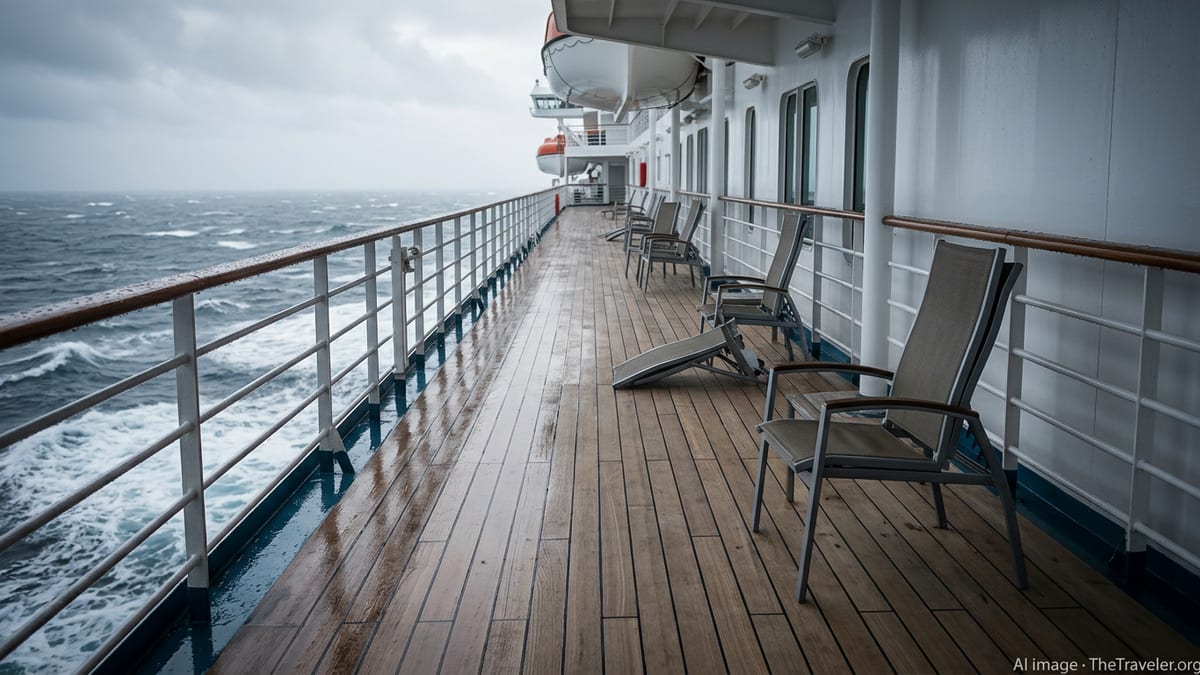
Fatal Injury After Violent North Atlantic Storm
The incident occurred aboard the UK-based Saga Cruises vessel Spirit of Discovery as it attempted to cross the notoriously rough Bay of Biscay in November 2023. According to the UK Marine Accident Investigation Branch (MAIB), the ship encountered Force 11 conditions, with heavy rolling that sent unsecured furniture and passengers crashing to the deck.
Among those injured was retiree Trevor Gilks, who had been seated in a high-backed armchair in a lounge area when the vessel rolled sharply. The chair toppled, flinging him backwards and causing his neck to strike the floor. Witnesses reported that he immediately complained of severe pain, a key red flag for potential spinal trauma.
Gilks was helped back into his chair rather than immobilized on a spinal board at the scene. He was later moved in a wheelchair to the ship’s medical facility, where staff began assessing his injuries as the vessel continued to battle heavy seas.
Over 100 passengers were hurt in the same storm event, overwhelming the ship’s medical center and testing its capacity to respond to multiple serious cases at once.
Investigation Finds Missed Chances in Spine Injury Response
The MAIB report details a sequence of delays and missteps that, taken together, contributed to Gilks receiving what investigators termed “suboptimal treatment” for a suspected cervical spine injury. Initial imaging was limited, with only a front-view X-ray taken despite a radiologist later advising that a side-view was necessary to confirm or rule out damage.
Instead of being rigidly immobilized on a spinal board, Gilks was placed on a bed in the ship’s medical unit, a decision that investigators said did not reflect best practice for a possible unstable neck injury. Over the next 48 hours his condition deteriorated markedly, and he was eventually found to be paralysed.
It was at this point, two days after the fall, that the ship’s doctor recommended an emergency medical evacuation. In spine trauma cases, early immobilization, comprehensive imaging and fast-track evacuation to a specialist center are widely considered critical to preventing permanent neurological damage or death.
Gilks was ultimately disembarked when the ship reached Portsmouth and transferred to a shoreside hospital. He died four days after the accident, with the investigation concluding that the delay in recognizing the severity of his injury and the treatment decisions that followed may have worsened his outcome.
Captain’s Weather Call and Medevac Decision Under Scrutiny
Alongside the onboard medical response, the MAIB closely examined the operational decisions that set the stage for the tragedy, especially the choice to continue a Bay of Biscay crossing despite worsening forecasts. Weather service providers had advised against the transit due to extreme wave heights, but the report found that the captain’s decision was not effectively challenged by bridge officers or the company’s shore-based team.
When the doctor later sought a helicopter evacuation for Gilks, the captain declined, citing the risks of conducting a hoist in high seas and opting instead to wait until the ship could reach port. Investigators acknowledged the inherent dangers of airborne rescues in such conditions but noted that the delay inevitably prolonged the time before Gilks could access specialist spinal care.
The case highlights the complex trade-offs cruise masters face when balancing passenger safety, vessel operations and medevac feasibility in severe weather. It also underscores the weight that a captain’s judgment carries, both in routing decisions and in determining when to call for external rescue support.
The MAIB has issued a series of safety recommendations, including proposals for enhanced stability monitoring and more robust internal challenge to high-risk navigational choices in heavy seas.
Cruise Line Responds as Industry Faces Tough Questions
Saga Cruises has expressed condolences to Gilks’ family and to other passengers affected by the storm, emphasizing that safety remains its top priority. The company has said that it accepts the MAIB’s recommendations, while disagreeing with aspects of the report’s conclusions and arguing that the summary does not fully reflect the detailed findings.
Following the incident, Saga stated that it reviewed and strengthened its policies and procedures related to severe weather routing, medical response and communication between ship and shore-based operations. The MAIB report notes that several changes have already been implemented, including updates to training and emergency protocols.
The case comes at a time when the cruise industry is under growing scrutiny over onboard medical capabilities, particularly in complex trauma and stroke care. While most large ships carry modern medical centers staffed by doctors and nurses, they operate far from tertiary hospitals, and decisions about when to evacuate a patient can be decisive for survival.
Legal experts in maritime injury law say high-profile investigations such as this one could influence how courts and regulators assess cruise lines’ responsibilities, not only in treating injuries but in making proactive, timely evacuation decisions when specialized care is needed.
What the Case Means for Cruise Passengers and Safety at Sea
For travelers, the Gilks case is a stark reminder that cruise vacations, though statistically safe, still involve inherent risks linked to weather, ship motion and the limitations of onboard medical facilities. Passengers, particularly older guests or those with pre-existing conditions, are being urged by safety advocates to pay closer attention to medical disclosure forms, travel insurance coverage and the fine print of cruise contracts.
Specialists in maritime medicine note that suspected spinal injuries should always be treated with extreme caution, minimizing movement and prioritizing rapid access to advanced imaging and neurosurgical expertise. They argue that clear, conservative protocols are essential on ships, where diagnostic tools and staffing can be stretched during mass-casualty events such as severe heeling or sudden storms.
The MAIB’s findings are likely to feed into broader discussions about storm-avoidance strategies, furniture and fixture design in public areas, and whether additional safeguards are needed to protect vulnerable passengers during heavy seas. Some experts have also suggested that more transparent reporting of onboard medical incidents could improve accountability and help travelers make informed decisions.
As the cruise sector continues to rebound and expand, the death of Trevor Gilks is resonating beyond the Bay of Biscay. For regulators, operators and passengers alike, it has become a touchstone case in the ongoing effort to ensure that medical care at sea keeps pace with the scale and expectations of modern cruising.