

More news on this day
Passengers on a small cruise ship in Fiji found themselves with an unexpectedly cinematic backdrop when their vessel grounded on a reef off Monuriki, the uninhabited island made famous by the Tom Hanks film “Cast Away.”
Get the latest news straight to your inbox!
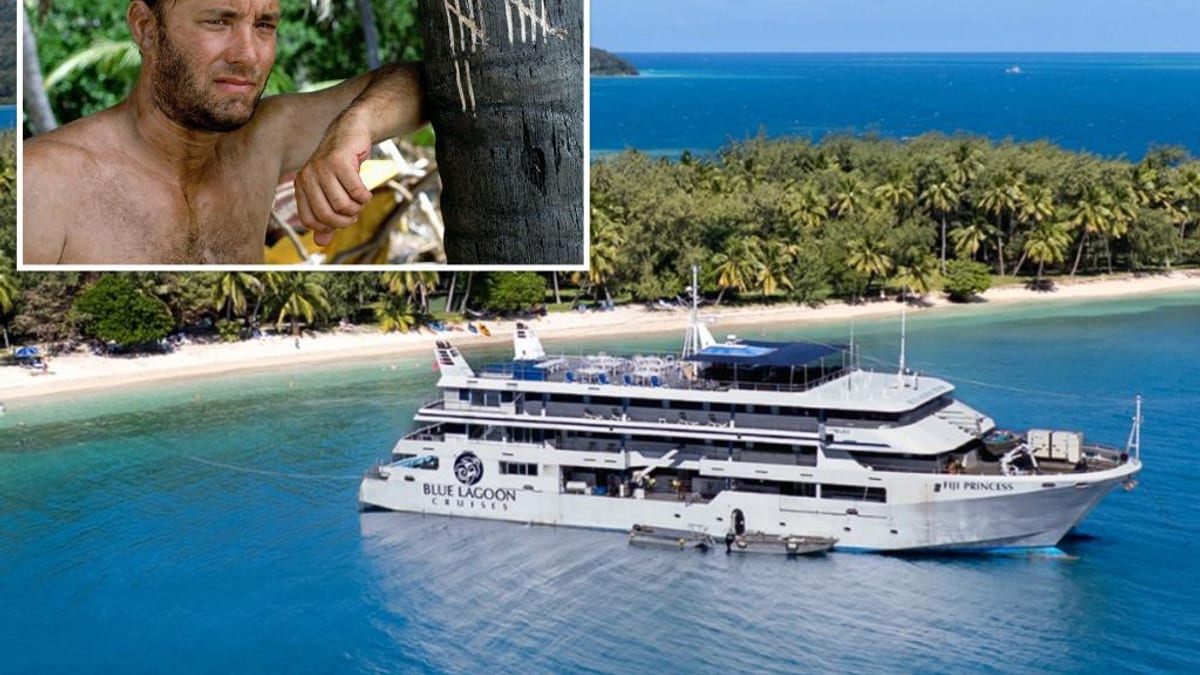
A real-life castaway setting in Fiji’s Mamanuca Islands
The incident unfolded on April 4, 2026, when the MV Fiji Princess, a 182-foot boutique cruise vessel operated by Blue Lagoon Cruises, ran aground on a coral reef near Monuriki in Fiji’s Mamanuca archipelago. Publicly available information describes calm conditions when the ship initially anchored, before a sudden squall reportedly caused the anchor to drag toward the reef, leaving the vessel stuck just off the tiny island.
Monuriki is best known as the primary filming location for the 2000 survival drama “Cast Away,” in which Tom Hanks plays a stranded FedEx executive marooned on a remote Pacific island. Travel and film coverage over the years has helped turn the rugged, uninhabited spot into a bucket-list stop for day trips and small-ship itineraries, adding a pop culture twist to what is otherwise a classic South Pacific landscape of steep green cliffs and white-sand beaches.
Early reports from regional media and maritime outlets indicate that while the grounding was dramatic, it did not develop into a prolonged stranding for those on board. Unlike the months or years of isolation imagined on screen, the passengers’ time off Monuriki was measured in hours, not seasons.
The juxtaposition, however, captured global attention. Headlines comparing the grounding to a “Tom Hanks treatment” on an actual Cast Away island underscored how strongly Monuriki’s identity has become intertwined with the movie’s story of survival and solitude.
Passengers evacuated at first light as salvage effort begins
According to published coverage from international news agencies and maritime industry sites, a local ferry came alongside the grounded cruise ship at first light on April 5 to take passengers off safely. Around 30 guests were transferred with their luggage and later transported to Denarau Island, a major tourism hub near Nadi on Fiji’s main island of Viti Levu. Reports indicate there were no injuries among passengers or crew.
Images and descriptions shared in news reports show the MV Fiji Princess listing slightly, with visible damage along its rear port side, near critical steering equipment. The Maritime Safety Authority of Fiji has described the impact as significant, with additional damage likely beneath the waterline. The size of the ship, which carries up to about 64 passengers across 32 cabins, meant that the evacuation could be completed in a relatively short window once conditions allowed.
By April 6, publicly available statements from the operator and local authorities indicated that pumpable fuel and other oils had been removed from the vessel as a precaution against pollution. A specialist salvage team, brought in from Australia, began overseeing efforts to stabilize and eventually refloat or remove the ship from the reef.
For the guests, the incident brought an abrupt end to what is typically marketed as a relaxed, small-ship exploration of Fiji’s islands and lagoons. Travel industry reports suggest the remainder of the voyage was canceled while investigations and recovery work got underway.
Environmental concerns on a high-profile island
With the grounding occurring close to a fragile coral reef and within sight of one of Fiji’s most photographed islands, environmental impacts have been a central concern. Coverage in regional and international media notes that authorities and the cruise operator moved quickly to remove fuel and other potential contaminants, seeking to reduce the risk of a spill into the surrounding lagoon.
Monuriki is uninhabited but frequently visited on organized excursions. The island’s fringing reefs and beaches support marine life and provide a scenic backdrop for snorkeling and hiking. Environmental groups and local stakeholders are watching closely for signs of reef damage from both the initial impact and any subsequent salvage operations.
Experts quoted in previous cases of cruise groundings have pointed out that coral systems are vulnerable not only to direct contact from hulls and propellers but also to long-term stress from sediment, debris, and even small fuel leaks. In this case, publicly available statements emphasize that removing fuel early has been a key part of the response, though a full assessment of reef health is expected to take time.
The incident arrives at a moment when the environmental footprint of cruise tourism is under increasing scrutiny worldwide. Groundings near sensitive islands, particularly those made famous through film and television, tend to draw heightened attention and renew debates over where and how cruise ships should operate.
Monuriki’s enduring fame from “Cast Away” to modern cruise itineraries
Monuriki’s sudden reappearance in global headlines reflects the lasting cultural resonance of “Cast Away” more than two decades after its release. The film, which followed Tom Hanks’ character as he struggled to survive alone on a remote island, helped turn the previously little-known Fijian isle into a cinematic icon and a recognizable shorthand for isolation.
Travel articles and tourism marketing have since leaned into that association, with many visitors referring to Monuriki simply as the “Cast Away island.” Small-ship operators and day-cruise companies have integrated stops there into itineraries that typically include beach time, guided walks, and snorkeling on nearby reefs. For many travelers, standing on the same sand where Hanks once shouted to his volleyball companion Wilson has become part of the experience.
The grounding of the MV Fiji Princess has, in effect, overlaid a real maritime incident onto that film legacy. Social media posts and entertainment coverage have highlighted the eerie coincidence of a modern cruise vessel coming to grief in almost the exact setting of a fictional plane-crash survival story.
At the same time, the swift evacuation and active salvage response underline the difference between Hollywood narrative and today’s heavily regulated cruise industry. Passengers may have glimpsed the silhouette of the famous island from closer than planned, but they were not left to fend for themselves on its shores.
Safety questions for boutique and expedition-style cruising
While the grounding appears to have resulted in no injuries, it has prompted fresh questions about safety procedures and risk management on smaller vessels that navigate close to reefs and remote islands. Boutique and expedition-style cruise ships like the MV Fiji Princess offer access to shallow lagoons and secluded anchorages that larger ships cannot reach, but that proximity can increase exposure to weather shifts, navigational hazards, and reef systems.
Publicly available information about the incident suggests that a sudden squall and anchor drag may have played a key role. Maritime analysts have previously noted that such scenarios can unfold quickly, especially in areas where depths change sharply and coral heads rise close to the surface. For operators, the event is likely to feed into ongoing reviews of anchoring practices, weather monitoring, and contingency planning around sensitive island environments.
Travelers watching the story from afar may also weigh how they think about ship size, itinerary style, and emergency preparedness when booking future trips. Although large mainstream cruise ships garner more attention due to their scale, many of the industry’s most adventurous routes are sailed by small vessels that deliberately seek out remote landings and reef-fringed bays.
For now, the focus in Fiji remains on safely recovering the grounded vessel and assessing any ecological impact around Monuriki. As those efforts continue, the island once again finds itself at the crossroads of cinematic myth and real-world travel, reminding visitors that even the most postcard-perfect castaway setting is part of a living, and vulnerable, seascape.