

More news on this day
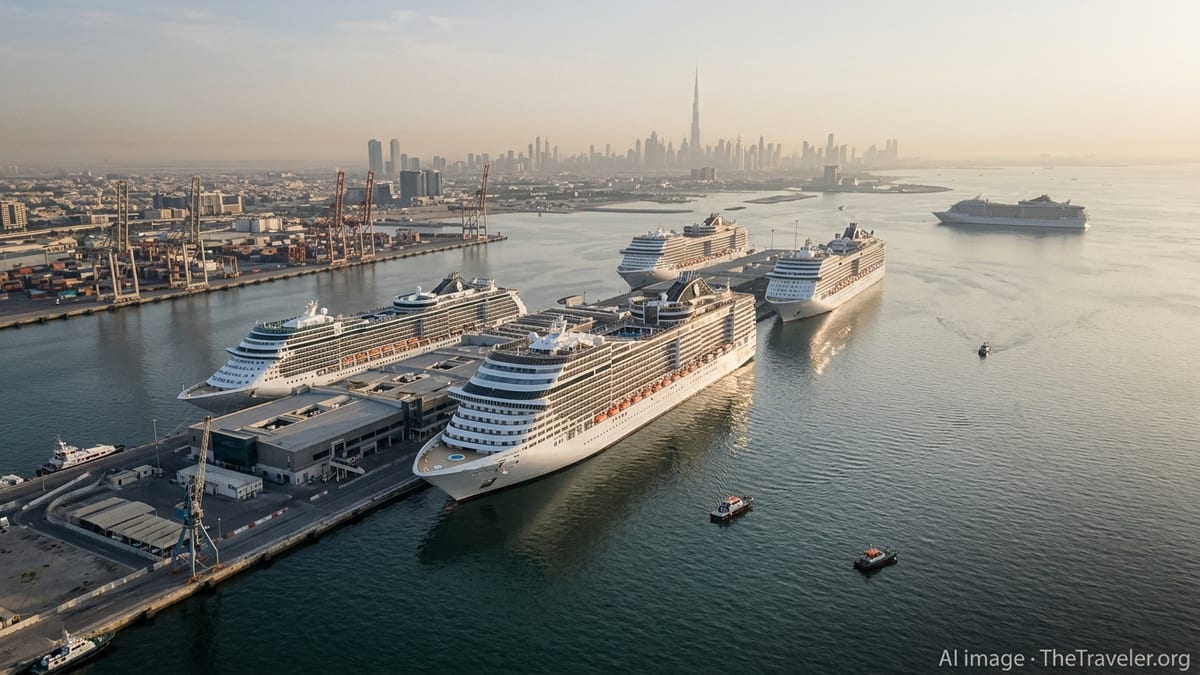
Cruise operators have been forced to strand ships and thousands of passengers in Arabian Gulf ports after near-halted maritime traffic in the Strait of Hormuz severed the only sea route between the region and global cruise networks, prompting mass cancellations and rapid redrawing of upcoming itineraries worldwide.
Get the latest news straight to your inbox!
Strait of Hormuz Shutdown Ripples Into Cruise Tourism
The abrupt collapse of commercial traffic through the Strait of Hormuz since late February has quickly shifted from an oil and shipping crisis into a major disruption for the cruise industry. Publicly available shipping intelligence and marine tracking data indicate that overall vessel movements through the narrow waterway fell from dozens of daily transits to near zero in the first days of March, as missile and drone attacks and war-risk insurance withdrawals made passage commercially untenable.
The shutdown has effectively isolated cruise ships already operating inside the Arabian Gulf, cutting them off from the wider network of global cruise routes to the Mediterranean, Indian Ocean and beyond. While container ships and tankers have dominated early coverage of the crisis, travel and maritime analysts now point to a secondary but growing impact on leisure travel, with cruise itineraries abruptly truncated and complex repatriation efforts under way for guests and crew.
The Strait of Hormuz is the only maritime outlet for major cruise turnaround hubs such as Dubai, Abu Dhabi and Doha. With traffic reduced to a trickle and navigation deemed high risk for nonessential voyages, cruise companies face a stark choice between keeping vessels laid up in Gulf ports or attempting carefully negotiated repositioning moves if security conditions and insurance terms allow.
Named Cruise Ships and Passengers Stuck Inside the Gulf
Information compiled from maritime databases and widely shared vessel-tracking snapshots shows at least six large cruise ships effectively stranded within Arabian Gulf waters. These include Aroya Cruises’ flagship Aroya, Celestyal Discovery and Celestyal Journey, MSC Cruises’ LNG-powered MSC Euribia, and TUI Cruises’ Mein Schiff 4 and Mein Schiff 5. Together, these ships can carry in the region of 15,000 passengers at full capacity, in addition to thousands of crew members.
Port calls originally planned as short embarkation or turnaround stops in Dubai, Doha or Saudi ports have, in many cases, stretched into unscheduled layovers of several days or longer. Social media posts from passengers on board MSC Euribia, for example, describe the ship “stuck” in Dubai while management reviews route options and awaits clarity on when safe passage through Hormuz might resume. Similar accounts from guests on other vessels suggest a patchwork of ad hoc arrangements, with extra nights in port, modified shore excursion schedules and, in some cases, early disembarkation.
The situation is fluid and varies by ship and operator. Some voyages that were due to continue into the Indian Ocean or reposition to Europe for the northern summer season are instead remaining within the sheltered waters of the Gulf, operating short scenic loops between nearby ports where berths remain available and local authorities are permitting calls. Others are canceling subsequent cruise segments entirely in order to clear ships and crew for eventual redeployment once a safe corridor through Hormuz is re-established.
Global Cruise Calendars Scrambled for 2026 Season
The stranded ships inside the Arabian Gulf represent only the most visible edge of a broader scheduling shock spreading through the cruise sector. According to publicly posted booking updates and advisory notes, several international lines have suspended new voyages originating in Gulf ports for the coming weeks, and are instead directing prospective travelers toward Mediterranean, Northern Europe or Caribbean sailings.
Industry observers note that the Hormuz disruption has arrived just as cruise companies were finalizing repositioning plans for the key 2026 summer season. Many vessels that winter in the Middle East typically transit through the strait in March and April en route to Europe. With that route now heavily constrained, operators are weighing whether to keep ships idle in the Gulf, reroute them via alternative long-haul passages once feasible, or accelerate maintenance and refurbishment periods to coincide with the unplanned pause in operations.
Short notice changes are already visible in published itineraries. Some spring and early summer sailings that would normally feature calls in Dubai, Abu Dhabi, Muscat or Doha are being reissued with revised port lists or substituted entirely with Western Mediterranean or Canary Islands routes. Travel agents are reporting a wave of schedule change notifications, as lines seek to maintain overall capacity while steering clear of high-risk choke points in both the Strait of Hormuz and the Red Sea corridor.
Travelers Face Cancellations, Route Changes and Repatriation Challenges
For passengers, the crisis is translating into a mix of extended vacations, abrupt truncations and complex travel logistics. Guests already on board affected ships are generally being kept in port or within nearby Gulf waters, with lines offering revised daily programs, additional onboard entertainment and, in some instances, complimentary changes to flights or future cruise credits according to their publicly available policy updates.
Travelers with upcoming bookings on Gulf-based cruises are encountering a spectrum of outcomes. Some departures have been canceled outright, prompting full refunds or credit offers. Others are proceeding on modified itineraries that eliminate the planned exit through Hormuz and instead focus on round-trip routes between regional ports that can still be reached safely by sea. In many cases, passengers must decide whether to accept a shortened or altered voyage, shift their booking to a different region, or postpone travel altogether.
The repatriation of international guests from Gulf turnaround ports has added another layer of complexity, given that airspace restrictions and flight cancellations have accompanied the maritime disruption. Airlines serving Dubai, Doha and other hubs have repeatedly adjusted schedules since late February, complicating efforts to rebook cruise passengers whose original return flights were tied to now-altered ship arrival dates. Travel insurers and credit card providers are being drawn into claims related to both security events and trip interruption.
Industry Response and the Outlook for Middle East Cruises
Cruise companies are issuing regular advisories through their public channels, emphasizing that guest safety remains the primary consideration in any decision about sailing near conflict zones or contested waterways. Insurance market communications and technical circulars from maritime regulators show that war-risk coverage for transits through the Strait of Hormuz has either been withdrawn or sharply restricted, particularly for nonessential leisure voyages, leaving little flexibility for rapid resumption of normal cruise traffic.
Port authorities and tourism boards in Gulf destinations are meanwhile confronting an abrupt pause in a sector that had become a flagship component of their visitor strategies. Over the past decade, cities such as Dubai and Doha invested heavily in cruise terminals, shore excursion infrastructure and marketing campaigns designed to position the Arabian Gulf as a winter-sun alternative to the Caribbean. With ship calls now reduced, hotels, tour operators and transport providers that rely on cruise traffic are exposed to sudden revenue gaps.
Analysts following the crisis suggest that the timing and extent of any recovery in Middle East cruise operations will depend largely on security guarantees for commercial shipping and the restoration of insurable conditions through Hormuz. Even if some limited, escorted traffic resumes in the coming weeks as military campaigns seek to secure the waterway, cruise lines may be slower than cargo operators to return, given their heightened sensitivity to perceived risk among leisure travelers.
In the longer term, the episode is likely to accelerate discussions within the cruise sector about concentration risk around strategic chokepoints. Companies may look to diversify winter deployment patterns away from regions where a single strait can sever access, while Gulf states invested in cruise tourism may explore more resilient contingency plans, including closer integration with air-based fly-cruise models and flexible itineraries that can pivot quickly if key sea lanes become compromised.