

More news on this day
From Bangkok’s deep-water terminals to Singapore’s mega-hub and Japan’s resurgent cruise calls, Asia’s shoreline is emerging as one of the world’s most dynamic regions for ocean itineraries in 2026 and beyond.
Get the latest news straight to your inbox!
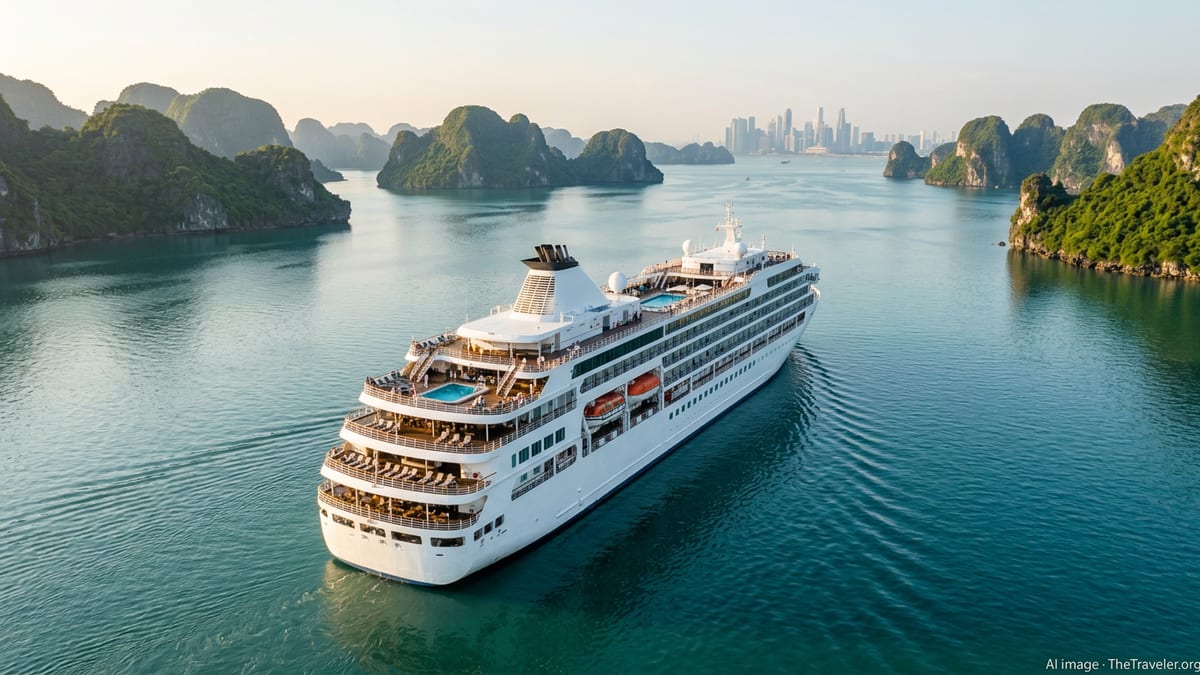
Asian Cruise Demand Rebounds With New Ships and Routes
Publicly available industry data indicates that cruising has become one of Asia’s fastest-recovering travel sectors, with passenger volumes rebounding strongly since 2023. Singapore has led the regional recovery, with recent ASEAN tourism reporting showing it handled well over a million cruise passengers in 2024, consolidating its role as a primary homeport for Southeast Asia sailings.
Major cruise brands are responding by redeploying capacity to Asia on a multi-year basis. Between 2025 and 2027, Norwegian Cruise Line, luxury lines such as Seabourn and other global operators have programmed longer seasonal deployments that stitch together Japan, Vietnam, Thailand, Singapore and Cambodia on the same itineraries. These voyages range from short regional hops to extended journeys of two to three weeks that trace much of the Asian coastline.
Travel trade coverage points to sharp growth in cruise calls to Vietnam in particular, with some ports recording triple-digit percentage increases in passenger numbers compared with earlier years. Meanwhile, multi-country itineraries are expanding to include Cambodia’s Sihanoukville and lesser-known Thai islands alongside established urban gateways, providing more varied routing for repeat cruisers.
In the upper end of the market, small-ship and yacht-style cruises are gaining traction across Southeast Asia. These sailings typically link Singapore with boutique ports in Thailand and Cambodia, as well as Vietnam’s coastal cities, offering longer overnight stays and destination-focused programming aimed at experienced travelers seeking slower-paced exploration.
Thailand’s Port Upgrades Poised to Support Larger Vessels
Thailand is positioning itself as a stronger cruise hub through a series of long-term port investments. At Laem Chabang, the country’s main deep-sea gateway near Pattaya, government and industry documents show that Phase 3 expansion works are under way, with plans to boost overall capacity substantially and modernize marine and terminal infrastructure. While primarily cargo focused, the expanded port is expected to ease congestion and give cruise operators more scheduling flexibility for calls serving Bangkok and the Eastern Seaboard.
Separately, proposals for dedicated cruise terminals at Pattaya, Phuket, Krabi and Koh Samui have been highlighted in regional transport and tourism coverage. The Samui cruise terminal concept, costed at several billion baht, envisions a deep-water berth capable of handling multiple large cruise ships and yachts at once, linking Gulf of Thailand routes between Singapore, Koh Samui and Laem Chabang. These plans are framed as part of a broader strategy to attract higher-spending visitors arriving by sea.
For travelers, the practical impact of these developments is expected to be smoother embarkation, shorter tendering times and more reliable access to Thailand’s key tourism areas. Laem Chabang already serves as the main cruise access point for Bangkok, Pattaya and surrounding beach destinations, and incremental infrastructure improvements are likely to make same-day shore excursions to the capital and resort towns more efficient.
As these projects move from planning toward implementation over the next several years, itineraries featuring Thailand as both a turnaround port and a high-value port of call are anticipated to grow. Cruise planners are watching progress closely, as the timing of new berths and terminals will influence ship deployment decisions across the wider Gulf of Thailand and Andaman Sea.
Vietnam and Cambodia Gain Ground on Southeast Asia Routes
Vietnam has emerged as one of Asia’s fastest-growing cruise destinations, supported by its long coastline, a cluster of deep-water ports and rising name recognition among international travelers. Recent industry reporting points to strong percentage growth in cruise arrivals, with large ocean liners now calling at Halong Bay, Da Nang, Nha Trang and Ho Chi Minh City on a regular basis. These ports offer contrasting experiences, from UNESCO-listed landscapes to urban food scenes, giving cruise lines ample variety for shore excursion programs.
Looking ahead, newly announced itineraries for 2026 and 2027 show Vietnam increasingly embedded in longer regional voyages. Published schedules from luxury and premium lines include extended holiday sailings linking Singapore with Thai islands, Sihanoukville in Cambodia and multiple Vietnamese ports, often over two or three weeks. This approach positions Vietnam as a central spine in Southeast Asia itineraries rather than a single, isolated call.
Cambodia, while handling smaller passenger numbers, is gaining prominence through Sihanoukville, which appears more frequently in upcoming deployment plans as a call on Gulf of Thailand routes. The port provides access to coastal resorts and overland excursions toward Phnom Penh, appealing to travelers seeking a mix of beach time and cultural touring during a single cruise.
For passengers, the growing integration of Vietnam and Cambodia into multi-country sailings means more diverse cultural experiences within a single trip. Travelers can move from Vietnamese street markets to Angkor-era heritage sites reached via Cambodian gateways, then on to Thai beach resorts, all without repacking a suitcase.
Japan and Singapore Anchor North Asia and Regional Hubs
Japan has restored its place as a marquee cruise destination after several years of pandemic-related disruption. Since resuming international cruise calls, the country has seen a gradual rebuilding of traffic, with itineraries now again circling Honshu and Hokkaido and incorporating side trips to South Korea or Taiwan. Pre-pandemic figures show Japan handled more than two million cruise passengers annually, and current deployment trends suggest operators are working to approach those levels over the medium term.
Regulatory updates are shaping how visitors plan their cruise-based trips to Japan. Publicly accessible guidance notes that short-term tourists from dozens of countries remain eligible for visa-free entry, while others must secure visas in advance, often through digital or e-visa channels that have expanded in 2025. Cruise passengers whose itineraries include multiple entries to Japanese ports are being advised by travel specialists to pay close attention to entry categories, length-of-stay limits and any requirements for proof of insurance.
Farther south, Singapore has cemented its role as Asia’s primary cruise hub and a key embarkation point for itineraries spanning the region. Port and tourism reports highlight its high passenger throughput, modern terminals and year-round deployment by large international brands. Seasonal homeporting by ships such as Royal Caribbean’s large vessels, along with luxury and premium lines, underpins a dense network of routes radiating to Thailand, Vietnam and Cambodia.
Singapore’s position will be further reinforced by new hardware entering the market. Disney Cruise Line is preparing to base a ship year-round in the city from March 2026, according to company announcements and media coverage, marking the brand’s first permanent deployment in Asia. The move is expected to draw a new family-focused segment into Asian cruising and create additional demand for regional sailings that pair Singapore with ports in Thailand and Vietnam on shorter itineraries.
Key Planning Considerations for 2026 and Beyond
With capacity increasing and itineraries multiplying, travelers looking to cruise through Thailand, Vietnam, Japan, Singapore and Cambodia face a wider range of options but also a more complex planning landscape. Industry advisories suggest that seasonality is a key factor, with many operators favoring the drier, cooler months between roughly November and March for Southeast Asia sailings, and late spring to early autumn for Japan-focused routes, while keeping an eye on typhoon patterns.
Visa rules and entry formalities remain another critical variable. While many nationalities enjoy visa-free or simplified access to popular cruise destinations in Asia, requirements can vary sharply by passport and by itinerary, particularly where multiple entries to the same country are involved. Travelers are being encouraged by consular and tourism information sources to verify their status directly with official government channels well before departure, as policies may have changed since their last visit.
Port access and logistics also influence the onboard and onshore experience. Some regional ports, including those in Thailand and Cambodia, still rely on tender operations for larger ships, which can affect the timing and duration of shore excursions. Ongoing port expansion projects in Thailand and infrastructure upgrades in Vietnam are expected to gradually ease these constraints, but cruisers are advised to factor potential delays into independent sightseeing plans.
Finally, as more lines add Asia to their global deployment maps, competition is prompting a wider spread of product types, from value-focused megaships to luxury small vessels and river–ocean combinations. For travelers, comparing not only price and cabin category but also route design, time in port and the balance between sea days and shore time will be essential to choosing the right way to sail across Asia’s most iconic destinations.