

I went to Cuba with a mix of curiosity and hesitation. For years I had heard how “Cuba is changing fast” and that you should go “before it’s ruined.” At the same time, recent stories of shortages, power cuts and a struggling economy were hard to ignore.
After seeing it for myself, the truth sits somewhere between romantic nostalgia and harsh reality. Cuba can absolutely be worth visiting, but only if you arrive with clear eyes, flexible expectations and an honest understanding of what travel there actually feels like.
First Impressions: Beauty, Decay And An Immediate Reality Check
Landing in Havana, I felt that jolt of excitement you only get in places that are genuinely different. The airport was functional but tired. Baggage took longer than expected and the air felt heavy and humid. Immigration was straightforward, but everything happened at a slow, almost sleepy pace that set the tone for the rest of my trip.
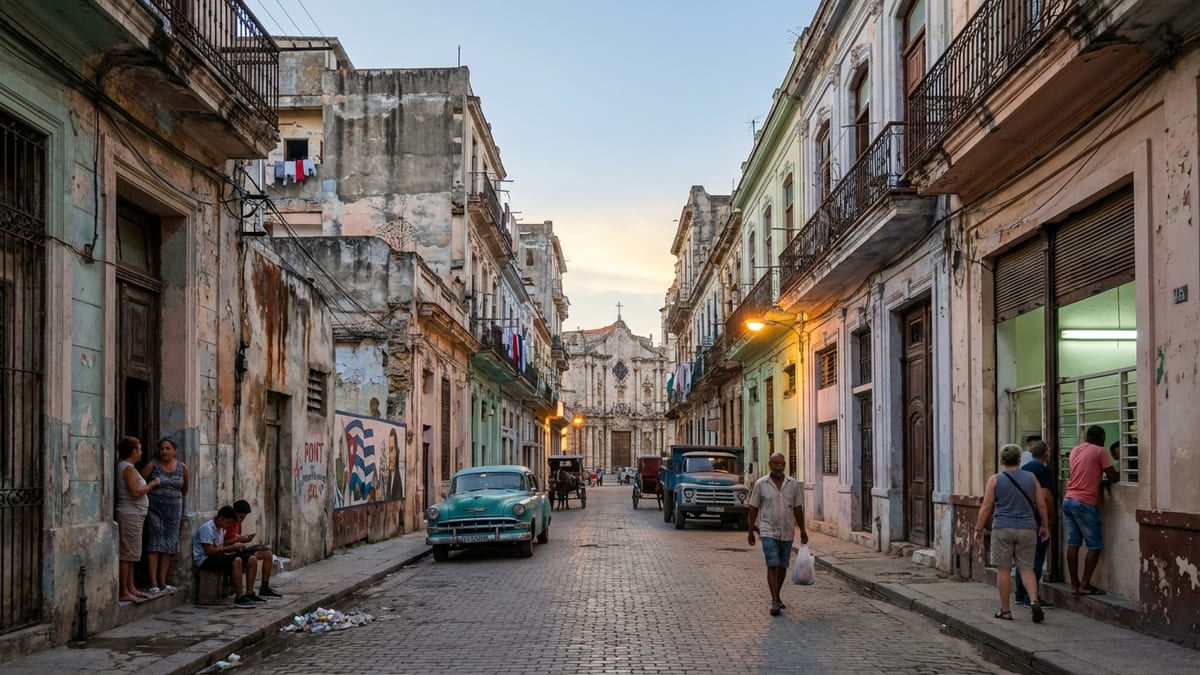
The drive into Havana was visually striking. Classic cars, Soviet-era trucks, and horse carts shared the road. Entire apartment blocks were faded, crumbling or clearly in need of serious repair. Then, suddenly, a freshly painted colonial façade, a glimpse of the sea, kids playing soccer in dusty lots. It felt like stepping into a parallel version of the Caribbean, one where time had moved, but unevenly.
My first walk through Old Havana was the definition of mixed feelings. There is no denying how gorgeous the architecture is, especially around the main plazas. Huge baroque churches, pastel buildings with wrought-iron balconies, and narrow cobblestone streets that made me want to keep walking just to see what was around the next corner. At the same time, I kept passing shuttered doors, broken sidewalks, piles of rubble and trash, and a lot of people simply hanging around doing nothing, because there often is not much to do.
Those first hours killed the idea of Cuba as a carefree Caribbean escape, but they did replace it with something more interesting. I felt like I was visiting a country in the middle of a very tough chapter, where tourism is both a lifeline and a distortion. If you are looking for “effortless vacation,” the reality check starts almost immediately.
Money, Access And Daily Logistics: The Unromantic Side Of Cuba
The least glamorous part of my trip, and the most stressful at times, was dealing with money and day-to-day basics. Cuba’s dual-currency confusion is technically being phased out, but in practice I found myself dealing with three concepts: the official Cuban peso, the informal street rate, and prices set in a kind of semi-hard currency (often labeled MLC) in certain shops and better restaurants.
The first rule I learned quickly was not to rely on cards. Foreign debit and credit cards technically work at some ATMs and higher-end hotels, but I saw plenty of machines out of service or with long queues. US-issued cards are especially unreliable due to sanctions. I brought euros and some US dollars in cash. Exchanging at official places gave a terrible rate, so like many visitors I ended up using trusted locals who offered better rates. That comes with obvious risks and requires common sense, but not doing so would have made everything painfully expensive.
Day-to-day spending felt odd. Some basic local places charged in pesos at rates that were cheap by foreign standards, while many tourist-oriented places priced things as if they were in a normal Caribbean destination: cocktails approaching what you might pay in Europe, taxis charging international rates, and some hotels asking prices that simply did not match the quality of what was being delivered. The result was a constant mental calculation of “Am I being charged local reality or tourist fantasy?”
Logistics were also shaped by ongoing fuel shortages and a weakened transport system. Official intercity buses did run, but tickets were often sold out or rescheduled. Taxis were available, especially in Havana and Varadero, but drivers frequently mentioned the difficulty and cost of fuel, which did show up in prices. I had to be flexible with departure times and accept that “on time” in Cuba can mean “within a wide window.” Anyone who gets anxious when plans slip will struggle here.
Power Cuts, Infrastructure And The Comfort Question
Before going, I had read about blackouts across Cuba and a fragile power grid that has seen multiple nationwide outages since 2024. In theory, the government prioritizes hotels and key tourist areas with generators and backup systems. In practice, my experience was mixed. I did not encounter a full national blackout, but there were several unplanned cuts and brownouts that affected both locals and visitors while I was there.
In Havana, my casa particular (a private homestay) lost power more than once, usually for one to three hours. The hosts did their best, bringing out candles and reassuring me it would come back, but during summer heat those hours without air conditioning felt long. In one mid-range hotel, the power flickered repeatedly and the Wi-Fi went down, which staff shrugged off as a normal occurrence. In Varadero, the resort I visited clearly had better backup, and any disruptions were brief, but staff quietly admitted fuel and generator use were ongoing concerns.
Water pressure and hot water were also inconsistent. I had strong showers in some places and frustrating trickles in others, with occasional periods when water was off completely for a few hours. Wi-Fi was better than Cuba’s old stereotype but still uneven. Some casas used private routers and data packages, others relied on nearby public hotspots. Speeds were enough for messaging and basic browsing, not for serious remote work or streaming.
If you measure a trip’s success by stable air conditioning, hot water on demand and seamless connectivity, Cuba will probably disappoint you. Comfort exists, especially in higher-end resorts and some better-run boutique hotels, but it is not guaranteed. You need patience and a tolerance for mild discomfort. For me, this was acceptable but occasionally exhausting. By the end I realized I was budgeting emotional energy every day just for the possibility that something basic might not work.
People, Politics And The Everyday Mood Of The Island
The best part of my time in Cuba was the people I met. My hosts, taxi drivers, and random strangers in the street were often warm, curious and surprisingly open. Many Cubans I spoke with cracked jokes about their own situation in that dry, resigned way you only find in places under long-term pressure. I felt safe walking around central Havana and smaller towns at night, much safer than in many Latin American cities of similar size.
At the same time, I could not ignore a quiet heaviness. Conversations kept drifting back to shortages, blackouts, family members abroad, and the sheer difficulty of making ends meet. Several people mentioned they had left professional jobs to work in tourism because tips from foreigners were the only way to get ahead. Others were clearly tired of the constant improvisation required to live: queuing for hours when fuel arrived, planning meals around whatever appeared in shops, dealing with frequent cuts to electricity or water.
I avoided bringing up politics directly, but even without asking, I heard a lot of criticism of both the Cuban government and the US embargo. People blamed state mismanagement, corruption and inflexible ideology, but also the external pressure that constrains imports and investment. For me as a visitor, the key point was that tourism sits awkwardly in the middle of all this. I was very aware that my “escape” was many Cubans’ workplace, and sometimes their only lifeline to extra income.
This dynamic produced moments that were both touching and uncomfortable. One family I stayed with went out of their way to cook a fantastic dinner despite obvious scarcity, using ingredients they had clearly saved for guests. It felt generous but also unequal: they were feeding me far better than they could regularly feed themselves. I left a large tip, but I also left with the uneasy feeling that my relatively simple holiday desires were plugged into a system that does not treat locals and visitors equally.
Beaches, Nature And The Classic Caribbean Fantasy
On a purely scenic level, Cuba still has the kind of beaches and landscapes that appear on postcards. Varadero’s sand is actually as white and soft as advertised, and the water was a shallow turquoise that made me forget every practical annoyance from the previous week. The more remote northern cays were even more stunning, with near-empty stretches of coastline and that sense of isolation people pay a lot of money for in other parts of the Caribbean.
However, the resort experience did not fully live up to the visuals. The hotel I visited was not cheap, yet several of the on-site restaurants were closed, the buffet repeated itself frequently, and some areas looked tired or under-maintained. Staff were friendly, but clearly stretched thin. I never went hungry, but I also never felt the abundant, varied food choices that most beach resorts promise. Knowing how difficult it is to import basic goods into Cuba, it made sense, but it still felt like poor value compared with beaches in Mexico or the Dominican Republic.
Outside the major resort zones, nature felt more authentic and less curated. In Viñales, the limestone hills and tobacco farms were genuinely beautiful. Horseback rides through the valley, visits to small family plantations and simple home-cooked meals felt honest and grounded. I liked Viñales far more than Varadero, partly because expectations were lower and partly because the setting did not pretend to be anything other than what it was: rural life in a struggling but proud country.
For hiking and outdoor activities, infrastructure was basic but decent where tourism has a strong presence. Guides were knowledgeable, though some clearly repeated identical tours every day. Transport to trailheads could be tricky during fuel-shortage spikes, and I found myself rearranging plans when drivers called to say they simply could not get enough gas. When it worked, it was wonderful. When it did not, I was reminded that Cuba’s natural beauty exists on top of very fragile foundations.
Food, Drink And The Gap Between Reputation And Reality
Before going, I had heard that food in Cuba was “bad” compared to other Latin American countries. That sounded unfair, but there is a kernel of truth when you look at the overall experience. This is not a destination where you casually stumble into great meals several times a day, largely because the supply chain is so inconsistent.
In Havana and a few tourist hubs, I ate some genuinely excellent meals in private paladares. These restaurants, often in old houses or rooftop spaces, are where creativity and better sourcing show up. Fresh fish, slow-cooked pork, well-seasoned rice and beans, inventive cocktails using local fruits, all served in atmospheric settings. These were the meals that surprised me positively and made me see Cuba’s culinary potential.
But between those highlights were a lot of bland, repetitive plates. The same combinations of rice, beans, basic salad and mystery protein appeared again and again, with limited vegetables and very little spice. Supermarkets were sparse, with many empty shelves. Even simple things like bottled water or snacks could be hard to find in some neighborhoods, especially during periods of increased shortages. Resort buffets tried, but you could see where ingredients ran out or had to be stretched.
Drinks were more reliable. You can still find very good mojitos and daiquiris in Havana, and Cuban rum is excellent. Coffee, when made properly, was strong and satisfying. But even here, shortages appeared. One café apologized multiple times for not having milk. Another had no sugar that day. These are small frustrations individually, yet they add up when you arrive expecting a classic Caribbean food-and-drink paradise.
Culture, Music And The Myth Of “Frozen In Time”
One of the reasons I went to Cuba was the promise of live music, dance and that intangible cultural energy the island is famous for. In this area, Cuba came closest to meeting or even surpassing my expectations, but only when I made the effort to go beyond the obvious tourist shows.
In Old Havana, plenty of bars had live bands in the evenings, some great, some clearly playing the same playlist for tour groups every night. It was easy to sit with a drink and enjoy salsa and son standards, but it could also feel staged and slightly hollow. The moments that stuck with me happened away from the big squares: a small bar where locals danced with each other without caring who was watching, a community event with kids learning traditional rhythms, a rehearsal space where a group of older musicians played simply because they wanted to.
Museums and cultural centers were hit and miss. A few were fascinating, giving context to the revolution, Afro-Cuban religions, or Cuba’s artistic movements. Others were dusty, under-lit, and clearly lacking funds. Information panels sometimes felt one-sided or outdated. Again, the sense was that Cuba’s cultural capital is enormous, but the resources to showcase it properly are not always there.
The “frozen in time” narrative is, in my view, misleading. Yes, there are classic cars everywhere and architecture from another era, but Cubans themselves are very aware of the outside world. Teenagers were on smartphones, people talked about relatives in Miami or Madrid, and modern reggaetón blasted from many speakers. Cuba is not a museum. It is a living, evolving place that happens to be constrained by politics and economics. If you come expecting a charming time capsule, you will see what you want in the cars and buildings, but you may not fully understand the tension underneath.
Is Cuba Worth It Compared To Other Caribbean Destinations?
This is the question I kept circling back to, especially when something broke, a bus was delayed again, or I did mental math on the cost of a mediocre resort buffet. If what you want is a smooth, all-inclusive beach holiday with strong Wi-Fi, abundant food and few surprises, other Caribbean destinations simply deliver better value and comfort than Cuba right now. Period.
Where Cuba stands apart is in how much it makes you think. This is a country where you cannot help but confront history, ideology, scarcity and resilience, whether you want to or not. Even walking through Havana for a day gives you more to process than an entire week in a sealed-off resort compound elsewhere. That comes with emotional weight. Your presence as a tourist has different implications in Cuba than in places where tourism is one of many healthy sectors of the economy.
Personally, I do not regret going. I am glad I saw Cuba now, when its challenges are so visible. The experience was not relaxing, but it was meaningful. I felt frustrated, moved, uncomfortable, and inspired, often in the same afternoon. I would not sell this as a dream vacation, but I would recommend it to certain travelers who value depth over ease.
If I compare my time in Cuba to trips I have taken to Mexico, Jamaica, or the Dominican Republic, I would say Cuba made a far stronger intellectual and emotional impression, but scored lower on comfort, food, and logistics. Whether that trade-off is “worth it” depends entirely on your priorities.
The Takeaway: Who Cuba Is Really For, And What I Would Do Differently
Would I go back to Cuba? Yes, but not for the same kind of trip, and not expecting it to be a carefree escape. I would lean more into homestays and smaller towns, where the uneven infrastructure feels more honest and less disappointing, and where my spending is more likely to stay with families rather than large state-linked entities. I would probably skip the big resort zones altogether, unless I found a specific property that genuinely justified its price and had a clear plan for handling power and supply issues.
I would also pack differently and plan with more redundancy. Extra cash, printed copies of bookings, a power bank, some basic snacks, medication, and a willingness to rework itineraries on the fly are not just nice-to-haves, they are survival tools for your patience. I would stay longer in fewer places instead of trying to cover the whole island, accepting that transport and logistics simply do not support an ambitious, fast-paced route.
In my view, Cuba is worth visiting if you are curious about how a society functions under prolonged strain, if you value human encounters and cultural depth over convenience, and if you can handle a level of unpredictability and discomfort without letting it poison your mood. It is worth it if you see yourself more as a guest trying to understand a complex country than as a consumer buying a flawless product.
Cuba is not worth it, at least not right now, if you are spending your one big vacation of the year and need it to be easy, if you get very stressed when things do not run on schedule, or if you mainly want luxury and indulgence. In those cases, you will likely feel shortchanged and annoyed, and Cuba deserves visitors who are prepared for what it really is rather than what the postcards promise.
FAQ
Q1. Is it safe to travel to Cuba right now?
From my experience, Cuba felt physically safe in terms of violent crime, especially in major tourist areas like Havana, Viñales, and Varadero. I walked around at night without issues. The main “risks” are more about infrastructure: power cuts, occasional fuel shortages, limited medical supplies, and unreliable transport. Common-sense precautions still apply, but I never felt personally threatened.
Q2. How bad are the power outages for tourists?
I did experience several blackouts, mostly lasting a few hours. In better hotels and resorts, generators often kept essentials running, but not always perfectly. In private homestays, outages were more noticeable, especially for air conditioning and Wi-Fi. I would not plan a trip to Cuba if guaranteed uninterrupted power is essential for you, but if you can tolerate occasional dark, hot hours, it is manageable.
Q3. Can I use my credit or debit cards in Cuba?
Technically, some foreign cards work at ATMs and hotels, but I would not rely on them. US-issued cards in particular are often blocked. I brought cash in euros and some US dollars, then exchanged locally. This was awkward and sometimes stressful, but it was the only truly reliable method. I would arrive with more cash than you think you need and divide it between safe spots.
Q4. Is Cuba a good destination for digital nomads or remote work?
In my opinion, no, not yet. Wi-Fi has improved, but it is still patchy and can disappear with power cuts. Speeds are usually enough for email and messaging, not for consistent video calls or heavy uploads. If your work is very light and asynchronous, you might manage in specific hotels or Airbnbs that are known for good connections, but I would not stake my job on Cuban internet in its current state.
Q5. What was the quality of accommodation like?
Very mixed. Some casas particulares were charming, clean and well run, with attentive hosts and decent Wi-Fi. Others felt worn and basic. Mid-range hotels often charged more than their condition justified, with dated rooms and service stretched thin. Resorts had beautiful settings but inconsistent maintenance and food. I found that carefully chosen homestays gave the best balance of value, authenticity and comfort.
Q6. How easy is it to get around the island?
Getting around Cuba requires patience. Intercity buses do exist but can sell out and be rescheduled. Taxis are common in cities, but fuel shortages can make longer trips expensive or subject to last-minute changes. Domestic flights are limited and sometimes unreliable. I found it best to build in buffer days, avoid very tight connections, and travel between fewer destinations rather than trying to cover the entire island.
Q7. Is Cuba suitable for a family vacation?
It depends on your family’s travel style. If your kids are used to adventure, can handle heat and occasional discomfort, and you are comfortable improvising when plans change, Cuba can be eye-opening and educational. If you want fully predictable routines, child-focused infrastructure, and guaranteed comforts, I would look elsewhere for a family beach break, at least for now.
Q8. How did you feel about the ethics of visiting Cuba as a tourist?
I had mixed feelings. On one hand, tourism provides crucial income for many Cuban families, especially those running small businesses or homestays. On the other, there is a clear divide between what tourists and locals can access, and tourism can reinforce certain inequalities. I tried to stay in local places, tip fairly, and spend where I felt it would directly benefit ordinary people. It is not a perfect solution, but ignoring Cuba altogether does not automatically help either.
Q9. When is the best time of year to visit Cuba?
Generally, the dry season from around November to April offers more pleasant temperatures and less rain. That said, Cuba’s current issues with fuel, blackouts and shortages are not strictly seasonal. I would choose dates based on weather and your own flexibility, then accept that some infrastructure problems can occur at any time of year.
Q10. Would you recommend Cuba to a first-time traveler abroad?
Honestly, no. For a first trip outside your home country, I would choose somewhere with more reliable infrastructure and clearer systems. Cuba rewards travelers who already know how to navigate complexity, manage their own expectations, and stay calm when things do not go to plan. If you already have some international experience and want something thought-provoking rather than easy, then Cuba can be a powerful choice.