

More news on this day
Cuba is grappling with an escalating energy emergency in early 2026, as repeated nationwide blackouts, a deepening fuel crisis and tighter U.S. restrictions on oil deliveries leave residents in the dark and travelers facing disrupted itineraries across the island.
Get the latest news straight to your inbox!
Nationwide Blackouts Expose a Fragile Power Grid
Cuba has suffered a series of large-scale power failures in March 2026, including multiple nationwide blackouts that left virtually the entire island without electricity for hours at a time. Publicly available information from international news agencies describes the latest collapse of the grid as the third such incident in the month of March alone, underscoring how fragile the national system has become after years of underinvestment and deferred maintenance.
Reports indicate that the breakdowns have been triggered by failures at key thermoelectric plants, followed by cascading outages that disconnect large sections of the country from the grid. In Havana and several provincial cities, only limited “micro systems” powered by local plants and generators have managed to keep critical facilities such as hospitals partially supplied, while surrounding neighborhoods remain in darkness. Analysis by reference outlets notes that Cuba’s grid, much of it built decades ago, is operating with little spare capacity, making it highly vulnerable to any technical fault.
Regional coverage and background reporting describe how the current wave of outages follows two years of rolling blackouts that already strained public patience. The difference in 2026 is the frequency and scale: extended cuts of more than 20 hours a day have been reported in some districts, and complete nationwide failures have occurred repeatedly within the span of weeks. This context has fueled a sense that the energy system is not just unstable but experiencing a systemic crisis.
Fuel Shortages and a Tighter U.S. Oil Regime
The blackout emergency is closely linked to a severe fuel shortage that intensified after early January 2026, when Cuba lost subsidized oil shipments from Venezuela and suffered a major fire at a key domestic refinery. At the same time, the United States has tightened restrictions affecting oil deliveries to the island, amending sanctions rules so that shipments of Russian crude bound for Cuba are explicitly excluded from certain waivers. Policy updates detailed in international financial and policy reporting describe this as part of a broader effort to curb revenue from Russian energy exports.
For Cuba, heavily dependent on imported fuel, the impact has been immediate. Economic analyses and specialized coverage point to reduced availability of diesel and fuel oil for power generation, as well as shortages of aviation fuel and gasoline. The government continues to describe the situation as the result of an “energy blockade,” language long used in official statements about U.S. sanctions, while outside observers highlight the combined effect of sanctions, the loss of Venezuelan support and domestic infrastructure failures.
Despite the new constraints, reports from European and Russian outlets describe attempts by Moscow-linked tankers to deliver cargoes of oil and liquefied gas to Cuba in mid March, in open defiance of U.S. pressure. Shipping and sanctions specialists note that these shipments face higher legal and financial risks under the updated American rules, raising uncertainty over how stable any alternative fuel supply lines will be in the coming weeks.
Street Protests and Daily Life in the Dark
The blackouts have rapidly spilled into the streets. Cuban and international media outlets describe nightly “cacerolazo” demonstrations in Havana and other cities, where residents bang pots and pans in the dark to signal their frustration with prolonged outages and shortages. These protests have been reported for multiple consecutive nights in March, spreading from upscale neighborhoods like Miramar to central districts and provincial towns.
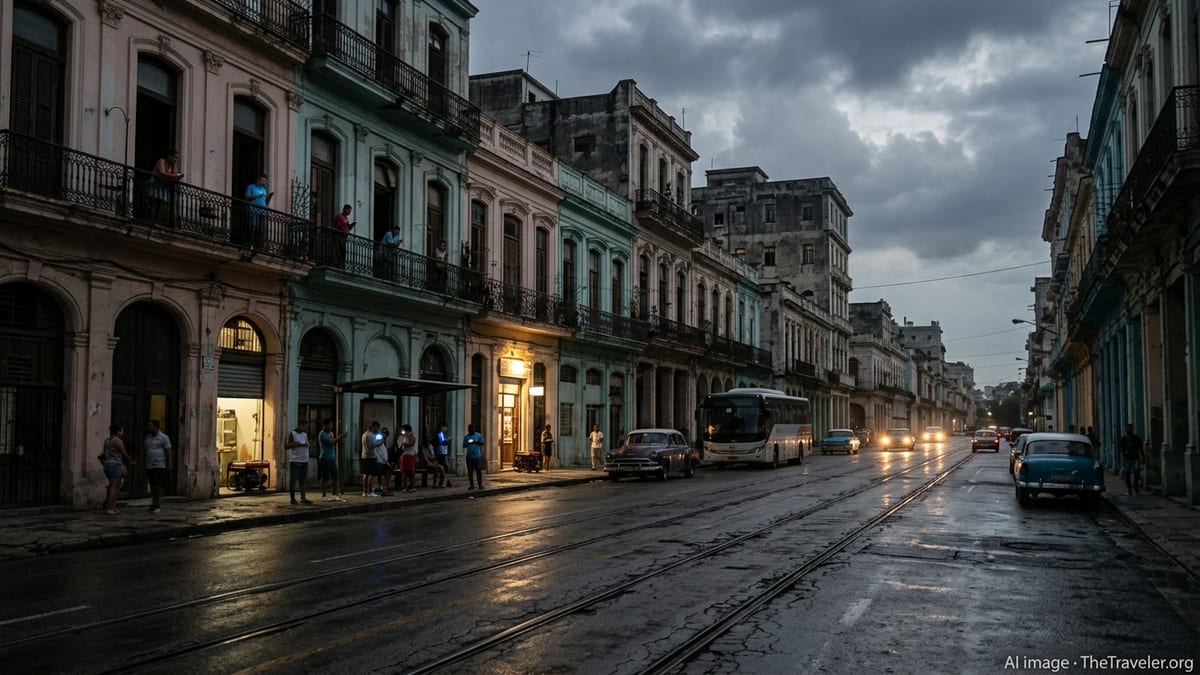
Associated press photography and eyewitness accounts gathered by independent Cuban platforms show crowded bus stops lit only by car headlights, improvised cooking over charcoal and long lines at water trucks when pumps are offline. The lack of refrigeration threatens food supplies, and telecommunications services have faltered whenever backup power runs low. Some digital rights groups and local media have documented temporary mobile internet shutdowns coinciding with protest peaks, compounding the sense of isolation among residents trying to contact relatives abroad.
Publicly available background on recent Cuban protests indicates that demonstrations linked to blackouts and food shortages have recurred since 2024, but the current wave is notable for its persistence and geographic spread. Analysts argue that the combination of extensive power cuts, inflation, and supply problems is eroding public tolerance more sharply than in previous crises, even as security forces maintain a visible presence around key intersections and public buildings.
Travel Disruptions, Flight Uncertainty and Stranded Visitors
The energy crisis is now directly affecting travel. Aviation notices cited by airline and aviation monitoring communities indicate that Cuba’s main international airport in Havana warned carriers in February 2026 that it could not guarantee jet fuel supplies for at least a month. While many international flights have continued to operate using fuel uplifted abroad, this uncertainty has led some airlines to adjust schedules, add technical stops elsewhere in the Caribbean or review capacity on routes to Cuba.
Travel advisories and specialist blogs aimed at international visitors describe a patchwork situation at airports and resorts. Large hotels in key destinations such as Havana, Varadero and Cayo Coco tend to rely on their own generators, which can maintain basic services during outages, but guests are still encountering dim corridors, reduced air conditioning, intermittent Wi-Fi and limited elevator operation. Smaller guesthouses and private homestays, a popular option for independent travelers, are more exposed to grid failures and often cannot provide stable power or water during long cuts.
Anecdotal accounts from recent travelers compiled on forums and travel sites mention flight delays linked to ground handling challenges during blackouts, including slowed immigration processing and baggage handling when terminal systems revert to backup power. Some visitors report needing to adjust itineraries at short notice as interprovincial buses reduce services due to diesel shortages and domestic flights face greater scrutiny over fuel availability. For travelers already on the island, the crisis is adding layers of uncertainty to what is traditionally considered a relatively straightforward Caribbean destination.
Tourism Industry on Edge as Peak Season Unravels
The timing of the crisis is particularly damaging for Cuba’s tourism sector, which relies heavily on the northern winter and early spring months. Tourism statistics from recent years show a gradual recovery in visitor numbers after the pandemic, with authorities and industry stakeholders hoping for 2026 to consolidate that rebound. Instead, widespread blackouts and fuel scarcity are now overshadowing promotional efforts and raising questions about service reliability.
Industry commentary in Canadian and European outlets, along with statements from some tour operators, notes that while package trips are still running, companies are receiving increased queries about contingency plans, refund policies and on-the-ground conditions. Some operators are emphasizing that core resort infrastructure remains functional thanks to generators, but they also acknowledge that excursions to rural areas, city tours in older neighborhoods and cross-island itineraries are more vulnerable to disruption.
Travel planners and regional analysts suggest that, in the short term, Cuba may see a shift in visitor profiles. Travelers with strong family ties or long familiarity with the country appear more willing to navigate shortages and outages, while first-time leisure tourists may defer trips in favor of more stable Caribbean destinations. The longer the blackouts and fuel crisis persist, the greater the risk that the island’s carefully built image as a distinctive yet manageable travel experience will be eclipsed by concerns over basic reliability.