

More news on this day
Cuba’s tourism industry, long touted as the island’s economic lifeline, is buckling under a simultaneous energy meltdown and aviation fuel shortage that has grounded flights, shuttered hotels and plunged key resort areas into darkness, prompting warnings from economists that the sector is nearing a point of no return.
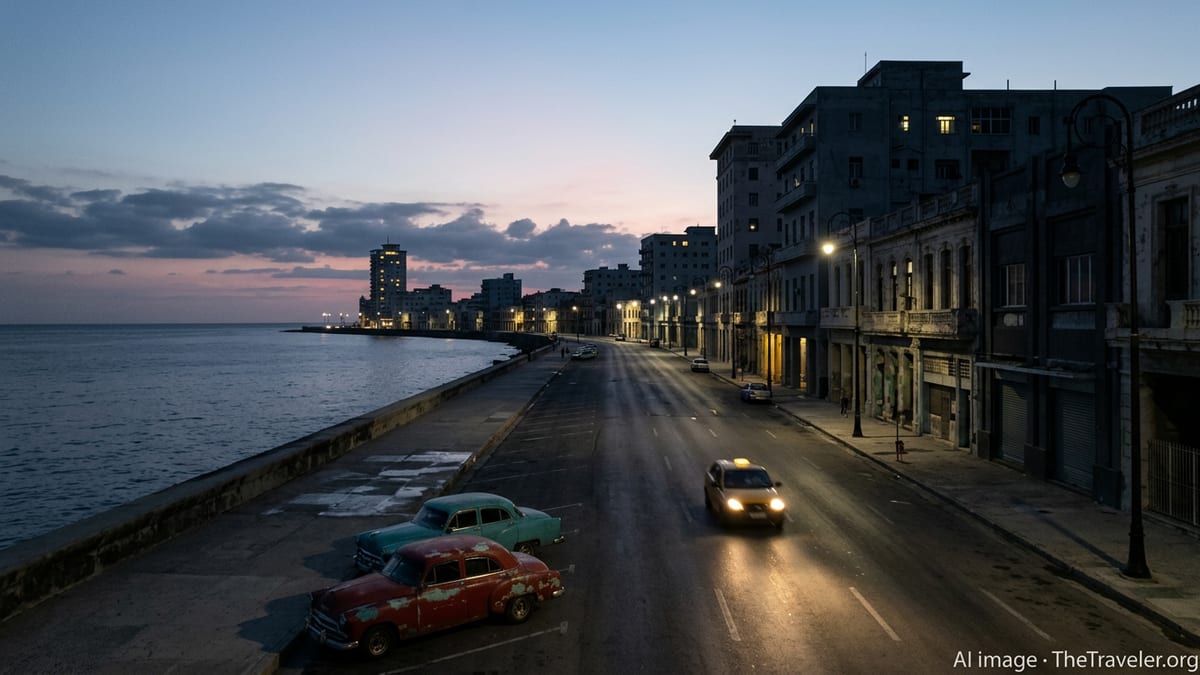
Jet Fuel Shortage Brings Air Links to a Standstill
Cuba’s carefully rebuilt air connections are now unraveling after aviation authorities quietly notified airlines that Jet A-1 fuel would not be available at any of the country’s nine international airports for at least a month, from February 10 to March 11, 2026. The unprecedented notice forces foreign carriers either to arrive with extra fuel, add refueling stops in third countries or suspend services altogether, sharply reducing Cuba’s capacity to receive visitors at the height of the northern winter season.
The disruption has already translated into a wave of schedule cuts. Canadian leisure airlines, which dominate winter traffic into resorts such as Varadero, Cayo Coco and Holguín, have thinned their operations or temporarily pulled out, citing the cost and complexity of rerouting aircraft. Several carriers are operating near-empty southbound flights only to repatriate stranded tourists, reducing inbound tourism revenue even as outbound obligations remain.
European links are also fraying. Air France confirmed it will suspend its Paris–Havana route for several weeks, pointing directly to Cuba’s worsening fuel crisis and operational uncertainty. For long-haul carriers already operating on tight margins to Caribbean destinations, flying to an island that cannot guarantee refueling has quickly become a commercial and logistical risk many are unwilling to take.
Aviation analysts note that while airlines can technically work around fuel shortages with creative planning, the knock-on effect is fewer flights, higher fares and a perception among travelers and tour operators that Cuba is a fragile, unreliable destination, especially compared with neighboring islands that maintain stable airport operations.
Energy Grid on the Brink and Tourists in the Dark
The shock in the skies comes as Cuba’s aging electricity grid endures one of its worst crises in decades. Since mid-2024, chronic fuel shortfalls and frequent breakdowns at thermoelectric plants have led to extended blackouts across much of the island. In early March 2026, a massive failure left large swaths of Havana and western provinces without power for many hours, once again exposing the fragility of basic infrastructure.
For tourists, the consequences are immediate and hard to ignore: stifling heat in hotel rooms without air conditioning, elevators stopped for hours, and restaurants unable to guarantee hot meals or refrigeration. Industry observers report outages lasting up to 20 hours a day in some regions during 2025, creating a level of discomfort that undercuts the very premise of a Caribbean vacation.
Local authorities and hotel operators have scrambled to deploy generators to priority tourist zones, but diesel shortages and maintenance issues limit their effectiveness. Travelers have increasingly taken to social media to describe stays overshadowed by darkness, long lines, and intermittent water supply. Travel agents in Canada and Europe say such accounts are now prompting customers to switch to destinations like the Dominican Republic or Mexico’s Caribbean coast.
Economists warn that the energy collapse is self-reinforcing. A shrinking supply of hard currency from tourism limits the government’s ability to import fuel and spare parts for the power sector, which in turn worsens the outages that are driving tourists away, trapping the country in a vicious cycle of decline.
Hotels Close, Visitors Rebook Elsewhere
The combination of fuel scarcity and power instability has pushed hotel operators into crisis management mode. In early February, local media and foreign correspondents reported that Cuban authorities and state-run hotel chains had begun temporarily closing properties and relocating guests to a smaller number of functioning resorts, particularly on the northern keys off Villa Clara and Ciego de Ávila.
While officials presented the moves as a way to “optimize resources,” tour operators interpret the closures as a clear sign that supply problems are too severe to maintain normal operations. Some all-inclusive complexes, once marketed as symbols of Cuba’s tourism ambitions, now sit partially dark, with pools drained and entertainment programs suspended while staff are reassigned or placed on leave.
The strain comes on top of already disappointing visitor numbers. In 2025, international arrivals fell to roughly 1.8 million, the lowest level since 2002 outside the pandemic years and far short of government targets. Hotels have struggled with low occupancy, and international brands managing properties on the island have reported declining room rates and rising operating costs driven by shortages of food, fuel and basic supplies.
Travel companies in key source markets say they are aggressively rebooking clients to alternative Caribbean destinations. Some are waiving change fees, preferring to preserve customer loyalty rather than risk confrontations over deteriorating conditions in Cuba. For many in the industry, the fuel and energy crunch has turned what was once framed as a “slow recovery” into an acute emergency.
An Economic Engine Stalls Amid Deepening Crisis
Tourism has long been one of Cuba’s principal generators of hard currency, bringing in around 3 billion dollars annually in better years. That inflow has been crucial for paying for imports of oil, food and medicine. With the sector now in freefall, economists estimate that tourism’s contraction contributed to a roughly 5 percent drop in gross domestic product in 2025, compounding inflation and chronic shortages.
The latest shocks are unfolding against a backdrop of tightening external pressure. A recent United States executive order threatening tariffs on countries that supply oil to Cuba has discouraged some traditional partners from shipping crude to the island. At the same time, Venezuelan deliveries have declined, leaving Havana scrambling to secure fuel on less favorable terms. A fire at a key fuel processing facility in mid-February further squeezed supplies just as demand for electricity and aviation fuel peaked.
Cuban officials have publicly blamed foreign sanctions and international “harassment” for the crisis, while promising that new supply agreements and investments in renewable energy will eventually stabilize the grid. However, independent economists argue that years of underinvestment, currency distortions and policy uncertainty have left the state with little room to maneuver, especially in the short term.
For now, the tangible reality is an island struggling to power its own homes and airports, even as it tries to attract foreign visitors with images of sun and sea. The widening gap between promotional slogans and on-the-ground conditions risks damaging Cuba’s brand for years, potentially even after the immediate fuel crunch eases.
Travelers Confront Uncertainty as Future Remains Murky
As the crisis drags on, travelers with existing bookings to Cuba face a maze of conflicting information. Airlines and tour operators are updating schedules in real time, adding technical stops in third countries, canceling flights on short notice or consolidating departures to a handful of gateways that can still be reliably served. Passenger advocacy groups are urging tourists to monitor their bookings closely and document any disruptions to claim compensation where local regulations allow.
On the ground, hotel workers and guides, many of whom depend almost entirely on tourist spending, fear a wave of layoffs and reduced hours. In popular destinations like Varadero and the northern keys, taxi drivers, private restaurateurs and owners of independent guesthouses report slow seasons stretching longer each year, with the current fuel shortage described as the worst blow yet.
Regional competitors are quietly capitalizing. Tourism boards in other Caribbean nations are stepping up campaigns to capture disillusioned Cuba-bound travelers, emphasizing reliable power, stable flight schedules and all-inclusive packages that do not involve last-minute relocations. In a market where holidaymakers have many options, the perception of chaos can be as damaging as the reality.
Whether Cuba can arrest the downward spiral will depend on its ability to secure new fuel supplies, stabilize the electric grid and restore confidence among airlines and foreign partners. Until then, an industry once hailed as the country’s smokeless engine finds itself sputtering, its future clouded by uncertainty and its present defined by empty hotel rooms and grounded planes.