

More news on this day
A sudden jet fuel shortage at all nine of Cuba’s international airports is triggering widespread flight cancellations, last-minute diversions and deep uncertainty for travelers with plans to visit the island in early 2026.
How Cuba’s Jet Fuel Shortage Started and Why It Matters Now
The disruption traces back to an official aviation notice, or NOTAM, issued by Havana’s José Martí International Airport in early February 2026. The alert confirmed that from February 10 at 05:00 UTC until at least March 11 at 05:00 UTC, Jet A-1 aviation fuel would not be available at any of Cuba’s nine international airports. Those include Havana, Varadero, Cienfuegos, Santa Clara, Camagüey, Cayo Coco, Holguín, Santiago de Cuba and Manzanillo.
In practice, the notice means airlines cannot count on refueling in Cuba, a basic assumption underpinning most commercial flight planning. Without guaranteed fuel, carriers must either arrive with enough fuel for a round trip, schedule a technical stop in a third country, or suspend the route altogether. Aviation analysts estimate that roughly 400 scheduled weekly flights across multiple airlines and markets are affected.
The fuel crunch is part of a broader energy and economic crisis. Cuba relies heavily on imported fuel, and tightened United States sanctions and tariff threats on countries supplying oil to the island have sharply reduced access to crude and refined products. The result is a squeeze that now reaches directly into the country’s most important tourism gateways at a key moment for the winter travel season.
Flights Grounded, Rerouted or Thinned Out
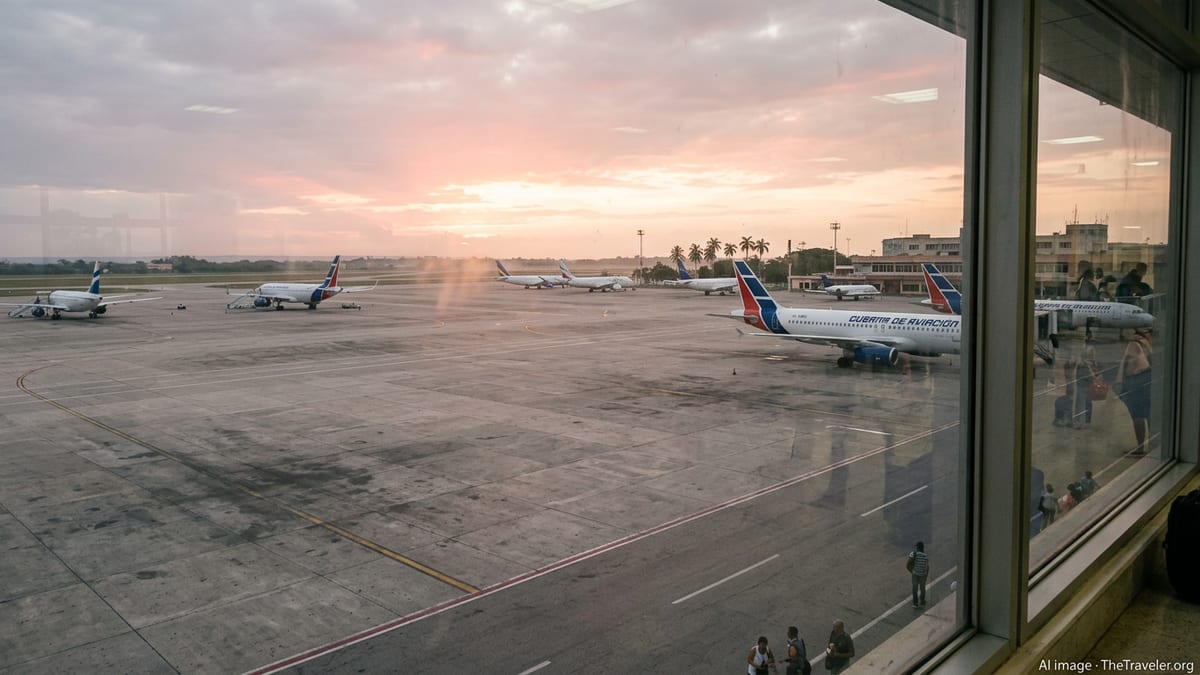
The most visible impact has been a rapid thinning of air traffic over Cuba. On one recent Monday, flight-tracking data showed just a single commercial departure from Havana in the early hours, an almost unthinkable scenario for a capital city airport that normally handles dozens of international movements each day.
Air Canada moved first among major North American carriers, suspending all flights to Cuba from February 9. The airline organized ferry flights to repatriate around 3,000 Canadian holidaymakers and has since pushed any planned resumption of service back to November 1, 2026, citing ongoing fuel shortages, rolling power cuts and hotel closures on the island.
Latin American and European airlines are also recalibrating. LATAM Airlines Peru halted its Lima–Havana route from mid-February, maintaining only a limited schedule of outbound flights to bring stranded passengers home before suspending the service indefinitely. European carriers such as Air Europa have chosen a different path, keeping their Havana services but inserting technical refueling stops in nearby hubs like Santo Domingo in the Dominican Republic, lengthening travel times and complicating schedules.
Other airlines, including large U.S., Canadian and Latin American operators that serve Cuba’s resort destinations and provincial cities, are weighing a mix of options: cutting frequencies, consolidating flights onto fewer days, or flying with extra fuel from origin airports at the expense of payload and profits. For passengers, the picture is a patchwork of cancellations, schedule changes and elongated journeys.
What Travelers Face on the Ground and in the Air
For visitors, the jet fuel shortage brings two main headaches. The first is getting to and from Cuba at all. With airlines trimming capacity or exiting routes temporarily, some popular gateways such as Cayo Coco and Holguín are seeing sharply reduced frequencies. Travelers may find themselves rebooked through Havana or via third-country hubs in Mexico or the Dominican Republic, often with added layovers and tighter connections.
The second headache is uncertainty. Because the NOTAM technically runs only through March 11, but the underlying energy crunch shows no quick fix, airlines are planning in increments, updating schedules as they go. That can translate into rolling waves of schedule changes, particularly for spring and summer bookings. Some carriers are offering free changes or refunds for affected dates, while others are applying standard fare rules, leaving it to passengers to negotiate options.
Conditions on the ground add another layer. Power cuts and fuel rationing across Cuba have prompted authorities and hotel operators to consolidate tourists into fewer open properties in some resort areas. While many visitors still report safe and welcoming stays, some services may be reduced, from air conditioning and dining options to local transport availability, especially outside major tourist corridors.
Travelers already in Cuba when disruptions hit should expect longer airport days and the possibility of last-minute routing changes. Airlines have been coordinating repatriation flights and positioning aircraft with sufficient fuel to operate round trips, but weather, congestion at refueling hubs and operational constraints can all cause knock-on delays.
Planning a Trip to Cuba in 2026: Key Considerations
For those with upcoming travel to Cuba in 2026, flexibility and vigilance are essential. Anyone booked to travel while the formal fuel blackout remains in effect, or shortly afterward, should watch for airline notifications and monitor their reservation frequently. Where permitted, choosing fully refundable tickets or fares with low change penalties can provide valuable protection if routes are scaled back or suspended.
Travelers should also build in more time. It is prudent to avoid tight connections on itineraries involving Cuba, particularly when a technical stop is scheduled in a third country. A journey that once took a single nonstop flight may now include an extra leg and several additional hours of travel. Leaving a generous buffer before cruises, tours or onward international flights can reduce the risk of missed departures.
Travel insurance that covers schedule disruptions and missed connections can be an important safety net, but passengers need to read the fine print. Some policies treat fuel shortages and sanctions-related disruptions differently from standard operational issues. Documenting airline notices, cancellation emails and any out-of-pocket costs will be critical for successful claims.
Finally, would-be visitors should consider the broader context of Cuba’s energy crisis. Beyond aviation, fuel shortages have affected public transport, domestic flights, and services in some tourist areas. Those who are risk-averse or traveling with young children or people with medical needs may want to consult their airline or tour operator about alternative Caribbean destinations until the situation stabilizes.
Could the Jet Fuel Shortage Extend Beyond March?
Officially, the most critical period runs through March 11, 2026, the date cited in the aviation notice as the expected end of the Jet A-1 blackout. In practice, however, industry observers caution that resolving the crisis may take considerably longer. Replenishing stocks, reopening procurement channels and restoring confidence among foreign suppliers and insurers are all complex, politically charged tasks.
Some airlines are already signaling a longer horizon of disruption in their planning. Air Canada’s decision to delay a full return to the Cuban market until November underscores concerns that even if aviation fuel begins to flow again, related problems such as power cuts, supply chain gaps and hotel closures could persist well into the year.
Diplomatic and commercial efforts are under way, with countries including Mexico and Canada sending humanitarian aid and exploring ways to support Cuba without running afoul of tightened United States sanctions. Yet there is no clear roadmap for restoring stable fuel supplies, and the risk of further disruptions or rolling shortages remains high.
For travelers, that uncertainty means 2026 could be an unusually volatile year for Cuban air travel. Those intent on visiting the island may still find workable options, especially via airlines using creative refueling strategies. But until fuel flows and flight schedules normalize, Cuba will remain a destination where careful planning, flexible dates and a backup plan are not just advisable, but essential.