

Thailand’s easygoing reputation can mislead first-time visitors into thinking anything goes. In reality, Thai society is shaped by deep respect for Buddhism, the monarchy and social harmony, and there are clear expectations about how guests should behave. Understanding local etiquette not only helps you avoid causing offense or running into legal trouble, it also opens doors to warmer connections with the people who call Thailand home.
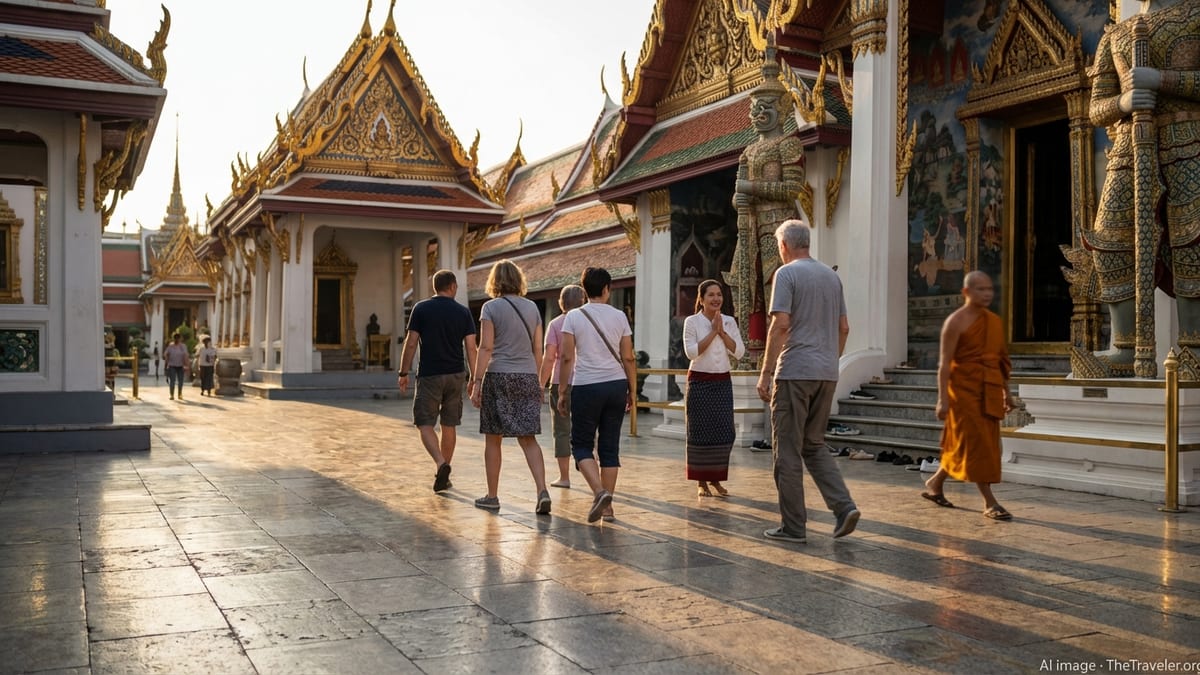
Understanding Thai Values and First Impressions
At the heart of Thai etiquette is the idea of keeping the peace. Thais tend to avoid open confrontation, prize self-control and prefer smooth, pleasant social interactions. Visitors who stay calm, smile often and avoid aggressive body language will usually be met with patience and kindness, even when misunderstandings arise. Losing your temper in public, raising your voice at staff or creating a scene is considered rude and can damage your reputation much faster than you might expect.
Hierarchy is another key part of Thai culture. Age, social status, job title and religious standing all influence how people interact. Showing extra courtesy toward elders, teachers, officials and monks is simply part of daily life. As a visitor, speaking politely, listening more than you talk at first and using a gentle tone all signal that you respect the local way of doing things, even if you do not yet know every custom.
Religion is visible everywhere in Thailand, from spirit houses outside shops to morning alms rounds by monks. Theravada Buddhism strongly shapes ideas about humility, merit-making and respect for sacred spaces. You do not need to be Buddhist to visit temples or take part in some rituals, but observing the behavior of locals and following their lead is an important baseline of respect.
First impressions in Thailand rely more on behavior than on words. Looking neat and modestly dressed, offering a friendly smile, lowering your voice in busy public places and avoiding boastful talk all contribute to a positive start. Most Thais understand that visitors will not get everything right, but they do expect a genuine attempt to fit in.
The Wai Greeting and Everyday Politeness
One of the first cultural gestures visitors notice is the wai, the traditional Thai greeting. It is performed by pressing the palms together in a prayer-like position and slightly bowing the head. The height of the hands and depth of the bow vary depending on the other person’s status, with higher hands signaling greater respect. You will see wais offered to monks, elders, teachers and sometimes even in shop interactions or hotel lobbies.
As a visitor, you are not required to initiate the wai in every interaction. A simple warm smile and a polite “sawatdee khrap” (for men) or “sawatdee kha” (for women) is usually enough. When someone offers you a wai, the polite response is to return it, unless it comes from a much younger person such as a small child or from someone serving you in a context where they would not expect one back. If in doubt, mirroring a wai with a modest bow and a smile is rarely wrong.
Verbal politeness matters as much as body language. Adding the polite particles “khrap” or “kha” to sentences, depending on your gender, softens your speech and signals respect. Even if your Thai vocabulary is limited to greetings, “please” and “thank you,” using these small words consistently goes a long way. Speaking slowly, avoiding sarcasm and refraining from swearing in public spaces are all noticed, even when people are communicating with you in English.
Patience is also part of everyday politeness. Service in some local establishments may be slower than you are used to, queues can be loose and bureaucracy can be confusing. Responding with visible irritation or raised voices makes everyone uncomfortable. Taking delays in stride and maintaining good humor will often prompt locals to go the extra mile to help you.
Temple Etiquette and Respect for Buddhism
Thailand’s temples are among its greatest attractions, but they are first and foremost active religious sites. Proper dress is essential. Shoulders and upper arms should be covered for all genders, and shorts or skirts should reach at least to the knees. Very tight, sheer or low-cut clothing is inappropriate at temples, even if it technically covers the necessary areas. Many major sites may refuse entry or ask visitors to rent or borrow sarongs if they do not meet the dress code.
Before entering a temple building that houses Buddha images or where people are praying, remove your shoes and leave them neatly outside. Hats and sunglasses should also come off inside. Keep your voice low, silence your phone and move slowly and respectfully. If you sit on the floor, tuck your feet behind you or to the side so they do not point at Buddha statues, monks or altars. Feet are considered the lowest and least clean part of the body, so pointing them at sacred objects is especially offensive.
Photography is usually allowed in the outer grounds of many temples, but flash, tripods and loud shutters can be disruptive in quiet worship spaces. Always look for signs, and when in doubt, ask discreetly. Avoid climbing on or touching Buddha statues, and never pose in a playful or suggestive way with religious imagery. Small Buddha images sold in markets are also considered sacred; treating them like casual souvenirs or using them as decoration in inappropriate places can upset locals.
Interacting with monks requires extra care. Men may approach and speak with monks fairly freely, though still with respect and soft voices. Women, however, should avoid touching monks or handing items directly to them, as many monks strictly observe rules about physical contact with women. If a woman needs to pass something to a monk, she should place it within reach on a table or cloth. On public transport, it is polite to offer seats to monks and to avoid sitting so close that physical contact is likely.
Royalty, Laws and Sensitive Subjects
Reverence for the monarchy is woven into Thai life, and it has legal weight. Images of the king and royal family appear in public spaces and on currency, and there are strict laws against insulting or defaming the monarchy. Negative comments, jokes or casual criticism about the royal family can lead to serious consequences, even if made in private settings or online. As a visitor, it is wisest to avoid the subject altogether or speak about it only with extreme care and respect.
Respect extends to symbols associated with the monarchy. Thai banknotes bear the king’s image, so avoid stepping on them, crumpling them aggressively or using them in any way that looks disrespectful, even jokingly. If you drop a note on the ground, pick it up with your hand rather than pinning it under your foot. During ceremonial events or commemorative displays, watch how locals behave and follow their lead.
Thailand also enforces various laws that intersect with cultural expectations. Vaping and electronic cigarettes, for example, have been subject to strict restrictions and can lead to fines or confiscation. Smoking is banned on many popular beaches, and fines for littering, especially cigarette butts, can be steep. Alcohol sales are restricted during specific religious holidays and certain hours of the day, and you may find shops refusing to sell drinks at times that surprise you. Understanding that these rules are tied to public order and religious observance makes them easier to accept.
Politics, regional tensions and social debates can be sensitive topics. While younger Thais in cities may discuss them more openly, it is usually better for short-term visitors to listen rather than lead politically charged conversations. Avoid making sweeping judgments about Thai society, religion or government, particularly in public settings or on social media while you are in the country.
Body Language, Dress and Behavior in Public
Nonverbal communication carries significant weight in Thailand. The head is regarded as the most sacred part of the body, so touching someone’s head, even playfully or with children you do not know well, is discouraged. If you accidentally bump someone’s head or brush against it in a crowded space, a quick smile and a soft apology can defuse any awkwardness. In contrast, the feet are considered the lowest part of the body, so propping them on tables, pointing them at people or resting them on seat backs in public transport is seen as disrespectful.
Displays of affection between couples are more restrained in much of Thailand than in some Western countries. Holding hands or a light arm around the shoulders in tourist areas is generally accepted, but long hugs, kissing and intimate behavior in public can be frowned upon, especially in rural areas and near religious sites. On the other hand, friends of the same gender may walk arm-in-arm or sit close without any romantic implication, and this is viewed as normal.
Dress expectations vary by setting. Beachwear is perfectly fine on the sand or at resort pools, but walking through towns, markets or transport hubs in only swimwear or very revealing clothing is considered inappropriate. In cities, casual but neat clothing is widely accepted, but modesty is still valued. Offensive slogans, very transparent fabrics or extremely short hemlines can draw unwanted attention. When visiting government offices, higher-end restaurants or family homes, opt for clean, tidy outfits that cover more rather than less.
Noise levels also matter. While bustling markets and nightlife areas are lively, shouting, singing loudly in the street or playing music at high volume in quiet neighborhoods late at night may disturb residents. On public transport, keeping conversations at a moderate volume and using headphones for media is appreciated. Respecting shared spaces by not eating messy foods on packed buses or trains and disposing of rubbish properly all contribute to the sense of communal courtesy that Thais value.
Social Interactions, Dining and Everyday Encounters
Social life in Thailand often revolves around food, and meals are a relaxed way to experience local etiquette. When eating in a group, dishes are commonly shared family-style, with several plates placed in the center of the table. It is polite to take small portions at a time and avoid piling your plate too high. If you are a guest, allow your host to begin serving or to invite you to start. Declining a particular dish is acceptable, but doing so gently, with a smile and perhaps a brief explanation if there are dietary restrictions, helps avoid embarrassment.
Table manners are relatively informal but still guided by a desire to keep things tidy and harmonious. In many places, diners use a spoon and fork, with the spoon in the dominant hand and the fork used to push food onto the spoon. Chopsticks are more common for certain noodle dishes. Sticking utensils upright in a bowl of rice can resemble offerings made at funerals and is best avoided. If you are unsure how to eat a particular dish, quietly observing others at the table can provide a quick lesson.
Invitations and small acts of hospitality often play a role in Thai interactions. You may be offered water, snacks or fruit when visiting a shop, office or home. It is polite to accept at least a little, or to refuse with warm thanks and a smile if you genuinely cannot. Compliments on food are usually appreciated, and you can express them simply by saying it is tasty and thanking your host or the cook.
In everyday encounters, such as shopping or hiring a taxi, bargaining can be part of the culture, especially in markets that clearly cater to tourists. However, haggling should remain light-hearted and friendly, not confrontational. If a price feels too high, a polite counteroffer or a cheerful “no, thank you” and walking away usually ends the discussion without offense. Respectful negotiation preserves face for both parties and is more aligned with Thai cultural expectations than hard, aggressive bargaining.
Modern Realities: Tourism, Nightlife and Legal Boundaries
Mass tourism has brought big changes to many Thai destinations, particularly in coastal resort areas and nightlife districts in cities. While these zones may feel more relaxed and familiar to visitors, Thai laws and fundamental cultural expectations still apply. Public drunkenness, rowdy behavior and disrespect toward local workers or other guests can quickly lead to problems. Police have the authority to intervene when situations become disruptive, and penalties for disorderly conduct, vandalism or fighting can be serious.
Alcohol and partying are tightly intertwined with some visitors’ image of Thailand, but it is important to remember that many locals see nightlife areas as essentially separate from family and community life. Drinking responsibly, avoiding illegal substances and treating staff in bars, clubs and entertainment venues with courtesy are basic expectations. Drug laws in Thailand are strict, and penalties for possession, use or trafficking of illegal substances can be severe, regardless of how casually such substances may be treated in other countries.
Beach etiquette is another area where cultural and legal expectations converge. On many popular beaches, smoking outside designated areas is prohibited, and littering, particularly of cigarette butts and plastic waste, is taken seriously due to environmental concerns. Visitors are expected to respect these rules, dispose of trash properly and avoid activities that damage coral or disturb marine life. Modest cover-ups when leaving the sand to visit shops or restaurants close to the beach are appreciated by business owners and residents alike.
Digital behavior also falls under modern etiquette. Sharing photos from temples, villages or private spaces on social media without consent can cause offense, especially if the images portray people in a way they might find embarrassing or disrespectful. Always ask before taking close-up photos of individuals, children, monks or street vendors, and be cautious about posting material that could be interpreted as mocking local customs or religious practices. Respect online is increasingly seen as an extension of respect in person.
The Takeaway
For most visitors, Thailand feels welcoming from the moment they arrive. Locals are generally patient with cultural missteps when they see that genuine effort is being made to adapt. The key threads running through Thai etiquette are respect, modesty and a desire to keep social interactions smooth and pleasant. By dressing appropriately for the setting, learning a few basic phrases, moving gently in temples and public spaces and staying calm even when things do not go to plan, you align yourself with these values.
Rather than a list of rigid rules, Thai cultural etiquette can be understood as a guide to building better connections. Observing how people around you act, asking polite questions when unsure and accepting correction with good humor all signal openness and humility. In return, you are likely to experience more authentic hospitality, be welcomed into spaces beyond the tourist surface and come away with a deeper understanding of the country.
Ultimately, Thailand’s etiquette is less about perfection and more about intention. Visitors who approach the culture with curiosity, sensitivity and respect for its religious and social foundations usually find that the country responds with exceptional warmth. That spirit of mutual consideration is one of the reasons so many people return again and again.
FAQ
Q1. Do I have to wai everyone I meet in Thailand?
As a visitor, you are not expected to initiate a wai with everyone. A friendly smile and polite greeting are usually enough, but returning a wai when it is offered to you is appreciated in most cases.
Q2. What should I wear when visiting temples in Thailand?
Cover your shoulders and upper arms, and make sure shorts or skirts reach at least to the knees. Avoid tight, sheer or low-cut clothing, remove your shoes before entering temple buildings and take off hats and sunglasses inside.
Q3. Is it acceptable to show affection in public with my partner?
Light affection such as holding hands is generally tolerated in tourist areas, but kissing, long hugs and overtly intimate behavior in public can make locals uncomfortable, especially near religious sites and in rural communities.
Q4. Can women interact with monks?
Women may speak with monks, but should avoid physical contact and should not hand items directly to them. If a woman needs to offer something, it is best to place it on a table or cloth within reach for the monk to pick up.
Q5. Is bargaining considered rude in Thai markets?
Bargaining is common in markets that cater to tourists, but it should remain friendly and relaxed. Polite counteroffers and a willingness to walk away are fine, while aggressive haggling or raised voices are not.
Q6. How serious are Thailand’s laws about the monarchy?
Insulting or criticizing the monarchy is taken very seriously and can lead to legal consequences. As a visitor, you should avoid negative comments or jokes about the royal family and treat related symbols, such as banknotes, with respect.
Q7. Are tattoos of Buddha or religious symbols a problem?
Buddha images and certain religious symbols are considered sacred. Tattoos of these images, especially placed on lower parts of the body or displayed in a provocative way, can be viewed as disrespectful, so covering them in temples and sensitive settings is advisable.
Q8. Can I wear beachwear away from the beach?
Swimwear is appropriate on the beach or at the pool, but walking through towns, shops or public transport in only beachwear is considered disrespectful. Put on a shirt, dress or other cover-up when you leave the sand.
Q9. Is it okay to touch children’s heads or ruffle their hair?
Because the head is regarded as the most sacred part of the body, touching anyone’s head is generally discouraged. If you accidentally do so, a quick smile and apology help, but it is better to avoid the gesture altogether, even with children.
Q10. What should I do if I unintentionally offend someone?
If you realize you have broken a cultural rule, a sincere apology, a small bow or wai and a calm, respectful attitude usually smooth things over. Most Thais are forgiving when they see that a visitor is genuinely trying to learn and be considerate.