

More news on this day
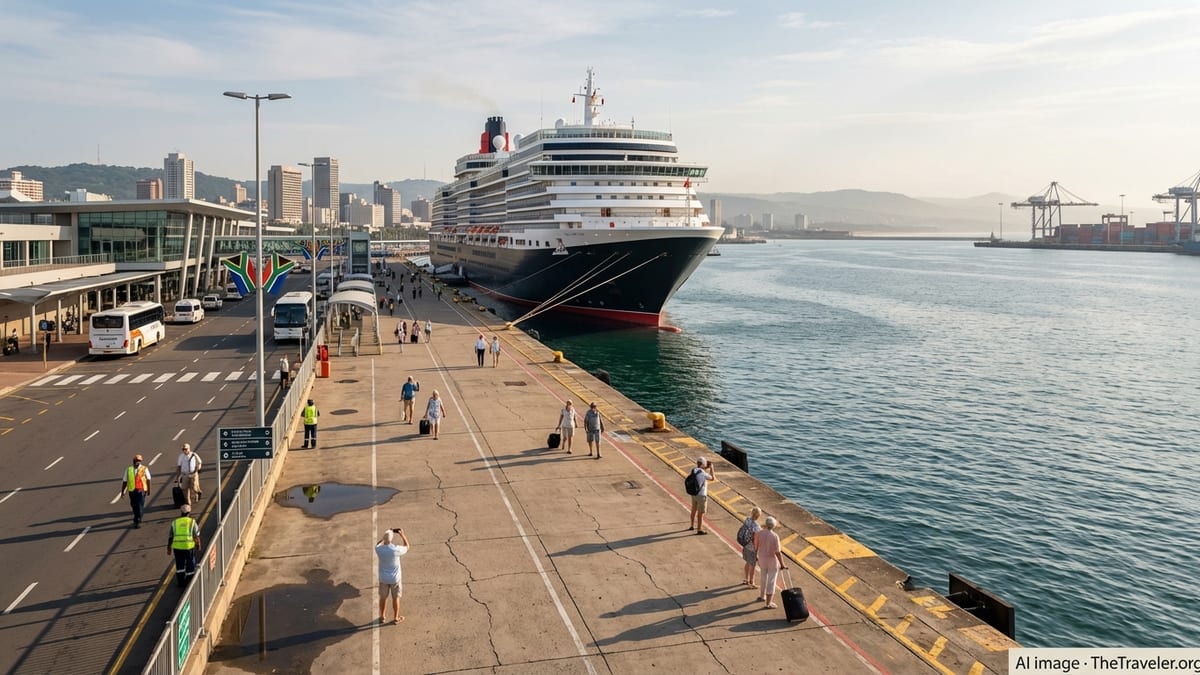
The arrival of Cunard’s newest ocean liner, Queen Anne, on her globe-ranging itineraries is casting a fresh spotlight on South Africa’s east coast, with Durban emerging as a key stop on one of the world’s most talked-about luxury world cruises.
As Queen Anne sails from the North Atlantic to the Indian Ocean, her scheduled calls at Durban are helping to reposition the city, and South Africa more broadly, as a premier gateway for high-end voyages that link Africa with Asia, Australia and the Pacific.
More News
- Caribbean Travel to U.S. Upended by New Visa Freezes and Expanded Bans
- Mexico Restores E-Visas for Brazilians, Paving the Way for Borderless Tourism
- Philippine Airlines Joins Regional Carriers Powering Southeast Asia’s Tourism Boom
Queen Anne’s World Cruise Puts Durban on the Global Map
Queen Anne, the latest in Cunard’s storied line of Queens, is operating extended world voyages that knit together Europe, Africa, Asia, Oceania and the Americas over more than 100 days at sea. The itineraries include multiple overnights and late departures, turning selected ports into marquee destinations for affluent travelers seeking time to explore beyond the pier. Among the most notable African calls are Cape Town, Walvis Bay and Port Elizabeth, but Durban’s appearance on the route signals a growing confidence in the city’s cruise infrastructure and tourism appeal.
Detailed sector schedules for the 2026 full world voyage from Hamburg and Southampton confirm Durban as a call after Cape Town and Port Elizabeth, on a leg that then continues across the Indian Ocean to Mauritius and onwards to Asia. The Durban stop is more than a convenient refueling point. It is part of a curated sequence that showcases Atlantic isles, the Namibian and South African coasts, and then the tropical landscapes of the western Indian Ocean before guests push on toward Sri Lanka, Singapore and Hong Kong.
Cunard’s move to include Durban on the world cruise roster follows a wider corporate strategy to broaden the geographic range of its itineraries, with Queen Anne alone scheduled to visit more than 100 unique ports and make over 20 maiden calls across several seasons. That approach dovetails closely with Durban’s own ambitions to anchor itself in the international cruise network, not only as a turnaround base for regional itineraries, but as a must-see port on epic once-in-a-lifetime journeys.
Durban’s Cruise Revival and New Indian Ocean Ambitions
Durban’s selection by Cunard comes at a moment when the city’s cruise sector is enjoying a strong revival. Local authorities and tourism planners have forecast hundreds of thousands of cruise arrivals in the 2025 and 2026 seasons, alongside a multibillion-rand economic impact for the wider KwaZulu-Natal region. That growth is underpinned by both homeport operations for regional lines and a steady uptick in calls from international brands ranging from resort-style ships to boutique luxury vessels.
The new, purpose-built cruise terminal at Durban’s harbor, developed as part of a broader waterfront regeneration effort, has been central to this turnaround. With facilities designed to handle simultaneous berthings, streamlined immigration and security processing, and upgraded passenger lounges, the terminal is engineered to meet the expectations of global brands that trade heavily on seamless embarkation experiences and premium service standards.
City officials see the presence of a marquee name such as Cunard not simply as validation, but as a step toward a more ambitious positioning of Durban as an Indian Ocean hub. By functioning as both gateway and showcase, the port can link South African safari and cultural experiences with Indian Ocean beach escapes, Asian megacities and transpacific routes, encouraging cruise lines to use Durban as an anchor point in cross-basin itineraries.
From the Golden Mile to Safari: What World Cruise Guests Find in Durban
For passengers arriving on a world cruise, the Durban call is a compact introduction to the diversity of South Africa’s east coast. Shore excursion portfolios typically blend coastal attractions with inland excursions that can range from cultural heritage tours to wildlife encounters. The city’s famed Golden Mile, lined with beaches, promenade walks and a growing collection of cafes and entertainment venues, offers a ready-made playground within minutes of the ship.
Beyond the waterfront, curated excursions can take guests into the heart of KwaZulu-Natal, with day trips to game reserves offering the chance to spot rhino, elephant and other signature African wildlife. Other itineraries dive into the region’s Zulu cultural heritage, local cuisine and craft markets, creating a contrast to the urbane experiences passengers have enjoyed in earlier ports such as Madeira or Tenerife, and those ahead in metropolitan centers like Singapore or Hong Kong.
For world cruisers in particular, port calls are remembered less for checklist attractions and more for a sense of place. Durban’s subtropical climate, Indian Ocean swells and multicultural street life present a distinctive flavor that contrasts with the stark desert vistas of Namibia or the cosmopolitan polish of Cape Town. Cruise planners are increasingly aware that this variety plays a critical role in maintaining guest enthusiasm on long itineraries that last three to four months.
Linking Africa to the Wider Indian Ocean Cruise Corridor
With Durban now firmly integrated into Queen Anne’s global routing, South Africa is better placed to capitalize on the evolving Indian Ocean cruise corridor that links East Africa, the Mascarene Islands, the Arabian Peninsula and South and Southeast Asia. World cruises sailing from Europe to the Pacific increasingly rely on a chain of attractive, well-serviced ports along this axis, allowing for a blend of cultural immersion, beach stops and at-sea relaxation days.
On Queen Anne’s full world voyage, Durban serves as a transitional port between the Atlantic-flanked western seaboard of southern Africa and the string of islands and coastal destinations leading toward Asia. After leaving Durban, itineraries head to the likes of Port Louis in Mauritius before continuing across to Sri Lanka and onward to major Asian hubs. This sequence turns South Africa into a narrative hinge in the overall journey, where the story of the voyage shifts from African coasts to Indian Ocean islands and Asian cities.
For South African tourism authorities, that role carries strategic value. It positions the country not as a cul-de-sac at the end of regional sailings, but as a connective node that cruise planners can integrate into larger global networks. That status can attract not just once-off world cruises, but also seasonal repositioning voyages, around-Africa routes and new hybrid itineraries that might, for example, combine Cape Town and Durban with the Seychelles, Maldives and Goa.
Luxury at Sea Meets a Growing Appetite for Experiential Travel
Queen Anne’s presence in the Indian Ocean arena also speaks to a broader consumer trend in the luxury cruise market. Today’s high-end travelers are looking for more than polished interiors and attentive service, though Cunard’s White Star standards remain a significant draw. Guests booking months-long world voyages increasingly cite destination depth, cultural access and curated experiences as decisive factors in choosing one line over another.
Durban’s attractions fit neatly into this experiential matrix. A single call can deliver coastal leisure, urban culture and gateway access to wildlife and heritage landscapes, all within a day’s reach of the pier. For guests who have already sampled iconic Mediterranean ports or Caribbean islands on earlier voyages, KwaZulu-Natal offers something comparatively less familiar, tapping into a sense of discovery that world cruise marketing campaigns have been keen to emphasize.
On board, Queen Anne complements that shoreside richness with a contemporary take on classic ocean-liner glamour, including art deco-inspired interiors, a broad culinary program and a range of entertainment that shifts from formal evening performances to casual daytime diversions. The interplay between these shipboard comforts and the sense of geographical progression as the vessel moves from the Atlantic to the Indian Ocean is a core part of the appeal.
Economic Ripples for Durban and South African Tourism
The economic implications of high-end world cruise calls extend well beyond the pier. Forecasts for Durban’s 2025 and 2026 cruise seasons project hundreds of thousands of passenger movements and a direct and indirect impact that runs into the billions of rand across accommodation, transport, dining, retail and excursions. While homeport operations generate the largest gains, single port calls on world cruises also contribute a valuable slice of that revenue, particularly for tour operators and small businesses that tailor their offerings to short-stay visitors.
The presence of a globally recognized brand like Cunard adds a reputational dividend. Each time Queen Anne sails into Durban, the image of the city as a safe, efficient and appealing cruise destination is reinforced among a high-spending segment of international travelers. That perception can, in turn, influence future travel decisions, whether guests return independently for longer land-based holidays or choose other Africa-centric itineraries.
Local stakeholders are also keenly aware that world cruise passengers are often seasoned travelers with significant discretionary income. Positive experiences in Durban can translate into word-of-mouth recommendations, social media exposure and repeat business for South African tour companies and hotels. As more lines consider extended itineraries involving multiple South African ports, the cumulative effect on the national tourism economy could be substantial.
Safety, Security and the Evolving Perception of Long-Haul Voyages
Modern world cruises, including those operated by Cunard, traverse regions that have historically raised questions about safety, from remote ocean stretches to areas once associated with piracy. Cruise lines routinely emphasize that comprehensive risk assessments, route planning and on-board protocols are in place to mitigate such concerns. In practice, heightened security periods along segments of world voyages have become part of a standard operating framework for the industry.
For South Africa and Durban specifically, the focus is on ensuring that shore operations match the high safety expectations of global brands and their guests. Investment in port security, coordinated transport arrangements and vetted touring partners all play a role in maintaining traveler confidence. The successful handling of world cruise calls helps reinforce the message that Durban is a reliable and professionally managed stop on a complex global itinerary.
These assurances align with a broader shift in how long-haul voyages are marketed. Rather than downplaying the logistical and geographic challenges of such trips, cruise lines are increasingly transparent about the measures they take to safeguard guests while still delivering the sense of adventure that motivates many to book extended journeys in the first place. Durban’s integration into these narratives underscores its status as both an accessible and aspirational port of call.
FAQ
Q1. Why is Queen Anne’s world cruise significant for Durban and South Africa?
Queen Anne’s inclusion of Durban on a flagship world voyage signals that South Africa’s east coast now meets the operational, safety and guest-experience standards of the world’s leading luxury lines. It elevates Durban from a regional turnaround port to a featured stop on an itinerary that spans multiple continents, helping to brand South Africa as a premier gateway between the Atlantic and the Indian Ocean.
Q2. When is Queen Anne scheduled to call at Durban on her world voyage?
On the 2026 full world voyage routing that departs Europe in early January, Durban is scheduled as a call after Cape Town and Port Elizabeth on the southbound African leg, before the ship continues across the Indian Ocean toward Mauritius and Asia. Exact dates can vary slightly by itinerary and booking platform, so guests are advised to confirm details at the time of reservation.
Q3. How does Durban compare with other South African ports on these itineraries?
Cape Town remains the marquee South African port, with its iconic Table Mountain backdrop and established role as a turnaround hub. Durban, however, offers a warmer subtropical climate, extensive beaches and closer access to KwaZulu-Natal’s wildlife reserves and cultural sites. Together with Port Elizabeth and Walvis Bay in neighboring Namibia, these ports create a varied and complementary regional cruise experience.
Q4. What can Queen Anne passengers do during a day in Durban?
Typical options include beach time along the Golden Mile, guided city tours, visits to cultural and historical landmarks, culinary experiences focused on local Indian-influenced cuisine, and full-day excursions to nearby game reserves or rural communities. Shore experiences are usually tiered by activity level and interest, ranging from leisurely sightseeing to more immersive outings.
Q5. How is Durban’s cruise terminal equipped to handle luxury world cruises?
Durban’s modern cruise terminal offers dedicated embarkation and disembarkation halls, upgraded security and immigration facilities, baggage handling areas and improved access to ground transport. These features are designed to process large ships efficiently while providing the level of comfort and service expected by passengers sailing on premium and luxury brands.
Q6. What economic benefits does a world cruise call like Queen Anne’s bring to Durban?
Each call generates spending on port fees, logistics, excursions, transport, food and retail. Local tour operators, guides, drivers, restaurateurs and artisans all share in the revenue. Over the course of a full cruise season, repeated calls from various lines can contribute significantly to job creation and to the broader visitor economy in Durban and the surrounding region.
Q7. How does Durban’s role fit within the larger Indian Ocean cruise network?
Durban functions as a key link between Atlantic-facing ports in southern Africa and Indian Ocean destinations such as Mauritius, Sri Lanka and the ports of Southeast Asia. By serving as a hinge point between these regions, the city helps cruise lines design itineraries that feel geographically coherent while still offering a mix of cultures, landscapes and climates.
Q8. Are there unique cultural experiences in Durban that appeal to world cruise guests?
Yes. Durban’s blend of Zulu, Indian and European influences is evident in its food, festivals and markets. Visitors may sample local curries, explore township communities with knowledgeable guides, or watch traditional dance and music performances. These elements give passengers a distinct sense of place that contrasts with both European and Asian ports on the same voyage.
Q9. What trends in luxury cruising are reflected in Queen Anne’s itineraries through South Africa and the Indian Ocean?
Queen Anne’s routing highlights several trends: longer world and grand voyages, increased emphasis on destination immersion through overnights and late departures, and a growing focus on less familiar ports that offer authentic cultural and nature-based experiences. Aligning Durban with these patterns helps ensure it remains on the radar of itinerary planners and discerning travelers.
Q10. Could Durban see more world cruise calls and new routes in coming years?
Industry observers expect Durban’s cruise traffic to continue rising as infrastructure investments bed in and as lines like Cunard, MSC and others refine their African and Indian Ocean offerings. Strong guest feedback, reliable port operations and positive economic outcomes all increase the likelihood that Durban will feature more frequently in future world cruises and in innovative new long-haul itineraries.