

Planning a trip to Italy means thinking about gelato flavors, train tickets and museum reservations, but it should also mean giving some thought to how you will actually pay for everything once you arrive. Italy uses the euro and offers a mix of modern card payments and very traditional cash habits. Understanding when you will need banknotes, how to use ATMs, and how to avoid the most common money mistakes will help you spend confidently and avoid unnecessary fees.
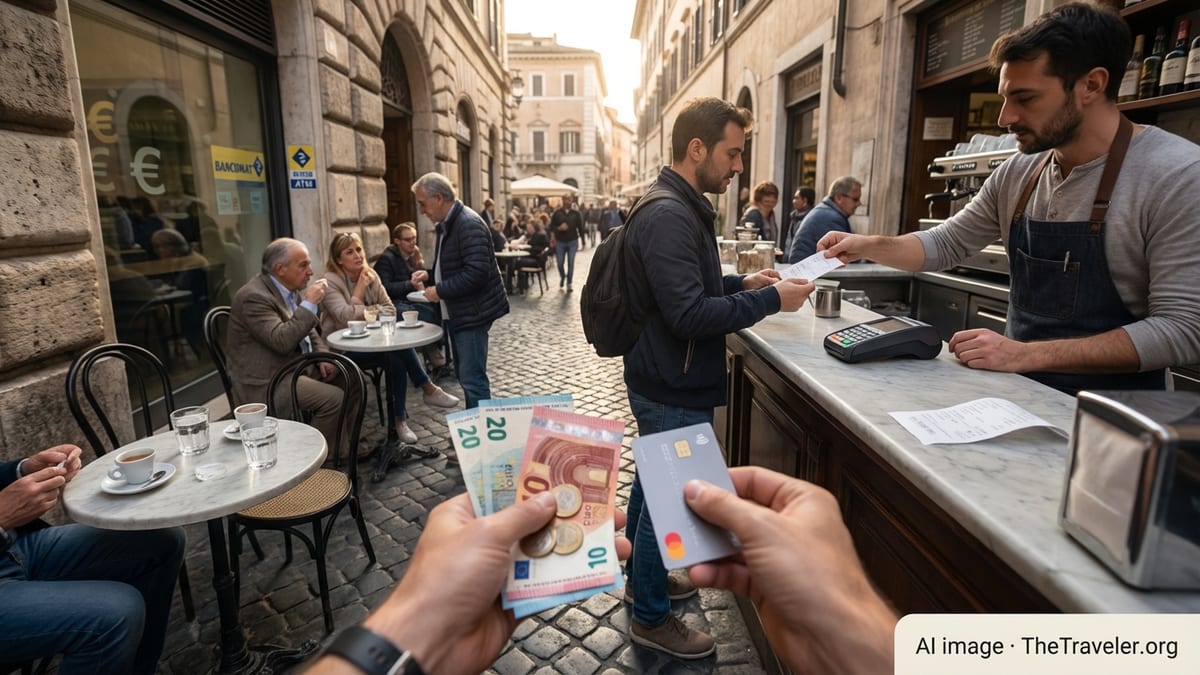
Understanding Italy’s Currency and Cash Culture
Italy’s official currency is the euro, which is used in coins and banknotes of various denominations. Euro cash issued in any eurozone country is legal tender throughout Italy, so it does not matter if your notes were withdrawn in Paris, Madrid or Rome. You will see prices written with a comma for decimals rather than a period, so ten euros and fifty cents appears as 10,50 rather than 10.50. Familiarizing yourself with the look and feel of different denominations before you travel can make small daily transactions quicker and more comfortable.
Although card and contactless payments have expanded in recent years, cash still plays a significant role in daily life. Small cafes, family-run trattorias, open-air markets and countryside shops often either prefer cash or quietly discourage cards for very small amounts, particularly under about 10 euros. If you rely on cards only, you may find yourself unable to pay for a quick espresso at the bar or for produce at a local market stall. Carrying a modest amount of cash each day remains the most reliable approach.
Italian businesses also face national rules on large cash payments that are designed to fight tax evasion and money laundering. As of 2025, cash payments within Italy are generally capped at 5,000 euros per transaction, with larger purchases expected to be made by traceable methods such as bank transfers or cards. Most visitors never approach this limit, but it is useful context if you are considering paying for high-value items or services in cash. Proposals to raise or adjust this ceiling occasionally appear in political debates, so it is wise to check for any recent changes before traveling if you anticipate large expenses.
Culturally, Italians are used to managing a mix of cash and cards and do not carry large stacks of banknotes in public. Visitors are best served by mirroring this pattern: keep a practical amount of cash in your wallet for the day’s expenses and store any extra cash securely in your accommodation rather than on your person. This balances convenience with basic security.
How Much Cash to Carry and Where You Will Need It
For most travelers, a realistic daily cash target is in the range of 50 to 100 euros in mixed denominations. This is typically enough for small meals, coffees, gelato, bus or tram tickets and incidental purchases without leaving you with too much to worry about if your wallet is misplaced. If you are traveling as a couple or family, you can adjust that range upward slightly, especially on days when you expect to visit markets or take taxis.
Two-euro coins and small notes such as 5, 10 and 20 euros are especially useful. Many small businesses are reluctant to break very large notes early in the day, and some may politely refuse to accept a 200 euro note for a minor purchase. When you withdraw cash from an ATM, try to use machines that dispense a mix of note sizes and consider buying something small at a supermarket or ticket office to get change into more practical denominations.
Cash is particularly important in certain situations. Street vendors, open-air markets, some taxis, public restrooms with attendants, small bakeries and family-run bars may not accept cards at all. Even when they do, they sometimes set informal minimums for card payments. In religious sights and small museums, donation boxes are often cash-based even if ticket counters accept cards. Having coins readily available prevents awkward moments and lets you participate fully in local customs, such as leaving a small church donation or dropping a coin in a busker’s case.
On the other hand, you can safely rely more on cards in larger supermarkets, chain clothing stores, most hotels, major museums and many mid- to high-end restaurants, especially in major cities. In those environments, it is common for locals and visitors alike to pay with contactless cards or mobile wallets. Effective trip budgeting usually combines both approaches: card for larger, planned expenses and cash for the dozens of small unplanned transactions that make up a typical day.
Using ATMs in Italy Safely and Efficiently
ATMs in Italy are commonly labeled "Bancomat" and are widely available in cities, airports, train stations and many towns. These machines typically accept major international networks and allow you to withdraw euros directly using your home bank card. This is often one of the most cost-effective and convenient ways to obtain local currency, compared with exchanging large amounts of cash at airport kiosks or currency booths that may offer less favorable rates.
To minimize fees, prioritize ATMs that are directly attached to recognized banks rather than standalone machines inside tourist shops or near souvenir stands. Bank-owned ATMs are more likely to apply standard fees and less likely to present overly aggressive conversion offers. Look for branch signage and consider visiting during normal business hours so that if your card is retained, you have at least some chance of getting assistance. As always, shield your PIN with your hand and avoid help from strangers while at the machine.
When using your card at an Italian ATM, you may be offered the option to be charged in your home currency instead of euros. This is known as dynamic currency conversion. It usually comes with a poor exchange rate and should generally be declined. Choose to be charged in euros and let your home bank apply its standard currency conversion, which is almost always more favorable. Take a moment to read the screen carefully before confirming any transaction and do not feel rushed if other people are waiting behind you.
Before departing, notify your bank of your travel dates to reduce the risk of fraud blocks and ask about any foreign transaction or ATM withdrawal fees they may charge. Consider making fewer, larger withdrawals instead of frequent small ones if your bank charges a flat fee per transaction, but balance this against security concerns. If you do carry a larger amount of cash after a withdrawal, go straight to your accommodation to store most of it securely and only keep what you need for immediate expenses in your wallet.
Paying by Card, Contactless and Mobile Wallet
Card payments have become much more common in Italy, particularly in the larger cities and tourist destinations. Visa and Mastercard are the most widely accepted networks, while American Express and some other brands may face more limited acceptance, especially at smaller businesses. It is wise to carry at least two different cards from different networks in case one is declined or temporarily blocked by your bank’s fraud system.
Contactless payments with tap-to-pay cards are well integrated into Italian payment terminals and widely used by locals. The contactless limit per transaction is typically around 50 euros before a PIN is required, although this may vary slightly by bank and terminal provider. For many daily purchases such as coffee, snacks or metro tickets, simply tapping your card is faster and more convenient than inserting the chip and entering a PIN.
Mobile wallets such as Apple Pay and Google Pay are increasingly accepted wherever card terminals support contactless payments. If your card issuer allows you to add your card to a wallet, doing so can add a layer of security since the merchant never sees your actual card number. It also reduces the need to carry multiple physical cards, which can be useful if you are trying to travel light or lower the risk of loss.
Despite this progress, it is important to remember that card acceptance is not uniform. Smaller independent shops, some rural accommodations and older establishments may have card terminals that occasionally malfunction or may prefer cash for low-value purchases. Always be prepared with enough cash to cover at least a day’s basic expenses in case of temporary network outages or terminal issues. If a business displays "solo contanti" at the entrance or on the counter, it means cash only and you should not count on paying by card there.
Avoiding Hidden Fees: Currency Conversion and Bank Charges
One of the most common and costly traps for travelers in Italy involves dynamic currency conversion. When you use a card at an ATM or at a shop, restaurant or hotel, the terminal may ask if you want to complete the transaction in your home currency instead of in euros. While this may sound convenient, it almost always involves an unfavorable exchange rate set by the payment processor rather than by your card network. Over the course of a trip, accepting these offers can add up to a surprising amount of extra cost.
To avoid this, always choose to be charged in euros when prompted. If a receipt shows an amount in your home currency, check that it clearly states that you declined conversion or that no dynamic currency conversion markup has been applied. If a cashier or server tries to rush you into choosing your home currency, you can politely insist on paying in euros instead. Most staff will be familiar with the choice, and it is perfectly acceptable to decline the conversion offer.
Bank and card fees are another important consideration. Many traditional bank cards charge both a foreign transaction fee and an out-of-network ATM fee, which together can significantly increase the cost of each purchase or withdrawal. Before your trip, review your bank’s fee schedule and, if necessary, consider using a travel-friendly card that waives or reduces these charges. Even if you cannot obtain a new product, knowing your exact fees in advance allows you to plan how often you will withdraw cash and when it makes more sense to pay by card.
Some Italian ATMs and currency exchange desks also apply their own surcharges or less competitive exchange rates. These can be difficult to compare in the moment, but you can often spot higher-fee machines by their location in heavily touristed areas or by prominent signage emphasizing convenience. When possible, obtain currency from bank ATMs in less touristy parts of town and decline any optional conversion offers during the transaction. Over a week or two, these small habits can save you the cost of several nice meals.
Tipping, Service Charges and Everyday Payment Etiquette
Tipping in Italy is more modest and discretionary than in countries such as the United States. Service workers are generally paid fixed wages, and tips are viewed as a bonus for particularly good service rather than an expected percentage of the bill. In many restaurants you will see a "coperto" or cover charge on the bill, sometimes alongside a "servizio" or service fee. Coperto is a per-person charge that covers bread and table settings, while a listed service charge typically means that staff compensation is already included.
If no service charge is indicated and you enjoyed the meal, rounding up the total or leaving around 5 to 10 percent as a tip is a common, appreciated gesture. In casual trattorias and neighborhood spots, it is equally acceptable to leave just a few euros on the table or to round the amount when paying in cash. In high-end restaurants in major cities, slightly more generous tipping may be practiced by international guests, but it is still less structured than in heavily tipping-oriented cultures.
At cafes and bars, particularly when you stand at the counter for a quick coffee, tipping is minimal. Leaving small coins in the tip jar or rounding up to the nearest euro is sufficient if you feel inclined. For table service at a cafe, a couple of euros as a thank-you is plenty. In hotels, modest tips for housekeeping or porters are appreciated but not strictly expected: a few euros per day for housekeeping and a similar amount per bag for porters is a reasonable guideline. Tour guides, on the other hand, are among the few professions where tipping is more clearly expected, especially on longer or private tours.
Whatever the context, tipping is normally done in cash even if you paid the main bill by card. Italian staff do not expect you to calculate exact percentages, and a thoughtful, clearly intentional tip is often valued more than the amount itself. If you are unsure, you can quietly observe what local patrons do, or simply round up your bill in a way that feels comfortable for your budget. There is rarely social pressure to tip heavily.
Carrying Money Safely and Dealing With Problems
Like most popular tourist destinations, Italy experiences its share of petty theft, particularly in crowded areas such as major train stations, busy piazzas and public transport in large cities. You do not need to be fearful, but it is smart to be deliberate about how you carry money and cards. Keep wallets in front pockets or a secure interior pocket, and consider a money belt or neck pouch for days when you are carrying passports or larger sums of cash between locations.
Distribute your resources so that losing one item does not leave you stranded. For example, keep one card in your wallet, another in a secure spot in your accommodation and a backup payment method, such as a second card or some extra cash, in a separate pocket or bag. Avoid flashing large amounts of cash when paying, and count your money discreetly. If a vendor or taxi driver returns change too quickly, take a moment to check it without feeling rushed.
If your card is lost or stolen, contact your bank as soon as you can to block it and request a replacement if possible. Many banks allow you to freeze your card temporarily through a mobile app, which can buy you time while you search your room or bags. If your passport or large amounts of cash are stolen, report the incident to local police and contact your embassy or consulate for assistance. Keeping photocopies or digital scans of important documents makes this process faster.
For day-to-day resilience, maintain a small emergency stash of euros separate from your main wallet. This could be a modest amount tucked into a secure pocket in your bag or locked in your hotel safe. In the unlikely event that you encounter card network outages, ATM malfunctions or an unexpected loss, having this reserve can cover essential expenses like food and transport while you sort things out with your bank.
The Takeaway
Managing money effectively in Italy is mostly about balance. Euros are essential for daily life, but cards and contactless payments make larger expenses and many city purchases fast and convenient. By arriving with a basic understanding of local cash habits, ATM use, tipping norms and common fee traps, you can focus your energy on experiences rather than logistics.
Carry a sensible amount of cash for small purchases, rely on reputable bank ATMs for withdrawals, favor paying in euros rather than in your home currency, and keep at least two different payment methods available. Treat tipping as a voluntary expression of appreciation rather than an obligation and stay alert, but not anxious, about petty theft. With these practices in place, you will be well positioned to enjoy everything from morning espresso to late-night gelato without worrying about how to pay for it.
FAQ
Q1. Do I need to carry a lot of cash in Italy?
Most travelers do not need to carry large amounts. A daily amount of roughly 50 to 100 euros in small notes and coins is usually enough for small purchases, while cards can cover bigger expenses.
Q2. Are credit cards widely accepted in Italy?
Visa and Mastercard are widely accepted in cities, hotels and larger restaurants, but smaller shops, markets and rural businesses may still prefer cash, especially for low-value purchases.
Q3. Is it better to exchange money at home or use Italian ATMs?
Using bank-owned ATMs in Italy to withdraw euros often gives a competitive rate compared with cash exchange desks, but you should check your home bank’s fees before deciding.
Q4. Should I choose to pay in my home currency when asked at an Italian terminal?
It is usually better to decline and choose to pay in euros, because dynamic currency conversion often uses a less favorable exchange rate than your bank would apply.
Q5. How much should I tip in Italian restaurants?
If no service charge is included and you enjoyed the meal, rounding up the bill or leaving about 5 to 10 percent in cash is a common and appreciated gesture, but not an obligation.
Q6. Do Italian taxis accept cards?
Many city taxis have card terminals, but not all do and sometimes the machines malfunction, so it is wise to confirm before starting the ride and to carry enough cash as a backup.
Q7. What is the cash payment limit in Italy and does it affect tourists?
Italy currently has a general cash payment ceiling of around 5,000 euros per transaction, intended to fight tax evasion, but ordinary tourist spending rarely approaches this level.
Q8. Is it safe to use contactless and mobile payments in Italy?
Yes, contactless cards and mobile wallets are widely used and considered safe when you follow normal precautions such as keeping your phone locked and monitoring statements.
Q9. What should I do if an ATM in Italy keeps my card?
If an ATM retains your card, note the bank name and location, contact the bank if it is open, and immediately inform your card issuer so they can block the card and advise on next steps.
Q10. Can I rely only on a single card for my trip to Italy?
It is not advisable. Bring at least two different cards, ideally from separate networks, and keep a small amount of emergency cash in case one card is lost or temporarily blocked.