

More news on this day
A wave of IT failures linked to a coordinated cyber incident in early April 2026 has triggered severe disruption at airports across Europe, snarling flight schedules, stranding passengers and underscoring ongoing vulnerabilities in the continent’s aviation infrastructure.
Get the latest news straight to your inbox!
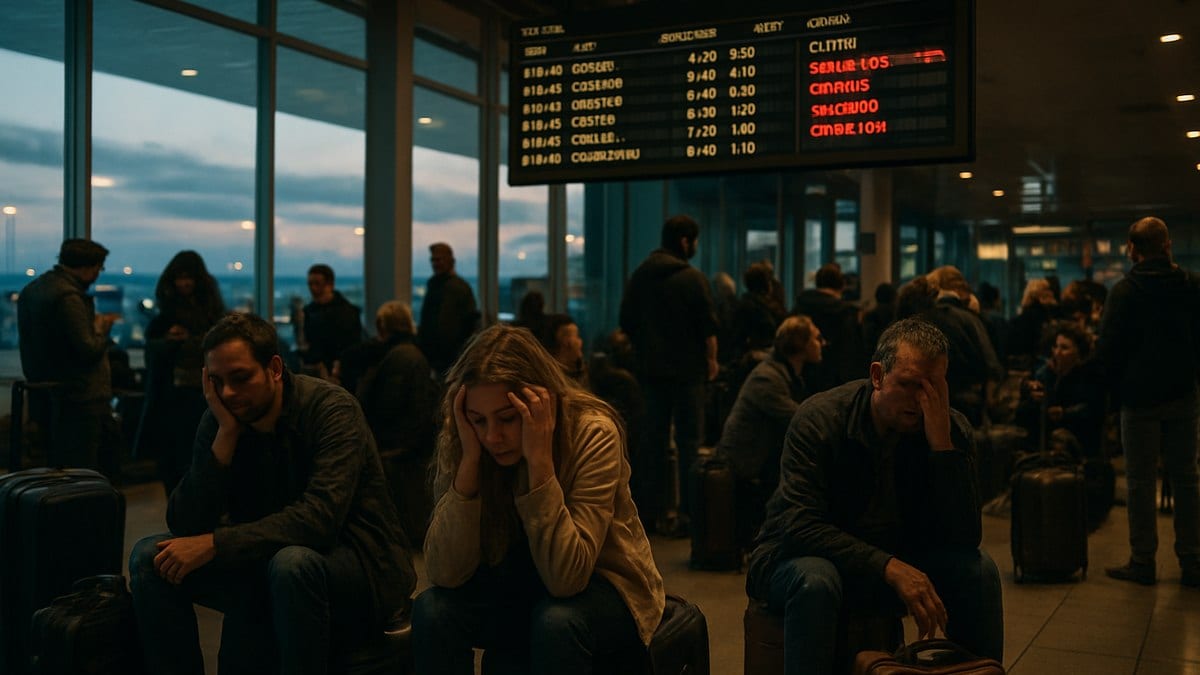
Disruptions Spread Across Key European Hubs
Publicly available flight-tracking data and travel-industry reports for April 4 to 6 indicate that airports in the United Kingdom, France, Germany, Denmark, Italy and several Nordic countries experienced acute operational disruption, coinciding with what multiple outlets describe as a significant cyberattack on aviation software used by European hubs.
Coverage focused particularly on major international gateways such as London Heathrow, Paris Charles de Gaulle, Frankfurt, Copenhagen and Oslo, where long queues formed at check in and security as staff reverted to manual processes. Reports from travel news services indicate that on April 6 alone, more than 1,600 European flights were delayed or cancelled, with some hubs such as Oslo Gardermoen recording well over one hundred disrupted services in a single day.
In the United Kingdom and neighboring states, the disruption compounded pre existing schedule pressures, with data from aviation analytics and tour operators showing cascading knock on effects across regional airports. Low cost and network carriers alike were affected, with cancellations and missed connections rippling into evening operations.
While daily disruption levels varied by country and airport, the combined impact across the network resulted in tens of thousands of passengers facing missed connections, enforced overnight stays and extended waits for rebooking as airline call centers and airport help desks struggled to keep pace.
Targeting of Aviation IT Systems Raises Alarm
According to recent technical summaries and previous case studies, the April 2026 chaos appears linked to a cyberattack on aviation support software used for check in, boarding and baggage handling at several European airports. Publicly available information on earlier incidents involving similar providers shows that centralized platforms serving multiple hubs can become single points of failure when targeted by malicious actors.
Industry analyses published over the past year have warned that airport and airline IT systems remain attractive targets because of their critical role, high degree of interconnection and reliance on legacy components. Specialist commentary on European infrastructure resilience notes that attackers may focus on back office and ground processes rather than air traffic control itself, knowing that disruption to passenger handling can quickly cascade into widespread cancellations.
Cybersecurity research published in early 2026 has also highlighted vulnerabilities in aviation communications and data links, pointing to weak or absent encryption in some operational systems. While current reports do not indicate an impact on aircraft navigation or safety critical communications in the April incident, the timing and scope of the airport IT failures have renewed debate over whether existing defenses and redundancy measures are adequate.
Publicly available policy documents from European institutions show that regulators have been pushing critical transport operators and their IT vendors to meet higher security standards, but the events of April 2026 suggest a continuing gap between regulatory intent and on the ground resilience.
Passengers Face Long Queues, Missed Connections and Limited Recourse
For travelers, the immediate effects of the cyber linked breakdown were felt in hours long queues at check in, manual boarding pass issuance, delayed baggage and a wave of last minute cancellations. Travel advisories issued by tour agencies and travel management companies on April 6 urged passengers to arrive early, monitor airline apps closely and consider carrying printed copies of booking confirmations in case digital systems remained unstable.
Accounts compiled by consumer travel sites describe families sleeping in terminal waiting areas, business travelers missing onward meetings and holidaymakers watching carefully planned itineraries unravel. With hotel availability tight during the busy spring travel period, some airlines provided accommodation while others encouraged passengers to make their own arrangements and seek reimbursement later.
The incident has also renewed interest in the extent of passenger protections under European air passenger rights rules. Advisory services have emphasized that when delays and cancellations stem from external cyber incidents affecting airport or third party IT systems, they are often classified as extraordinary circumstances, limiting entitlement to financial compensation even when the disruption is severe.
Consumer advocates argue that the complexity of cyber incidents makes it difficult for passengers to understand when they are protected and when they are not, and have called for clearer, more proactive communication from airlines and airports in the aftermath of such events.
Airlines and Airports Work to Stabilize Operations
Public updates from airlines and airport operators over the weekend of April 4 to 6 indicate that emergency response plans were activated, with technical teams working to isolate affected systems, restore backups and validate data integrity before bringing services fully back online. Some carriers temporarily reduced schedules or extended minimum connection times in an effort to stabilize operations.
Ground handling teams at several hubs reportedly reverted to contingency procedures that had been refined during earlier IT outages and pandemic era disruptions. These included manual check in, handwritten bag tags and simplified boarding processes designed to keep at least a portion of traffic flowing while core systems were restored.
Even as systems gradually recovered, industry trackers noted ongoing knock on effects, with aircraft and crews out of position and maintenance windows compressed. Forward schedules for the week of April 7 showed continuing pockets of cancellation and delay as airlines sought to re synchronize fleets and return to planned rotations.
Aviation analysts have pointed out that the April 2026 cyber incident coincides with already elevated global operational stress, including airspace restrictions connected to geopolitical tensions and infrastructure constraints at some European airports. This environment leaves limited margin to absorb sudden IT shocks without passenger facing disruption.
Renewed Scrutiny of Cyber Resilience in European Aviation
The events of early April have quickly moved from being treated as a contained IT disruption to prompting broader scrutiny of cyber resilience in European aviation. Think tank papers and specialist financial commentary published in late 2025 had already warned that airport operators and their technology suppliers could face higher insurance costs and investor questions if cyber incidents continued to escalate.
Policy discussions in Brussels and national capitals in recent months have focused on implementing updated EU directives on network and information security and the resilience of critical entities. The latest disruptions are likely to intensify pressure on both public authorities and private operators to demonstrate concrete progress on securing shared IT platforms, improving segmentation between critical and non critical systems, and testing recovery plans under realistic attack scenarios.
Experts in aviation risk management note that while cyberattacks are unlikely to compromise aircraft safety directly when core air traffic control systems remain protected, they can nonetheless inflict substantial economic and reputational damage. Repeated episodes of large scale disruption erode traveler confidence and place additional strain on staff working under intense public scrutiny.
For now, attention remains focused on restoring normal operations and assisting affected passengers. In the coming weeks, however, industry observers expect closer examination of how the April 2026 cyberattack penetrated shared aviation IT infrastructure, what safeguards failed to prevent cascading disruption, and how Europe’s airports and airlines can better protect travelers from similar shocks in the future.