

More news on this day
Cyclone Narelle is disrupting travel across large parts of Western Australia, with reports of cancelled flights, closed highways and hazardous driving conditions as the severe system tracks south-west and delivers intense rain, strong winds and coastal flooding.
Get the latest news straight to your inbox!
Air travel across the northwest grinds to a halt
Airports serving Western Australia’s north and midwest are experiencing significant disruption as Cyclone Narelle’s outer bands bring gale-force winds and heavy rain. Publicly available information from airline schedules and aviation tracking services indicates multiple cancellations and diversions on routes linking Perth with Pilbara and Gascoyne towns, particularly around Port Hedland and Karratha.
Airlines have pulled services on safety grounds as crosswinds strengthen and visibility drops, leaving many passengers stranded or rebooking for later in the week. Several carriers have also introduced temporary waivers allowing travellers to change their tickets without penalty, reflecting the uncertainty over when conditions will improve.
Regional links to mining centres and offshore oil and gas hubs are particularly affected, with delays to fly-in fly-out rosters and crew changes. Industry updates suggest companies are staggering non-essential travel and relying more heavily on remote operations while the cyclone remains in the area.
At Perth Airport, the state’s main domestic and international gateway, most long-haul and interstate flights continue to operate, but connections to northern Western Australia are limited and subject to last‑minute changes. Travellers heading to or from affected regions are being advised to check their flight status frequently and allow extra time at terminals in case of schedule adjustments.
Key highways closed as flooding and debris build
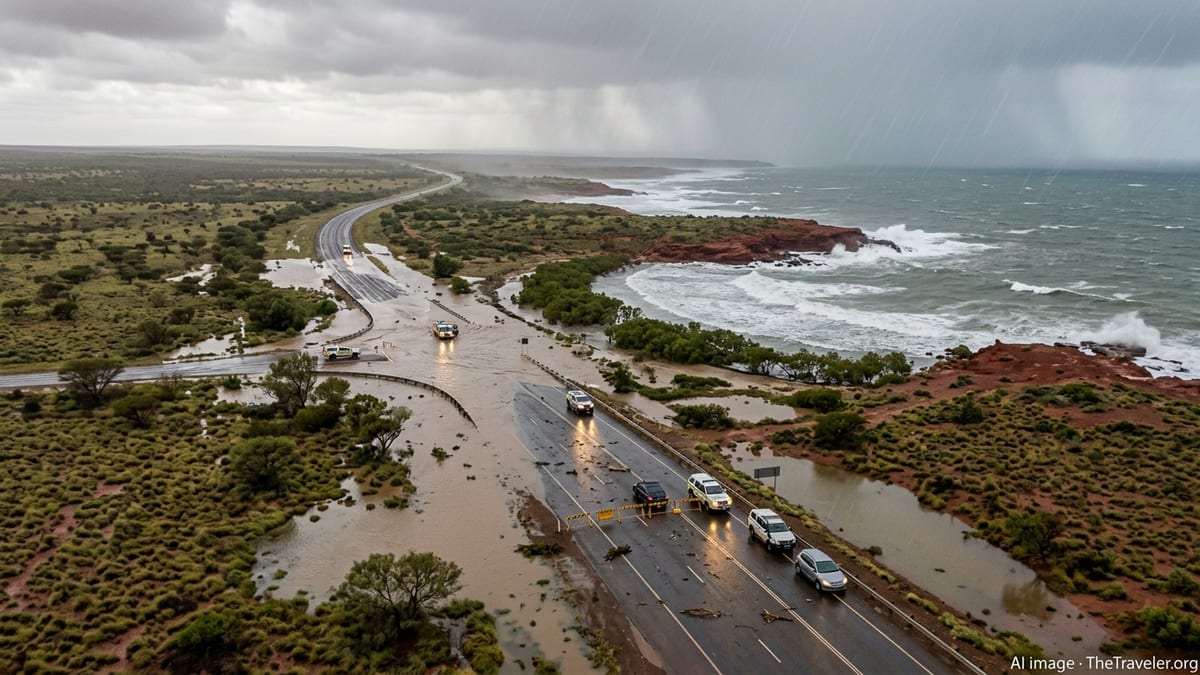
On the ground, road conditions are rapidly deteriorating in parts of Western Australia as Narelle’s rain bands sweep inland. Traffic alerts and emergency updates show sections of major routes, including stretches of the North West Coastal Highway and Great Northern Highway, closed due to flooding, downed trees and washouts.
Localised flash flooding has been reported near low‑lying river crossings and coastal plains, where drainage systems are struggling to keep up with intense bursts of rain. In some locations, water is covering the road surface and obscuring edge lines, creating a high risk of vehicles being swept from causeways or becoming stranded.
Authorities managing the network are urging motorists to avoid non‑essential travel in the warning zones and to comply strictly with barricades and road‑closed signs. Experience from previous Western Australian cyclone seasons indicates that ignoring closures can place additional pressure on emergency services and prolong the time needed to reopen critical freight and tourism corridors.
Further inland, unsealed outback tracks and pastoral access roads are becoming impassable as saturated soils turn to mud. Tour operators and remote accommodation providers are suspending four‑wheel‑drive excursions until assessments can be carried out, and some stations are temporarily cut off except by air.
Tourism and regional communities brace for extended disruption
The travel fallout from Cyclone Narelle extends beyond immediate safety concerns, with tourism operators across Western Australia’s northwest preparing for a difficult period. Published coverage of the storm’s path shows popular coastal destinations, including stretches of the Pilbara and Gascoyne coastline, lying within zones of damaging winds, high seas and dangerous surf.
Many beachfront caravan parks, campgrounds and holiday parks have closed to new arrivals, advising guests already on site to shelter in sturdier communal facilities or relocate further inland. Tour companies running marine wildlife experiences, fishing charters and scenic flights have postponed operations, citing rough seas, poor visibility and the risk of airborne debris.
In smaller regional centres, accommodation bookings are shifting from leisure visitors to emergency and utility crews, with hotels and motels prioritising space for workers involved in network inspections and essential repairs. Local businesses that rely heavily on passing tourist traffic along coastal highways are likely to feel an immediate drop in trade while roads remain shut.
Despite the disruption, regional communities are drawing on well‑rehearsed cyclone plans. Public information campaigns rolled out before the cyclone season emphasised the need for self‑sufficiency, including keeping vehicles fuelled, stocking food and water, and preparing alternative routes for essential journeys.
Warnings for coastal hazards and power interruptions
Along the Western Australian coast, Cyclone Narelle is driving a combination of storm surge, large waves and king tides that is expected to persist even as the system gradually weakens. Forecasts indicate the risk of beach erosion, inundation of low‑lying areas and hazardous surf conditions, particularly near river mouths and exposed headlands.
Marine advisories are in place for much of the coastline affected by Narelle, with strong recommendations that small craft remain in harbour and that recreational boaters postpone trips. Ports that serve bulk exports and offshore energy installations have limited movements or implemented cyclone mooring plans, slowing commercial shipping activity until conditions stabilise.
Across impacted regions, reports indicate scattered power outages where strong winds have brought down lines or where access to substations is complicated by flooding. Utility providers are staging crews close to, but outside, the highest‑risk zones so that inspections and repairs can begin as soon as it is safe to move in.
Residents and travellers are being reminded that power interruptions can affect fuel availability, communications and traffic signals. Those remaining in cyclone‑prone areas are encouraged to conserve battery power on mobile devices, treat intersections with non‑functioning lights as four‑way stops and keep emergency kits within easy reach.
What travellers should expect in the coming days
Meteorological guidance suggests Cyclone Narelle will continue to weaken as it tracks away from the coast, but lingering impacts for transport and tourism are likely to stretch well beyond the storm’s core. Even after the system moves offshore or decays inland, runoff from saturated catchments can keep roads closed and low‑lying rest areas unusable for several days.
Airlines are expected to restore services gradually as winds abate and aerodrome inspections are completed, with priority generally given to essential freight, medical transfers and high‑demand commuter routes. Passengers may still face altered departure times, equipment changes and extended queues as carriers work through backlogs.
For those planning trips into Western Australia’s cyclone‑affected regions, travel advisers recommend building additional flexibility into itineraries, including refundable bookings and contingency days. Travellers are also encouraged to monitor local radio, official emergency channels and airport and road operator updates, rather than relying solely on generic weather summaries.
As Western Australia enters the latter part of its cyclone season, Narelle’s impact on flights and roads underscores how quickly conditions can change across the vast state. For visitors and residents alike, current events highlight the importance of checking forecasts and transport status right up to the moment of departure and being prepared to adjust plans at short notice.