

More news on this day
Tourists across Bali’s busiest resort areas have been urged to brace for days of intense rain, strong winds and hazardous seas as Cyclone Seed 90S, a developing tropical system in the Indian Ocean, fuels extreme weather alerts and disrupts travel across the Indonesian island.
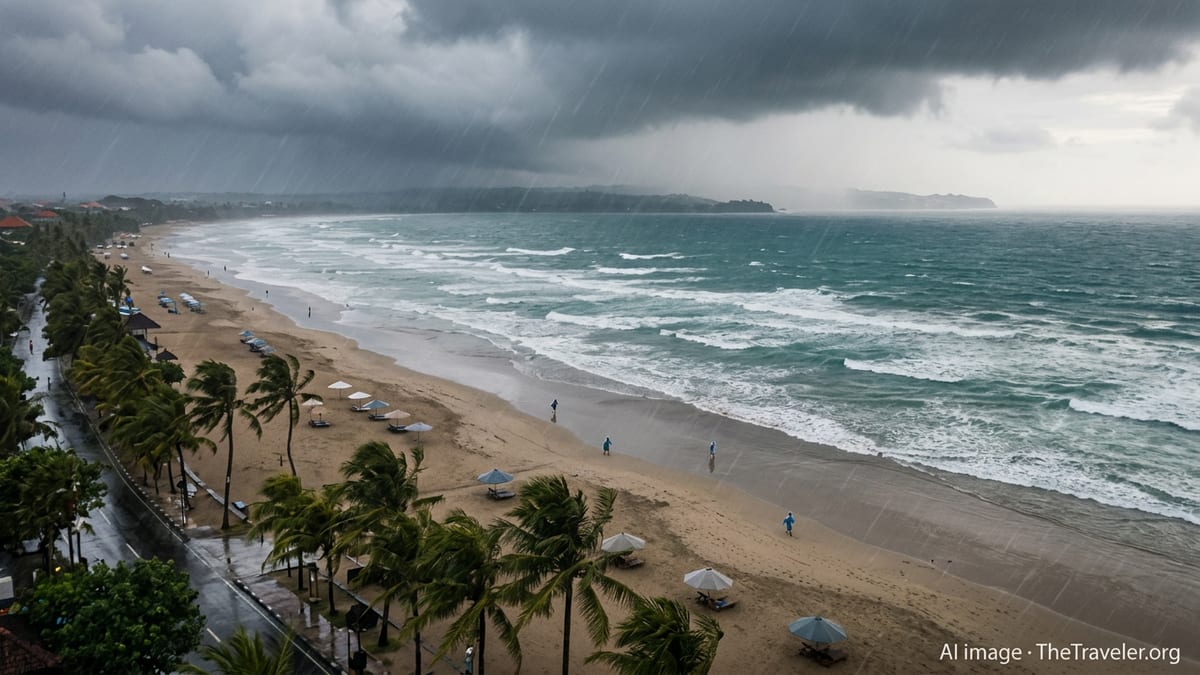
Cyclone Seed 90S Intensifies Rainy Season Risks
Indonesia’s Meteorology, Climatology and Geophysics Agency (BMKG) has identified tropical cyclone seed 90S in the Indian Ocean south of Java, warning that the system is already amplifying rainfall and wind intensity across Bali and neighboring regions between March 2 and March 8, 2026. The disturbance is interacting with other large-scale weather patterns, creating an extended window of unstable conditions over the island.
BMKG says the cyclone seed has a high chance of strengthening into a full tropical cyclone within 24 to 48 hours, increasing the likelihood of very heavy downpours and squally winds over southern and eastern Indonesian waters. Forecasters highlight that warm sea surface temperatures and converging air masses along a band stretching from Bali through Nusa Tenggara are feeding rapid cloud growth and powerful storm cells.
The latest analysis places Bali firmly within the impact zone, with the potential for storms to develop quickly and deliver intense bursts of rain, lightning and localized flooding. Officials emphasize that even if 90S does not fully organize into a named cyclone, its indirect effects are more than enough to disrupt travel, especially in coastal tourism hubs.
Popular Tourist Hotspots on High Alert
BMKG’s alerts cover all of Bali’s main tourism regencies, including Denpasar, Badung, Gianyar, Tabanan, Jembrana, Bangli, Karangasem, Klungkung and Buleleng. Within these areas are the island’s most frequented beach and cultural destinations, among them Kuta, Legian, Seminyak, Canggu, Jimbaran, Uluwatu, Nusa Dua, Sanur and Ubud, where hotel operators and tour companies are updating guests on fast-changing conditions.
In Kuta, Legian and Seminyak, authorities are warning that sudden cloudbursts could lead to brief but intense street flooding, particularly around low-lying lanes and drainage bottlenecks. Coastal roads and beachfront promenades may be affected by standing water, reduced visibility and wind-blown debris, prompting transport providers to build extra time into airport transfers and inter-hotel shuttles.
Further south, in Jimbaran, Uluwatu and Nusa Dua, the combination of heavy rain and rough seas is a growing concern for beach resorts and cliff-top properties. Strong onshore winds can drive high surf against popular stretches of coastline, prompting lifeguards to restrict swimming and water activities. Inland, the lush hills and river valleys around Ubud and central Bali are susceptible to saturated slopes and minor landslides on steep roads, which can slow or temporarily cut off access to rural retreats and villa clusters.
Local tourism officials say they are coordinating closely with BMKG and regional disaster management teams to ensure that hotels, guesthouses and tour operators receive up-to-date briefings. Travelers are being urged to monitor hotel notice boards and official advisories rather than rely solely on informal social media updates.
Flight Schedules, Ferries and Island Hopping Disrupted
The unsettled weather is already rippling through Bali’s transport network, with airlines, ferry operators and marine tour companies reviewing schedules on a day-by-day basis. Although Ngurah Rai International Airport in Denpasar remains open, aviation observers report that passing storm cells and reduced visibility are increasing the risk of delays, holding patterns and occasional diversions during heavier downpours.
Domestic and regional flights connecting Bali with Jakarta, Surabaya and other Southeast Asian hubs may face knock-on delays as air traffic controllers space out takeoffs and landings for safety. Travelers transiting through Bali are being advised to allow longer connection times and to stay in close contact with airlines for any gate or schedule changes triggered by adverse conditions.
At sea, the impact is even more pronounced. BMKG has warned of moderate to high waves in Indian Ocean waters south of Java and Bali, as well as in nearby seas and straits. This has prompted ferry operators on popular island-hopping routes to Nusa Penida, Nusa Lembongan and the Gili Islands to scale back or temporarily suspend services when wave heights exceed safety thresholds. Snorkeling, diving and private boat charters are also being curtailed or rescheduled at short notice.
Authorities stress that passengers should avoid pressuring boat crews to depart in marginal conditions and instead follow official guidance on port closures and sea-state advisories. Past incidents involving overloaded or weather-affected vessels in Indonesia have underscored the risks of ignoring warnings during periods of heightened wave activity.
Safety Advice for Tourists During Extreme Weather
With heavy rain and tropical storms forecast to continue intermittently through at least March 8, officials are urging visitors to adjust expectations and prioritize safety over fixed itineraries. Travelers are encouraged to keep a flexible schedule, build in weather contingency days and consider shifting activities from outdoor excursions to indoor cultural experiences, spa visits or culinary tours when storms are expected.
On the roads, scooter riders and drivers alike are being reminded that Bali’s often narrow, winding routes can become slick and hazardous within minutes of a downpour. Pooled water may conceal potholes or loose gravel, while sudden gusts of wind can destabilize lighter vehicles. Using proper rain gear, slowing down and avoiding night-time rides during storms can significantly reduce the risk of accidents.
In coastal areas, lifeguards and resort staff may impose temporary bans on swimming, surfing or stand-up paddleboarding when rip currents and shore breaks intensify. Tourists are advised to respect red flags and verbal instructions even if the sea appears deceptively manageable from the sand. Inland, hikers and cyclists should avoid river crossings, steep ravines and remote jungle tracks where flash floods or falling debris are more likely during heavy rain events.
Health professionals also note that prolonged damp conditions, fluctuations in temperature and higher humidity can contribute to respiratory and viral illnesses among travelers. Visitors who feel unwell are urged to seek early medical advice from local clinics and to ensure they remain hydrated, particularly if travel disruptions extend journey times.
Authorities Urge Vigilance as Forecasts Evolve
BMKG and local disaster mitigation agencies emphasize that forecasts for tropical systems such as cyclone seed 90S can shift rapidly as the atmosphere evolves. While current guidance points to a period of heightened risk through the first full week of March, the precise track and intensity of the disturbance will determine how long severe weather persists in specific parts of Bali and greater Indonesia.
Officials are maintaining round-the-clock monitoring of satellite imagery, sea-surface temperatures and wind fields in coordination with international tropical cyclone centers. Any upgrade of 90S from a cyclone seed to a named storm would trigger a new round of advisories and more granular impact projections for coastal communities and marine operators.
For now, the overarching message from authorities is to stay informed, remain cautious and avoid unnecessary exposure to the elements when conditions deteriorate. Hotels and tourism businesses across Kuta, Legian, Seminyak, Canggu, Jimbaran, Uluwatu, Nusa Dua, Sanur and Ubud are being urged to review their contingency plans, brief staff and make sure emergency contact information and safe-assembly procedures are clearly communicated to guests.
As Bali navigates an unusually volatile stretch of the rainy season, both residents and visitors are being reminded that flexibility, preparedness and respect for official warnings are the best ways to continue enjoying the island while minimizing the risks posed by Cyclone Seed 90S and its accompanying extreme weather.