

More news on this day
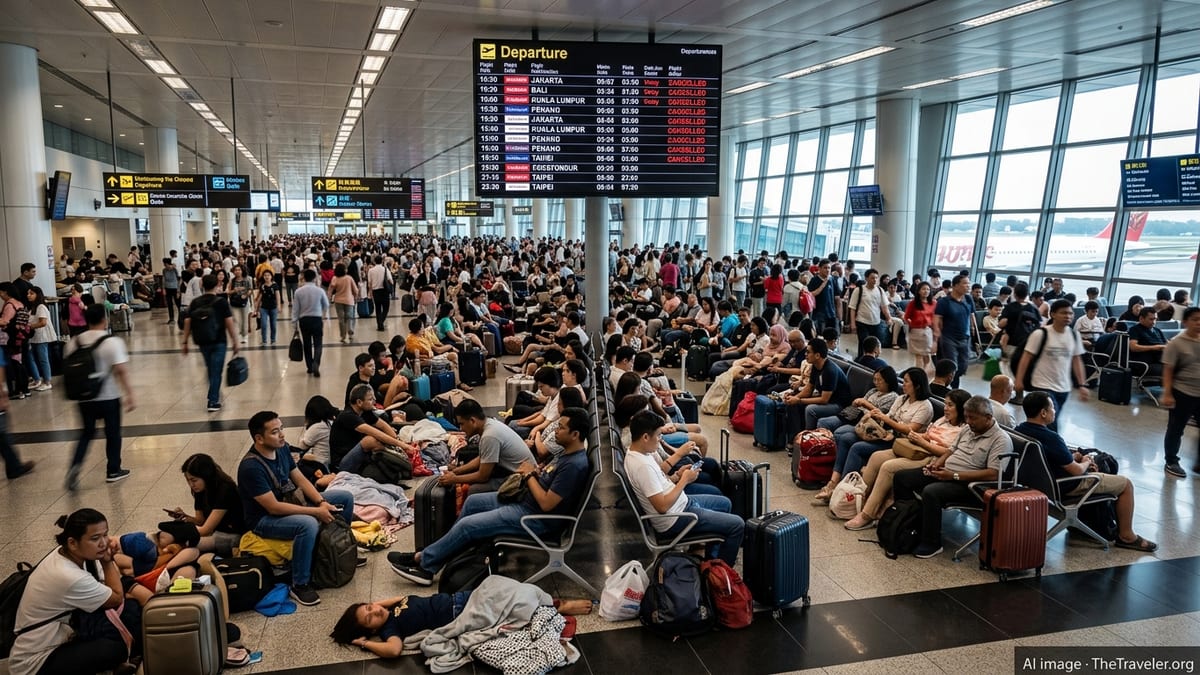
Cyclone Vaianu is driving fresh disruption across parts of Southeast Asia’s aviation network, with cancellations, diversions, and weather-related delays affecting travelers on regional and long-haul routes.
Get the latest news straight to your inbox!
Storm Track and Regions Most at Risk
Publicly available meteorological updates describe Cyclone Vaianu as an intensifying tropical system bringing heavy rain, strong winds, and hazardous seas across parts of the western Pacific. While its core impacts are centered around island nations and coastal areas, the storm’s large circulation and associated rain bands extend along busy air corridors linking Southeast Asia with Australia, the Pacific, and North Asia.
Forecast discussions indicate that Vaianu is expected to maintain or strengthen its intensity over the coming day as it interacts with warm ocean waters and seasonal monsoon patterns. That combination increases the risk of convective storms and wind shear along approach paths to major hubs at key times of day. Even when airports remain open, these conditions can significantly constrict the number of arrivals and departures that can be handled safely.
Airports most exposed to knock-on impacts are those located close to the storm’s projected path or on the periphery of its rain bands, including regional gateways that serve as refueling and diversion points. Travelers connecting through secondary airports may encounter schedule changes even if their ultimate destination lies well outside the cyclone-affected zone, as aircraft and crew must be repositioned.
The wider regional backdrop also matters. Asia’s aviation system is already operating under pressure from seasonal thunderstorms, congestion at major hubs, and ongoing rerouting around conflict-related airspace closures. Cyclone Vaianu adds another layer of strain that can quickly ripple beyond the immediate storm zone.
How Airlines Are Adjusting Schedules
Published airline advisories and regional media coverage suggest that carriers are taking a cautious operational stance as Vaianu moves through key routes. Standard responses in similar recent storms in Asia have included preemptive cancellations of selected services, temporary suspension of operations at smaller coastal airports, and schedule thinning on routes most exposed to turbulence and crosswinds.
When a cyclone threatens, airlines typically work from conservative weather and safety thresholds. If surface winds or crosswinds are forecast to exceed safe limits for takeoff and landing, or if visibility is expected to deteriorate sharply, flights may be canceled or retimed hours before the worst weather arrives. In other cases, aircraft might be moved out of storm-prone airports to protect parked fleets and to ensure planes and crews are positioned to restart operations quickly once conditions improve.
Moreover, disruptions are not confined to the immediate landfall window. Once a storm passes, airlines must deal with aircraft and crews that are out of place, duty-time limits for pilots and cabin crew, and a backlog of passengers waiting to be re-accommodated. This recovery phase can prolong delays and cancellations across several days, particularly on tightly scheduled regional networks in Southeast Asia where spare capacity is limited.
Travelers transiting via large hubs in Singapore, Bangkok, Kuala Lumpur, Jakarta, Manila, and other regional centers may therefore see indirect impacts from Vaianu, including missed connections, rolling delays, or last-minute equipment changes. Flight tracking data and operational summaries for recent weather events in the region show that such cascades of disruption are common even when only a portion of the network is directly exposed to severe weather.
What Travelers Should Do Before Heading to the Airport
Passenger-facing guidance issued during recent typhoon and cyclone events in Asia provides a clear blueprint for handling Vaianu-related uncertainties. The most consistent recommendation is to verify flight status directly with the airline via mobile apps or official channels in the 24 hours before departure and again shortly before leaving for the airport. Airport departure boards and general travel sites often lag behind real-time operational decisions.
Travelers with same-day or next-day departures should monitor both their origin and destination airports, as well as any intermediate transit points, for updated forecasts and operational bulletins. If severe weather watches or warnings are in effect along any segment of the journey, schedule changes are more likely, and passengers may have a brief window to adjust plans before flights fill with rebooked travelers.
Airlines commonly allow fee-free changes or provide flexible rebooking options when tropical systems affect operations, particularly for flights into or out of storm-exposed airports. Public information from previous disruption events shows that these policies can differ widely between carriers and may apply only for limited travel dates or fare types. Checking the specific waiver or advisory that applies to a given ticket is essential, especially for travelers on separate tickets or complex itineraries.
Travel insurance can also play an important role. Policies that cover weather-related disruptions may reimburse nonrefundable hotel nights, prepaid tours, or onward connections, provided travelers retain documentation such as airline notifications and delay confirmations. However, coverage terms can vary, and some policies exclude foreseeable events after a storm has been named, so reading the fine print remains critical.
Navigating Airports and Connections During Disruptions
Once at the airport, operational reality can evolve quickly as Vaianu’s bands of heavy rain and wind move across the region. Departure banks may be compressed or spread out, boarding can start and stop abruptly, and security queues often swell as multiple delayed flights converge on the same time window. In these conditions, allowing extra time for check-in, security, and immigration is prudent, even if a flight still appears on schedule.
Travelers connecting through major Southeast Asian hubs should pay close attention to minimum connection times and the layout of transit terminals. When flight delays erode connection windows, ground staff may be able to reroute passengers onto alternative departures, but options can narrow rapidly during widespread disruption. Keeping boarding passes and documentation handy and tracking gates through airline apps can reduce the risk of missed announcements in crowded terminals.
For those facing overnight delays or cancellations, publicly available airport and airline policies from recent events in the region show that assistance varies. Some carriers provide hotel accommodation, meals, and transfers when disruptions are within their control, but extreme weather is often categorized as an extraordinary circumstance. In those cases, airlines may prioritize rebooking while offering limited or no coverage of incidental expenses, leaving travelers to rely on credit card protections or travel insurance.
Families traveling with children, older passengers, and those with reduced mobility may want to proactively request seating and boarding assistance, as disrupted operations can amplify the stress of long queues and sudden gate changes. Keeping essential medications, chargers, and a change of clothes in carry-on baggage can help manage extended waits during Vaianu-related delays.
Key Planning Tips for the Coming Days
As Cyclone Vaianu continues to influence weather patterns across parts of Southeast Asia, aviation observers expect a dynamic situation, with pockets of severe disruption interspersed with periods of partial recovery. Travelers scheduled to fly through the region over the next several days should assume that timetables may remain fluid even after the storm’s core has weakened or moved on.
Flexibility is likely to be the most valuable asset. Passengers who can adjust travel dates by a day or two, accept alternative routings, or shift between nearby airports may have a smoother experience than those tied to fixed itineraries. Monitoring seat availability and tracking how airlines adjust capacity on unaffected routes can reveal opportunities to reroute around the worst of the disruption.
Finally, travelers should pay attention to local advisories at their destinations, not just airport status. Heavy rain and flooding associated with Vaianu can disrupt ground transport, close roads, and affect ferry links in coastal and island areas, complicating the final leg of any journey. Aligning flight plans with realistic expectations for onward travel will be essential to avoid additional delays and unexpected costs as the region works through the storm’s impacts on its already busy aviation network.