

More news on this day
Severe Tropical Cyclone Vaianu is rippling across Pacific air corridors, forcing a Fiji Airways flight from Australia to divert to Tonga and triggering widespread cancellations that have entangled travellers in Australia, New Zealand, Fiji and Tonga.
Get the latest news straight to your inbox!
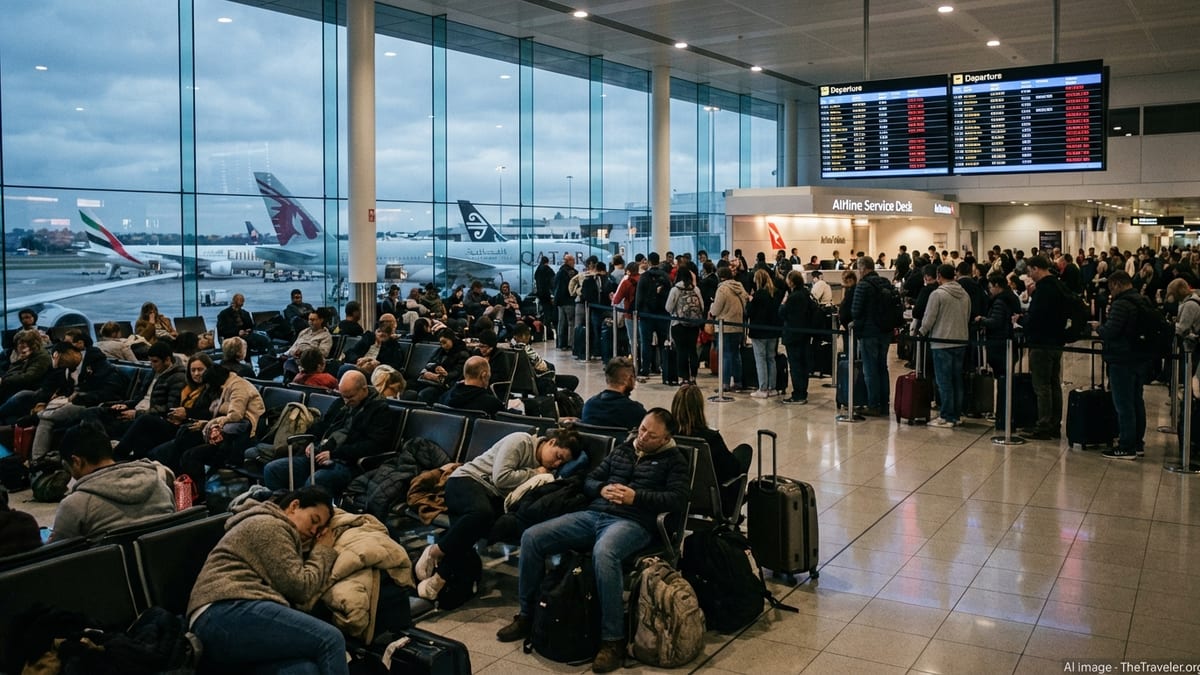
Fiji Airways Diversion Highlights Volatile Skies
Reports from Fiji-based outlets indicate that Fiji Airways flight FJ914 from Sydney to Nadi was diverted to Tonga on April 7 as deteriorating weather linked to Cyclone Vaianu made its planned approach into Fiji increasingly hazardous. The aircraft continued safely to Nuku’alofa, where passengers faced extended delays while the airline reassessed routing options around the storm.
Publicly available statements from the carrier describe the diversion as a precautionary move aligned with its safety protocols, underscoring how quickly flight paths across the South Pacific can be upended when a severe tropical system intensifies near major hubs such as Nadi. The incident has become a focal point of broader regional disruption as airlines scramble to balance safety, aircraft positioning and passenger care.
Travel industry coverage notes that the diversion came amid a tightening ring of weather-related constraints, with heavy rain bands and strong crosswinds reducing operational flexibility in key Fiji airports. With alternate airfields also exposed to the storm’s outer impacts, options for smooth rerouting were limited, contributing to bottlenecks that are still unwinding.
For many passengers, the unexpected stop in Tonga has turned a routine trans-Tasman holiday connection into a multi-day ordeal, illustrating the vulnerability of long-haul leisure itineraries that rely on a single regional gateway to reach resort islands scattered across the Pacific.
Australia and New Zealand Routes Grounded or Rescheduled
Across Australia and New Zealand, outbound and inbound services to Fiji have been heavily disrupted since April 7 as the cyclone’s path intersected with one of the region’s busiest holiday corridors. Travel trade reports indicate that Fiji Airways, Qantas, Jetstar, Virgin Australia and Air New Zealand have cancelled or rescheduled multiple flights to and from Nadi, with some airlines pre-emptively suspending operations for safety and logistics reasons.
Australian travel advisories and aviation updates describe a dynamic situation in which carriers are issuing rolling schedule changes, often with limited lead time. Travellers departing from Sydney, Melbourne and Brisbane have been advised to monitor flight status closely and to expect same-day cancellations or significant delays as Cyclone Vaianu’s outer bands brush key waypoints to the northeast.
In New Zealand, Nadi-bound flights have also been affected, compounding earlier weather-related strains on the country’s aviation network. Meteorological guidance cited in regional coverage suggests that Vaianu could curve closer to northern New Zealand later this week, raising the prospect of additional precautionary adjustments for flights that traverse shared airspace between the Coral Sea and the wider South Pacific.
The knock-on effects are spreading beyond direct Fiji services. Airline schedule data and booking-platform alerts indicate that disrupted rotations to Nadi are cascading through broader Pacific networks, prompting retiming of services that connect Australia and New Zealand with secondary island states via Fiji as a primary hub.
Fiji’s Tourism Hub Brought to a Standstill
Within Fiji, Nadi International Airport has experienced substantial disruption as Cyclone Vaianu’s heavy rain, flooding and strong winds have affected both airside and landside operations. Local news coverage describes periods in which flights were largely halted on April 7, with Fiji Airways and its domestic arm Fiji Link suspending multiple services and warning that further changes remain likely while adverse conditions persist.
Industry commentary from regional travel and tourism outlets portrays a tourism sector thrown abruptly into standby mode. Resorts in the Mamanuca and Yasawa island groups, typically accessed through Nadi, are contending with stranded guests, delayed arrivals and resupply challenges as seas turn rough and inter-island transfers become hazardous or impossible.
Economic analysts quoted across regional publications highlight the timing as particularly sensitive for Fiji, which has been working to rebuild visitor numbers and airline capacity through 2026. With tourism a central pillar of the national economy, even a short burst of intense disruption from a single cyclone can reverberate through employment, small business revenues and forward bookings.
Local transport and logistics reports further indicate that some roads around Nadi and other low-lying areas have faced flooding and debris, complicating ground access to airports and coastal resorts. This has extended the impact of the aviation shutdown, turning routine airport transfers into complex operations that must navigate rapidly changing safety conditions.
Tonga’s Strategic Role as Emergency Diversion Point
The diversion of flight FJ914 has drawn attention to Tonga’s wider role as a critical diversion and connection point in Pacific aviation. Pre-cyclone route maps and regional aviation studies show that Tonga sits on key corridors linking Fiji with New Zealand and other Polynesian destinations, making its capital Nuku’alofa an important alternative when weather or technical constraints affect Nadi.
While Tonga itself has not been in the direct line of Vaianu’s strongest winds, regional cyclone histories and current forecast discussions suggest that outer rain bands and swells can still affect operations, requiring careful coordination between air traffic management, airlines and airport operators.
Publicly available tourism and transport assessments compiled before this latest storm have long noted that Tonga’s connectivity to Australia, New Zealand and Fiji is heavily reliant on a limited number of carriers and aircraft. Events such as the diversion of a long-haul Fiji Airways service can therefore place additional pressure on local infrastructure, accommodation capacity and onward travel options for passengers unexpectedly arriving in the kingdom.
In the current event, Tonga’s ability to function as a safe harbour for diverted flights underscores both the resilience and fragility of Pacific aviation. Each diversion helps keep passengers and crew away from the worst of the weather, but also exposes the system’s dependence on a small constellation of airports scattered across a vast ocean.
Regional Travel Advisories Urge Patience and Flexibility
Travel alerts issued by government and commercial advisory services across the Pacific region are urging travellers to remain flexible and prepared for ongoing disruption while Cyclone Vaianu remains active. Published guidance recommends closely monitoring airline notifications, maintaining up-to-date contact details in bookings and allowing extra time for transits through regional hubs that may be operating on revised schedules.
Some advisory platforms note that airline customer-service channels and travel insurers are experiencing high volumes of inquiries, particularly from passengers in Australia and New Zealand whose holiday departures have been cancelled at short notice. Guidelines encourage travellers to prioritise digital channels such as airline apps and online booking portals for rebooking, as call centres may face lengthy wait times.
Analysts tracking previous cyclone seasons in the South Pacific point out that the most severe flight impacts often persist for several days after the weather system has moved on. Aircraft repositioning, crew duty-hour limits and the need for post-storm inspections of runways and airport facilities can prolong the recovery period, meaning schedules may remain irregular even as skies clear.
For now, publicly available information suggests that airlines, airports and tourism operators across Australia, New Zealand, Fiji and Tonga are focused on restoring core connections as conditions allow, while balancing safety and capacity constraints. Travellers with imminent plans to pass through Nadi or other affected gateways are being advised to prepare for a fluid situation that may change with each new forecast track update for Cyclone Vaianu.