

More news on this day
Cyprus and Australia have issued stark new warnings urging their citizens to leave Iran, Israel and Lebanon as soon as possible, as rapidly escalating tensions between Iran, Israel and the United States raise the risk of sudden conflict across the Middle East.
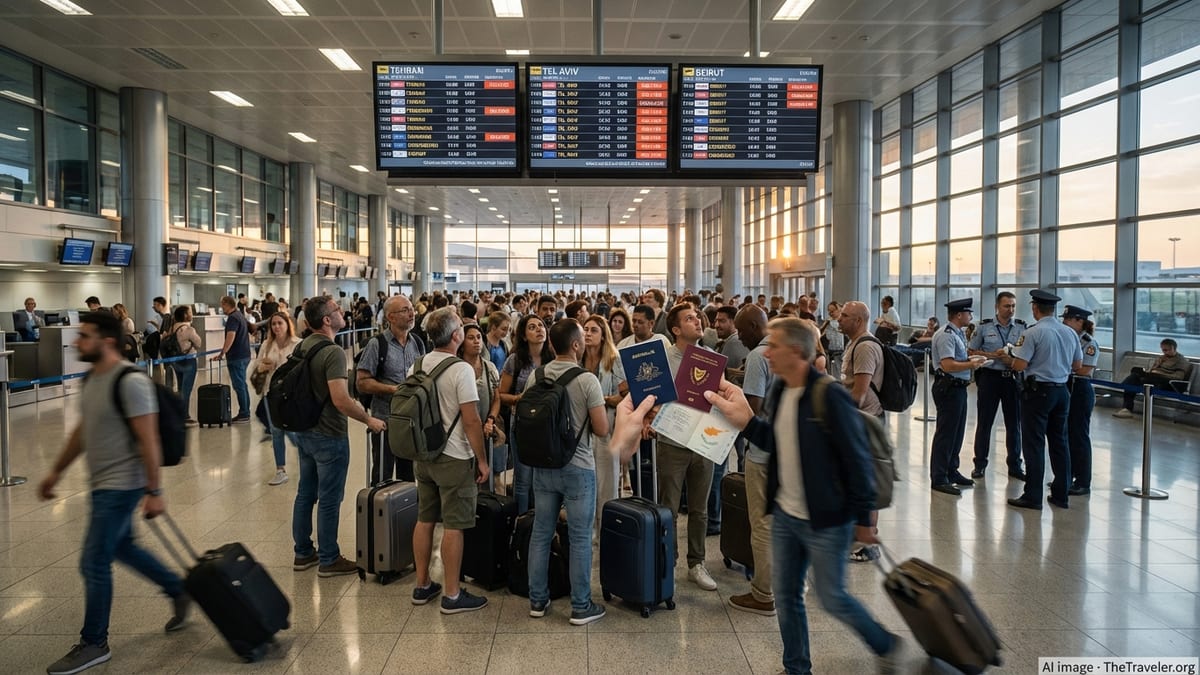
Escalating Crisis Triggers Strongest Travel Alerts Yet
The latest advisories, issued over recent weeks and sharpened again on February 25 and 26, mark some of the strongest language used by both governments since the current Middle Eastern crisis began in 2023. Officials in Nicosia and Canberra now openly warn that the security situation could deteriorate without warning, potentially cutting off commercial flight routes and limiting their ability to help stranded nationals.
Cyprus’ foreign ministry has elevated its guidance on Iran to the highest level, advising citizens to avoid all travel and for those already in the country to leave immediately. The move follows months of mounting unrest inside Iran, a deepening economic crisis and fresh threats directed at states seen as aligned with Western policy in the region.
Australia’s Department of Foreign Affairs and Trade has similarly hardened its language on Israel and Lebanon, advising Australians there to consider leaving while commercial options remain available. The warnings are framed not only around ongoing clashes involving Israel and Hezbollah, but also around a potential US military strike on Iran that many analysts fear could ignite a broader regional confrontation.
Diplomats quote an “unpredictable” and “volatile” regional landscape, with multiple flashpoints involving Iran, Israel, Lebanon and US forces. For travel planners and tourists, that volatility translates into a heightened risk of flight cancellations, rapid changes in entry rules and the possibility of being caught in a fast-moving security crisis.
Cyprus Moves to Distance Citizens from Iran Flashpoint
Cyprus has found itself increasingly entangled in the regional standoff after diplomatic friction with Tehran intensified in recent months. In January 2026, Nicosia formally urged all Cypriot citizens in Iran to depart immediately and called on others to cancel any non-essential trips, citing both the country’s internal instability and the risk of spillover from the wider Iran–United States confrontation.
The guidance reflects a sharp reassessment of risk. Iranian authorities have repeatedly lashed out at states seen as siding with Gulf and Western positions, and Cyprus’ support for a recent declaration on disputed Gulf islands has further strained ties. Iranian officials have publicly protested Cypriot policy, while pro-government media have singled out the Mediterranean island as a supporter of pressure campaigns against Tehran.
Against this backdrop, Cypriot consular officials have warned they may have limited capacity to assist citizens if political tensions escalate into direct confrontation. The foreign ministry has advised nationals in Iran to maintain a low profile, avoid demonstrations and large gatherings, closely monitor local media and be prepared to leave at short notice. Travel agents catering to the Cypriot market report a steep fall in demand for Iran-bound itineraries since the January alert.
While Cyprus has stopped short of issuing the same level of formal “do not travel” warning for Israel and Lebanon, officials in Nicosia are quietly advising that non-essential trips across much of the Levant be postponed. The island’s role as a nearby staging point for humanitarian and evacuation flights underscores how quickly regional dynamics can affect even short-haul leisure travel from Europe.
Australia Orders Diplomatic Families Out of Israel and Lebanon
In Canberra, the latest step has been the decision to withdraw the families of Australian diplomats from embassies in Tel Aviv and Beirut. The measure, confirmed by government and media reports on February 25 and 26, is described as precautionary but signals a serious reassessment of risk for those posted in the region.
Australia’s embassies remain open, but dependants of officials in Israel and Lebanon have been told to leave, with voluntary departure options extended to relatives of staff in Jordan, Qatar and the United Arab Emirates. The move reflects fears that any escalation between the United States and Iran could quickly draw in Israel and Hezbollah, placing diplomatic compounds and key infrastructure under threat.
Travel advice for Australians has been upgraded to urge citizens in Israel and Lebanon to consider leaving while commercial flights are still operating. Authorities warn that air routes could be reduced or suspended at short notice if hostilities intensify, complicating any attempt to mount large-scale evacuations similar to previous crises.
Australia had already been advising its citizens to leave Iran “as soon as possible” following an upsurge in violent protests and a harsh security crackdown by the authorities. That guidance now sits alongside the newer alerts for Israel and Lebanon, creating a broad swathe of destinations across the Middle East that Australian travelers are urged to avoid or exit.
Flights, Insurance and Itinerary Disruptions for Travelers
The rush of high-level warnings is filtering quickly into the travel industry. Airlines serving Tel Aviv and Beirut have repeatedly adjusted schedules and routes over the past year in response to security assessments, missile exchanges and drone activity. Carriers serving Tehran face added uncertainty given the risk of new sanctions, airspace closures or targeted disruptions should the crisis deepen.
Industry analysts say travelers with tickets to or through the region should brace for further last-minute changes. Even routes not directly touching Iran, Israel or Lebanon may be diverted to avoid sensitive airspace, lengthening flight times and complicating connections. For Cyprus, a key Eastern Mediterranean hub, disruptions could also affect onward links between Europe and Gulf destinations if tensions spill into neighboring countries.
Travel insurers are responding by tightening exclusions on policies covering war and civil unrest. Many standard leisure policies already exclude losses arising from armed conflict or government travel bans, leaving travelers exposed if they choose to ignore official warnings. Advisors recommend that anyone holding future bookings to high-risk destinations review their coverage carefully and be prepared to adjust plans well in advance.
For tour operators, the new alerts are prompting itinerary redesigns. Multi-country Middle East tours that once combined the cultural highlights of Iran, Lebanon and Israel are being shelved or re-routed through safer alternatives in the Gulf, Jordan or the Caucasus. Corporate travel managers are similarly reassessing essential business trips and seeking alternative meeting locations away from potential flashpoints.
What Citizens Are Being Told to Do Now
Both Cypriot and Australian authorities are stressing that their latest guidance is not intended to cause panic, but to encourage citizens to act while options remain open. Officials urge those currently in Iran, Israel or Lebanon to register with their embassies, confirm that travel documents are up to date and monitor official channels for further updates.
Citizens are being advised to book earlier departures rather than relying on last-minute flights, to maintain flexible itineraries and to keep family members informed of their movements. Those unable to leave immediately are being told to avoid border areas, military facilities, protest sites and other sensitive locations, and to maintain a high level of personal security awareness in daily routines.
For would-be visitors still holding future plans, the message is equally blunt. Authorities recommend postponing non-essential trips to Iran and reconsidering travel to Israel and Lebanon in light of the risk that a sudden escalation could disrupt airports, communications and basic services. Travelers are urged to stay in close contact with airlines and tour operators, who are updating customers as conditions change.
While the trajectory of the crisis remains uncertain, the alignment of warnings from Cyprus and Australia underscores a broader international trend: a growing number of governments now see parts of the Middle East as too volatile for routine leisure and business travel. For global travelers, that assessment is rapidly reshaping maps, itineraries and expectations for the region in 2026.