

More news on this day
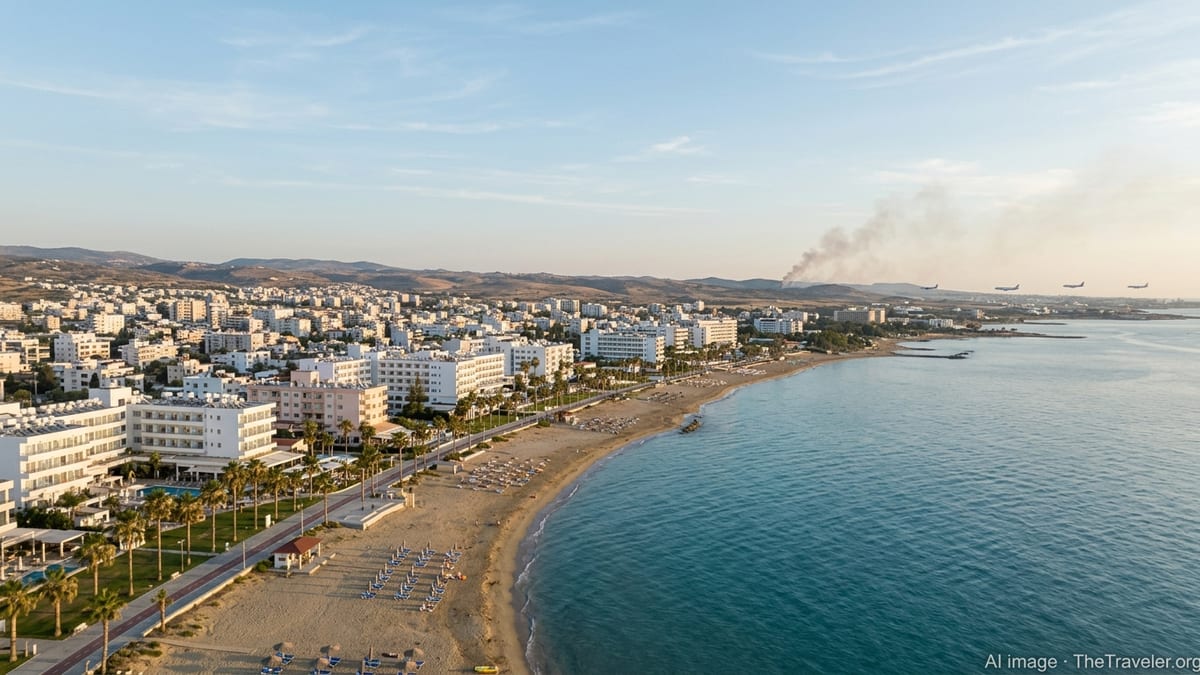
Cyprus is entering the 2026 summer season navigating a delicate balance between regional war anxieties and mounting climate pressures, as the island works to protect a tourism industry that has set records in recent years while hardening itself against extreme heat, wildfires and water stress.
Get the latest news straight to your inbox!
From Record Arrivals to Renewed Uncertainty
Tourism remains one of Cyprus’s most critical economic pillars, with recent seasons delivering historic numbers. Official statistics for 2024 show tourist arrivals exceeding 4 million visitors, more than four times the island’s population, with tourism receipts and hotel occupancy rates marking some of the strongest results since records began. The United Kingdom continues to be the largest source market, while visitors from central Europe and the Middle East have helped diversify demand.
Industry presentations and government data describe 2024 and 2025 as reference years for Cypriot tourism, underscoring how fully the sector rebounded after the pandemic shock. Revenues have approached and in some cases surpassed 2019 levels, and resort regions such as Paphos have reported tourism income above 1 billion euros in a single year, contributing a substantial share of national arrivals and signaling progress toward all-year tourism.
Yet the strong performance masks underlying vulnerabilities. Analysts and sector representatives have highlighted a widening gap between headline arrival numbers and profitability for traditional hotels, as short-term rentals draw a growing share of visitors and some tourists choose accommodation in the island’s north. These structural pressures have made the sector more sensitive to sudden shifts in demand driven by geopolitical shocks or climate-related disruptions.
As 2026 begins, bookings data and travel commentary suggest that Cyprus still benefits from its reputation as a nearby, easily accessible destination for European travelers, but sentiment is more fragile. Concerns over security, flight reliability and extreme weather are becoming more prominent in traveler decision-making, even as long-term trends such as pent-up demand and flexible remote work continue to support Mediterranean holidays.
Regional Tensions Cast a Shadow Over a Key Market
Cyprus’s geographic proximity to the Middle East has long shaped its tourism fortunes. Israel has emerged over the past decade as one of the island’s most important source markets, with official figures for 2024 placing Israeli visitors among the top contributors to overall arrivals. Weekend city breaks, family holidays and wedding tourism from Israel have all supported airlines and coastal resorts, particularly in Paphos and Larnaca.
Hostilities linked to the Gaza conflict and subsequent regional tensions have, however, injected new uncertainty into this relationship. Published coverage on the wider region shows that Israel’s own tourism sector suffered a steep downturn after the escalation of violence, dragging on outbound travel demand. Flight patterns between Israel and neighboring destinations, including Cyprus, have periodically been adjusted as airlines respond to shifting risk assessments and consumer caution.
Cyprus has also taken on an unexpectedly visible role as a logistics and humanitarian staging point, hosting a maritime corridor used to channel aid toward Gaza. Publicly available information on maritime operations and regional diplomacy indicates that the island’s ports and airspace have been central to relief efforts, reinforcing its geopolitical significance. For prospective holidaymakers, images of naval activity and news of missile interceptions in the broader Eastern Mediterranean have sometimes blurred geographic distances, creating the impression that the island is closer to front lines than it is in practice.
Travel industry commentary during recent flare-ups suggests that, while direct security risks on the island remain limited, waves of cancellations and rebookings tend to follow each major escalation. Some tour operators have reported that families in northern Europe, in particular, prefer to delay bookings or switch to destinations perceived as farther from potential flashpoints. As a result, Cyprus’s tourism revenue outlook for 2026 is more dependent than usual on how regional headlines evolve over the coming months.
Heatwaves, Wildfires and Water Stress Test the Holiday Season
Alongside geopolitical risks, climate change is exerting growing pressure on Cyprus’s tourism model. Scientific assessments and national climate risk reports describe the island as a hotspot for rising temperatures, more frequent and intense heatwaves, and prolonged droughts. These trends are already reshaping when and how visitors experience popular resort areas in Limassol, Ayia Napa, Protaras and Paphos.
Recent summers have seen periods of extreme heat, with temperatures in inland areas and foothills at times exceeding 40 degrees Celsius. In July 2025, a major wildfire in the Limassol district burned large areas of forest and agricultural land during a severe heatwave, drawing attention to the vulnerability of peri-urban landscapes that sit close to residential zones and rural guesthouses. Prior years brought similar episodes in the Troodos foothills, underscoring the link between warmer, drier conditions and rapidly spreading fires.
Water scarcity is another persistent concern. European policy documents and recent meetings held in Nicosia have placed water resilience at the center of Cyprus’s long-term planning, citing pressure on aquifers, increased evaporation and competing demands from agriculture and urban growth. For tourism, this translates into tighter management of hotel pools, golf courses and landscaped resorts, as well as investment in efficient desalination and distribution networks to guarantee supply during peak summer demand.
The combination of heat stress, wildfire risk and water constraints is prompting a gradual rethink of how to package and promote the Cypriot holiday experience. There is growing emphasis on expanding the shoulder seasons of spring and autumn, when temperatures are milder, and on developing inland cultural, gastronomic and nature-based tourism that is less exposed to midday heat along crowded beaches.
Investment and Adaptation: Cyprus Seeks Climate-Ready Tourism
To address rising climate risks, Cyprus is drawing on a mix of national resources and European Union support. The country’s Recovery and Resilience Plan includes funding streams aimed at energy efficiency, water management, renewable power and climate-resilient infrastructure, with tourism-intensive regions among the beneficiaries. Program descriptions highlight projects such as upgrading coastal defenses, improving wastewater reuse and modernizing public transport in key urban and resort corridors.
Environmental and tourism stakeholders are also piloting local initiatives, from beach nourishment and dune protection to reforestation and firebreak maintenance in forested uplands that host hiking and cycling routes. Municipalities in Paphos, Limassol and Larnaca have promoted tree-planting campaigns and shade creation in public spaces, recognizing that comfortable urban microclimates can help sustain city breaks even as average temperatures climb.
Researchers working on Cyprus-focused climate studies have flagged the island as a useful test bed for adaptation strategies in semi-arid Mediterranean environments. Work on environmental digital twins and sector-specific risk assessments is being used to model how heatwaves, coastal erosion and changes in precipitation might affect tourism infrastructure, from seafront promenades and small harbors to rural agritourism ventures.
Although many of these measures are still in the planning or early implementation stages, the direction of travel is clear: authorities and industry bodies are treating climate resilience as central to safeguarding the country’s competitive edge. For 2026 and beyond, that means marketing Cyprus not only as a sun-and-sea destination, but as a place that is actively preparing for a hotter, more volatile Mediterranean climate.
Reassuring Visitors While Diversifying the Offer
Against this backdrop of war-related anxieties and climate challenges, Cyprus’s tourism strategy for 2026 is increasingly focused on reassurance and diversification. Public communications from tourism bodies, airlines and airport operators emphasize that flights and visitor services continue to function normally, even during periods of regional tension. Travel forums and industry commentary note that, after initial waves of cancellations linked to conflict headlines, bookings often recover as travelers differentiate between Cyprus and neighboring territories.
At the same time, there is a visible push to broaden the island’s tourism offer beyond its traditional core of summer beach packages. Promotion of cultural heritage sites, wine routes, mountain villages and sports tourism aims to spread visitor flows across more months and regions, reducing pressure on coastal hotspots during peak heat and creating new income streams for inland communities. Sustainability themes are increasingly woven into marketing, with references to cleaner beaches, nature conservation and responsible tourism practices.
Domestic stakeholders are also paying closer attention to the social and economic footprint of tourism. Discussions in business and civic circles highlight concerns about overtourism, housing affordability in resort towns and the impact of short-term rentals on local neighborhoods. Balancing the needs of residents with those of visitors is becoming a more prominent policy question, especially as the sector seeks continued growth in a context of environmental limits and geopolitical volatility.
How the 2026 season ultimately unfolds will depend on developments largely beyond Cyprus’s control, from ceasefire prospects in the Middle East to the severity of upcoming heatwaves. For now, publicly available indicators suggest a sector that is cautious but determined, leaning on recent record years while accelerating investments intended to keep the island both welcoming and resilient in an era defined by war and weather.