

More news on this day
A decade after a painful banking collapse and international bailout, Cyprus is posting some of the euro area’s strongest growth figures, offering a compact case study in how a small, open economy can rebuild resilience amid overlapping global shocks.
Get the latest news straight to your inbox!
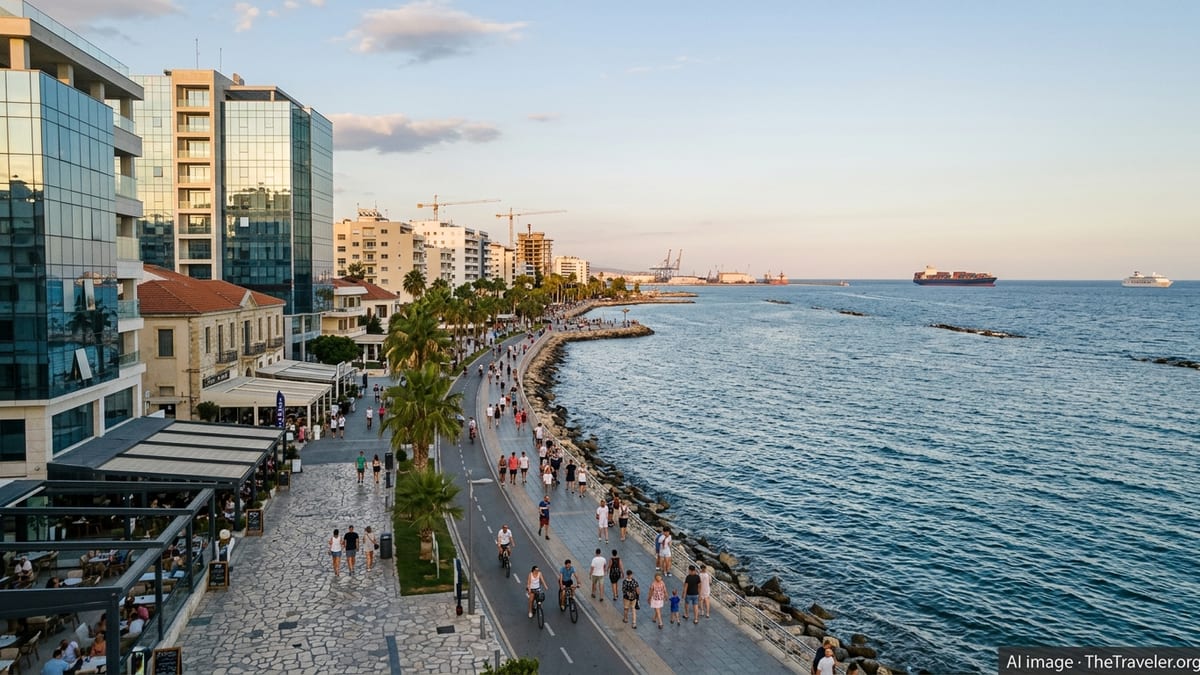
From Crisis Epicenter to Euro Area Outperformer
Cyprus entered the 2010s as one of the euro area’s most fragile economies, reeling from a 2013 banking crisis that forced depositor bail-ins, capital controls and a deep recession. Publicly available historical data show that output contracted sharply and unemployment surged, while confidence in the financial system and the island’s business model was severely shaken.
Recent assessments by international institutions indicate that many of those crisis legacies have now been addressed. The International Monetary Fund’s latest Article IV consultation notes that Cyprus has recorded some of the highest growth rates in the euro area in recent years, with real GDP expanding by around 3.4 percent in 2024, supported by robust domestic demand, tourism and professional services. Fiscal accounts have swung from deficit to sizeable surplus, and public debt has fallen below the euro area average.
European Commission forecasts and independent country analyses echo this picture of steady, above-euro-area growth despite a challenging global backdrop of tighter financial conditions and weaker trade. Projections published in 2025 point to growth of roughly 3 to 3.5 percent over the mid‑term, even as many larger European economies face stagnation. This relative outperformance is a fundamental marker of Cyprus’s renewed resilience.
Crucially, the restructuring of the banking system, tighter supervision and efforts to reduce non‑performing loans have helped restore confidence and reduce vulnerabilities that amplified the previous crisis. While risks remain, particularly around private debt and exposure to external shocks, the shift from crisis management to forward‑looking reform has laid the foundation for a more durable expansion.
Tourism, Trade and Adaptation to Global Shocks
Tourism has long been the backbone of the Cypriot economy, and its resilience has been repeatedly tested by global events, from the pandemic to geopolitical tensions in the wider region. Publicly available tourism data and government presentations highlight how arrivals rebounded strongly after Covid‑19, surpassing pre‑pandemic levels by 2023 and continuing to grow through 2024, even after the loss of Russian visitors, once a key source market.
Officials have responded to these shocks with a deliberate diversification of tourism markets. European Commission and national macroeconomic presentations show that a larger share of visitors now come from a mix of EU states, the United Kingdom, Israel and emerging regional markets, reducing dependence on any single country. This broadening, combined with extended shoulder seasons and rising per‑visitor spending, has supported services exports and employment even as global travel patterns remain volatile.
The tourism sector has also had to contend with environmental pressures, particularly water scarcity in the context of higher visitor numbers and hotter summers. Coverage from international news agencies reports that Cyprus is subsidizing small‑scale desalination units for hotels and investing in water infrastructure upgrades in order to secure supplies without stalling tourism growth. These measures illustrate how the country’s resilience strategy increasingly integrates climate adaptation into core economic sectors.
More broadly, Cyprus has leveraged its role as a logistics, shipping and professional services hub between Europe, the Middle East and North Africa. Although slower global trade and regional security tensions continue to pose risks, recent forecasts from organizations such as the Economist Intelligence Unit suggest that robust private consumption and services exports should keep growth above the euro area average through at least 2025.
Fiscal Discipline and Social Repair as Shock Absorbers
One of the most striking shifts since the 2013 crisis is Cyprus’s fiscal position. European Commission country reports show that the general government balance moved into a sizeable surplus in 2024, estimated at more than 4 percent of GDP, supported by strong revenues from growing employment, wage gains and buoyant tourism‑related activity. The IMF reports that the primary surplus reached even higher levels, helping to accelerate the reduction of public debt.
This consolidation has taken place while the authorities continue to roll out targeted social policies linked to the crisis legacy. Recent European Commission analysis points to instruments such as a solidarity fund designed to compensate individuals who lost savings during the banking collapse, and a mortgage‑to‑rent scheme that allows over‑indebted households to remain in their homes while converting loans into rent. These measures are cited as examples of efforts to balance fiscal prudence with social repair, which can in turn support political and social stability.
Strong fiscal buffers have also improved Cyprus’s capacity to respond to new shocks, including the pandemic, energy price spikes following Russia’s invasion of Ukraine, and cost‑of‑living pressures. Publicly available information from multilateral institutions suggests that room now exists for countercyclical measures and investment in long‑term priorities, from digitalization to green infrastructure, without jeopardizing debt sustainability.
Ratings upgrades back into investment‑grade territory by major agencies, as referenced in international financial reports, reflect this shift. Lower sovereign borrowing costs feed back into the domestic financial system and investment climate, reinforcing the virtuous circle that underpins the island’s renewed economic resilience.
Energy Pivot and the Next Phase of Resilience
A third key lesson from Cyprus’s recent trajectory lies offshore, in the natural gas discoveries that are gradually reshaping its strategic and economic outlook. Since the initial finds at the Aphrodite field in the early 2010s, subsequent discoveries by international energy majors have raised estimates of gas resources in Cyprus’s exclusive economic zone to tens of trillions of cubic feet. Publicly available reporting from outlets such as the Associated Press and energy trade publications indicates that some of this gas could reach European markets around 2027, depending on final investment decisions and infrastructure timelines.
Rather than relying on a single megaproject, Cyprus and its partners are advancing a portfolio of options. These include pipeline tie‑backs to existing liquefied natural gas facilities in Egypt, potential new offshore developments such as the Cronos and Pegasus fields, and integration into wider regional initiatives like the EuroAsia electricity interconnector linking Cyprus with Greece and Israel. Recent commentary from energy analysts suggests that, while offshore gas will not transform the domestic electricity market overnight, it is central to the island’s longer‑term resilience strategy.
At the same time, the government is promoting renewable energy projects and grid upgrades to reduce reliance on imported oil for power generation, a vulnerability highlighted when global oil prices spiked in recent years. Energy market research notes that almost 80 percent of Cyprus’s electricity has traditionally come from oil‑fired plants, but rising investments in solar capacity and interconnection projects aim to gradually change this mix.
The combination of emerging gas exports, closer regional energy integration and a push into renewables positions Cyprus as both a potential contributor to European energy security and a test case for how small states can navigate the energy transition. For travelers and investors alike, the evolving landscape underscores how the island’s economic story now extends well beyond its beaches, revealing a broader narrative of adaptation to a more volatile world.