

More news on this day
Cyprus is welcoming a growing list of countries resuming or reinforcing air links, with Switzerland now joining the United Kingdom, the Netherlands, Hungary, Romania, Poland, Germany, Jordan and Egypt among others, yet hoteliers and aviation officials warn that regional instability and signs of softer travel demand could quickly erode the island’s fragile tourism momentum.
Get the latest news straight to your inbox!
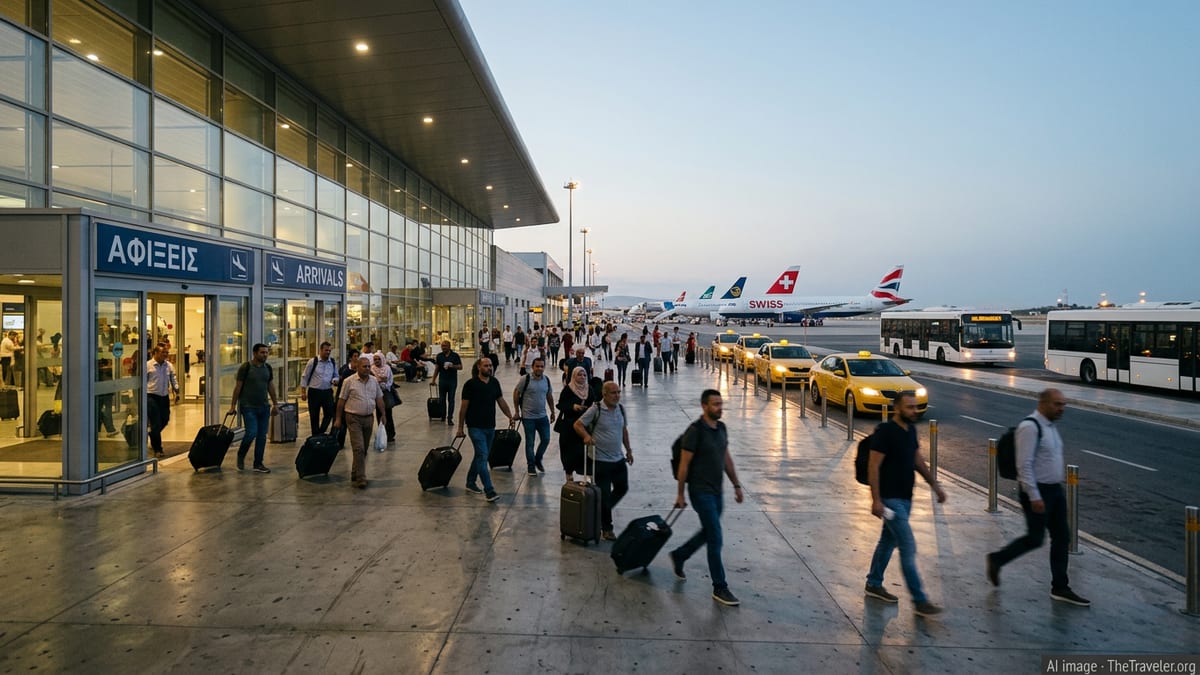
Switzerland Joins Expanding Network of Reconnected Routes
The latest boost to Cyprus’s air connectivity comes from Switzerland, as carriers increase services linking Larnaca and Paphos with Swiss hubs alongside long-standing routes from the United Kingdom, the Netherlands, Germany, Italy and central and eastern European markets. Industry officials say the wider European picture remains broadly positive, with Eurostat data showing strong tourism activity across the bloc through 2025, supporting airlines’ confidence in maintaining and restoring capacity on key leisure routes into Cyprus.
Europe’s aviation recovery has restored traffic on many corridors to or above pre-pandemic levels, and Cyprus has been a clear beneficiary. Flights from Poland, Romania and Hungary, often operated by low-cost carriers, have helped backfill capacity lost from Russia and parts of the Middle East, while traditional markets such as the United Kingdom and Germany continue to underpin overall arrivals. Switzerland’s reinforced presence is seen as another sign that carriers still view Cyprus as a reliable Mediterranean holiday draw despite recent geopolitical shocks.
At the island’s two international gateways, Larnaca and Paphos, airport operator Hermes Airports recently reported record passenger throughput for 2025, underscoring how quickly traffic had returned after the pandemic downturn. Officials describe the resurgence in flights as the result of targeted incentives and close cooperation between the government, tourism authorities and airlines, with a particular focus on diversifying source markets so that Cyprus is not overly dependent on any single country or region.
Record Passenger Numbers Mask Emerging Fragility
Headline figures for 2025 paint a picture of strength. Cyprus welcomed more than 4.5 million visitors last year, while combined arrivals and departures through its airports surpassed 13 million passengers, both marking historic highs. Sector analysts note that tourism now contributes around 14 per cent of national output, reinforcing the industry’s importance for jobs, tax revenues and wider services activity across the island.
Behind those records, however, operators describe a more nuanced reality. Hotel associations report that while occupancy has been solid in peak months, booking patterns have shortened and late cancellations have become more common, particularly from markets sensitive to security headlines. Many hoteliers have had to increase discounts or promotional offers to keep beds filled outside the core summer season, eating into margins even as volume numbers appear strong.
Rising operating costs are adding pressure. Energy prices, higher wages and debt servicing costs have pushed up the break-even point for many businesses, from family-run guesthouses to large coastal resorts. Executives caution that a single weak season triggered by a regional escalation or a broader European economic slowdown could tip some operators into financial distress, especially smaller properties with limited cash buffers that only recently recovered from the pandemic shock.
Regional Tensions Disrupt Air Links and Sentiment
The most immediate threat to Cyprus’s tourism outlook stems from the wider Middle East, where the 2026 Iran conflict and related tensions have rattled airlines and travellers across the eastern Mediterranean. Recent drone attacks near Britain’s sovereign bases at Akrotiri and Dhekelia on the island, used for operations in the region, have drawn international attention and prompted updated travel advisories stressing that regional escalation poses significant security risks and can lead to sudden travel disruption.
In practice, that disruption has already been felt in Cyprus’s flight schedules. Services to and from Middle Eastern destinations such as Haifa and Tel Aviv in Israel, Beirut in Lebanon, Doha in Qatar, Dubai in the United Arab Emirates and Amman in Jordan have seen cancellations and timetable changes as carriers reassess risk and navigate temporary airspace restrictions. While European routes remain largely unaffected, the volatility has unsettled some prospective visitors and led to a wave of short-term cancellations, particularly for trips planned in the coming weeks.
Tourism officials emphasise that the island itself remains calm and fully functional, and there is no indication of direct security threats to holiday resorts or urban centres. Nonetheless, they acknowledge that Cyprus’s proximity to conflict zones makes it highly exposed to shifts in regional perception. Even when the physical risk remains low, images of nearby instability and headlines about drones or airstrikes can be enough to convince some travellers to switch to alternative Mediterranean destinations perceived as further from the frontline.
Middle Eastern and Israeli Markets Under Strain
One of the clearest pressure points for Cyprus is the Israeli market, historically one of its fastest-growing and highest-spending visitor segments. In recent years Israel has ranked among the top sources of arrivals, and Cyprus has emerged as a popular short-break destination for Israeli travellers thanks to its proximity and frequent flights. Before the latest flare-up, some forecasts even projected that visitors from Israel could exceed one million annually in the coming years if growth trends continued.
The Gaza war and subsequent Iran-related tensions have sharply curtailed outbound travel from Israel and triggered repeated suspensions or reductions of flights across the region. As international airlines scaled back services to Israeli airports and Israeli travellers focused on domestic concerns, Cyprus felt the knock-on effects in the form of lower bookings and wider uncertainty. Local hoteliers describe the market as highly volatile, with sudden surges when conditions appear to stabilise followed by abrupt slumps when hostilities resume or new security incidents occur.
Neighbouring markets in the wider Middle East have also become more unpredictable. Political and economic strains in countries such as Lebanon, as well as rerouted traffic driven by airspace closures and higher insurance costs, have complicated efforts to grow arrivals from the region. Sporadic increases in flights, including additional services to Larnaca when other airports come under pressure, provide short-term boosts but do little to address the structural fragility created by ongoing instability.
Tourism Industry Pushes for Diversification and Support
In response to these overlapping shocks, Cyprus’s tourism authorities and private sector are intensifying efforts to broaden the island’s appeal and reduce reliance on any single source market. Campaigns are targeting underdeveloped segments such as cultural tourism, nature and hiking, gastronomy and wellness, in an attempt to attract visitors beyond the traditional sun and sea holidaymaker. There is also a renewed emphasis on securing more year-round flights from central and northern Europe so that the industry is less exposed to seasonal swings and sudden drops from nearby markets.
Stakeholders are also lobbying for targeted government support to help businesses navigate a more volatile environment. Proposals include temporary reductions in airport charges to incentivise airlines to maintain capacity, energy-efficiency grants for hotels to cut operating costs and marketing funds to reassure key markets that Cyprus remains a safe and accessible destination despite regional turbulence. Industry leaders warn that without such measures, the combination of higher costs and unpredictable demand could stall investment just as the island needs to upgrade and diversify its tourism product.
For now, the resumption and reinforcement of flights from Switzerland, the United Kingdom, the Netherlands, Hungary, Romania, Poland, Germany, Italy, Jordan, Egypt and other markets provide a vital lifeline and a visible symbol of confidence in Cyprus as a destination. Yet tourism executives are increasingly aware that air links alone are not enough. The island’s fortunes are inextricably tied to the stability of its wider neighbourhood, leaving Cyprus to walk a narrow line between capitalising on record-breaking recent seasons and preparing for the possibility that the next external shock could be just one headline away.