

More news on this day
Cyprus is navigating a delicate balance between heightened demand for travel across the eastern Mediterranean and a cautious stance on repatriation, as regional tensions and shifting air routes reshape how visitors move to and through the island.
Get the latest news straight to your inbox!
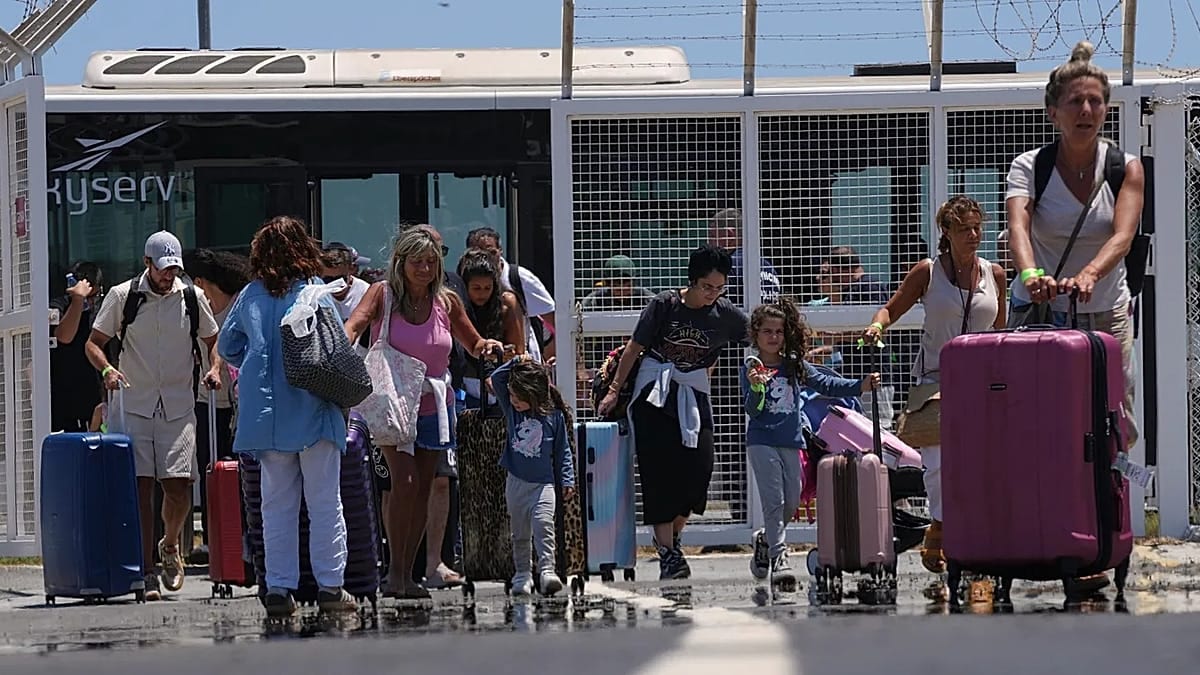
Image by Euronews
Rising Passenger Flows Through the Eastern Mediterranean
Publicly available aviation and tourism data indicate that Cyprus is seeing stronger passenger flows linked to Middle East routes, even while parts of the region remain volatile. As airspace closures and rerouted services affect destinations such as Israel, Lebanon and the Gulf, the island’s location in the eastern Mediterranean is drawing more travelers who use Larnaca and Paphos as staging points for regional connections.
Industry analyses suggest that airlines and tour operators are responding to demand for alternative gateways that avoid conflict hotspots while still providing access to major Middle Eastern markets. Cyprus, less than an hour’s flight from several Levant and North African cities, has emerged as a logical hub for short-haul links, cruise turnarounds and package holidays that combine European and regional itineraries.
Travel advisors also point to a steady appetite from European travelers for winter sun, cultural visits and business trips that mix Cyprus with nearby destinations. Although some carriers maintain suspensions or reduced frequencies to specific Middle Eastern airports, bookings into Cyprus itself appear comparatively resilient, with the island serving as both a safe destination and a springboard toward onward travel.
At the same time, global airline waivers and flexible booking policies related to Middle East unrest are making it easier for passengers to adjust plans without cancelling trips entirely. This flexibility often redirects travel rather than suppressing it, reinforcing the role of Cyprus as a practical fallback for rerouted journeys.
Travel Advisories Stay Firm as Repatriation Slows
While travel demand is firming, government travel advisories issued by Cyprus for parts of the Middle East remain in force. Official notices for Israel, the Palestinian territories, Lebanon and Iran continue to urge citizens to avoid non-essential travel or to refrain from all travel, depending on the destination, reflecting ongoing security concerns.
Despite these cautions, there is currently no broad-based repatriation program for Cypriot nationals or residents in the wider region. Publicly available information from previous crises showed that Cyprus coordinated special flights and maritime operations when conditions sharply deteriorated. In the present phase, however, authorities appear to be prioritizing targeted assistance, consular support and close monitoring rather than large-scale returns.
This restrained stance contrasts with earlier moments of acute emergency, when foreign and Cypriot nationals were evacuated through Larnaca in sizable numbers. Today’s approach suggests that Nicosia assesses risk levels as serious but manageable, with commercial links and limited humanitarian corridors still functioning and no blanket directive for citizens to leave Middle Eastern countries en masse.
Observers note that the continued operation of some commercial flights and ferry routes also reduces the immediate need for organized repatriation. Travelers are often able to depart affected areas using scheduled services, even if on reduced timetables, easing pressure on Cyprus to mount state-led operations.
Humanitarian Corridor Role Outpaces Citizen Evacuations
In parallel with its travel policies, Cyprus has expanded its role as a platform for humanitarian logistics, particularly for Gaza. International coverage highlights how the Cyprus-based maritime corridor, sometimes described as the Amalthea initiative, was designed first for aid deliveries and is now being reconsidered as part of a longer-term reconstruction framework.
Ships loaded with food, medical supplies and other essentials have departed from Cypriot ports toward Gaza in carefully coordinated missions, supported by European and regional partners. These voyages underscore the island’s logistical significance at a time when overland routes are frequently constrained by conflict and access restrictions.
Yet the prominence of Cyprus in humanitarian planning has not translated into a comparable surge in organized repatriation of its own nationals from the broader Middle East. The focus remains on facilitating aid, supporting international mechanisms and maintaining readiness for potential contingencies, rather than actively transporting large numbers of citizens back to the island.
This divergence highlights a structural shift in Cyprus’s role: increasingly a humanitarian and diplomatic staging ground for regional crises, but not currently the center of a major evacuation pipeline for its own population, even as travel through its airports grows.
Tourism Industry Adjusts to Volatility Without a Retreat
Tourism stakeholders in Cyprus are adapting to the new reality of persistent Middle East volatility coupled with sustained traveler interest. Industry commentary points to dynamic pricing, flexible itineraries and last-minute booking trends, as travelers monitor events in neighboring states before finalizing plans.
Regional airline decisions, including fare adjustments and capacity cuts on some Middle Eastern routes, are influencing how visitors route their trips. Some carriers have extended suspensions to high-risk destinations while maintaining or even strengthening links to Cyprus and other relatively stable points in the eastern Mediterranean, effectively reinforcing the island’s position as a safer node within a turbulent neighborhood.
Local hoteliers and travel agencies are also reworking product offerings to emphasize Cyprus’s perceived stability, EU membership and proximity to but separation from conflict zones. Package holidays that once paired Cyprus stays with side trips to nearby Middle Eastern cities are being redesigned, with optional extensions retained only where security conditions and flights allow.
Despite these adjustments, there is little sign of a broad retreat from the region in booking patterns that involve Cyprus. Instead, traveler behavior appears to be evolving toward risk-aware but still regionally focused itineraries, with the island benefitting from its ability to offer both access and distance.
Strategic Crossroads Facing a Prolonged Test
The current moment underscores Cyprus’s long-standing position as a strategic crossroads between Europe and the Middle East. Its airports, ports and rescue coordination infrastructure have repeatedly been called upon in past crises, and recent developments again place the island at the heart of evacuation planning, aid logistics and travel reconfiguration.
Analysts of regional security and aviation trends suggest that this role is unlikely to diminish. Continued instability in the Levant and Gulf, coupled with pressure on shipping lanes and air routes, keeps Cyprus central to scenario planning for governments, airlines and humanitarian organizations.
However, the decision not to launch broad repatriation efforts, even as Middle East-related travel rises, illustrates the fine line Nicosia must walk between precaution and proportionality. Overreacting risks unnerving travelers and undermining the tourism economy, while underreacting could leave citizens exposed if conditions suddenly deteriorate.
For now, Cyprus appears to be managing that balance through stable but firm travel advisories, targeted consular support and an expanded humanitarian footprint, while allowing the island’s travel sector to continue capitalizing on rising demand. How long that equilibrium can be sustained will depend on the trajectory of Middle East tensions in the months ahead.