

More news on this day
Cyprus has moved to tighten travel guidance for destinations across the Middle East as escalating conflict in the region disrupts air traffic, raises safety concerns and begins to unsettle one of Europe’s most tourism-dependent economies.
Get the latest news straight to your inbox!
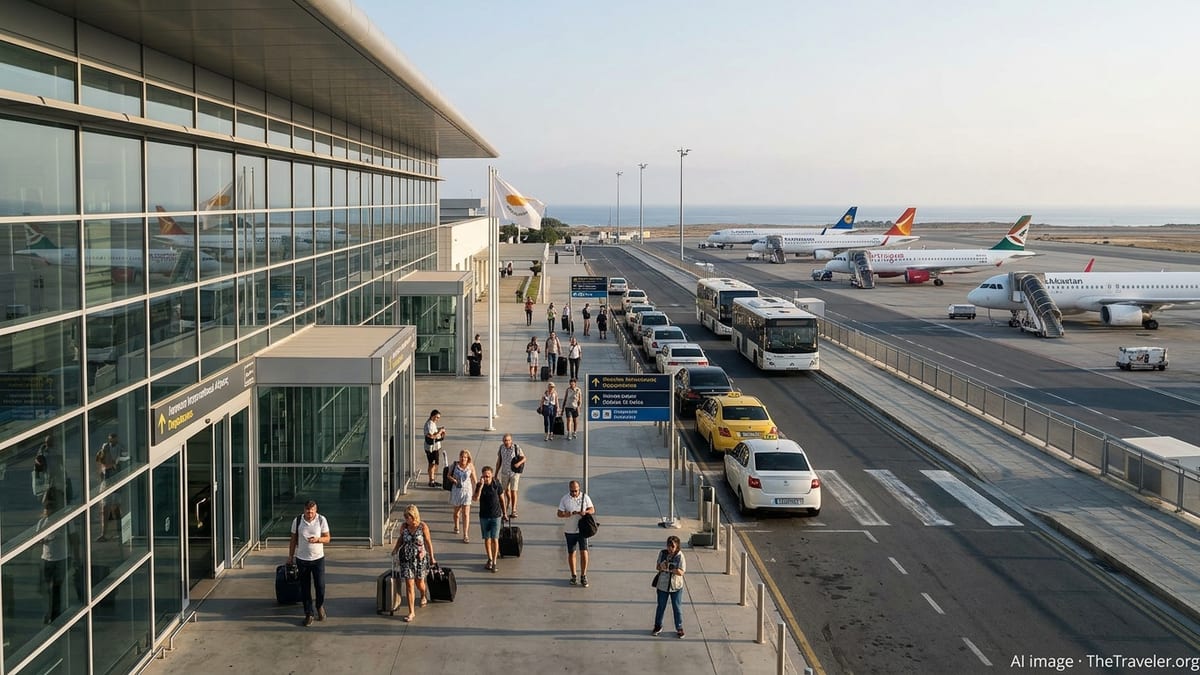
New Advisory Urges Caution for Travel to Conflict-Affected States
According to publicly available government notices and regional media coverage, Cypriot authorities have updated travel advice for a broad group of Middle Eastern countries affected by the current Iran-related conflict and associated airspace restrictions. While the full list varies between advisory systems, the focus is on states experiencing direct military activity or significant spillover risks, including Iran, Israel and several Gulf and Levant destinations.
Recent advisories echo language used by other governments and risk consultancies, urging residents to avoid non-essential travel to active conflict zones and to reconsider trips that require transiting through airspace subject to sudden closures or missile and drone activity. The updated guidance reflects a fast-changing environment in which airports, air corridors and ground routes can shift from operational to constrained in a matter of hours.
Public information indicates that the warning is framed as precautionary rather than a blanket ban, but it places added responsibility on travelers and tour operators to monitor local restrictions, airline statements and insurance conditions before departure. Cypriot citizens are being encouraged to register their journeys, keep contact details updated and maintain flexible itineraries in case of abrupt schedule changes.
Risk assessments released in early March by private security and travel-intelligence firms highlight widespread disruption across Middle Eastern airspace, noting closures or partial restrictions in several Gulf and Levant states and warning that further escalations could trigger additional rerouting or cancellations. These developments underpin the more cautious tone now reflected in Cyprus’s public-facing travel messaging.
Flight Disruptions Ripple Through Larnaca and Paphos
Although Cyprus itself remains outside the immediate conflict zone, the island’s airports at Larnaca and Paphos are deeply intertwined with Middle Eastern air networks and are already feeling the secondary effects. Industry reports show that airlines based in the Gulf and wider region have dramatically reduced schedules since late February, cutting frequencies or suspending some routes entirely as they navigate closed airspace and security concerns.
Global aviation coverage describes a sharp fall in departures by prominent carriers such as Emirates, Etihad, Qatar Airways, flydubai and Air Arabia after the first wave of strikes connected to the Iran conflict. With key hubs temporarily constrained, connecting passengers who would normally route between Europe and Asia via the Gulf are being forced to rebook or route via alternative corridors, sharply reducing the volume of transit traffic through the Eastern Mediterranean.
Airport and port assessments compiled in early March nonetheless classify Cypriot airspace and ports as fully operational, with normal security levels in place and no formal suspensions of commercial activity. Airlines continue to operate direct services between Cyprus and major European cities, but schedules touching affected Middle East destinations are under constant review and may be subject to last-minute adjustments, extended routings or technical stops to avoid high-risk corridors.
Travelers heading to or from Cyprus are being advised by airlines and travel agents to allow for longer connection times, check-in earlier than usual and track their flights in real time. For those with itineraries involving multiple Middle Eastern stops, some carriers are offering fee waivers, rebooking options or credit vouchers, though conditions vary widely and may change as the situation evolves.
Tourism Economy Braces for Knock-On Effects
Cyprus relies heavily on tourism, with recent economic assessments describing the sector as a cornerstone of national output and employment. Country risk analysis published in the past year points to the island’s particular exposure to external shocks, highlighting geopolitical instability in the wider region as a recurring challenge for its visitor economy.
While early-season booking data for 2026 remain incomplete, travel and tourism industry commentary suggests that the Iran conflict is already reshaping regional demand patterns. The World Travel and Tourism Council recently estimated that Middle East travel spending is suffering losses of hundreds of millions of dollars per day as disrupted air travel, shaken traveler confidence and reduced connectivity weigh on demand. Analysts note that any prolonged downturn in regional traffic is likely to be felt in Cyprus through lower arrivals, shorter stays and reduced spending from source markets that typically connect via Gulf hubs.
At the same time, neighbouring Greece has reported a modest uptick in demand as some travelers seek alternatives perceived as more stable yet still geographically close to the Middle East. Cyprus may experience a similar substitution effect from visitors who redirect trips away from conflict-affected states but remain interested in the Eastern Mediterranean. Recent lifestyle and relocation coverage has already portrayed the island as a safe haven and strategic base for businesses and residents looking to maintain proximity to the region while benefiting from European Union regulation and infrastructure.
Tourism stakeholders in Cyprus are therefore navigating a delicate balance: reassuring potential visitors about the island’s stability and connectivity, while acknowledging that ongoing disruptions in surrounding airspace and markets could weigh on arrivals from certain regions, particularly the Gulf, Israel and parts of the Levant.
Travelers Urged to Rethink Routes and Insurance
Global consumer travel outlets are emphasizing that the most immediate impact of the Middle East crisis for ordinary travelers is logistical rather than purely safety-related. With large sections of regional airspace temporarily closed or restricted, flights that once followed direct arcs now need to detour around conflict zones, adding hours to journey times or making some routings commercially unviable.
Recent explainers on air travel disruptions highlight the importance of flexible booking conditions, drawing attention to the limits of standard travel insurance in situations involving war or political violence. Industry experts point out that many policies exclude armed conflict from coverage, meaning that while airlines may provide refunds or alternative flights, travelers cannot always rely on insurance to recoup additional costs for accommodation, missed tours or replacement tickets.
For residents of Cyprus or visitors using the island as a hub, this environment calls for a more cautious approach to itinerary planning. Travelers are being encouraged to build in extra layover time when connecting through regional gateways, keep digital and printed copies of all bookings and stay in close contact with airlines through official communication channels and apps. Booking direct flights where possible, or using European hubs less exposed to the current airspace turmoil, is another strategy being recommended by travel advisers.
Publicly available risk briefings further suggest that travelers consider specialist policies that explicitly cover disruptions caused by security incidents, while carefully reading exclusions before purchase. Given the fluid nature of the crisis, experts underline that advisories and policy terms can change quickly, making last-minute checks an essential part of pre-departure routines.
Cyprus Positions Itself as Stable Eastern Mediterranean Gateway
Even as it tightens guidance for travel into parts of the Middle East, Cyprus is working to reinforce its own image as a reliable staging point at the crossroads of Europe, the Levant and North Africa. Commentaries in regional business and lifestyle media describe a growing role for the island as a relocation destination and operations base for companies and individuals seeking continuity amid instability.
Strategically located and equipped with EU-regulated infrastructure, Cyprus offers airlines, logistics firms and travelers an alternative node in a region where several traditional hubs are constrained. Recent coverage of regional aviation has underlined the emergence of new corridors through Egypt and the Eastern Mediterranean to maintain Europe–Asia connectivity; Cyprus, with its established airports and maritime links, is well placed to benefit from any lasting diversification of routes.
For the tourism sector, this positioning creates both challenges and opportunities. On one hand, heightened awareness of conflict in the broader region risks deterring some visitors unfamiliar with Eastern Mediterranean geography, who may conflate Cyprus with more volatile locations. On the other, targeted messaging that stresses the island’s distance from active hostilities, its EU status and its operational airports could attract travelers seeking a sun destination that still offers proximity to Middle Eastern culture and business ties.
As the situation evolves in the coming weeks and months, Cyprus is likely to continue fine-tuning its travel advisories, while airlines, hotels and tour operators adjust marketing and operations to reflect new realities. For now, the island remains open for tourism, yet deeply exposed to developments unfolding just beyond its horizon.