

More news on this day
Cyprus has issued an urgent travel warning covering multiple Middle East destinations as escalating conflict, airspace closures and drone incidents in the wider region begin to disrupt tourism flows to the eastern Mediterranean island.
Get the latest news straight to your inbox!
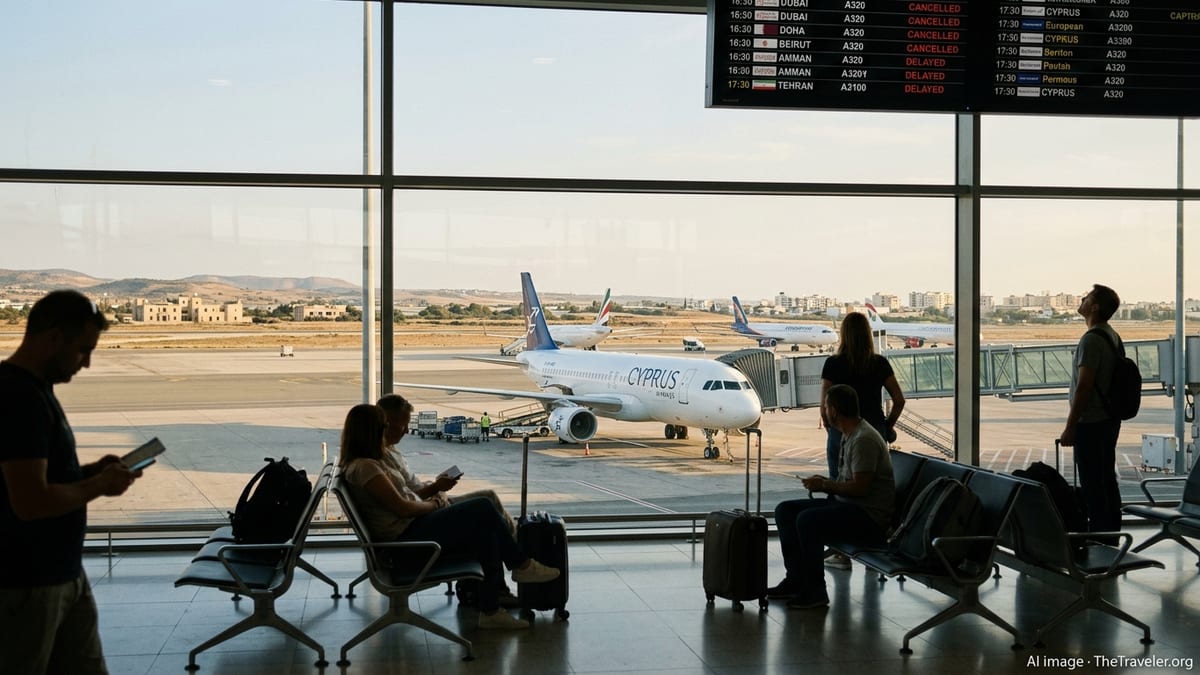
New Advisory Targets High-Risk Middle East Routes
Publicly available information from Cypriot government notices and regional risk bulletins indicates that the new advisory focuses on countries most exposed to the current Iran-centred conflict and related military activity. The warning urges Cypriot residents and travelers transiting through the island to reconsider non-essential trips to parts of the Gulf and Levant, citing heightened security risks and severe disruption to air links.
The updated guidance follows a series of drone and missile incidents tied to the broader confrontation involving Iran, Israel and the United States, including strikes and attempted strikes aimed at targets in or near Cyprus. Recent reporting on attacks against the RAF Akrotiri base on the island and intercepted drones approaching Cypriot airspace has drawn renewed attention to the country’s proximity to regional flashpoints.
The advisory stresses that conditions in several neighboring states can change at short notice due to military operations, airspace closures and localized unrest. Travelers are being encouraged to check airline schedules carefully, maintain flexible itineraries and review insurance coverage before undertaking journeys involving Middle Eastern hubs.
While the warning primarily addresses outbound and connecting travel from Cyprus to the region, it also has indirect implications for inbound tourism, since many visitors traditionally route through major Gulf and Levant gateways to reach the island.
Airspace Closures and Airline Cancellations Ripple Across the Region
The Cypriot move comes amid a wider aviation crisis as large parts of Middle East airspace remain closed or heavily restricted. Coverage from international aviation trackers and regional media points to sustained shutdowns or severe limitations affecting Iran, Israel, Jordan, Bahrain, Kuwait, Qatar, the United Arab Emirates and sections of surrounding air corridors.
Major carriers have extended cancellations to and from hubs such as Dubai, Doha and Abu Dhabi, with additional suspensions reported on routes serving Tehran, Baghdad, Amman, Beirut and Gulf cities. Industry analysis describes a cascading effect in which long-haul flights are rerouted around the region, flight times are lengthened and aircraft are redeployed away from traditional transit points.
Travel risk advisories issued in early March highlight that, even where airspace technically remains open, commercial operators are exercising caution and avoiding specific flight paths near areas of active military activity. This has reduced the number of available connections between Europe and Asia and has complicated itinerary planning for travelers who previously relied on Middle Eastern connecting hubs.
For Cyprus, which has marketed itself as a conveniently located bridge between Europe and the Middle East, the realignment of flight networks presents both a challenge and a partial opportunity. Some passengers are being rebooked through alternative European gateways, while others are choosing to avoid the broader region entirely until conditions stabilize.
Tourism Cancellations Surge as Summer Season Nears
Tourism sector data and local business reports show that the conflict is already taking a tangible toll on Cyprus’s visitor economy. Short-term rental analytics cited in recent Greek and Cypriot coverage indicate that cancellation rates for Cyprus properties spiked sharply following the first wave of strikes in early March, at times reaching unusually high daily levels before easing somewhat later in the month.
The Cyprus Hoteliers Association has reported a substantial downturn in bookings for March and April compared with the previous year, with estimates pointing to a drop of around 40 percent in some segments of the market. Public statements from hotel executives suggest that group reservations and high-spend leisure trips from the wider region have been particularly affected as travelers in Gulf and Levant markets postpone or redirect their holidays.
Global tourism and aviation analysis referenced by regional outlets suggests that the broader Middle East conflict is costing the region hundreds of millions of dollars per day in lost visitor spending. Cyprus, which relies heavily on tourism for employment and foreign exchange earnings, faces the risk that prolonged instability will dampen demand from key feeder markets just as operators prepare for the crucial summer peak.
Local tourism stakeholders are closely watching booking patterns for May and June to assess whether the downturn will extend into the high season. Travel agents and online platforms are reportedly noting increased demand for destinations perceived as entirely outside the conflict zone, putting added pressure on Cyprus to highlight its relative safety while acknowledging the seriousness of the regional situation.
Cyprus Balances Safe-Haven Image With Heightened Vigilance
In parallel with the travel warning, Cyprus is working to maintain its positioning as a secure eastern Mediterranean base for residents and visitors affected by turmoil across the Middle East. Recent business and lifestyle coverage has described the island as an emerging relocation hub for professionals and families seeking a European Union jurisdiction that remains geographically close to the Gulf and Levant but insulated from direct conflict.
This safe-haven narrative has been reinforced by Cyprus’s role in previous regional crises, when the island served as a staging point for evacuations and humanitarian operations. Analysts note that its modern airports, ports and healthcare infrastructure, together with its membership in the European Union, enhance its appeal as a stable fallback option for organizations and individuals needing to relocate quickly from nearby conflict zones.
At the same time, the recent drone and missile incidents underscore the need for heightened vigilance. Security analysts quoted in regional think tank publications describe Cyprus as exposed to spillover risk because of its geographic location and the presence of foreign military facilities. Publicly available briefings emphasize that the island’s authorities and partners are adjusting security postures while working to keep civilian air and sea links operating normally.
Travel specialists based in Europe have begun advising clients to differentiate between travel into active conflict countries and trips to neighboring states such as Cyprus. While recommending caution and careful monitoring of advisories, many note that scheduled flights to Cypriot airports continue to operate and that on-the-ground conditions for tourists remain calm outside of isolated security-related disruptions.
Outlook: Uncertain Summer Ahead for Eastern Mediterranean Travel
The coming weeks are expected to be decisive for Cyprus and the wider eastern Mediterranean tourism market. Economic outlook reports from regional banks and international consultancies published in late 2024 already identified Middle East instability as a key downside risk to Cyprus’s otherwise positive tourism trajectory. The eruption of full-scale conflict in early 2026 has brought those concerns to the forefront.
Forecasts now hinge on how long airspace closures persist and whether military activity escalates or stabilizes. If Gulf and Levant hubs remain constrained deep into spring, airlines may further rationalize their networks, potentially reducing direct and connecting capacity to Cyprus just as summer demand typically builds.
Industry observers suggest that Cyprus may need to accelerate efforts to diversify its source markets, strengthen links with central and northern Europe, and promote longer-stay travel that is less sensitive to short-term shocks. Marketing campaigns highlighting the island’s safety record, healthcare standards and role as a regional support base are likely to intensify as tourism officials seek to reassure hesitant travelers.
For now, the urgent travel warning underlines the degree to which Cyprus is intertwined with events across the Middle East. Even as the island seeks to project stability and continuity for visitors, its tourism fortunes remain closely tied to the evolving security and aviation landscape in the region.